
Reaming is one of the most demanding processes in machining. Anyone who wants to achieve tight tolerances and fine surfaces cannot avoid this type of finishing. However, the process is not trivial: The interplay of pre-machining, tool, and process control determines success and scrap.
Reaming completes what drilling has begun. Those who require dimensional accuracy, surface quality, and shape fidelity rely on this type of finishing. The reamer removes only a small amount of material, smooths the bore wall, and brings it to tolerance.
"The basis for an efficient and economical process is a clean pre-drilling," says Dennis Sommer, product specialist for reaming at ISCAR. "It should exhibit the best possible straightness, be dimensionally accurate, and as free from grooves as possible."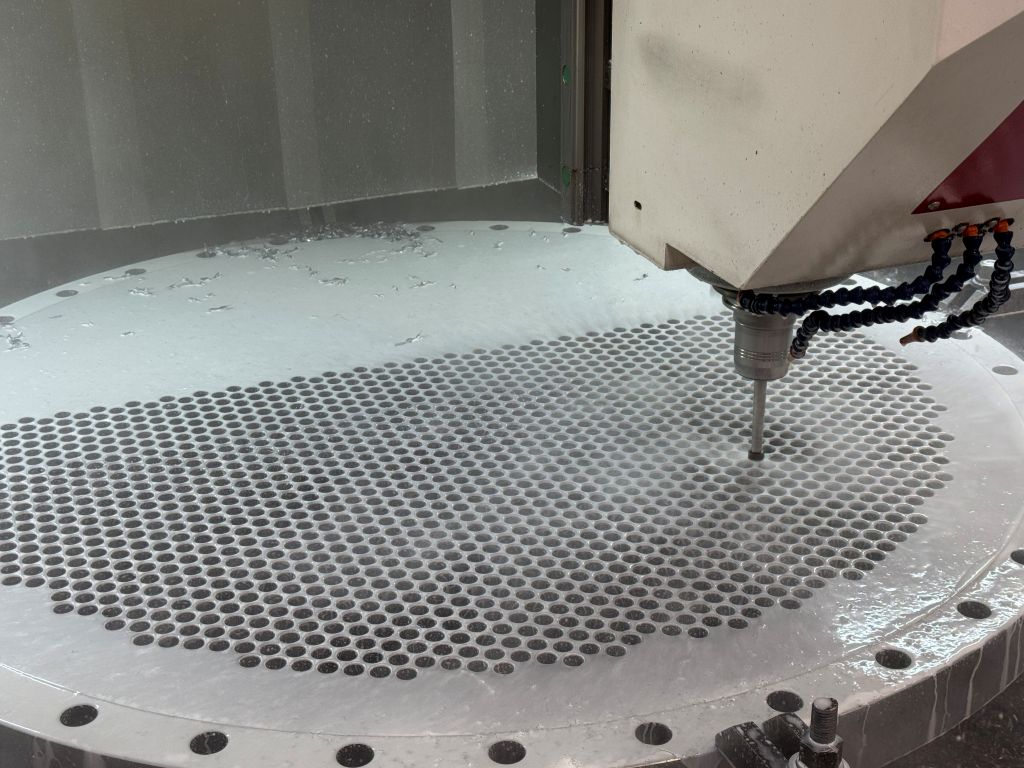
Every deviation propagates and worsens the result. The reamer operates on the bore wall. Therefore, its quality determines success or failure.
Tool and bore require precise alignment, as do roundness and machine rigidity. Even slight vibrations leave marks on the surface. A key role is played by the coolant: it reduces friction, dissipates heat, and extends tool life. It is crucial that it reaches the cutting edges directly.
The process and its limits
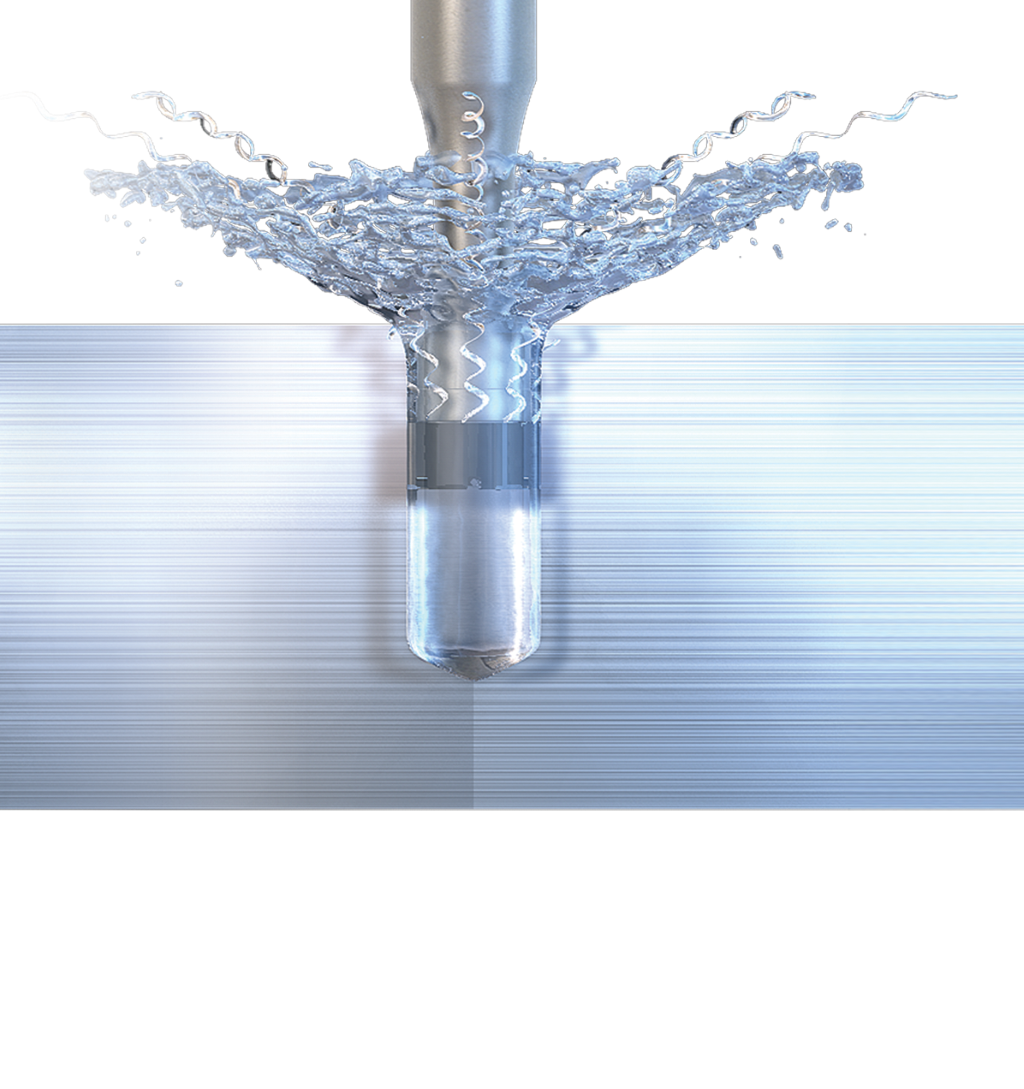
Reaming means precision work; the goal is accuracy with a short process time. Typical application areas are found in mechanical engineering, commercial vehicle construction, and aerospace, such as fits, bearing seats, or guides – everywhere tight tolerances are required.
Alternatives like fine drilling, hard turning, or honing only cover partial areas. Fine drilling achieves good dimensional accuracy but does not always meet the required surface quality.
Honing increases shape accuracy and produces the well-known cross-hatch pattern, for example, in cylinder bores. However, it is significantly slower and often only economical for hardened materials.
Different materials offer different cutting conditions.
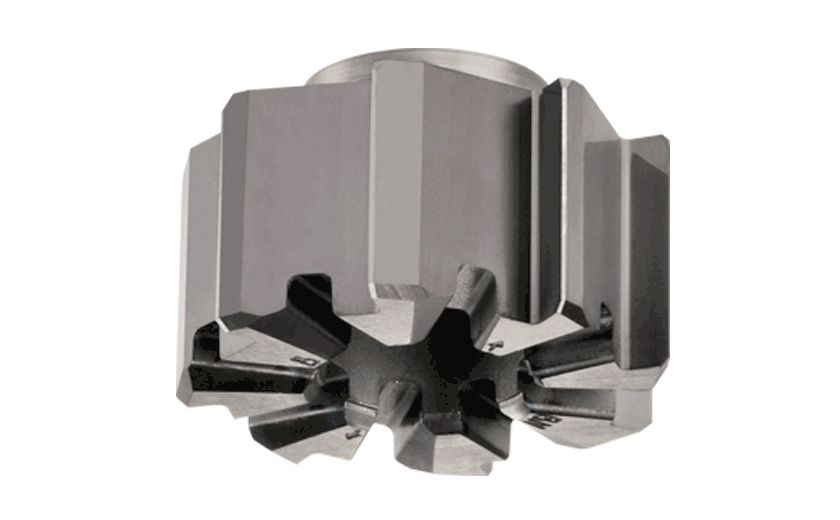
Not every material reacts the same. Construction steels produce long chips and require high feeds or chip-breaking geometries. Aluminum, on the other hand, demands very sharp cutting edges to avoid built-up edges. For titanium, robust cutting edges and precisely adjusted cutting values are crucial. Ferritic stainless steels are particularly tricky: their toughness causes the cutting edges to glide rather than cut. This increases temperature and accelerates wear.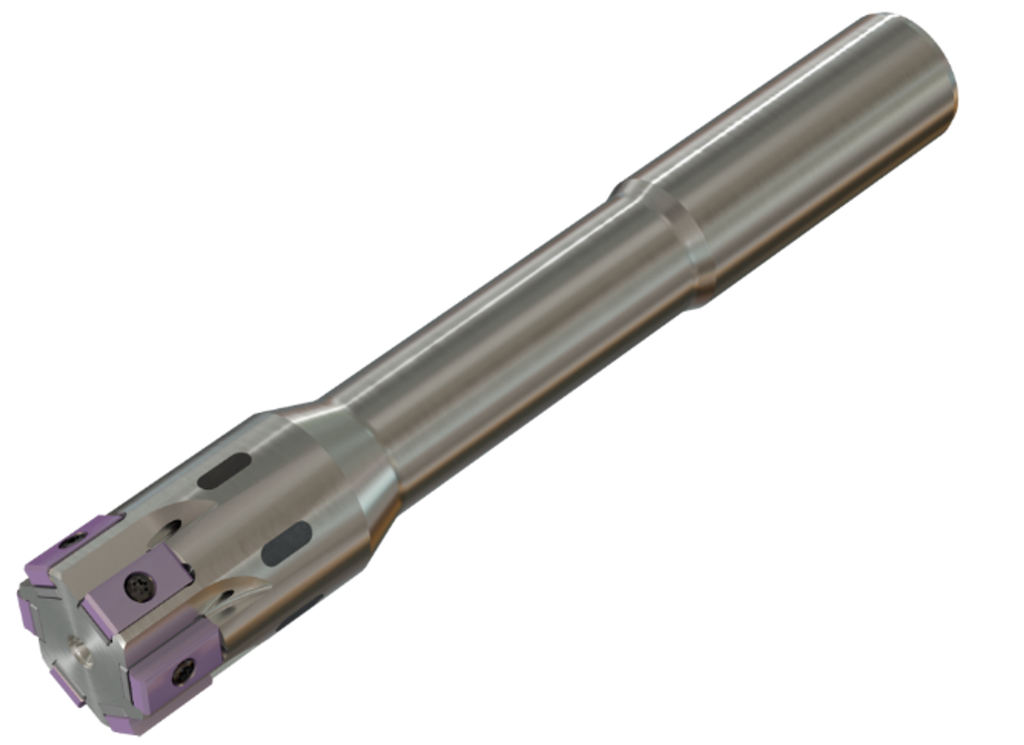
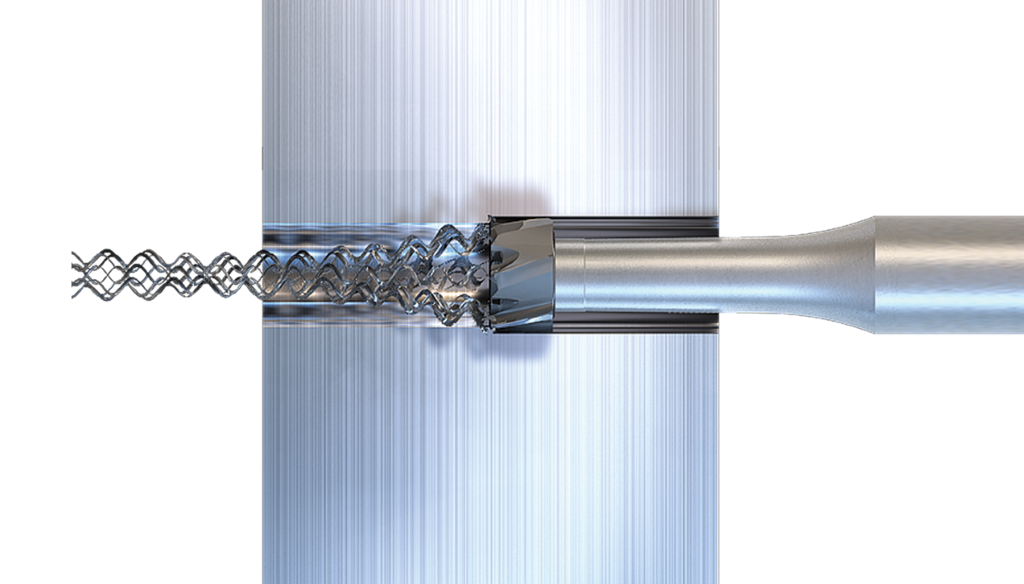
In addition to the material, it is also crucial for tool selection whether it is a through hole or a blind hole. For through holes, tools with left-twisted flutes are usually used. They allow the chips to flow forward with the feed. In blind holes, straight or slightly right-twisted flutes carry the chips backward. An incorrect twist direction would lead to chip congestion and possible tool breakage. The cutting angle also depends on the type of hole. For through holes, it is 25 degrees, while for blind holes, it is 45 degrees.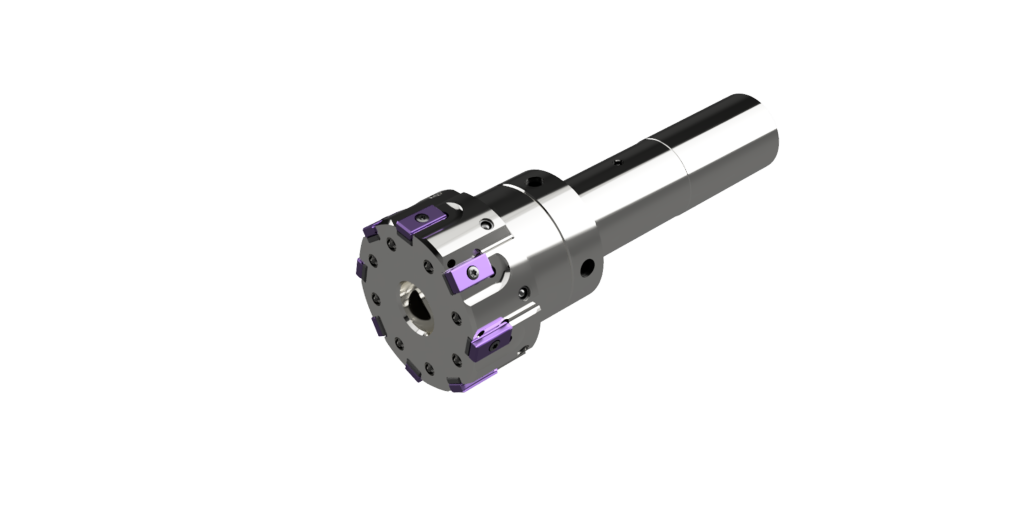
"For high roundness accuracy and stability during reaming, the use of hydro-expansion clamping chucks is recommended," says the product specialist. "Especially for deep holes, adjustable clamping chucks can correct roundness deviations to under five micrometers – that’s where we want to go."
Sources of error and their avoidance
Typical error patterns in reaming are chatter marks, dimensional deviations, and poor surfaces. They often arise from faulty pre-drilling, incorrect cutting data, or insufficient tool rigidity. A clean chamfer on the pre-drilling helps with the reamer setup: its angle should be smaller than or equal to the cutting angle of the tool so that the reamer centers accurately.
"Practice shows that reaming does not forgive negligence," says Dennis Sommer. "Even small deviations in dimension, feed, or roundness have visible effects." To ensure dimensional accuracy and smoothness are repeatable, the tool and roundness require regular inspection while stable process conditions are maintained.
Modularity is key
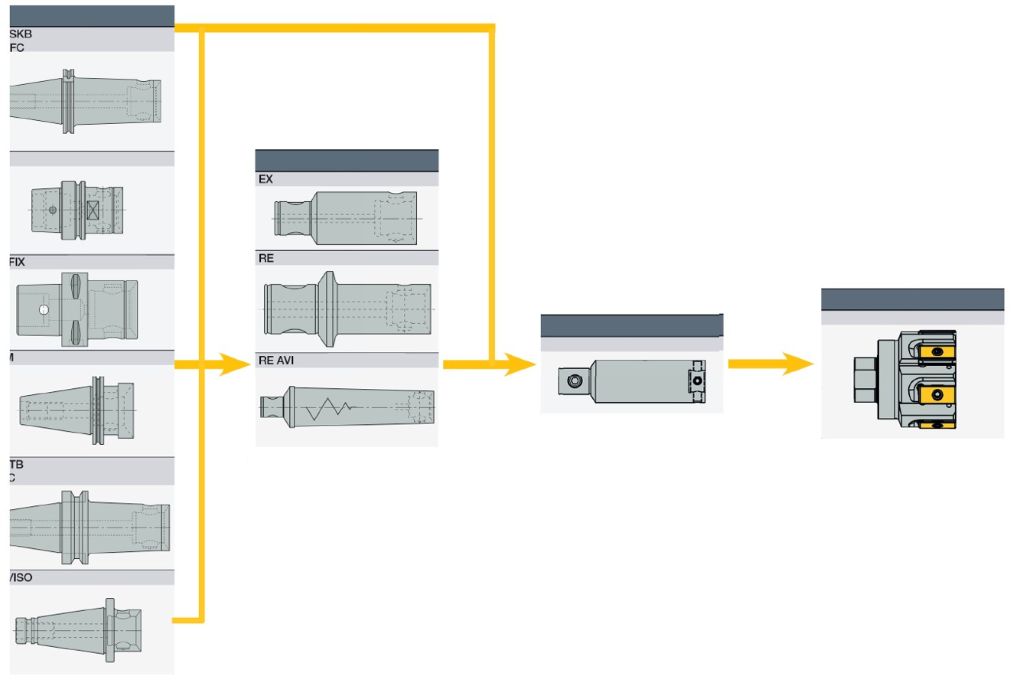
In drilling, milling, turning, and grooving, modularity in tools is already standard. And in reaming, systems with interchangeable heads are the future. Tools like the high-speed reamer BAYO T-REAM from ISCAR show where reaming is headed: they have precise interfaces, allow quick tool changes within the machine, and enable reproducible roundness.
The flexibly designed tool consists of a steel shank, an interchangeable carbide reaming head, and a quick-change bayonet closure. The reaming head is mounted using a special clamping key. A time-consuming removal of the base holder is not necessary. Another advantage is the internal coolant supply: it ensures that each cutting edge is effectively cooled. This results in long tool lives and optimal chip flow. ISCAR offers reaming heads in diameters from 11.5 to 32 millimeters for machining depths of 3xD, 5xD, and 8xD. Compared to non-modular systems, users of the BAYO T-REAM typically achieve significantly higher tool lives and increase their productivity.
In addition to the system with interchangeable heads, ISCAR also offers modular reamers with tangentially clamped cutting inserts. The TangReamer Easyline is specifically designed for machining holes in cast iron and steel. The semi-standard tool, preset to a fixed nominal diameter between 20 and 100 millimeters, can be equipped with different right-cutting indexable inserts with four tangential cutting edges. "Thanks to additional ground spacers, called shims, the user can adjust the nominal diameter in one-micron steps," explains the product specialist. "The maximum adaptation here is plus/minus 0.02 millimeters in diameter." Users achieve very high surface qualities and dimensional accuracies of IT6 for diameters over 50 millimeters and IT7 for diameters under 50 millimeters with the modular tool. The unequal division of the cutting edges is the same as in the BAYO-T-REAM system.
Contact: