
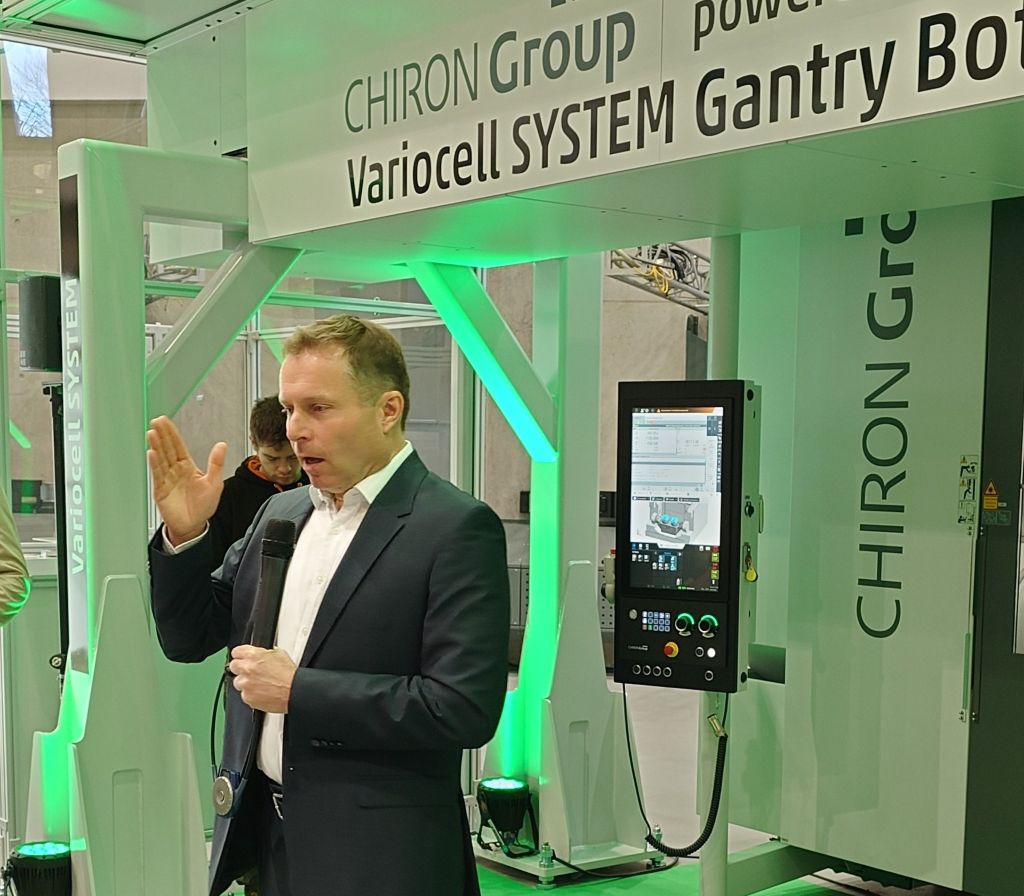
The interview was conducted by Helmut Damm and Frank Dietsche
Mr. Dr. Eppler, your in-house exhibition was well attended – despite difficult economic conditions. Were you surprised by this and from which regions did the visitors come?
Claus Eppler: To some extent, yes. We knew that there were many parallel events this year. That we still exceeded the mark of 1200 visitors is evidence to me that participants are not coming out of habit, but because they expect concrete, beneficial solutions. That is ultimately crucial for such a format. The focus of the visitors is usually within a radius of 300 kilometers. But we consciously invest in internationality. Our subsidiaries bring visitor groups with them. These come from Eastern Europe, Turkey, and other countries. At the same time, it is noticeable that many companies have become more restrictive regarding travel. All the more, we are pleased about the positive feedback.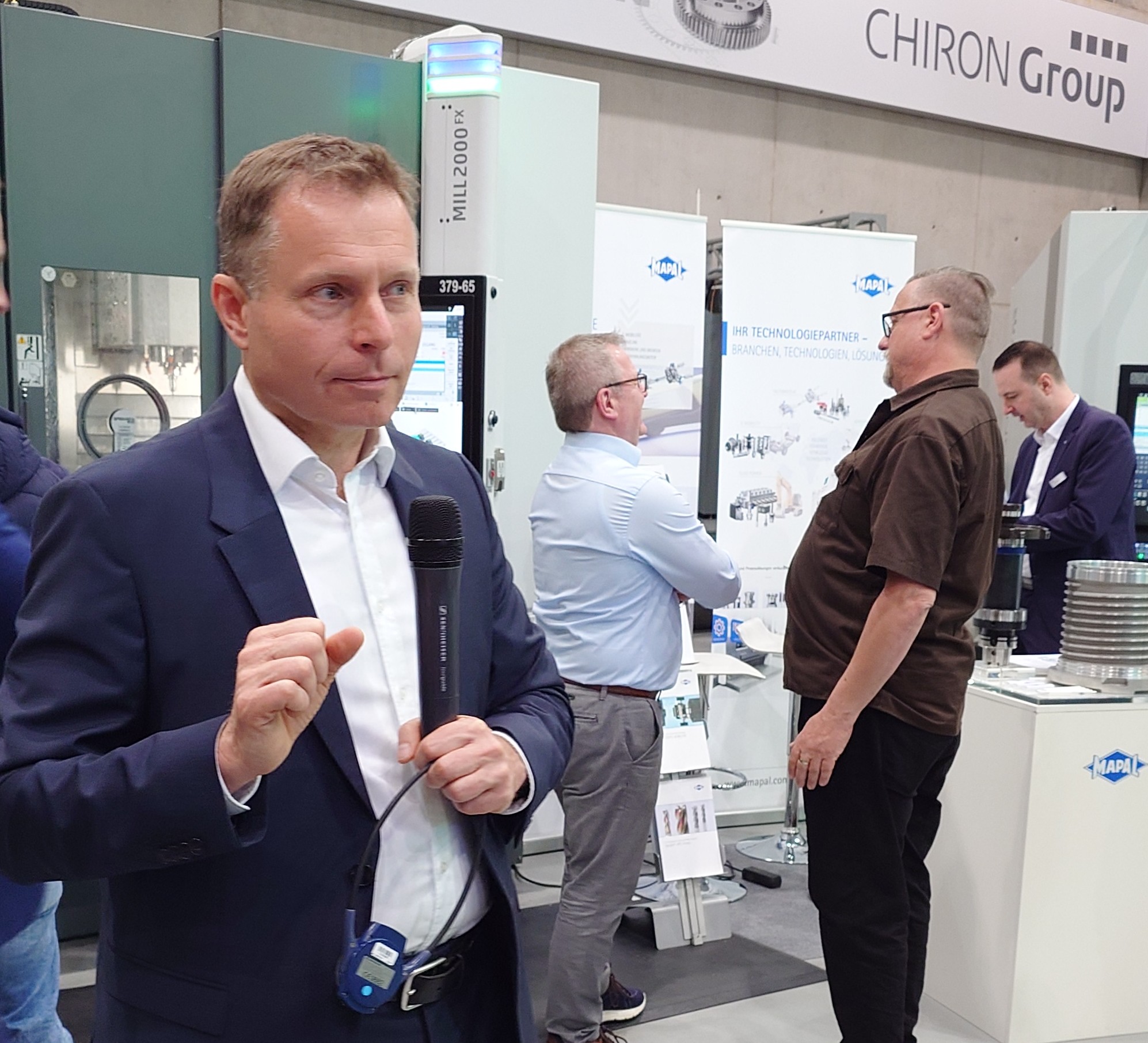
How important are in-house exhibitions and leading trade fairs today?
Eppler: In-house exhibitions are platforms for customer retention and for exchanging specific applications. Large trade fairs like EMO, on the other hand, are more focused on new customers. However, what has changed significantly are the framework conditions. Costs have risen enormously, in some cases to a level that is critically questionable. And at the same time, the impact has changed: In the past, sales were made at trade fairs, today contacts are established there, and the actual sales process takes place only afterwards.
Let's talk about technology: How is the machine portfolio of the Chiron Group developing?
Eppler: We remain within our defined working area and do not venture into larger dimensions. This is also related to our DNA: We know where our strengths lie and where our market is. However, we have expanded our offering downwards, for example with the Micro5. We see potential there, as many applications have previously been operated on machines that were too large. At the same time, space in production has become a crucial factor. In the past, productivity was increased through the number of spindles, that is, by using double or four-spindle machines. Today, however, we also see customers who consciously forgo this and instead want to use smaller, more flexible machines. And that is exactly where we come in.
This makes you a competitor to yourself...
Eppler: That's true, and we have discussed this internally as well. But we prefer to offer a suitable solution ourselves rather than having the customer buy it elsewhere. As a manufacturer, you also have to challenge yourself to some extent. Stagnation would be the greater risk in this market.
What role does automation play today for Chiron?
Eppler: An absolutely central role. Without automation, it is no longer possible today. We deliver practically every machine with the corresponding interface and a large part with an integrated solution. That has completely changed. In the past, automation was an add-on, today it is an integral part of the machine and the business model.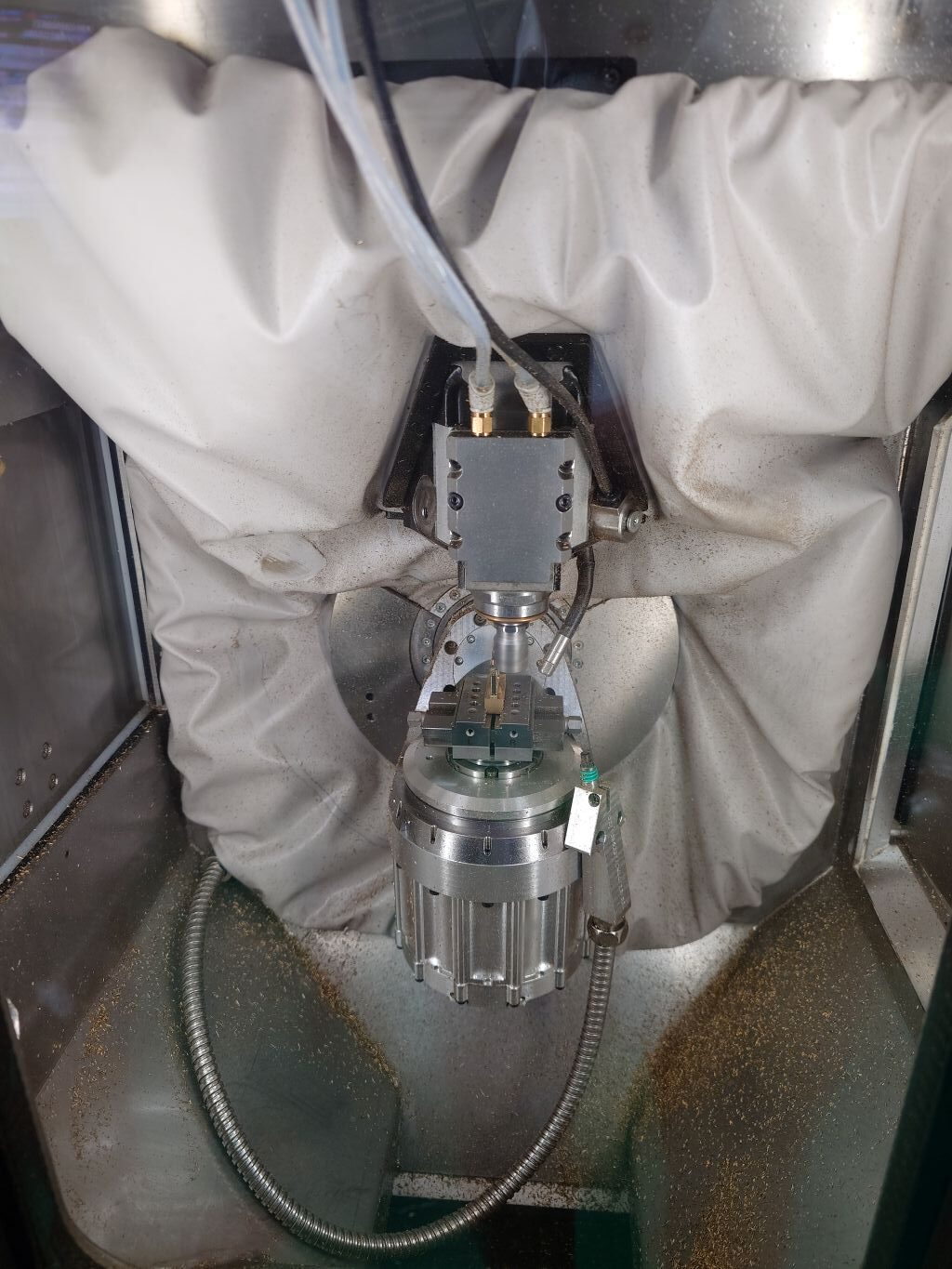
Many are currently talking about artificial intelligence as the key to autonomous manufacturing. Do you share this assessment?
Eppler: I see it much more soberly. AI can certainly be helpful, for example in analysis or knowledge management. However, the robustness of the processes is crucial. If a system stops after a short time during the night shift, the best AI is of no use to you. Therefore, our focus is on making processes stable and error-tolerant. However, we use AI systems internally to bundle and make knowledge accessible. A classic example: Our experts repeatedly answer the same questions in service. This is inefficient – and that is exactly what AI can address. AI makes existing experience more widely available but does not replace it.
How do your customers handle data usage and networking?
Eppler: It is still very varied. There are customers who are very open to it, and others who strictly reject it. This will not change either. For us, it is crucial: We do not need all the data. Often, subsets are sufficient to recognize patterns and further improve our machines. And that is exactly what we focus on.
How does the current economy affect your business?
Eppler: The decision-making processes have become significantly longer. At the same time, customers expect a quick implementation after a decision. This leads to standardized solutions gaining importance again. Classic turnkey projects with a lot of engineering are at least temporally more difficult to implement in such phases.
In difficult economic waters, the cost side usually comes into focus. How do you respond to the pressure to save at Chiron?
Eppler: That is correct. We examine our processes very closely – keyword cost engineering. Of course, we also rely on global sourcing strategies. But one must remain realistic: We cannot compete with the price levels in China. We have to find our own way to remain competitive, and we achieve that through efficiency, quality, and application expertise.
Which markets will become more important for Chiron in the future?
Eppler: We will expand our activities in areas such as defense, drone technology, or precision engineering. These are growth markets that fit well with our strengths. The automotive sector remains important, but we do not expect any significant growth impulses from there anymore.
What does this mean concretely for your strategy?
Eppler: In order to compensate for declines in individual segments, we want to be more broadly positioned. Keywords here are diversification and resilience. It is not necessary to have large market shares everywhere – it is sufficient to be solidly present in several fields.
What topics are at the top of your agenda for the next few years?
Eppler: We want to further standardize and simplify automation, consistently tap into cost-saving potentials, and at the same time ensure that we do not miss any significant technological developments. In the end, all these measures lead to stable, economical processes that can run as autonomously as possible.
Mr. Dr. Eppler, thank you very much for the conversation.
Contact: