
Since November, Oliver Freisinger has strengthened the management of SSB Maschinenbau GmbH. With his appointment, the company is sending a clear signal for customer orientation, service competence, and strategic development in custom machine construction. The 50-year-old mechanical engineer brings over three decades of experience from large industry. In the interview, he explains why he consciously switched sides, what sets SSB apart from the competition, and what role service, retrofit, and partnership will play in the future.
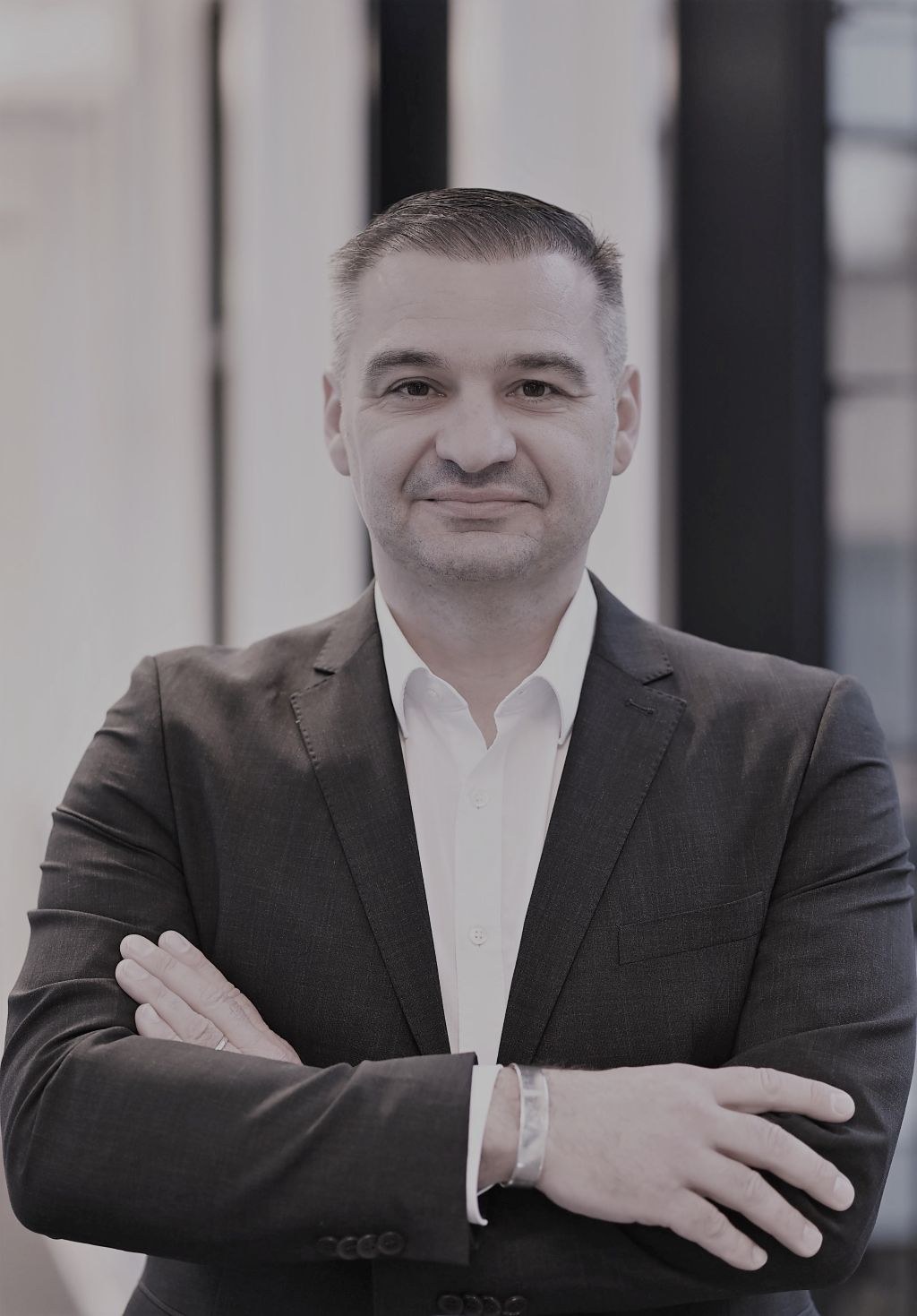
Mr. Freisinger, you look back on a long career at Linde AG and the current KION Group. What prompted you to switch to the management of SSB after more than three decades?
Oliver Freisinger: My professional journey began in 1991 with an apprenticeship as a conventional turner at Linde in Aschaffenburg. It was almost a family tradition at the time, as my parents also worked there. Over 34 years, I went through almost every station there - from control room manager to production planning to international large projects. At the same time, I further qualified myself alongside my job, including becoming a master craftsman, completing a bachelor's degree in mechanical engineering, and further training as a maintenance manager.
My time as Technology Manager and later as Senior Project Manager Fabrication Production Technologies at the KION Group was particularly formative. In this role, I was responsible for the machine equipment of seven plants worldwide - from the USA to China. At some point, I reached a point where I wanted to shape something new again. When the opportunity at SSB arose, the decision was very clear.
You had known SSB Maschinenbau as a customer for many years. What convinced you back then and ultimately prompted you to switch?
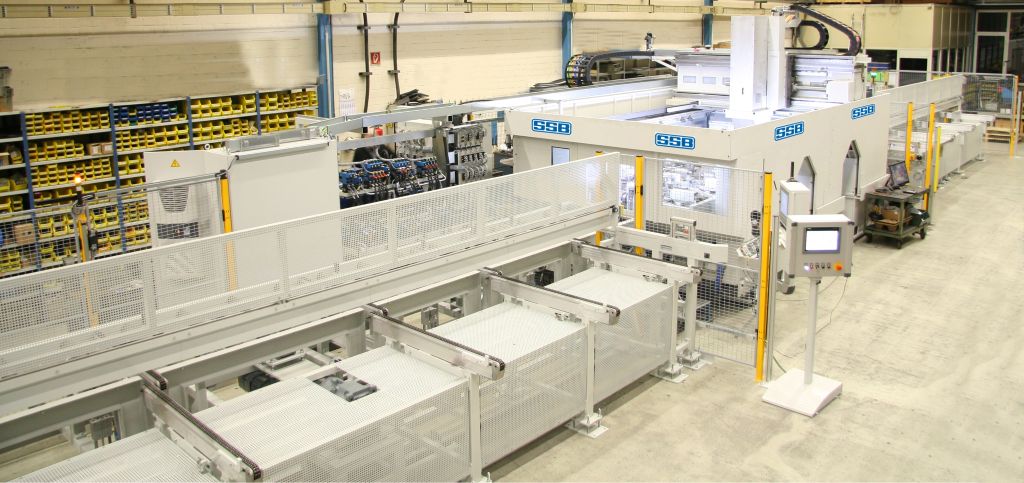
Oliver Freisinger: I got to know SSB very intensively from the customer perspective during my time at KION. For example, I aimed to establish a uniform manufacturing concept for several plants worldwide. Specifically, highly automated machining systems for profiles needed to be procured. My task was to achieve as autonomous an operation as possible: place a component at the front, then automatically go through all processing steps, and finally remove a finished component - ideally with just one employee for the entire line. This is exactly where SSB convinced me. The machine was consistently designed around the product, from clamping technology to handling to automatic loading and unloading.
We also inquired with other providers. However, as soon as requirements went beyond the catalog, there was often reluctance. SSB, on the other hand, took responsibility and realized a complete solution from a single source. When the opportunity arose to actively develop this potential as a managing director, it was clear to me: I want to do this. Today, I consciously see myself as the 'advocate of the customer' within the management.
Did you find the role change from customer to managing director difficult?
Oliver Freisinger: Maybe a little. I actually still have to get used to not being a customer anymore. I had been on-site at SSB very frequently for years, so I was well-known here, and conversely, everyone knew what they were getting into with me. But that is exactly an advantage. The collaboration works excellently, I am very happy here and see enormous development potential.
How does SSB differ from traditional series manufacturers in mechanical engineering from your perspective?
Oliver Freisinger: The essential difference lies in the approach. Series manufacturers are optimized for identical parts and standardized processes. Individual requests are often seen as a disturbance because they increase effort and risk. SSB takes a different path. We want and can realize customer-specific solutions. Our machines are custom-made for the respective product. While our systems are 'one-offs', the components produced on them are not. Typically, the systems manufacture series products with high variant diversity. This is where our strength lies.
To represent this individuality economically, we rely on standard components where it makes sense. This improves spare parts availability, shortens delivery times, and increases process reliability. This creates a balanced connection between individuality and economy.
A central part of your strategy is the model 'Service to Customer'. What do you understand by this?
Oliver Freisinger: 'Service to Customer' means for me to build an organization that proactively approaches the customer and accompanies their machines throughout the entire lifecycle. Our goal is to act as an extended part of the production. We do not want to act only as a service provider but to be a partner for our customers. Especially in custom machine construction, this brings great advantages. Each system is different, and accordingly, maintenance, spare parts supply, and service are complex. The customer should be able to say: I have a partner in SSB who knows my machine, thinks along, and takes responsibility.
What role does Global Spare Part Management play in this?
Oliver Freisinger: A very central one. Many spare parts, especially spindles, are expensive and sensitive. They need to be stored properly, sometimes under defined temperature conditions and with regular movement. This incurs effort and ties up capital. We offer our customers to store these spare parts centrally at SSB. Especially for companies with multiple plants and identical or similar machines, significant synergy effects arise. Instead of holding several spare parts at different locations, often a central stock is sufficient. In case of need, we deliver the part by courier within a few hours to the respective plant.
Another pillar of SSB is retrofit solutions. What significance does this topic have for you personally?
Oliver Freisinger: Retrofit is a topic where my customer perspective helps me enormously. I know very well what a customer means when they say: 'I want a retrofit.' From the customer's perspective, this usually means: a turnkey overhaul, state-of-the-art technology, more sustainability, a modern appearance, and ideally lower investment costs compared to a new machine. On the contractor side, retrofit is often viewed purely technically: new hydraulics, new electrics, perhaps a modernized control system. This is important but too short-sighted. The customer does not only buy functionality with retrofit but also appearance, value retention, and future security.
A retrofit is a significant investment. When a managing director walks through production and asks what has actually been done, the answer should not be: 'Looks like before.' Appearance, sustainability, and technical modernization go hand in hand. At exactly this point, I can support very well with my customer perspective and help avoid sender-receiver misunderstandings.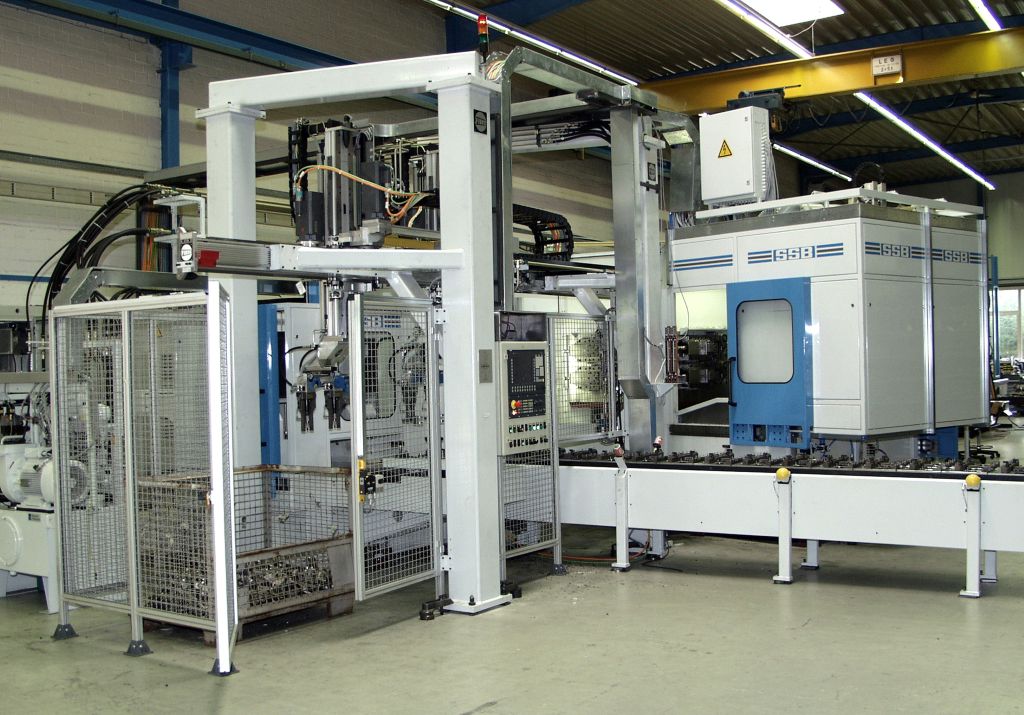
How do you share management responsibilities with Holger Klatte?
Oliver Freisinger: We complement each other very well. Holger Klatte is responsible for sales, design, and development. He is deeply rooted in technology and works extremely constructively and solution-oriented. Due to his solid technical understanding, he can quickly categorize and assess customer requirements and translate them into robust concepts together with the SSB team. I focus on the operational area as well as the strategic further development of the company structures. The goal is to transfer proven standards from large industry to medium-sized businesses in such a way that quality, efficiency, and flexibility are permanently secured.
What technological goals do you pursue in the coming years?
Oliver Freisinger: In the short term, we are setting technological benchmarks with current projects and realizing solutions beyond classical catalog standards. In the medium term, a stronger modularization of our special machines is planned to further reduce manufacturing costs despite the highest individuality. Our claim remains clear: 'Made in Germany', technologically at the limit of what is feasible and consistently oriented towards customer needs.
Contact: