
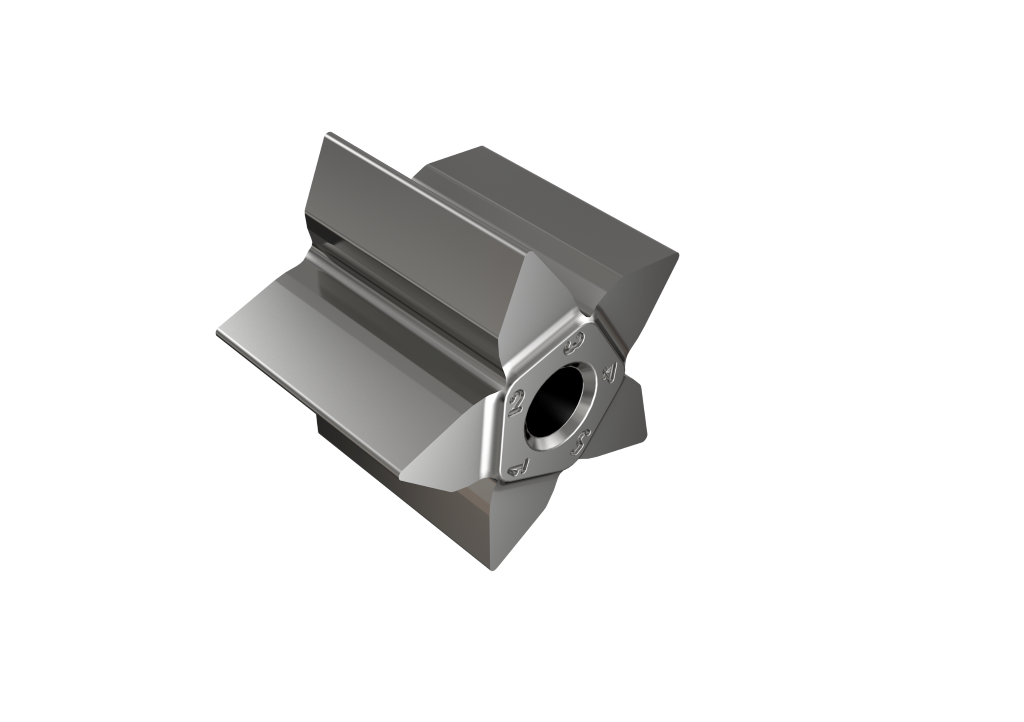
Spanformers are chip formation elements on the tool. They ensure that the resulting chip is specifically shaped, broken, or diverted. The ISCAR portfolio includes more than 20 different variants that are pressed into the cutting edge – at least in the standard. However, special tools for turning and drilling do not yield significant results with this. Only laser-cut spanformers can help here and open up unprecedented possibilities.
"The process has been around for a while, but ten years ago it simply wasn't profitable," recalls Frederik Schmalbach, Product Manager Non-Rotating Tools at ISCAR. "A laser-cut plate was extremely expensive back then. Today, thanks to modern machines and automated processes, we can offer them at acceptable prices – especially because users see the immediate benefits."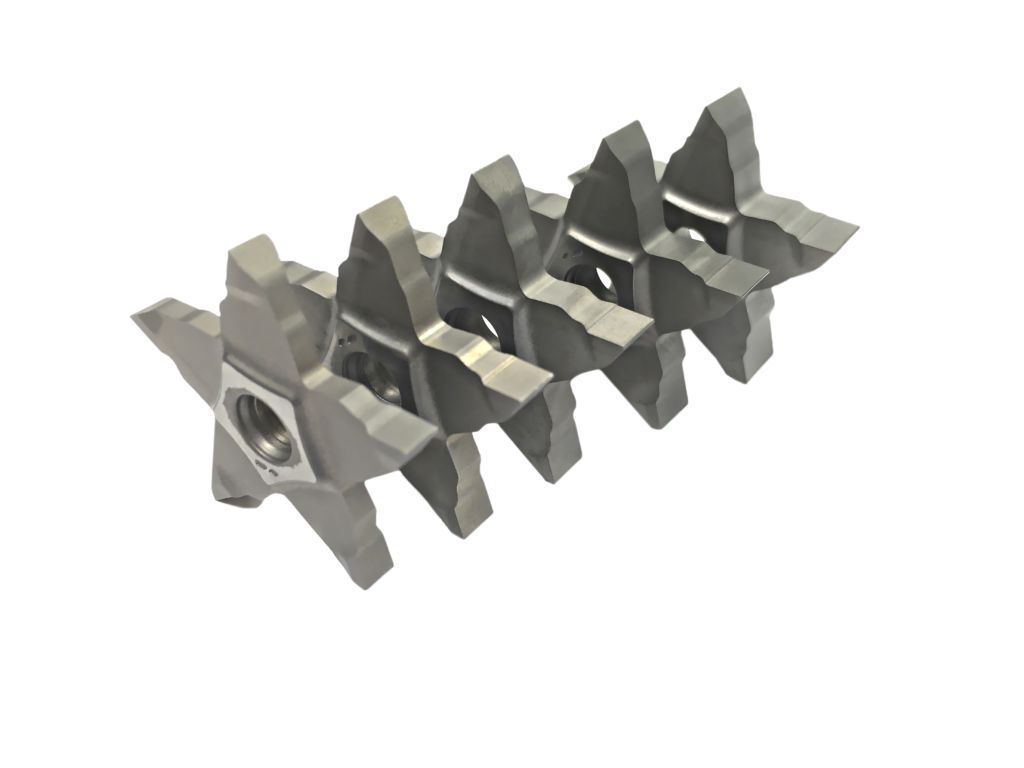
Where conventional methods like molding or sintering of powdered hard metal reach their limits for spanformers, laser cutting opens up new possibilities. Especially for special constructions in turning and profile turning, this technology offers significant advantages: It allows for precise design of chip guiding steps without changing the cutting height or distorting contours. This ensures reliable chip control, especially in complex form turning and in difficult-to-machine materials.
Flexibility in shape
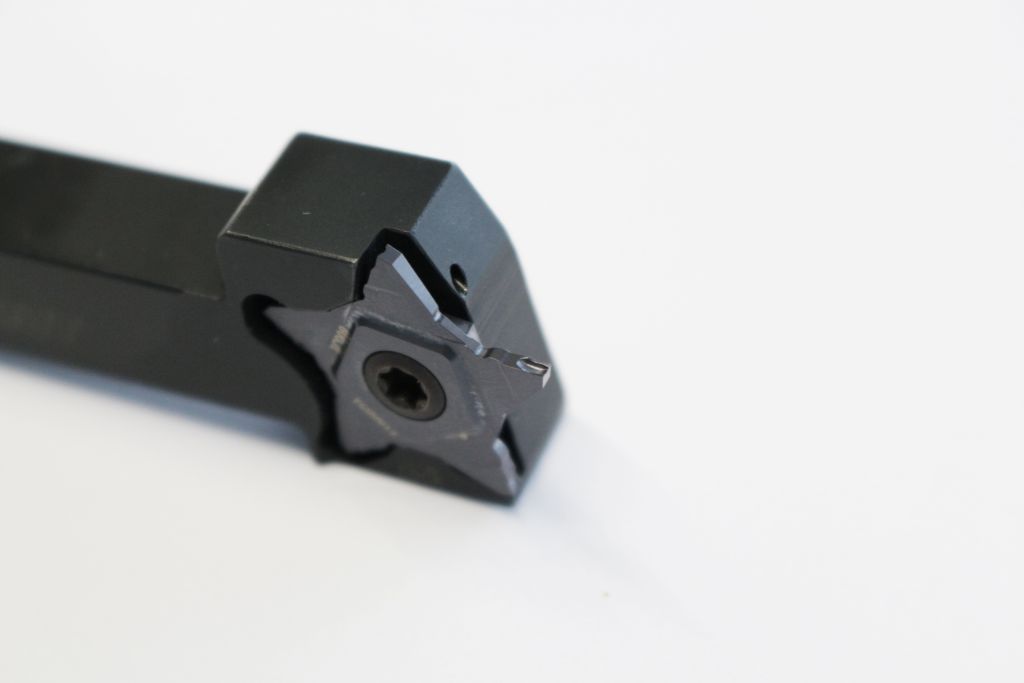
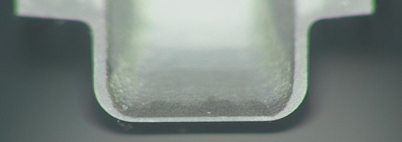
The process is practical, as shown by the growing demand. Inquiries for laser-cut spanformers have become commonplace – whether because a standard spanformer is insufficient or because customers are specifically looking for solutions for chip control with special geometries. Applications range from medical technology to machining large workpieces with special cutting widths. In some cases, the spanformer is even only partially laser-cut to show effect exactly where it is needed.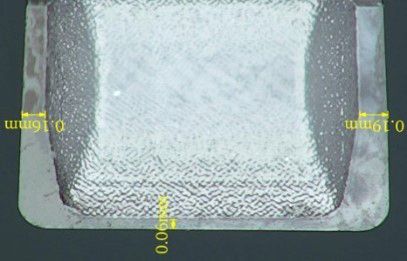
Technically, laser cutting offers great flexibility. Spanformers from the standard portfolio can be replicated or modified almost arbitrarily in the special area. The key is to adapt to the specific requirements: workpiece material, feed rate, and machine parameters determine which geometry makes sense. For example, the width of a protective chamfer can be precisely matched to the feed rate used by the customer.
If this is too small, the spanformer does not engage; with higher feed rates, the chamfer can be designed wider, which increases tool life.
One challenge lies in the surface structure of the laser-cut chip pockets. "Under the microscope, it looks like a lunar landscape," explains Frederik Schmalbach. "In the rear area of the spanformer, this is unproblematic, but at the main cutting edge, it leads to tool wear – hence the ground protective chamfer." ISCAR is working with new laser sources to make this step unnecessary in the future.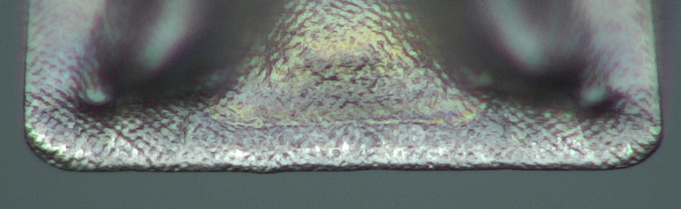
Economic PENTA system as a basis
Basically, all turning tools can be equipped with laser-cut spanformers, but usually serve
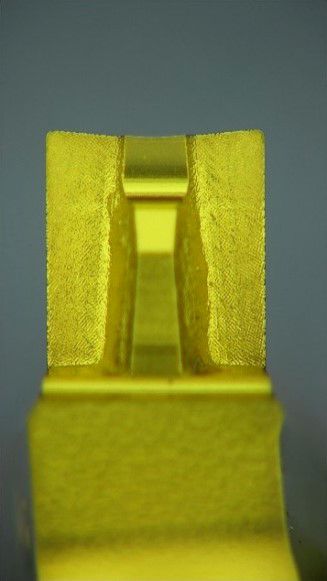
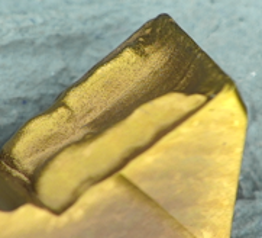
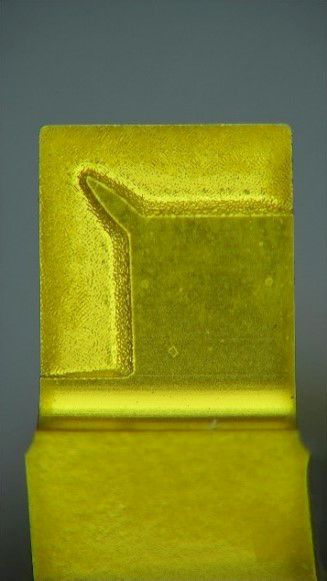
Blanks from ISCAR's economical, five-edged PENTACUT precision turning system as a basis. The cutting insert blanks are available in various variants and can be used for external, profile, and internal turning, as well as turning and backward turning. The cutting depth ranges from four millimeters for PENTA 17 and PENTA 27 to six millimeters for PENTA 24 and up to ten millimeters for PENTA 34. "Which blank is used depends on the task to be solved," says the product manager. "For all, however, it applies: The user achieves a very good price per cutting edge due to the five edges on the star-shaped insert."
The demand for laser-cut spanformers is continuously increasing. Whether in medical technology, with wide form turning, or in projects where chips are only to be broken in specific areas – the process proves itself. "For special tools, laser cutting is the only way to produce suitable spanformers," summarizes Frederik Schmalbach. "High process reliability, very good surface quality, and longer tool life make the higher costs compared to the standard bearable."
Contact: