
The start of the year 2025 was not necessarily marked by euphoria. The global political and economic events were too intense, causing both German companies and households to look into a significant uncertainty for the new year. The dissatisfaction with the policies of their own government did not really encourage a positive outlook and development.
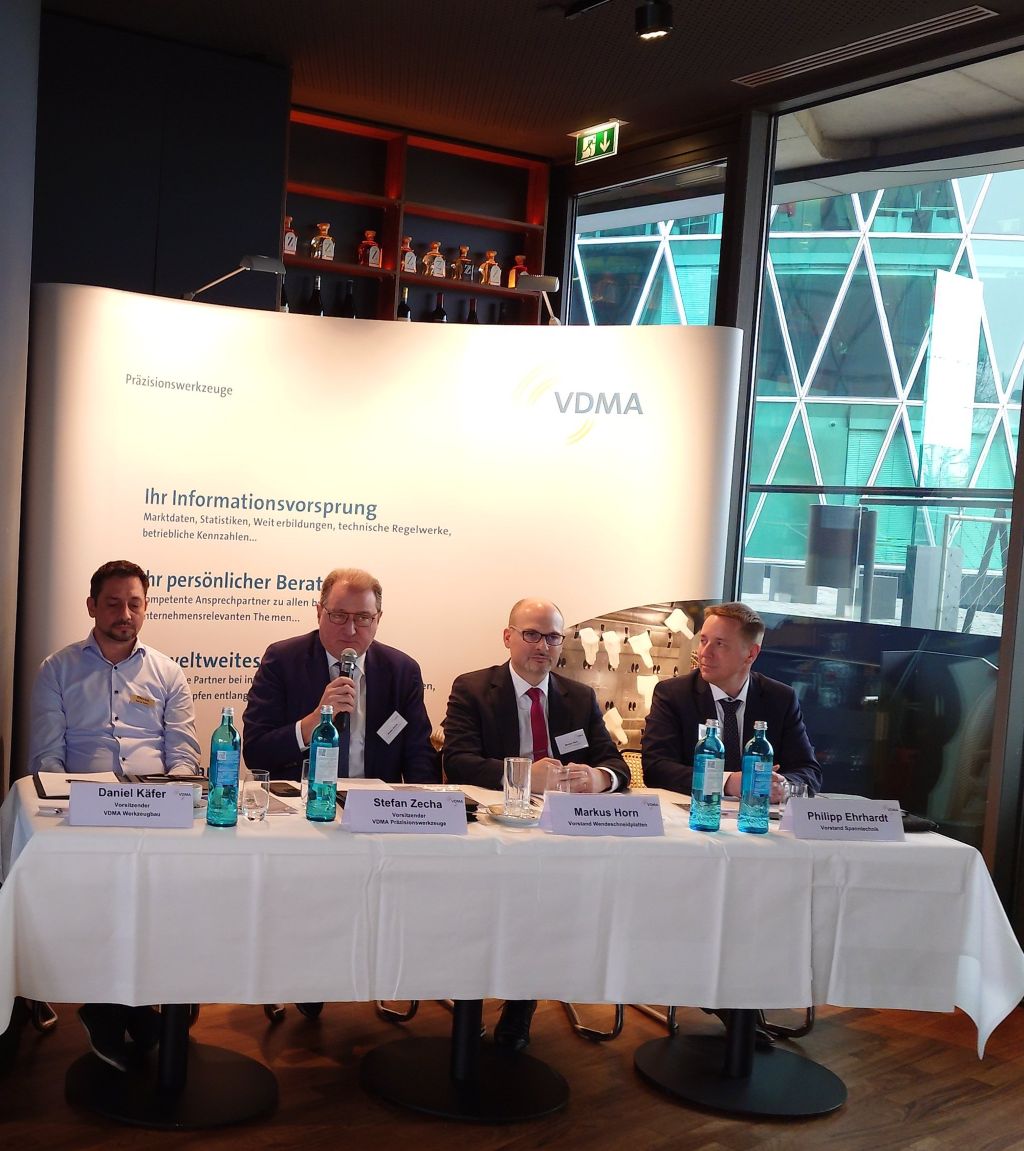
The traditionally held annual press conferences of the industry associations at the beginning of the year did not evoke a positive expectation in advance. This was also confirmed at the events of the Precision Tools Association in the VDMA and the VDW (Association of German Machine Tool Manufacturers) during their annual press conferences. Both Stefan Zecha for the manufacturers of precision tools and Franz-Xaver Bernhard for the machine tool manufacturers could not announce any figures that encouraged hope for improvement in 2025.
The core problems mentioned by the industry associations were almost identical. Excessive burdens and costs for companies or a high degree of bureaucracy were consistently the first mentioned.
The desire for quick bureaucracy reduction, open markets, new free trade agreements, the elimination of trade barriers, affordable energy, an investment-friendly tax system with lower corporate taxes and better depreciation conditions was clear and uniform.
A slight glimmer of hope was the upcoming change in government, which shortly after its introduction suggested that the governing parties were not compatible regarding the necessary measures for an economic upturn.
A flourishing economy brings prosperity
Contrary to the claim of a leading and now former young politician that work makes you sick and a 20-hour workweek must be the goal, politics has now recognized what entrepreneurship in Germany has long seen. We need more labor and skilled workers to remain or become internationally competitive. However, cost savings through process optimizations by companies were offset by political regulations and additional burdens. Labor, progress, and innovations are the basis for success. And when companies are successful, the economy benefits as well.
Labor and skilled worker shortages hinder progress
To attract qualified workers, companies today invest a lot of money. On one hand, motivating experienced professionals to stay in the workforce, and on the other hand, convincing new young talents is a difficult undertaking. An attractive working environment and consideration of individual wishes have changed the situation in the skilled labor market. 'In the past, the applicant sweated during the job interview; today, the company is sweating,' described Hans Jürgen Büchner, the managing director of ISCAR Germany. H.J. Büchner retired at the beginning of the new year and handed over management to Erich Timons.
Leadership, motivation, mentality, and role models are in demand
However, when looking at the behavior of supposed role models, young people should avoid following political talk shows or Bundestag debates. Instead of gaining political education, they often experience little in terms of advancement or further education there. Screaming speakers who want to attract attention in the meeting room with mocking laughter and interjections, gesticulating wildly, are not role models for respectful and fair treatment of colleagues and fellow human beings. For example, when paid representatives prefer to leave the plenary chamber rather than respect the rules and remove their hats, they do not truly embody the qualities of a role model for young workers. This could also be seen as a deliberate refusal to work. In the private sector, this would have consequences.
Market changes, investments
Acquisitions and mergers are a normal occurrence every year. Notable acquisitions in the industry include the purchase of the HELLER Group from Nürtingen by the Korean machine tool manufacturer DN Solutions, the acquisition of GF Machining Solutions by the UNITED GRINDING Group, or most recently, the purchase of the Laupheim-based machine tool manufacturer LICON by Modig Machine Tool based in Kalmar, Sweden.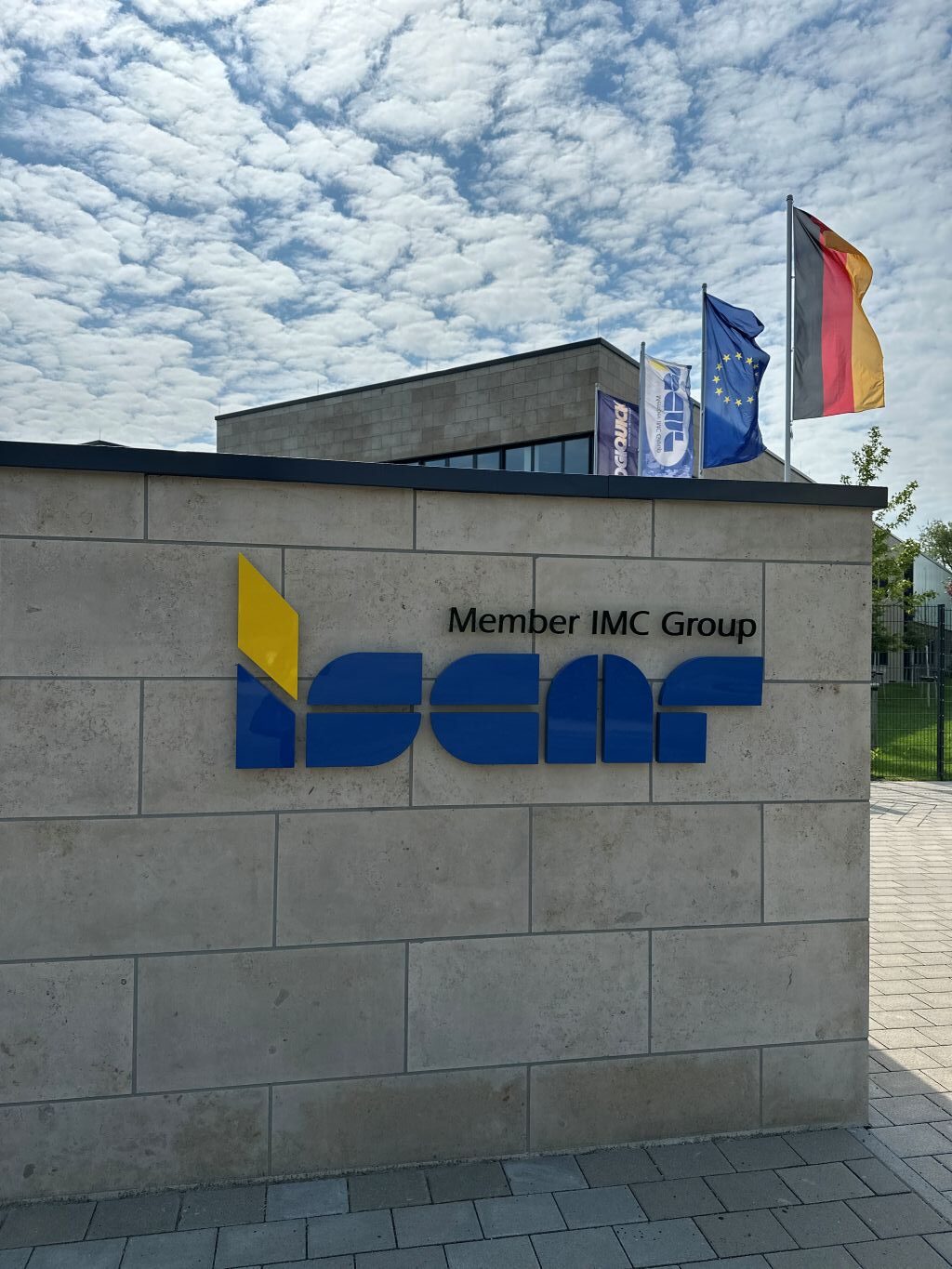
Positive activities were also reported by German companies. Contrary to negative forecasts and insolvency reports, many companies in the metal industry also invested in 2025. Whether process optimization with the latest technology and automation, structural expansions, or the establishment or expansion of international representations. With an impressive new building in Ettlingen, ISCAR Germany made a clear statement about the location in Germany. The Hermle AG from Gosheim, a manufacturer of machining centers and automation solutions, is also investing heavily in expansions at its location. Many other companies are also positioning themselves for the future with investments.
In-house and trade fairs
In-house exhibitions are successful and very popular. On one hand for the organizer, but also for co-exhibitors. In 2025, the in-house exhibitions at INDEX-Werke or at Hermle AG, as well as the technology days of the precision tool manufacturer Paul Horn GmbH in Tübingen, were among the traditional industry highlights that attracted co-exhibitors and visitors to interesting events.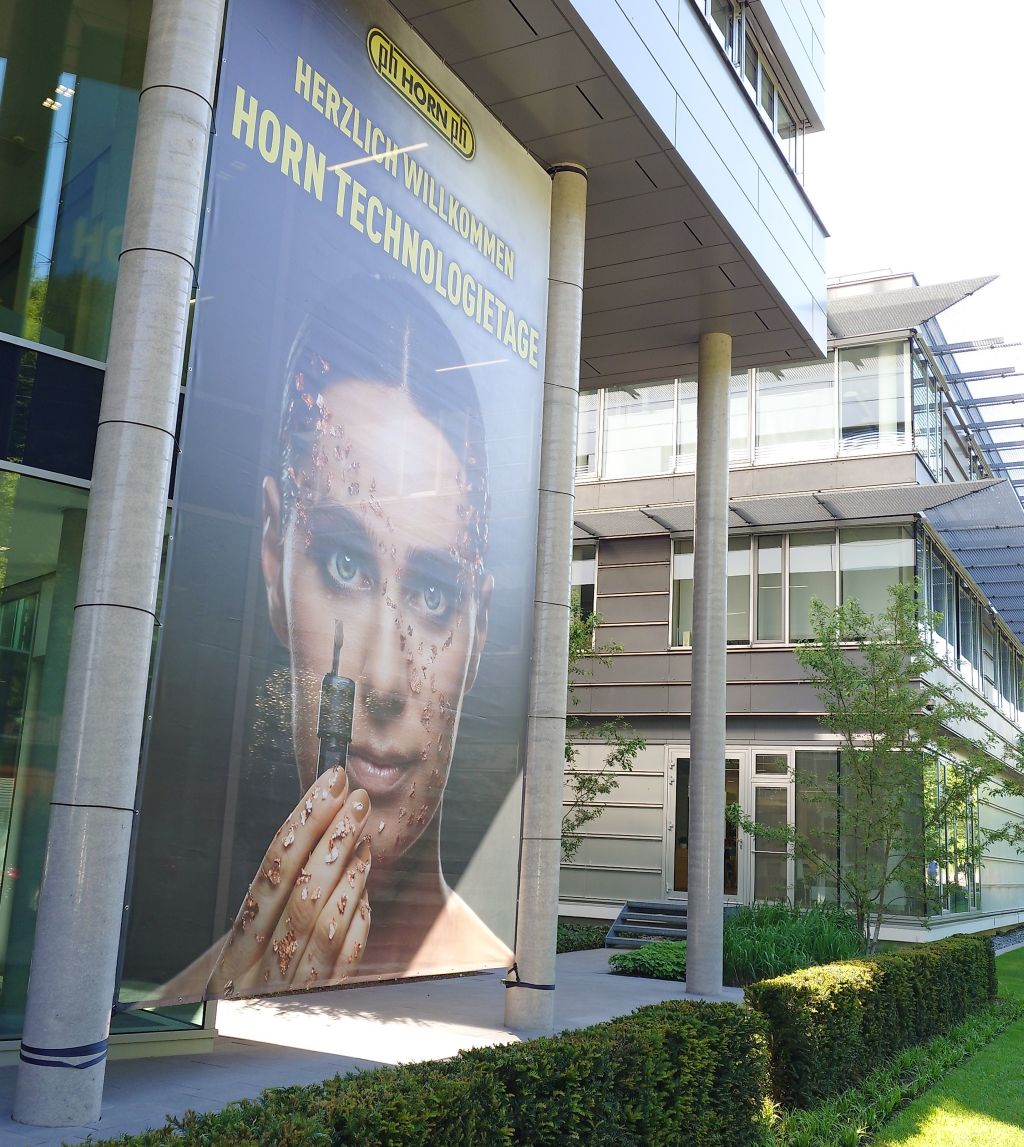
After the AMB year 2024, the EMO in Hannover was scheduled for 2025. Due to uncertain times, there was a question in the run-up to the fair about whether the EMO would deliver what it promises. Many international visitors and a wide range of demanding inquiries faced high costs for exhibitors and uncertainty. Although one or two major players were missing from the fair, many German and international companies were present, showcasing innovative solutions at elaborate exhibition stands. Contrary to the muted expectations, around 80,000 visitors (source: organizer) found their way to the 50th edition of the EMO, which will continue to be held in Milan and Hannover.
In contrast to the EMO, the Turning and Milling Days (DST) Southwest took place in April in Villingen-Schwenningen. The small but fine fair welcomed 6,000 machinists.
In May, specialists from the tool, model, and mold making industries met at the Moulding Expo 2025.
No festive mood but a reason to celebrate
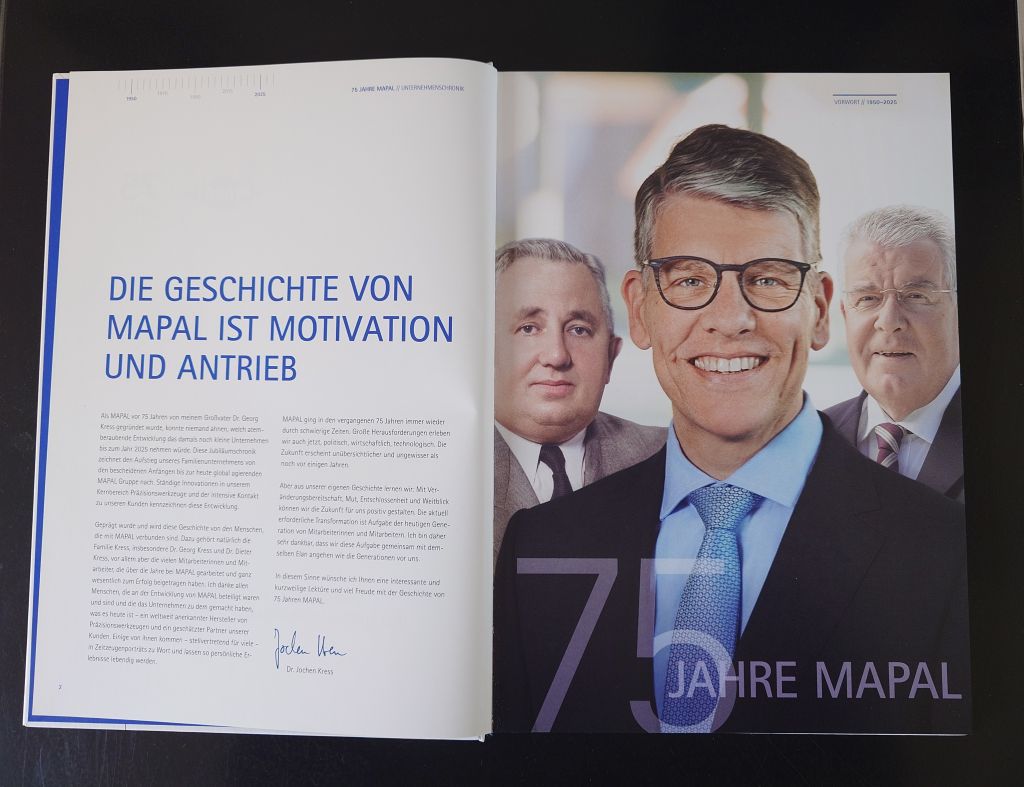
In addition to the EMO, which celebrated its 50th anniversary, a traditional Swabian company also had something to celebrate. We are talking about the MAPAL Group from Aalen. The name of the family-owned company MAPAL stands for "Machine and Precision Tool Factory Aalen". With Swabian craftsmanship, MAPAL has earned a global reputation when it comes to demanding applications and machining solutions. The entire MAPAL story is documented in a very interesting anniversary book.
Congratulations and respect to MAPAL, which, even in the third generation of founders, with Dr. Jochen Kress at the helm, presents itself as an innovative, open-minded, and down-to-earth company.
From the rearview mirror to the high beam
The tunnel is still there, and the high beams remain on. Even though the freshly published figures from VDMA and VDW for 2025 do not provide a reason for euphoria in the industry, the signs are again pointing towards progress. Signals from politics are present, but unfortunately, not yet in full throttle mode.
With NORTEC in Hamburg and GrindingHub in Stuttgart, the first trade fairs are at the door. In May, European precision tool manufacturers will meet at the European Cutting Tools Conference (ECTC) in Graz.
The trade fair highlight of 2026 is the AMB in Stuttgart in September. Whether the signs point to an upswing will be evident there at the latest.
Hope and confidence are present. There is also no shortage of innovation and drive among German and European industrial companies. Now it is up to politics to reduce bureaucratic and legal hurdles and to quickly pave the way out of the tunnel for companies and secure prosperity for society.
Frank Dietsche
Editor-in-Chief Dieonlinemagazine.de