
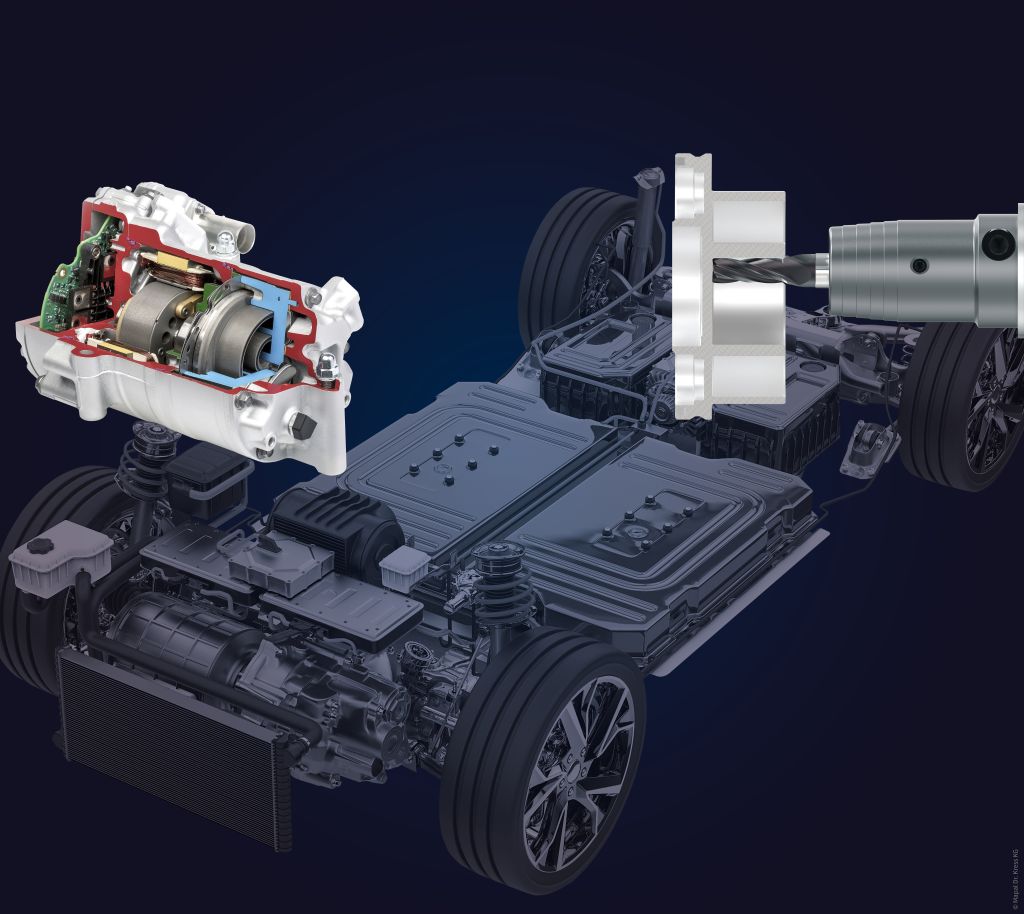
Electric drives are increasingly replacing conventional combustion engines. As a result, many engine components are no longer needed. They are being replaced by completely new components made from materials that are often challenging to machine – with corresponding new requirements for cutting tools. Tool manufacturers can confidently meet these challenges thanks to high-performance coatings from CemeCon.
The shift away from conventional drives is becoming increasingly evident, especially in the automotive industry. However, electrification is already penetrating many more areas: Two-wheelers, construction machinery, motorized tools, and material handling equipment such as telehandlers and forklifts are gradually being equipped with electric drives. This is a profound structural change that undoubtedly poses challenges for the machining industry. Because wherever the combustion engine is replaced by an electric drive, different components are installed. Altered shapes and modern materials fundamentally create new requirements for processes and tools.
New materials – new challenges – new opportunities
Until now, a large part of machining tasks involved aluminum, cast iron, and steel components for engine blocks, cylinder heads, or crankshafts of combustion engines. Today, typical components of electric drive systems – motor housings, battery frames, or components for thermal management – increasingly consist of aluminum and magnesium alloys. These materials are challenging to process – often additionally thin-walled and therefore very sensitive to vibrations. The mixed processing of different material combinations, such as aluminum motor housings with pressed-in steel bushings, is particularly complex.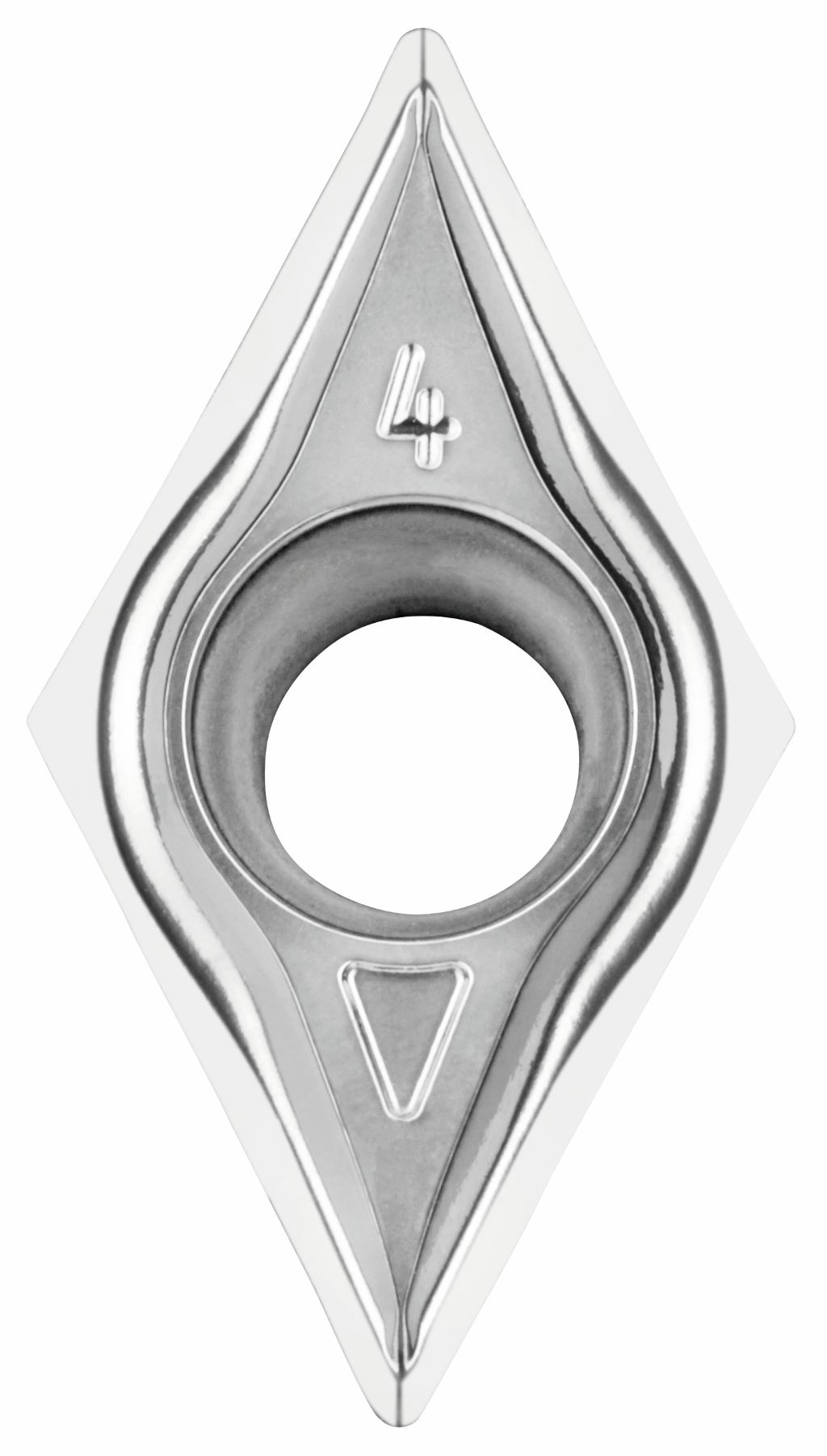
For tool manufacturers, this new material diversity means: Many previous solutions will soon be obsolete. However, this does not have to jeopardize their economic success – it can be solidified and even expanded with coordinated, specialized precision tools. 'A good way to achieve this is with customized coating technologies,' believes Inka Harrand. The experienced product manager for cutting inserts at CemeCon explains the goal-oriented approach: 'To ensure maximum performance, we first identify the right coating material. Then we precisely tailor the coating to the tool, component geometry, material, and machining situation. With our advanced processes, we significantly contribute to the highest precision and flawless surface qualities in every specific application.'
Utilizing future coatings today
For the special requirements that modern lightweight materials – aluminum and magnesium alloys – place on cutting tools during processing, CemeCon offers the precisely fitting answer. The HiPIMS coating AluCon for shank tools and indexable inserts, for example, has already proven itself in an extraordinarily wide range of applications. Its only 2 µm thin, smooth coating effectively prevents built-up edges from forming. At the same time, AluCon enables outstandingly long tool life and high cutting speeds in aluminum processing due to its high hardness and nanocrystalline structure – for example, for battery housings.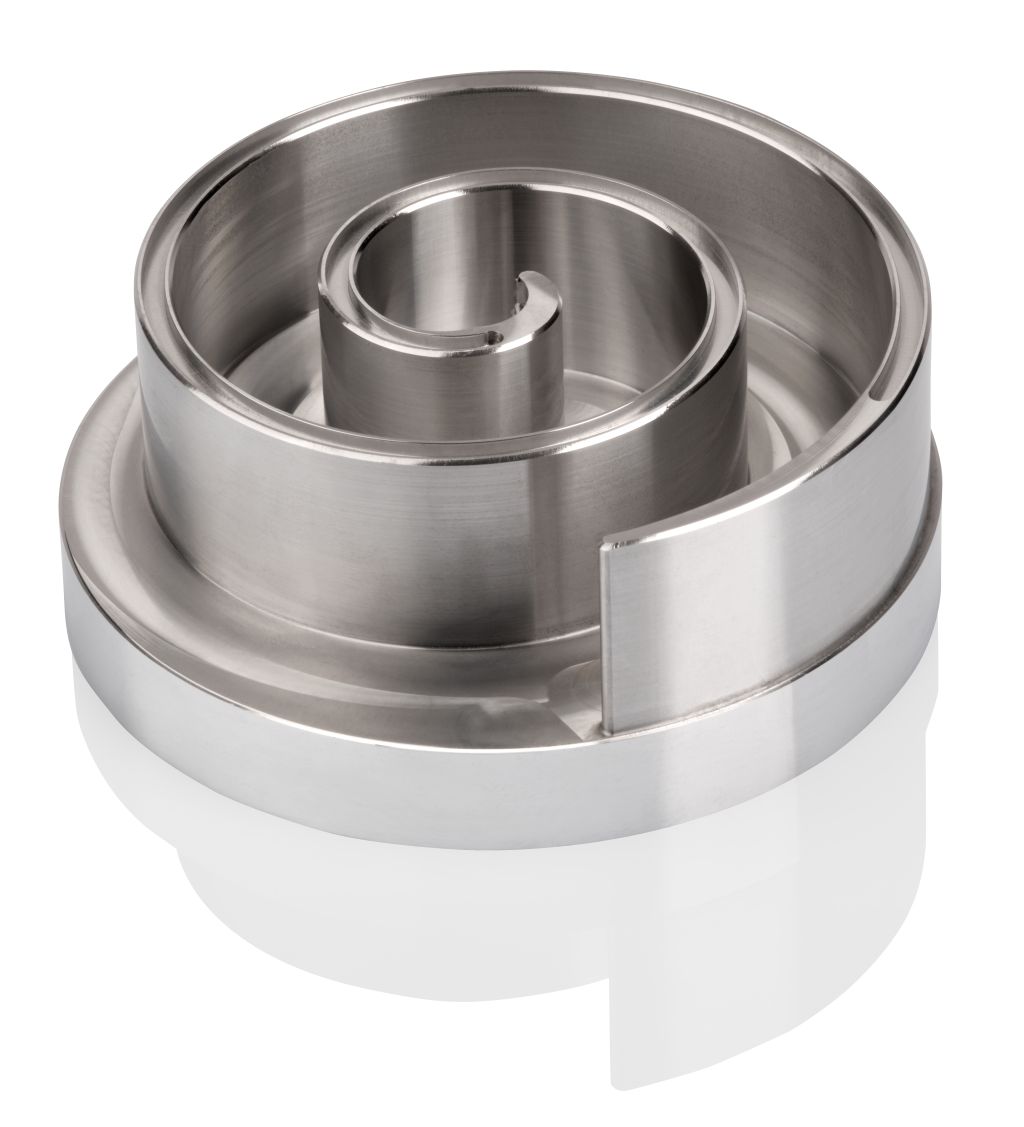
Another important component to be machined is the scroll compressor. It is a central element of temperature management in electric vehicles and has mostly been made from heavy iron materials until now. With the switch to aluminum, the compressor is a current prime example of the material change driven by lightweight construction demands. Here, tools with adapted CemeCon diamond coatings from the CCDia series are an ideal solution. They enable precise, process-safe, highly efficient, and economical machining of aluminum alloys with increased silicon content, from which the complex-shaped components are now manufactured.
Other future-proof coating solutions are already in proven use: For the demanding mixed processing of aluminum-steel components, CemeCon offers InoxaCon and InoxaConPlus tool coatings with high wear resistance. The characteristically red-gold HiPIMS coating material is predestined for high-performance applications in this area due to its balanced ratio of hardness and toughness and its very high temperature resistance.
Active partnership from the start
'Those who rely on the right partner can establish themselves long-term in the dynamic competition with their tool offerings,' summarizes Manfred Weigand, CemeCon product manager for round tools. 'Our decades of material expertise, the close collaboration with users, and the capabilities of our own coating center make us an active, strategic 'ally' in tool development.' This is explicitly about an active partnership: Through early consulting, engineering, and process support already in the development phase, the optimal coating becomes an integral part of the overall concept 'Precision tool of the future.'
Contact: