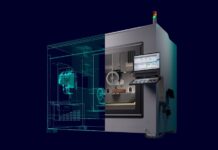

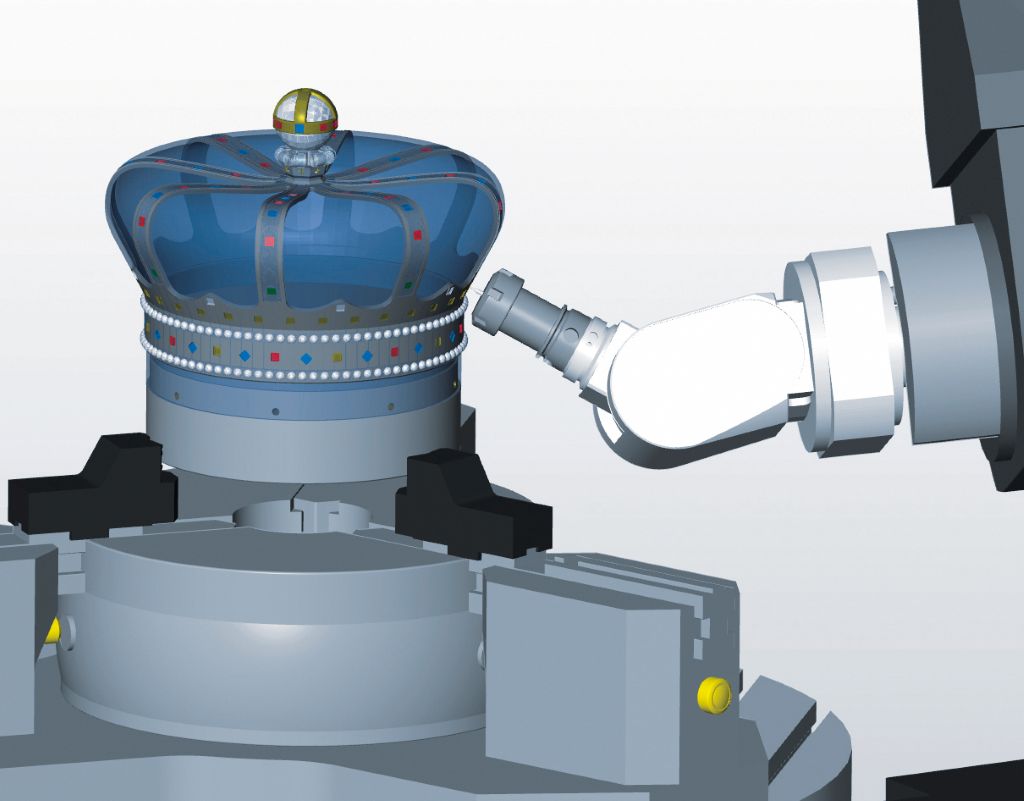
With version 2026, it will be possible to seamlessly integrate angle heads into the hyperMILL CAM programming. The angle head is defined as part of the NC tool and configured via the hyperMILL TOOL Builder. The virtual machine continuously considers angle heads during NC code generation, tool path optimization, simulation, and collision checking. Critical phases such as the approach and retraction of the angle head are fully and safely simulated. The hyperMILL VIRTUAL Machining Optimizer automatically determines optimal positioning solutions for angle head machining. Approaching via a curve additionally allows for safe access to hard-to-reach areas of the component. This function is initially available for controls from Siemens (SINUMERIK 840D) and Heidenhain.
2D Halo Machining for perfect sealing surfaces
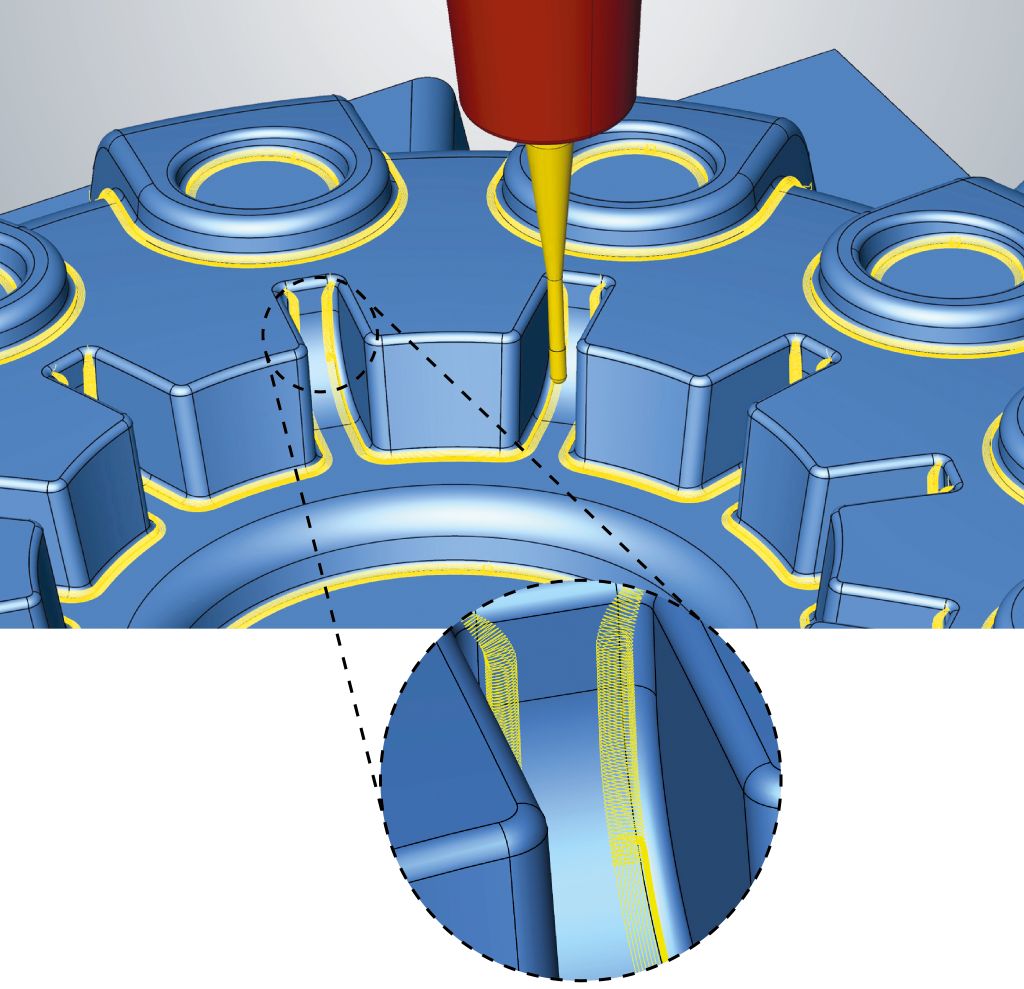
Another new tool option is supported both by machining strategies and in simulation. The 2D Halo Machining, also known as contour planing, allows for scratch-free surface finishes, which are required for sealing surfaces in battery manufacturing or the semiconductor industry, for example. The spindle axis operates as a following axis, so the impact chisel is continuously guided vertically along the contour.
Safe 3D and 5-axis residual material machining
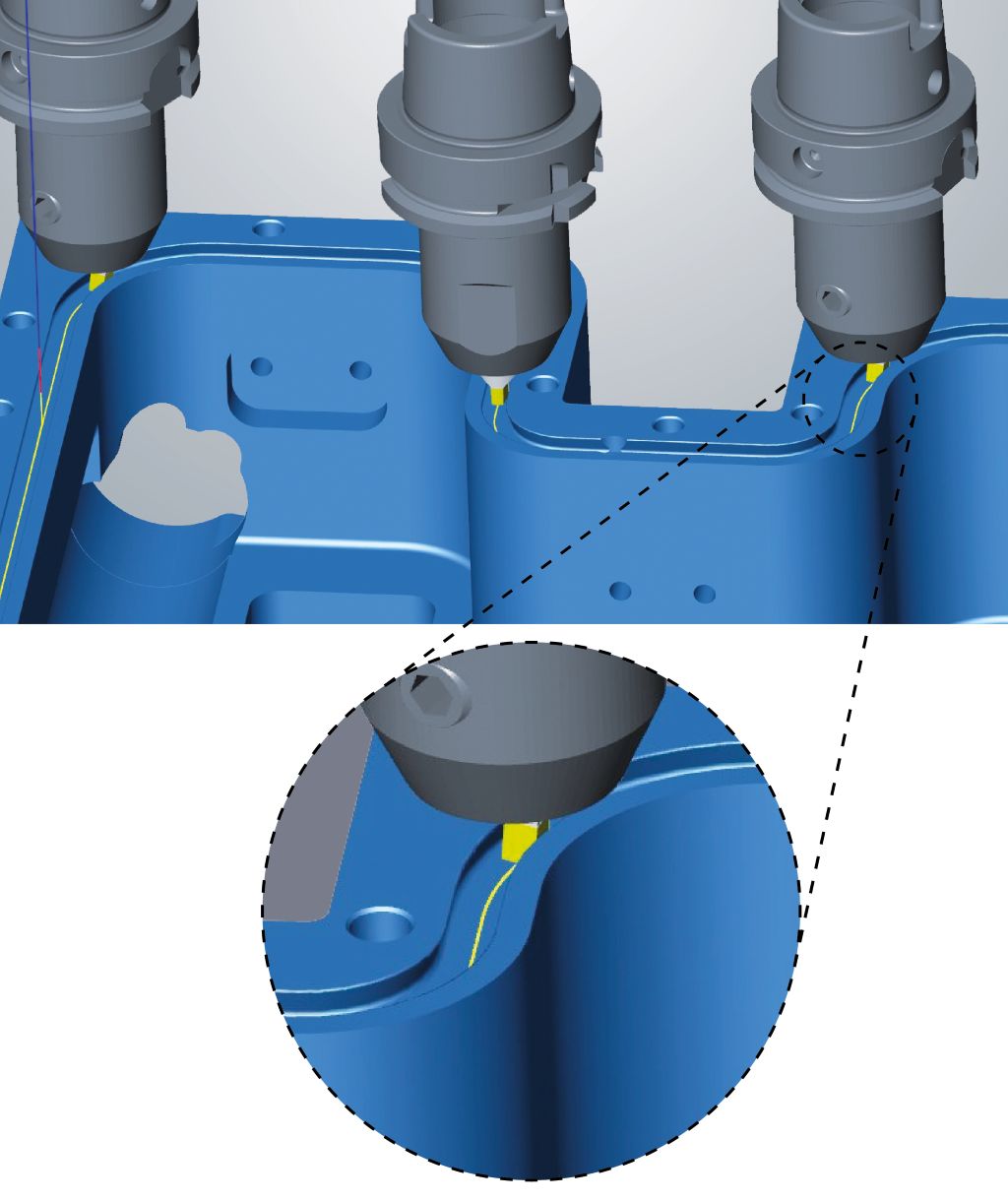
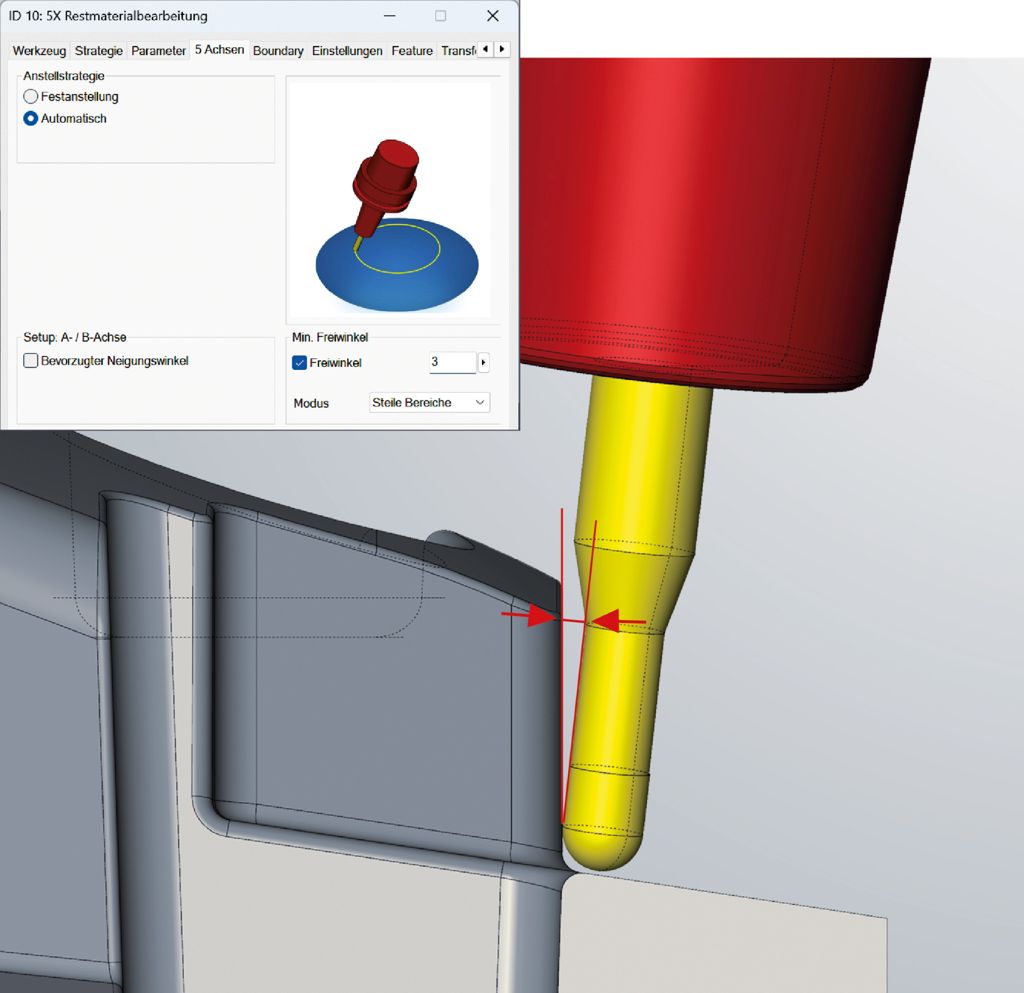
Residual material machining has been further automated in version 2026 of hyperMILL. The calculation algorithms of the three machining strategies 'Z-Level', 'Parallel', and 'Normal' have been redeveloped to make the machining of residual material areas even more reliable and efficient. Residual material areas are thus recognized much more precisely and machined more safely. Specifications for the feed are reliably considered, leading to more uniform tool paths. Additionally, the system automatically integrates a gentle overlap in steep and flat areas as well as at transitions and during entry and exit movements. This automation applies to both 3D and 5-axis machining.
In the latter, users can set a minimum distance between the tool shank and the component with the new option 'Minimal Clearance Angle', allowing machining with a defined clearance angle.
Turning with hyperMILL: reduced programming time and increased process reliability
With 'CAM Plan Turning', hyperMILL offers comprehensive programming support for turned and milled turned components. Often, only geometries without tolerances, fits, or manufacturing information are available during turning programming. These had to be manually supplemented until now, a time-consuming and error-prone process. The 'CAM Plan Turning' allows for quickly and consistently enriching turning contours with all relevant manufacturing information. The advantage: significantly reduced programming time and increased process reliability for turned and milled turned components. The hyperMILL TURNING Solutions have also been expanded with new complex turret types for better collision checking.
Optimized control of erosion paths
In the hyperMILL Electrode module, the control of erosion paths has been improved, for example, through more flexible use of feed and rapid movements. By optimizing the erosion paths, machining times can be shortened.
Contact: