
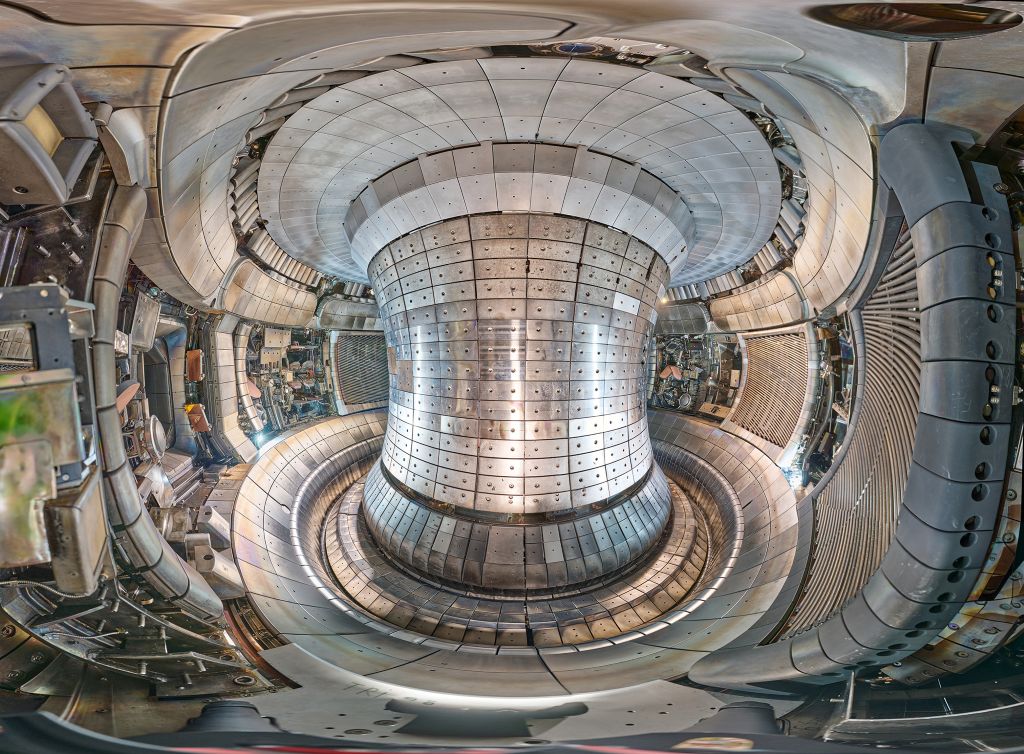
The project running until the end of 2028 aims to protect the inner walls of future fusion reactors – the so-called first wall – with tungsten coatings. Tungsten is the material of choice for plasma-exposed surfaces that must withstand loads of up to 10 megawatts per square meter due to its heat resistance and robustness. As a so-called refractory metal with a melting point above 3000 degrees Celsius, tungsten withstands even extreme thermal stresses. However, the material is rare: with only one millionth of the Earth's crust, it is considered a conflict mineral and is extremely difficult to process mechanically. Therefore, manufacturing entire components from tungsten is neither economical nor practical. The solution: a thin tungsten layer on a more manageable substrate material.
Anhydrous Electrolytes
The scientific challenge lies in the nature of the metal itself: classical galvanic processes used in the industry fail due to a physical barrier: tungsten has a very low hydrogen overvoltage. Therefore, no metal is deposited in aqueous electrolytes, only hydrogen is produced. The research consortium is thus venturing into uncharted scientific territory with anhydrous electrolytes based on ionic liquids and organic solvents. 'There is currently no process for the electrochemical deposition of pure tungsten worldwide – neither industrially nor in the laboratory,' emphasizes project leader Andreas Waibel from Fraunhofer IPA.
The three partners bring complementary expertise: The IPP defines the requirements for the layers and conducts application-oriented tests under fusion-relevant conditions. Fraunhofer IPA develops the entire coating process with the goal of later industrial scaling. IoLiTec contributes the know-how for formulating the special ionic liquids.
The project 'GalvanoFusion – Electrochemical Deposition of Tungsten Coatings for Fusion Reactors from Non-Aqueous Electrolytes' is funded by the Federal Ministry for Research, Technology and Space (BMFTR) as part of the funding program Fusion 2040 – Research on the Path to the Fusion Power Plant under the funding code 13F1034A with a duration from January 1, 2026, to December 31, 2028.
Contact: