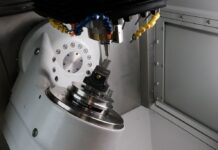

When the previous supplier exited, the customer had only one option: to find a partner who would not simply copy existing solutions but rethink the application. For EMCO Gears, a family-owned company with deep roots in precision, motorsport, and high technology, this was exactly the incentive. Together with the tool partner HORN USA, a modern manufacturing approach was developed for a demanding bevel gear set with unusual geometry. Design, tool design, five-axis machining, and measurement technology work seamlessly together – demonstrating how gearing can be manufactured efficiently, reproducibly, and future-proof today.
EMCO Gears is a family-owned manufacturer with two locations: technology and manufacturing in Elk Grove Village, Illinois, and a second location in Indianapolis, Indiana, which supports motorsport services and sales. EMCO operates in motorsport, defense, aerospace, and industry with the same theme: high-tech parts where material selection, heat treatment, and manufacturing strategy are as important as the drawing template. For this application, EMCO was asked to produce a bevel gear set for a customer whose previous supplier had ceased production of the parts. EMCO agreed to do so under one condition: the gear set should be manufactured with a modern approach.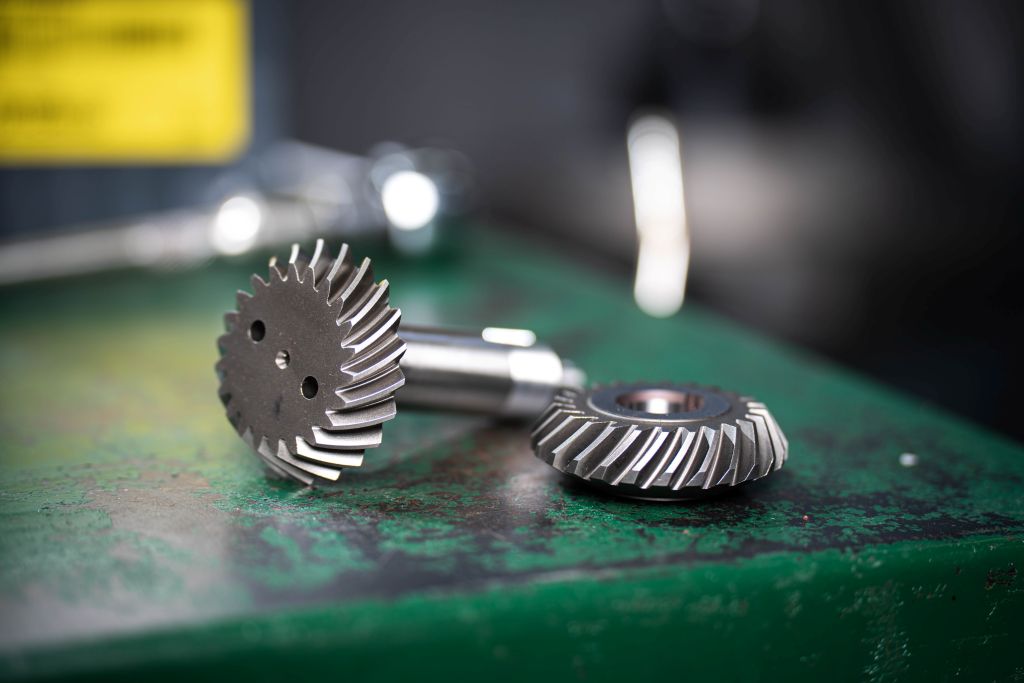
A bevel gear set with 60 degrees
The gear set is used in a PTO assembly. Normally, bevel gear applications involve a power transmission of 90 degrees, but this project required an adjustment of 60 degrees. This difference affects the gear geometry, the contact ratio, and the manufacturing process required for these goals.
Changes in profile, position, or process stability quickly manifest as noise, heat, wear, or premature failure. With such a low tolerance for error, repeatability is crucial.
The gear is made from SAE 9310/14NiCrMo 13-4 (1.6657), a steel alloy with high nickel and chromium content that exhibits good strength and hardenability properties. After case hardening, the gear develops a hardened surface while the core remains tough. This provides a combination of surface strength and underlying toughness suitable for demanding work cycles.
Beyond the Limits of Traditional Bevel Gear Processes
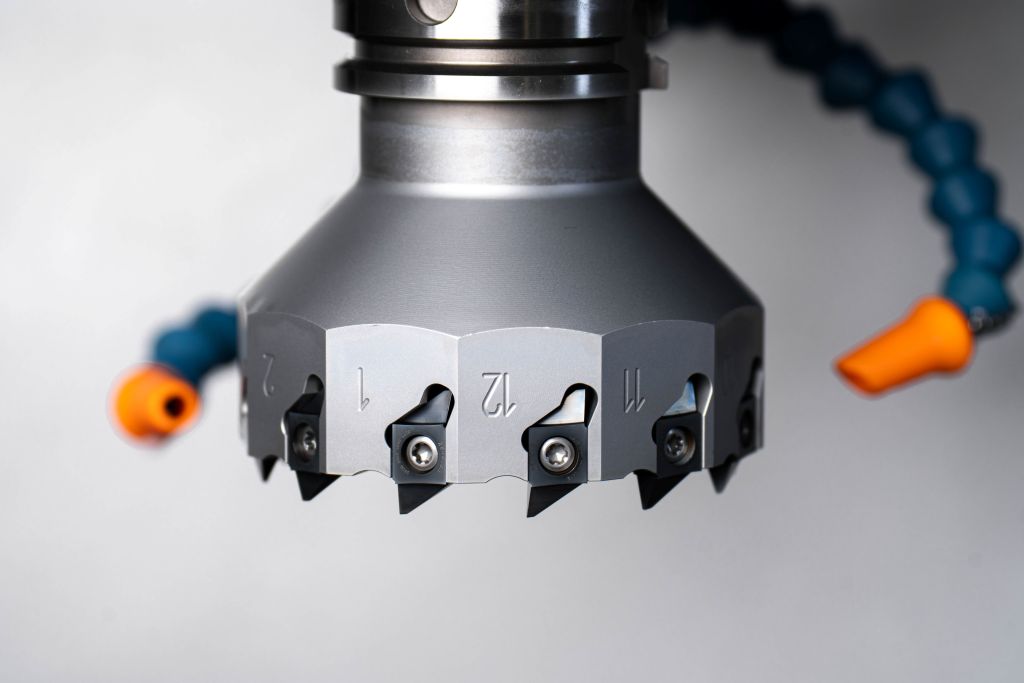
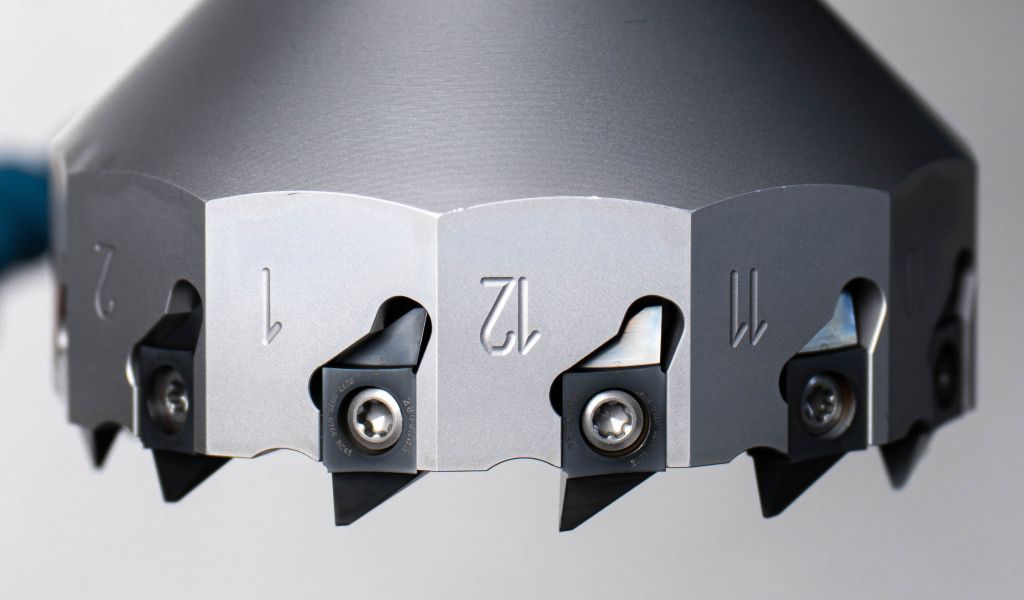
Once the cutter diameter is selected, it may happen that the development is limited by the chosen cutter. EMCO pursued a different goal. The team wanted the freedom to design the required tooth shape and then manufacture this profile on a five-axis machine with a tool that cuts both sides of the tooth profile in one pass. The developed solution is based on a specially designed milling tool for bevel gears for EMCO's five-axis strategy.
"In the past," says Wolfe, "four special tools were needed. We now achieve this with just one special tool." The implementation was quick, as HORN was already familiar with EMCO's spindle interface on the DMG five-axis machine. For the cutting plates, HORN started with a proven profile shape and modified this profile to achieve the required cutting edge.
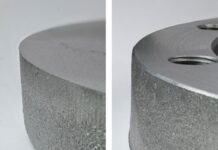
The workflow at EMCO connects design, manufacturing, and measurement. The team mills the gearing, checks the topology with a Zeiss CMM, and updates the program as needed. The advantage is that dimensional adjustments to the gearing can be made without changing tools.
From 8 hours to 15 minutes
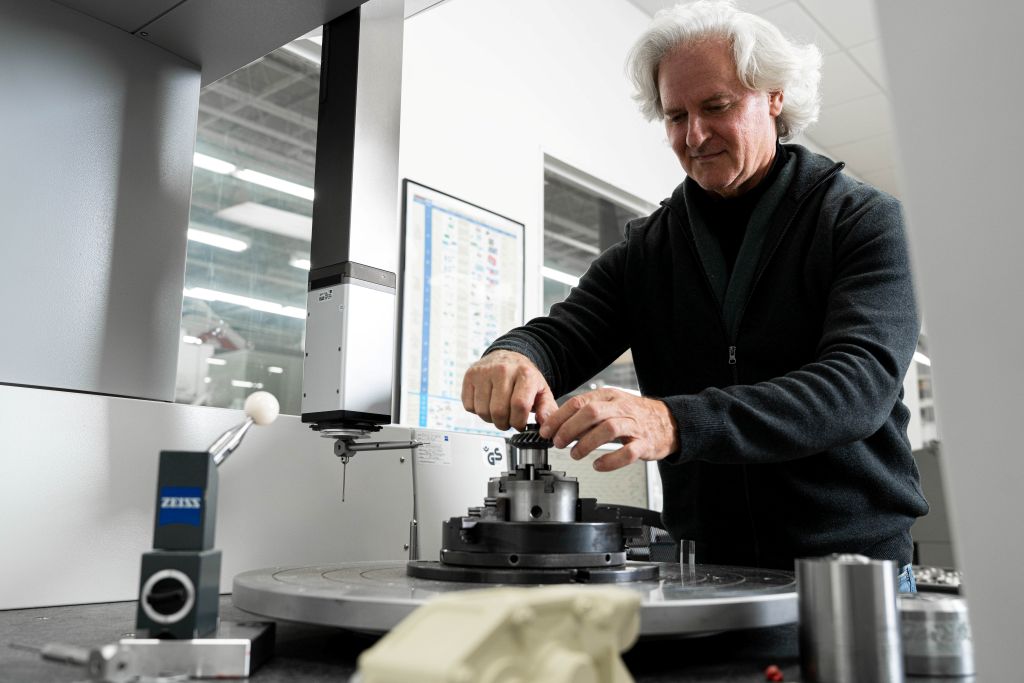
Before the HORN cutter was used, helical gears were produced with small shank cutters and conservative cutting parameters, with the machining of a single gear taking about 8 hours of machine time. With the new process, milling the teeth now takes only about 15 minutes, followed by measurements and any necessary program updates. Wolfe emphasizes that the implementation depends on realistic starting parameters. He describes the cutting data recommended by HORN as practical and accurate, supporting stable production.
Grooving system in use
In addition to bevel gear machining, EMCO focused on grooving. To ensure a continuous flow, EMCO integrated the grooving process using the HORN N117 system into the lathe. Wolfe describes the new process as follows: "Instead of waiting for a batch, the parts are forwarded with a more uniform flow from turning to subsequent operations. A special cutting plate is used here. EMCO desired special corner radii for more strength, and HORN adjusted the cutting profile accordingly."
Both Wolfe and Bruce Williams, product development manager at EMCO, describe the collaboration with HORN as solution-oriented and responsive. Wolfe points to the quick access from sales contact to technical support, which helped clarify questions and details about tool design quickly. Williams explained that while EMCO can define how a part should be machined, the advantage lies in having a tool partner who can translate this need into a timely and usable solution. The result is a clear competitive advantage, as EMCO can bring the finished product to market faster.
Positive Outcome
By combining five-axis manufacturing, Zeiss-based topography measurement, surface measurement, and HORN's product portfolio, EMCO has developed a process for bevel gears that was faster to develop, easier to operate, and better aligned with actual production requirements. For EMCO, this means improved contact conditions, quieter operation, longer lifespan, and easier manufacturing while meeting cost targets in a changing market.
Extra: EMCO Gears
EMCO Gears was founded in 1934 in Chicago. Wolfe recalls the beginnings when the company started with simple, mass-produced gears and eventually transitioned to high-precision defense contracts. In motorsport, the company's role expanded from manufacturing to gearbox and system design. Today, EMCO applies the same problem-solving approach beyond defense, aerospace, and industry.
Contact: