
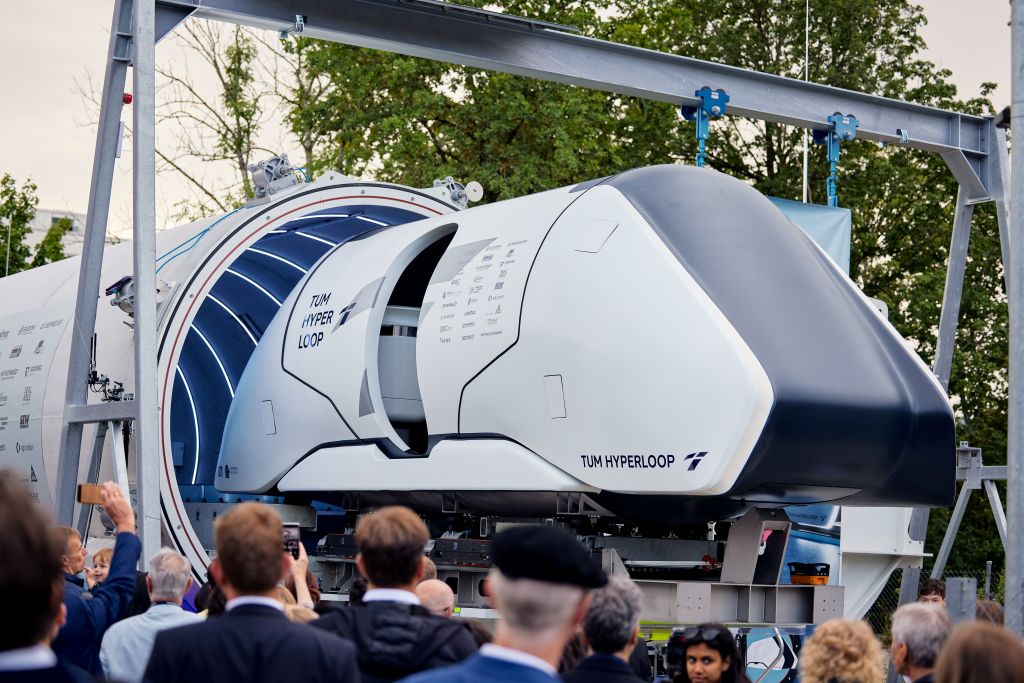
Hufschmied Machining Systems is now using a model of the vacuum magnetic levitation train Hyperloop as a demonstrator for machining challenging materials at trade fairs. It was first showcased at the K 2025 plastics trade fair in October in Düsseldorf. The background of this exhibit is TUM Hyperloop, a project of the Technical University of Munich, in which Hufschmied was significantly involved.
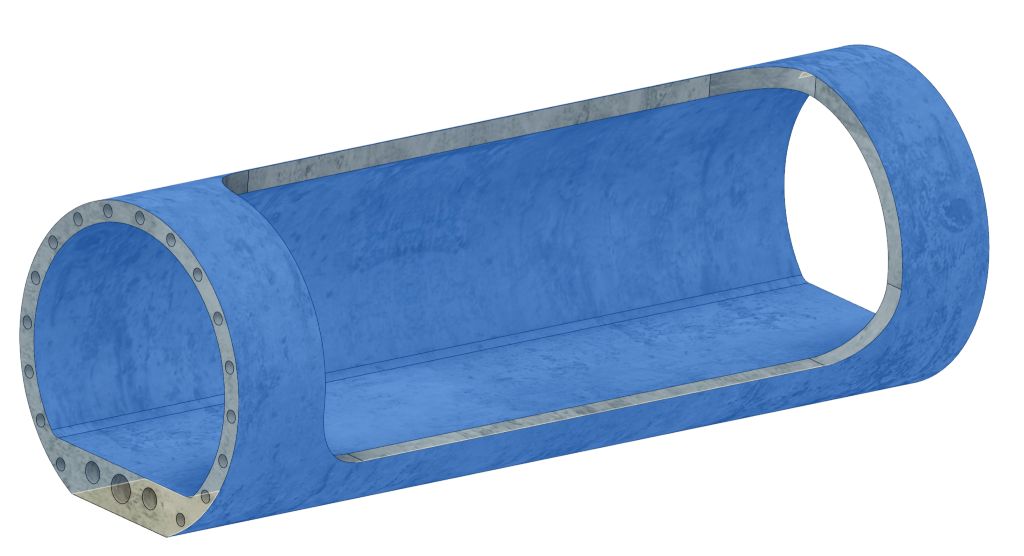
TUM Hyperloop completed Europe's first Hyperloop test segment in passenger size in 2023, received the first certification for passenger transport from TÜV Süd, and conducted a manned test ride. A large part of the forming tools for the novel vehicle and transport tube was manufactured at the technology center of Hufschmied Machining Systems in Bobingen. The post-processing of the composite components was mostly carried out by the manufacturer of material-specific tools.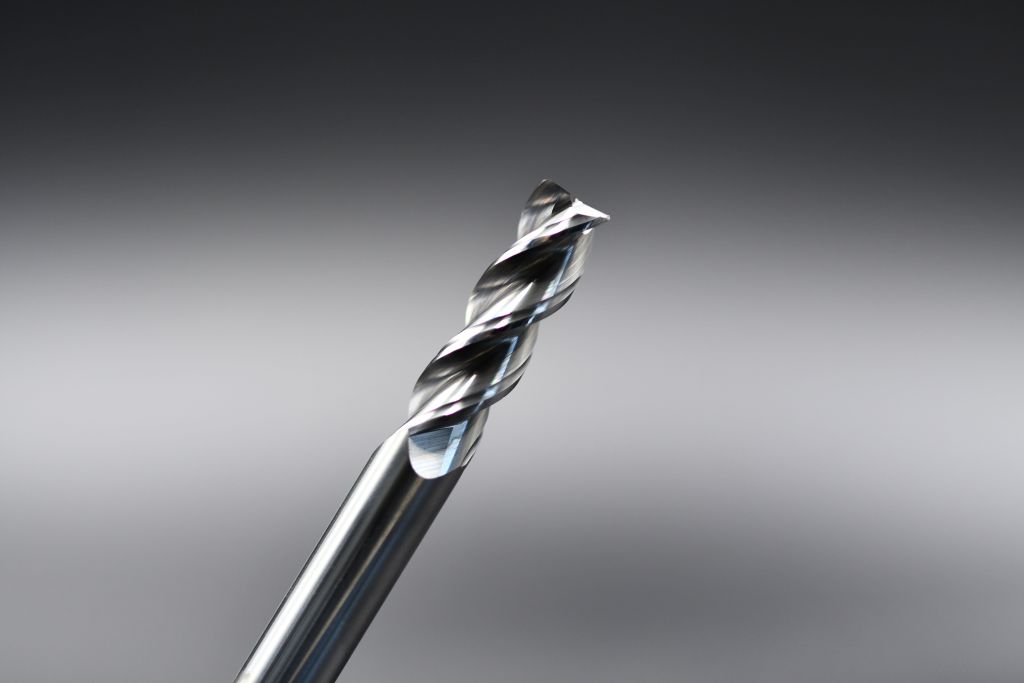
The Hyperloop principle of air resistance-free transport through vacuum tubes requires the highest precision in manufacturing the pressure cabin for passengers. Therefore, the Hyperloop team at TU Munich was happy to receive support from Hufschmied Machining Systems, whose tools and process optimizations in the field of composites in the automotive and aerospace industries enjoy an excellent reputation. TUM Hyperloop sponsorship has now been chosen as a topic for a demonstrator realized in collaboration with KraussMaffei.
The manufacturer of machines for plastic production contributed the additively manufactured blank of the transport tube to the Hyperloop model.
Examples of Challenges
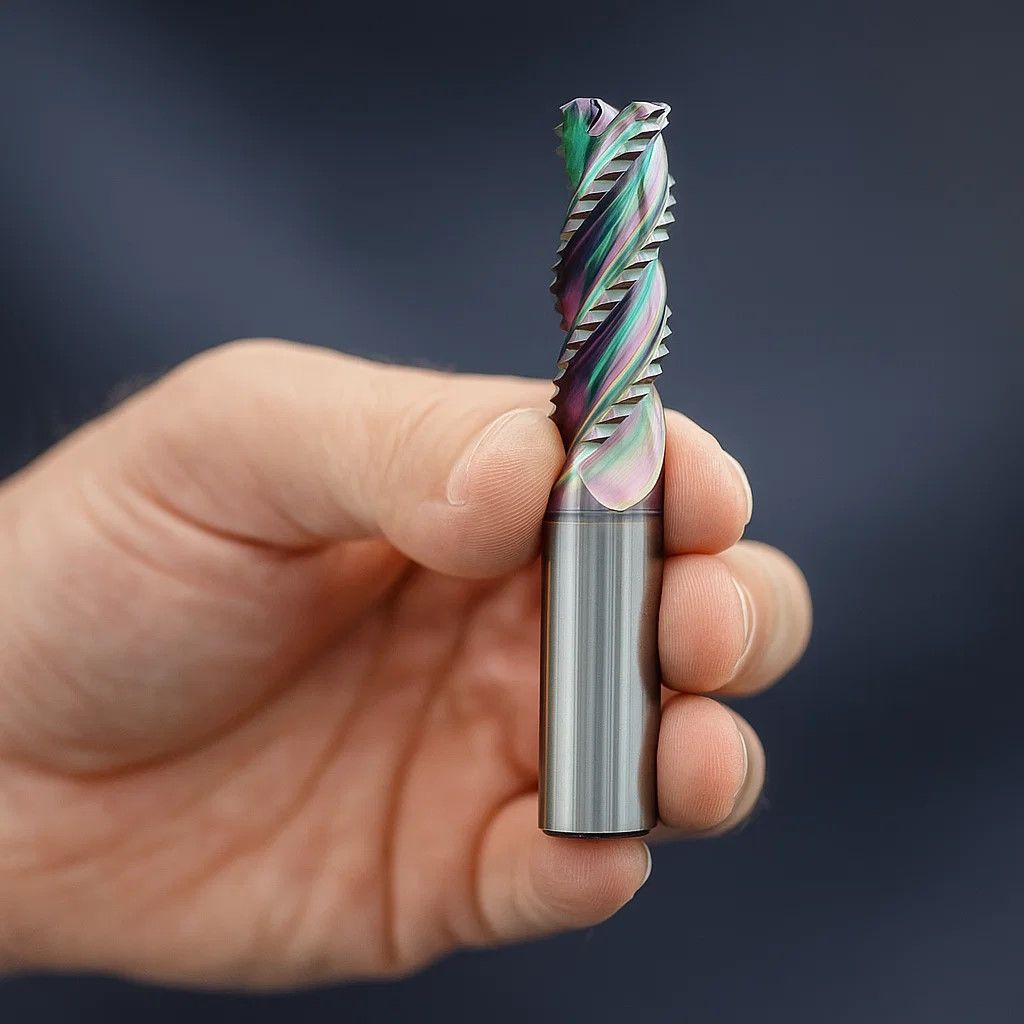
The tube was made from PETG with 30% glass fiber. In addition to the challenging clamping of the part, it was also the very temperature-sensitive 3D printing filament of glycol-modified PET that made precise machining difficult. The machining was carried out with Proto-Line HC403, a three-edged HSC torus milling tool with low heat generation, which avoids adhesion and melting due to its cutting geometry and polished clamping grooves. The tool was also used for finishing the edges on the model of the rail made from the very dense block material SikaBlock M960. Otherwise, as for the SikaBlock M700 N of the passenger cell, the tools from the Blockbuster series were used.
This solution from Hufschmied for model and prototype construction is valued for its high removal rates during roughing and best surface quality during finishing.
The model of the drive unit made from ALU 6080 serves as an example of the use of the Wolverine tool, an aluminum roughing tool with an exceptionally high chip volume.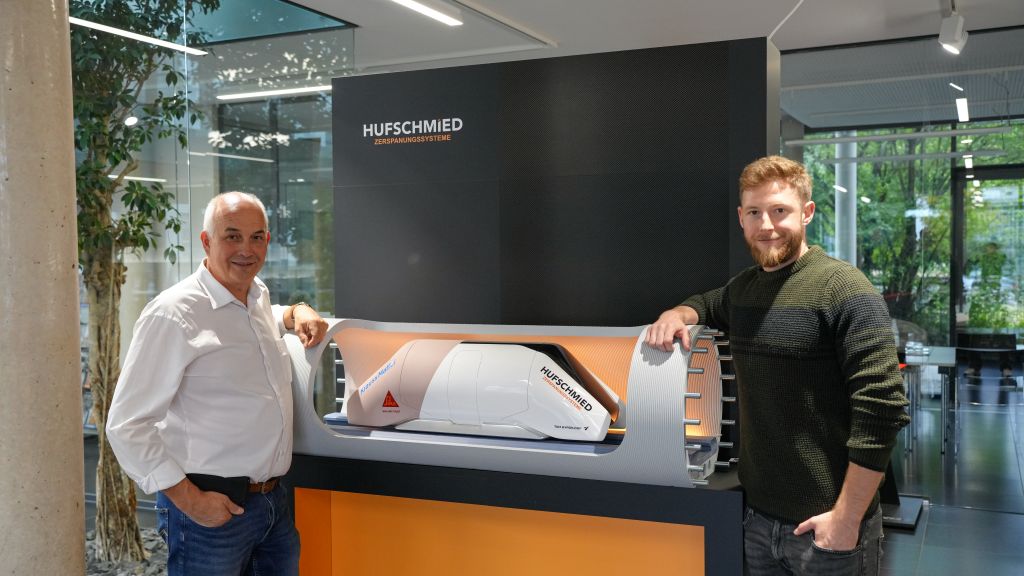
"We were happy to support the TUM Hyperloop project, and it was fun to create this 'eye-catcher' for trade fair appearances together with KraussMaffei," says Wolfgang Rinke, Business Development at Hufschmied Machining Systems GmbH. "Additive manufacturing and the necessary subtractive post-processing are a highly relevant topic to which we can make valuable contributions – because ultimately, the efficiency of the entire process determines whether additive manufacturing continues to expand as an economic option from laboratories into production halls."
Contact: