
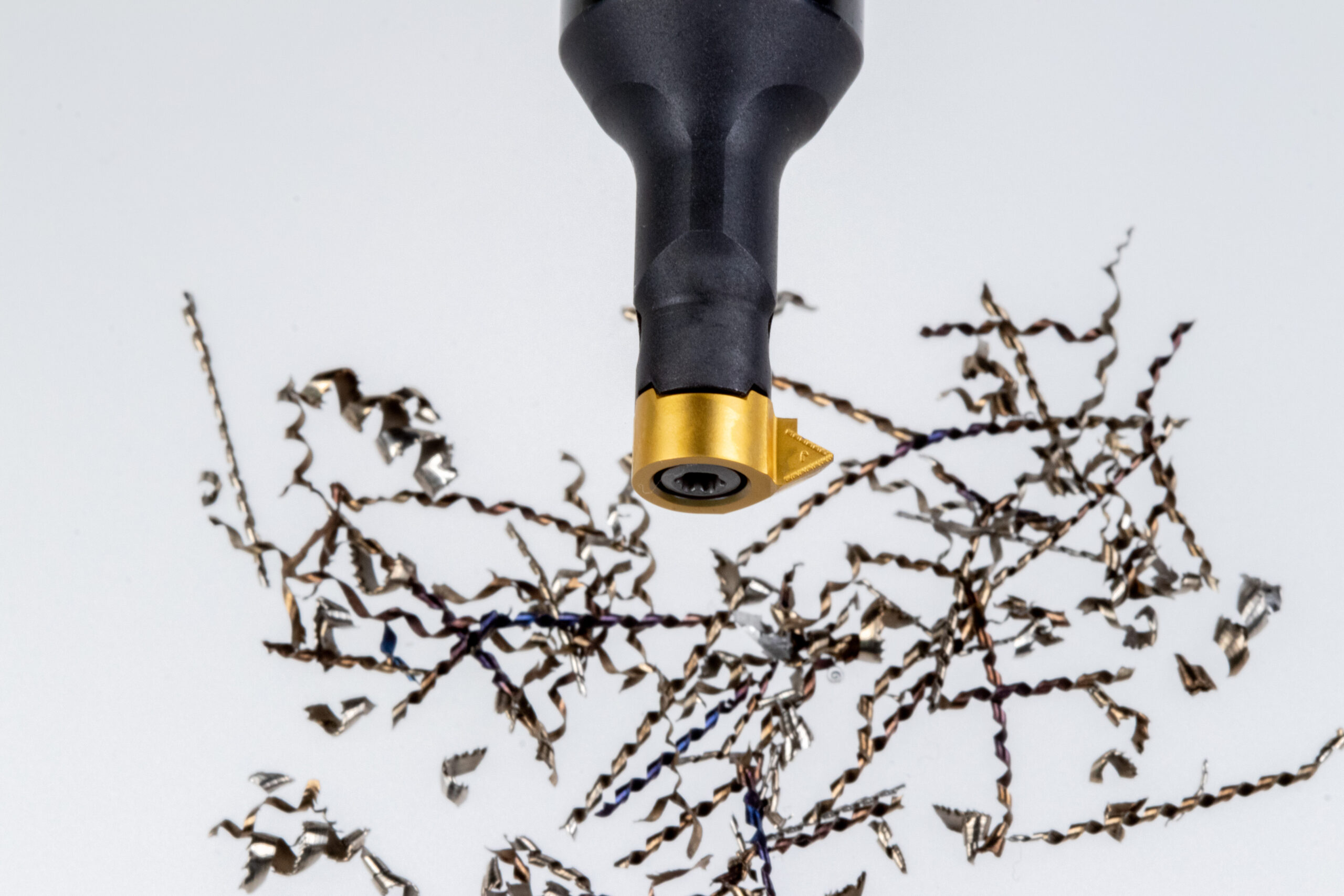
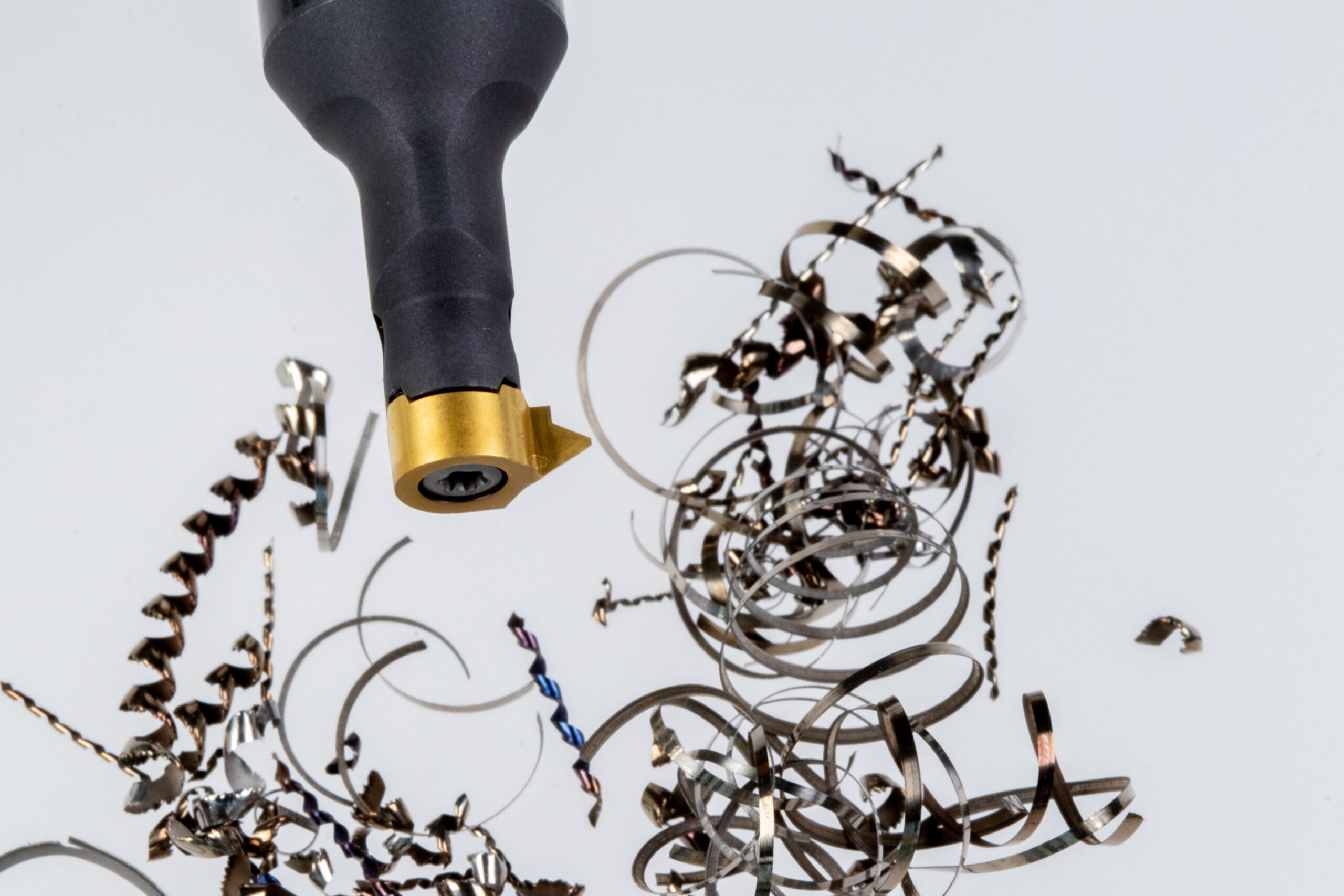
Since the Swabian tool manufacturer SIMTEK introduced laser-cut chip geometries for carbide tools at AMB 2024 for the first time, demand has significantly increased. Many customers are now ordering laser-cut geometries for their special tools. The advantages are clear: optimal chip control and high process reliability in the chip process with improved cutting values. Often, several machining steps can even be integrated into a single geometry, making entire tools redundant. But when does the constructive additional effort really pay off? We discussed this with Norbert Seifermann, board member of SIMTEK AG.
Mr. Seifermann, laser cutting of chip geometries has now taken a firm place at SIMTEK. What triggered this development?
The classic design was previously based on grinding – that is, the targeted removal of material at defined points. With laser cutting, it is fundamentally different: we design a negative model that precisely describes what needs to be removed. This new way of thinking was a real paradigm shift for us and has significantly changed our CAD processes. Previously, two data sets were sufficient – today we need at least four for comparable tools because the laser-cut negative is an independent design component.
What does this mean specifically for the designers?
First of all: significant additional effort – and a completely new approach. Especially at the beginning, it was a combination of experience, gut feeling, and intensive experimentation. Often we laser-cut two to three variants and tested them in parallel to find out which geometry works best for a specific application. In the meantime, we have a wealth of experience that is on par with that from the grinding process.
Are there typical application areas where laser cutting is particularly useful?
In about 90% of the cases where customers request laser geometries, it is about chip control. The goal is to prevent scratching of sensitive surfaces or to eliminate process interruptions caused by blocking chips. Another focus is on process optimization. One example is a tool for machining lead-free copper alloys with a feed rate of 0.15mm. In this case, it was crucial that no chips remained stuck to the workpiece. By using a circumferentially laser-processed geometry, we were able to ensure this – and the customer could simultaneously save an additional tool.
What makes laser cutting so powerful compared to grinding?
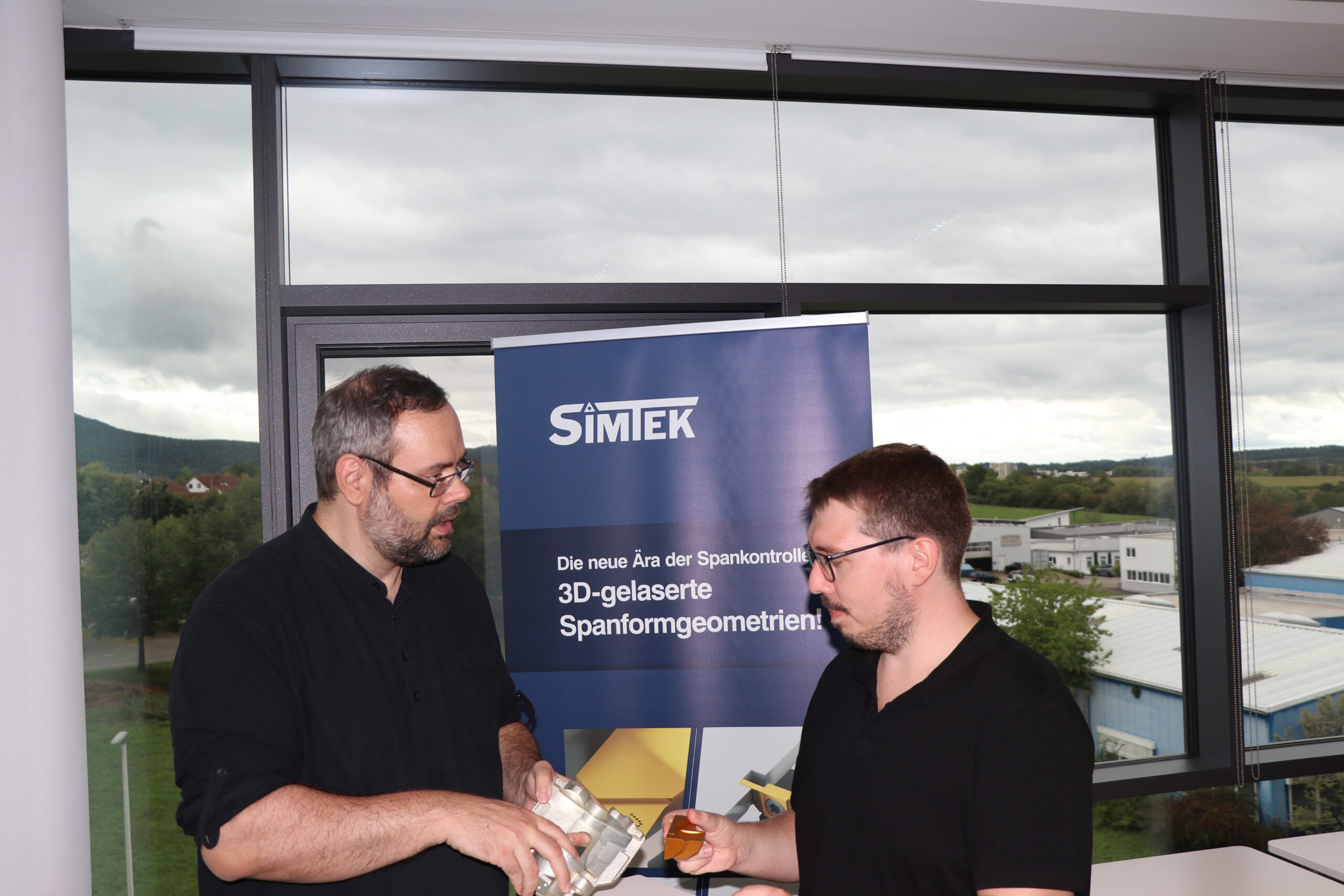
We can create complex freeform shapes that would not be realizable at all with grinding. And perhaps the most important difference: the chip angle remains constant across the entire cutting edge – regardless of whether it is being plunged or copied. This reduces vibrations, improves the surface, and makes the tool overall more cutting-friendly. One example: the mentioned customer previously needed two tools for two plunges – today one is sufficient – this not only saves setup times but ultimately also energy.
How do you manage to anchor the know-how within the team?
Through close communication and structured knowledge transfer. We have established internal meetings where new insights are shared weekly. This way, we systematically build up know-how and make it available throughout the team. By now, many geometry variants are so well standardized that they no longer need to be passed up to me – a sign of how confident and routine our designers have become with the topic.
Are there also limits to laser cutting?
Of course. We do not laser cut indiscriminately. If a ground geometry works perfectly for the customer, there are no issues with chip control, and the process runs stably, we see no reason to switch. We even had specific requests for laser geometries where analysis revealed that a classic, round chip guide step was the best solution for the application. So why laser cut if the existing concept works optimally?
And if laser cutting is done – what is important?
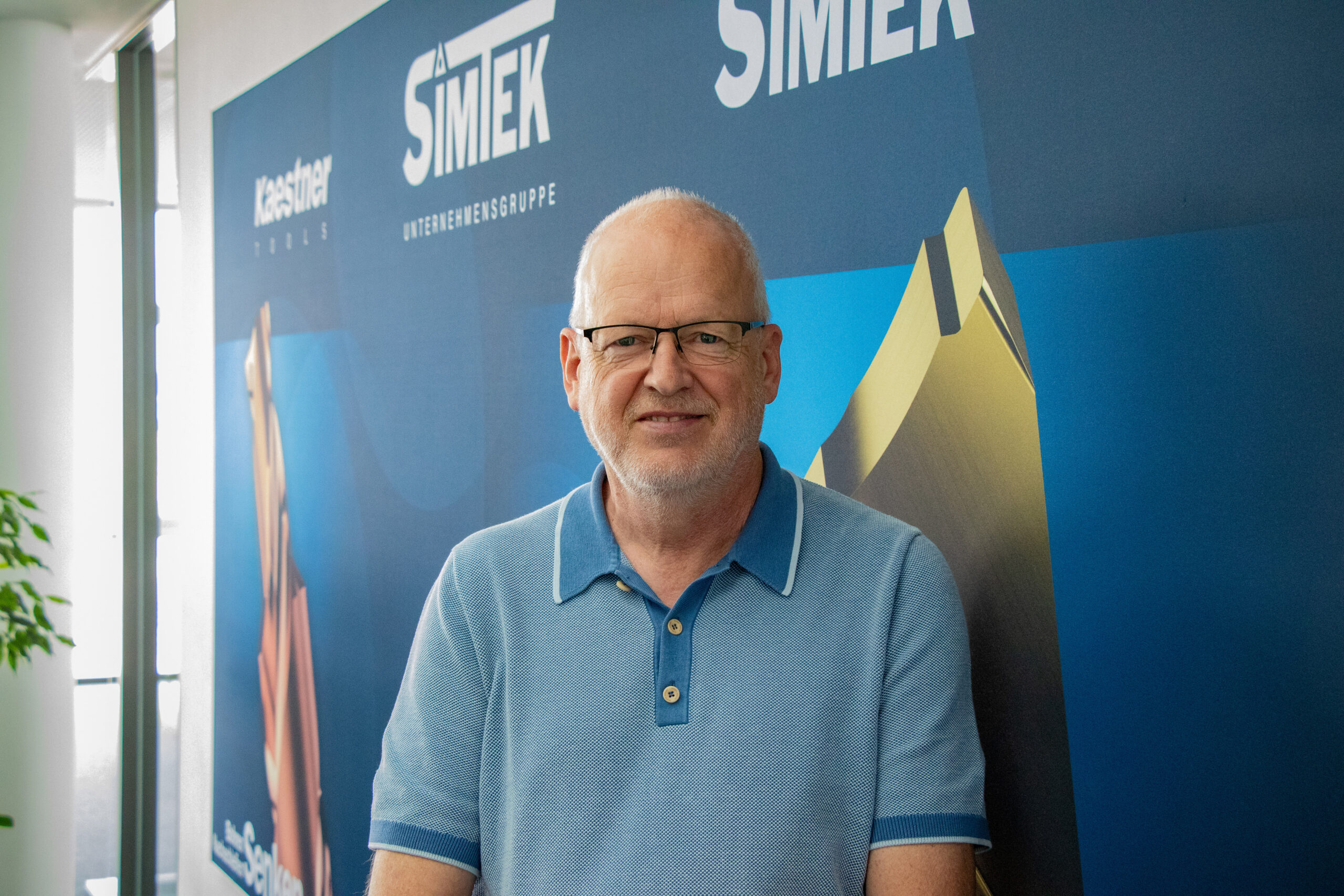
Primarily on information. We need material data, cutting values, and target sizes. Unfortunately, many customers are rather reserved with these details – partly due to time reasons, partly out of sheer habit. Often we receive requests for special tools with two or three sets of data – and the expectation that we will develop the perfect solution from that. Of course, we can simulate a lot. But we cannot exactly replicate every machine, every coolant, and every cutting condition. Without reliable input data, there is always a factor of uncertainty.
One more look into the future: What comes next?
We want to consistently further develop the technology – both in the standard area and with a view to process-integrated solutions. The goal remains the same: to provide the customer with a tool that not only works but improves their entire process – whether through higher cutting values, reduced rework, or safe chip handling. Laser cutting is not an end in itself for us, but a means that comes into play whenever it is technically and economically worthwhile.
Thank you for the interview, Mr. Seifermann!
The interview was conducted by Ralf M. Haassengier, PRX Agency for Public Relations GmbH
Contact: