
The necessary surface cleanliness of medical and pharmaceutical products is usually achieved during their production using liquid-based cleaning processes that require enormous amounts of energy and water. To effectively reduce resource consumption, a collaborative project funded by Invest BW was conducted with industrial partners and the Fraunhofer IPA and NMI institutes at the University of Tübingen to investigate the material compatibility of the dry quattroClean snow jet cleaning technology on various product-typical surfaces of medical and pharmaceutical products. The results of the investigations, which included in vitro cytotoxicity tests as well as VOC and SVOC analyses, demonstrate the suitability of the cleaning process for a wide range of applications. To lower the approval thresholds, a comprehensive basic validation for life science applications was also carried out in parallel.
In the production of medical and pharmaceutical products, a cleaning process is suitable when contaminations are safely removed and a product-specific defined cleanliness level is reliably achieved. At the same time, any alteration or damage to the product surface of the cleaning goods must be avoided. Classic liquid-based cleaning processes meet these requirements across a wide spectrum of materials used for life science products.
Such experiences are not yet available for the dry CO2 snow jet cleaning process 'quattroClean' in a broad sense. Therefore, the aim of the collaborative project with five industrial partners, as well as the Fraunhofer Institute for Production Technology and Automation IPA and the NMI Natural Science and Medical Institute at the University of Tübingen, was to demonstrate the fundamental suitability of the process for cleaning various medical and pharmaceutical materials.
Surface changes and cytotoxicity in focus
The primary goal was to demonstrate that the mechanical forces of the snow crystals do not alter, impair, or damage the surface. Furthermore, it was to be determined whether the thermal stress and/or the chemical properties of carbon dioxide affect the surfaces or the biocompatibility of the materials, for example, by releasing cytotoxic material components.
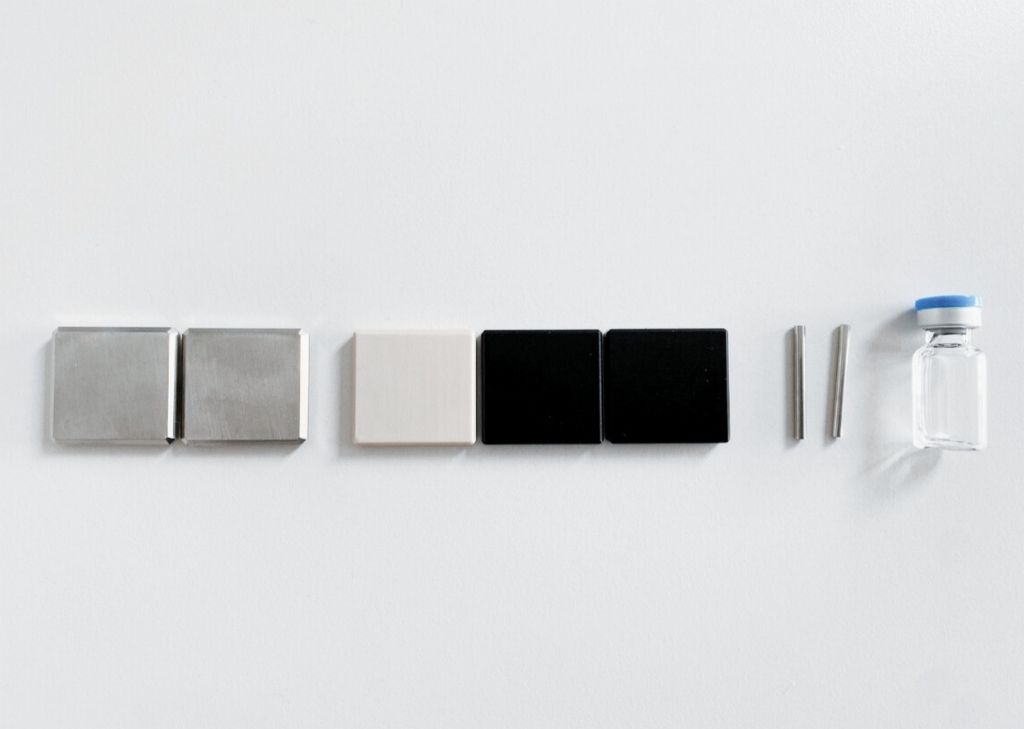
The investigations were conducted with test specimens made of stainless steel 1.4301 and 1.4305 with different surface characteristics, as well as from polyether ether ketone (PEEK), polyether (PE), polyoxymethylene (POM), nitinol, cobalt-chromium, and glass vials.
Basic validation under worst-case conditions
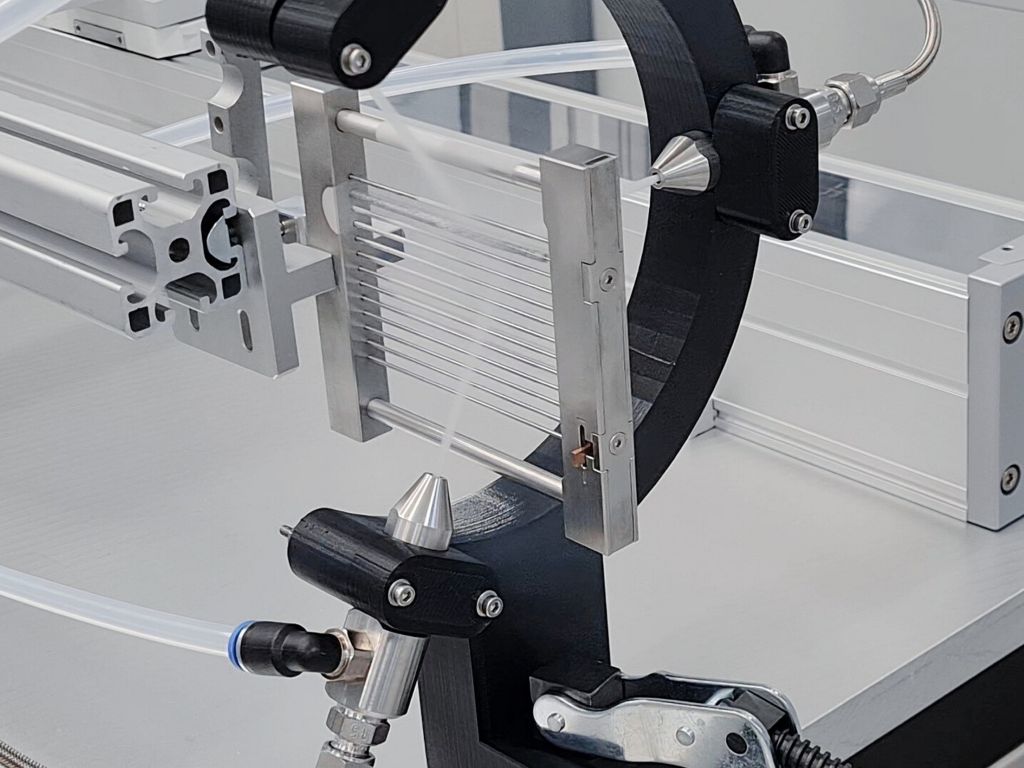
For the basic validation by the Fraunhofer IPA, the surfaces of the test specimens were microscopically examined (light and/or scanning electron microscope) in their initial state. The subsequent cleaning was carried out under worst-case conditions: The test specimens were continuously locally irradiated with CO2 snow at high pressure of twelve bar for ten seconds, both in the center and at the edge.
Evaluation regarding surface changes
The subsequent microscopic evaluation of the surfaces using light and scanning electron microscopy showed no impairments such as structural changes, damages, changes in surface roughness, flaking, etc. of the surfaces. It was noted that slightly protruding burrs at the phase edges were partially removed.
No cracks were formed on glass vials during cleaning, and no propagation of existing cracks was observed. With the help of a fluorescent penetrant, it could also be demonstrated that the snow crystals do not cause additional stresses in the glass. Additionally, the abrupt cooling effect and the subsequent warming of the vials to room temperature did not lead to any microcracks.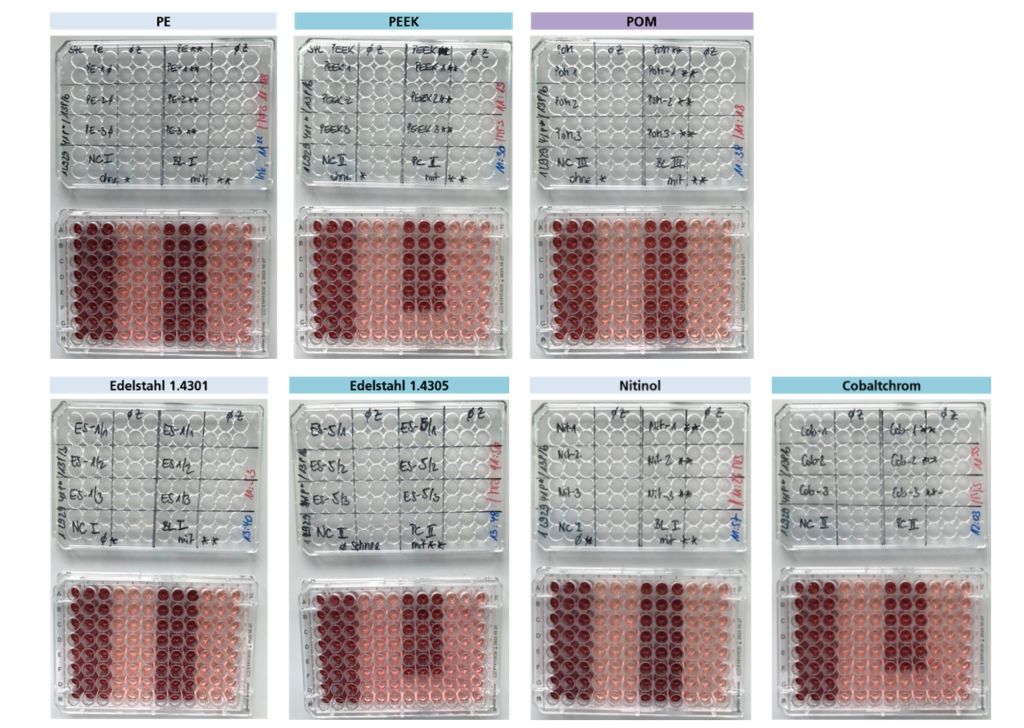
Assessment of biocompatibility
In vitro cytotoxicity studies according to DIN EN ISO 10993-12: 2021-05 and DIN EN ISO 10993-12: 2021-08 confirmed that there are no negative effects on cell viability due to the CO2 snow. The VOC and SVOC analyses conducted according to ISO 16017-1 showed Tenax values within or below the measurement limits.
Material compatibility with stainless steels
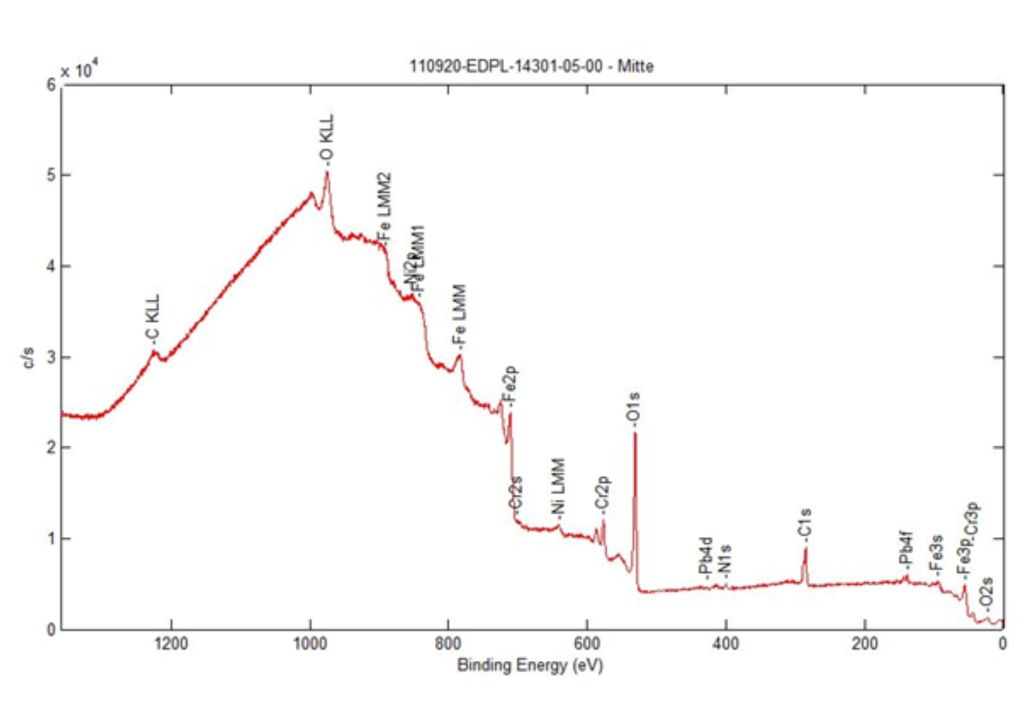
The NMI further examined the material compatibility of the quattroClean snow jet cleaning with stainless steel 1.4301 and 1.4305. The surfaces were examined before and after treatment with the CO2 snow jet using photoelectron spectroscopy. The comparisons and analyses showed that the cleaning of the stainless steels with the process does not lead to any material changes and can be classified as material-compatible.
Resource-saving cleaning suitable for life science applications
Through extensive investigations, the suitability of the quattroClean snow jet technology for a wide range of applications in the medical and pharmaceutical industries as a resource-saving cleaning process has been proven. It is a dry cleaning process for comprehensive and local applications that uses liquid, recycled carbon dioxide as a cleaning medium. It is channeled through a wear-free two-component ring nozzle and expands upon exit into fine snow crystals. These are bundled by a separate, ring-shaped compressed air mantle jet and accelerated to supersonic speed.
When the well-focusing snow compressed air jet strikes the surface to be cleaned, a combination of thermal, mechanical, solvent, and sublimation effects occurs, on which the cleaning effect is based. Regarding particulate residual contaminations, cleanliness levels in the submicrometer range are reproducibly achieved. For filmic contaminants, the cleaning result is comparable to that of other fine cleaning processes such as wet chemical and plasma cleaning. Removed contaminations are suctioned off in the compact cleaning cell, preventing recontamination of the parts and contamination of the environment. Since the crystalline carbon dioxide completely sublimates during the process, the cleaned surfaces are dry – elaborate and energy-intensive rinsing and drying processes are eliminated.
Individually customizable, cleanroom-compatible, and integrable into production lines
To optimally adapt the cleaning solution to the respective component geometries, requirements, and production situation, the manufacturer offers various modular solutions and individually planned systems, also in cleanroom-compatible designs, for example, for high purity applications. This includes, among other things, a media preparation for the liquid carbon dioxide that ensures a purity of 99.995 percent, with the compressed air quality at 1.2.1. The process validation and design are carried out customer- and application-specific through trials in the manufacturer's cleanroom-based technical center.
Contact: