
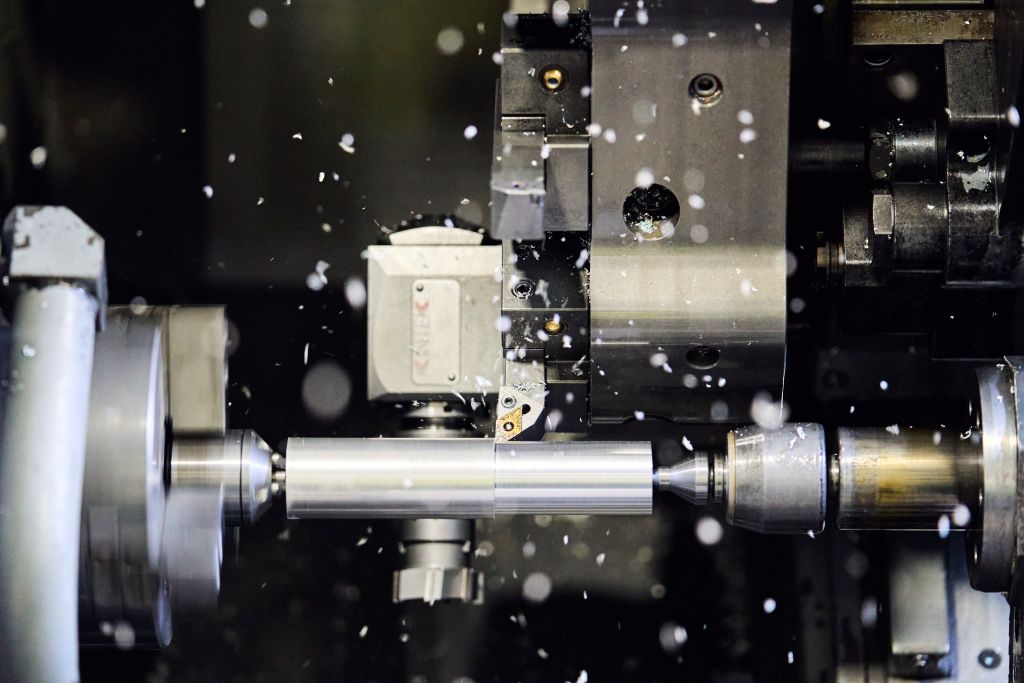
The new legal framework confirms that by June 12, 2027, the last exemption for aluminum alloys for machining with a lead content of more than 0.4 weight percent will expire, thereby definitively limiting the permissible concentration to 0.1%. This measure will have significant impacts on the European metal industry: the gradual phasing out of lead affects not only aluminum but also extends to other metallic materials. The previously permissible limits for steel (0.35%) and for copper alloys, where the lead content can currently be up to 4%, will be eliminated.
This update confirms the foresight of Eural Gnutti's industrial strategy, the world's leading manufacturer of drawn bars made from aluminum alloys for machining and one of the largest players in the field of extruded bars and profiles. The company has already initiated a research and development process aimed at the gradual transition to lead-free aluminum alloys, anticipating the development of the European legal framework to support the market on the path to lead-free solutions.
Lead-Free Alloys in Focus
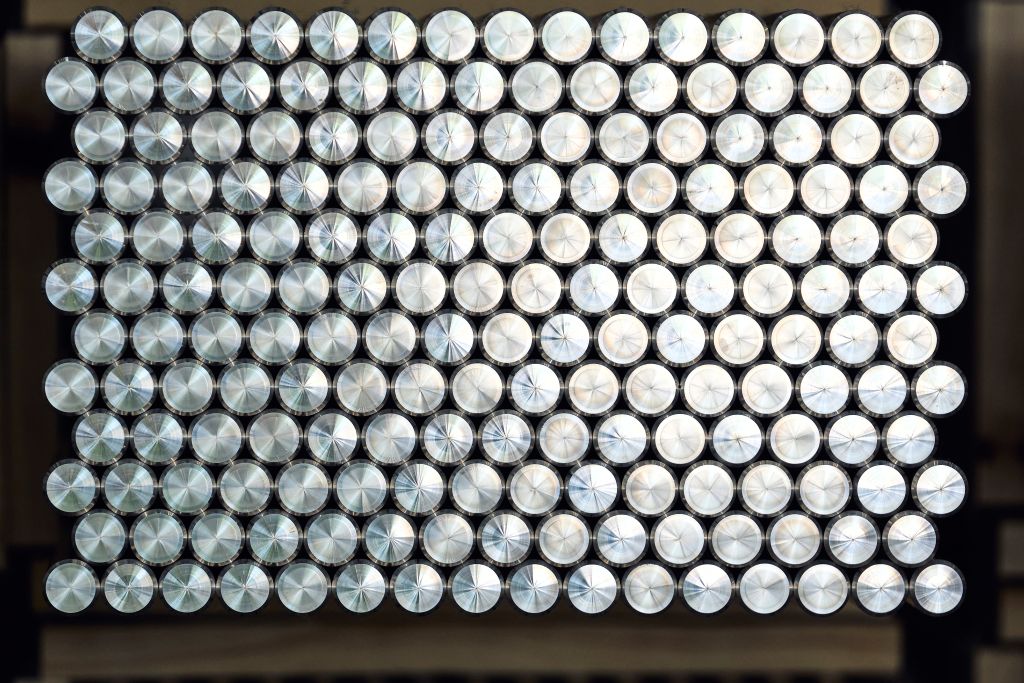
Historically, the use of lead in iron and non-ferrous alloys has been associated with the aim of optimizing their machinability. As a low-melting element and due to its particular distribution within the alloy, it improves machinability, reduces friction between material and tool, and thus contributes to a longer tool life.
However, the REACH Regulation, which governs the registration, evaluation, authorization, and restriction of chemical substances, classifies lead as a substance of very high concern (SVHC) and as highly toxic at a concentration of over 0.1%, which has significant implications for health and the environment.
On this basis, the RoHS Directive has initiated the feasibility assessment of its replacement, evaluating not only the impacts on human health and the environment but also the economic and technological impacts as well as the availability of suitable alternatives on the market. The revision of the RoHS exemptions was supported by a technically-scientific study conducted across Europe (Package 22), in which Eural Gnutti participated as a leading industry player along with other significant actors such as the European Aluminium Association and users of semi-finished products.
EURAL Gnutti advances LEAD FREE project
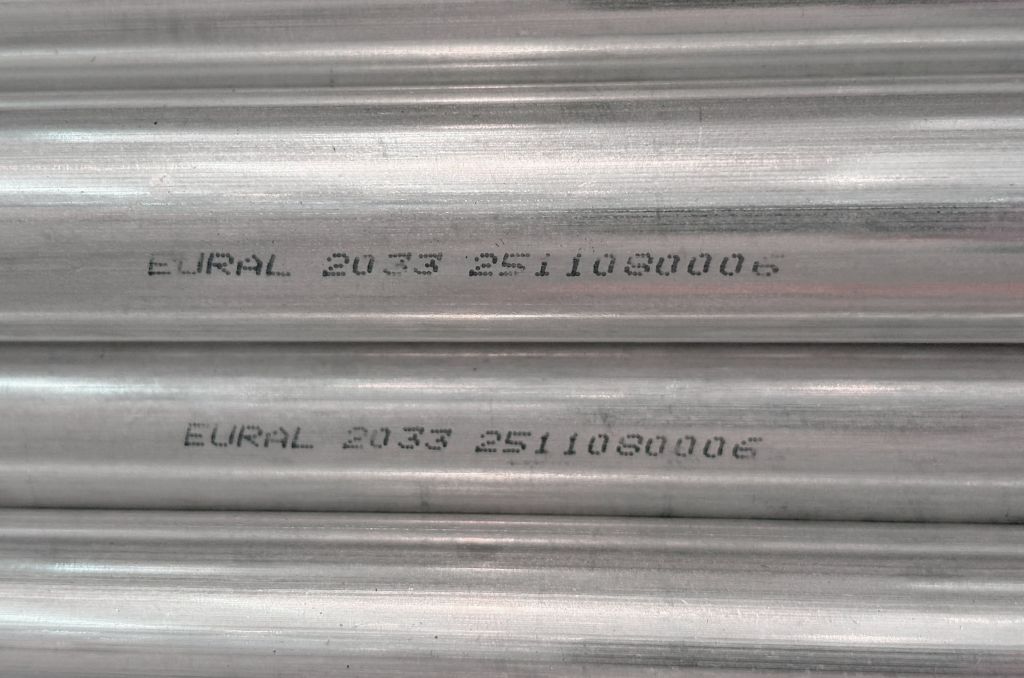
The conclusions of Package 22 are confirmed by the application examples, processing data, and results from Eural Gnutti, which has been advancing the LEAD FREE project for years. Its contribution is the result of proven expertise in practice, leading to the development of lead-free solutions with high machinability: three complementary alloys developed, among other things, based on a high proportion of recycled aluminum, aimed at promoting more efficient resource use.
The 6026LF was the first alloy of this new generation and is characterized by excellent mechanical properties and machinability as well as complete compatibility with surface treatments, especially anodizing. The 2033 is the second alloy; it was developed for high-speed machining and ensures a continuous process flow and high productivity on automatic lathes and CNC machines thanks to the formation of fine and uniform chips. It also represents a natural alternative to alloy 2011. The most recent is the 2077, the third and final one, developed for applications requiring higher mechanical properties, positioned with values above those of alloy 2024 and close to those of 7075. The combination of high mechanical properties and exceptional machinability allows for tight tolerances with better surface quality, expanding the application range of aluminum, which has a significantly lower density of about 2.7 g/cm³ compared to about 7.8 g/cm³ for steel and 8.9 g/cm³ for copper.
Lead-free alloys as ecologically sustainable alternatives
In addition to compliance with regulations, aluminum also proves to be a strategic material in terms of decarbonization and industrial competitiveness. Its inherent properties such as lightness, corrosion resistance, good conductivity, and ease of processing expand its potential as an efficient alternative to materials traditionally used in industrial applications. Added to these advantages is its high recyclability, which allows for a significant reduction in energy consumption and ecological footprint throughout the material's lifecycle. In a European context focused on emission reduction and resource optimization, aluminum is establishing itself not only as a material that meets environmental regulations but also aligns with the principles of the ecological transition due to its circular economy.
"The update of the RoHS Directive is the logical formalization of a technical and industrial path that has been taken for a long time," explains Giorgio Di Betta, Sales Director at Eural Gnutti. "In the context of the European consultation, we presented concrete industrial evidence, demonstrating that lead-free alloys, especially those developed in Eural's laboratories, are already available worldwide and widely used. They meet the requirements of precision engineering and represent technically reliable as well as ecologically sustainable alternatives," he concludes. "Our participation as qualified technical contacts confirms the solidity of the work done over the years and strengthens the company's commitment to resolutely continue on the path of development in the spirit of responsible innovation."
Contact: