
PKD (Polycrystalline Diamond) and CVD (Chemical Vapor Deposition) are, alongside natural diamond, the hardest materials used for machining. Their very high hardness and wear resistance provide optimal conditions for processing difficult-to-machine aluminum alloys or composite materials. Compared to conventional cutting materials, such as carbide, CVD and PKD achieve significantly better surfaces with good dimensional accuracy, higher cutting speeds, and superior tool life. Saint-Gobain Diamond Tools GmbH in Norderstedt has been producing diamond cutting materials for many years, tailored in size, geometry, abrasive bonding, and concentration to meet specific customer requirements and the special grinding process. The individual product solutions impress with excellent cutting properties and high economic efficiency. PKD and CVD are clearly superior to conventional tools in numerous applications.
Like CVD, PKD is an extremely hard, resilient cutting material. It is produced under high pressure and high temperatures by sintering diamond particles and a binding matrix, such as cobalt. As a cutting material, PKD is directly sintered onto a carbide carrier. Hardness and quality are influenced by the size of the diamond particles, their quality, and the binder. In contrast, CVD is deposited under vacuum conditions from a hot, activated gas mixture – primarily composed of methane and hydrogen – as a thin diamond layer. The synthetically produced diamonds consist of pure carbon and free-standing polycrystalline diamond layers without binder material. Thanks to its high wear resistance, CVD achieves even higher performance in various applications than PKD.
PKD and CVD tools are primarily used for processing non-ferrous metals. Processing ferrous metals would lead to a conversion of the diamonds into graphite due to the high machining temperatures.
PKD in six basic grain sizes
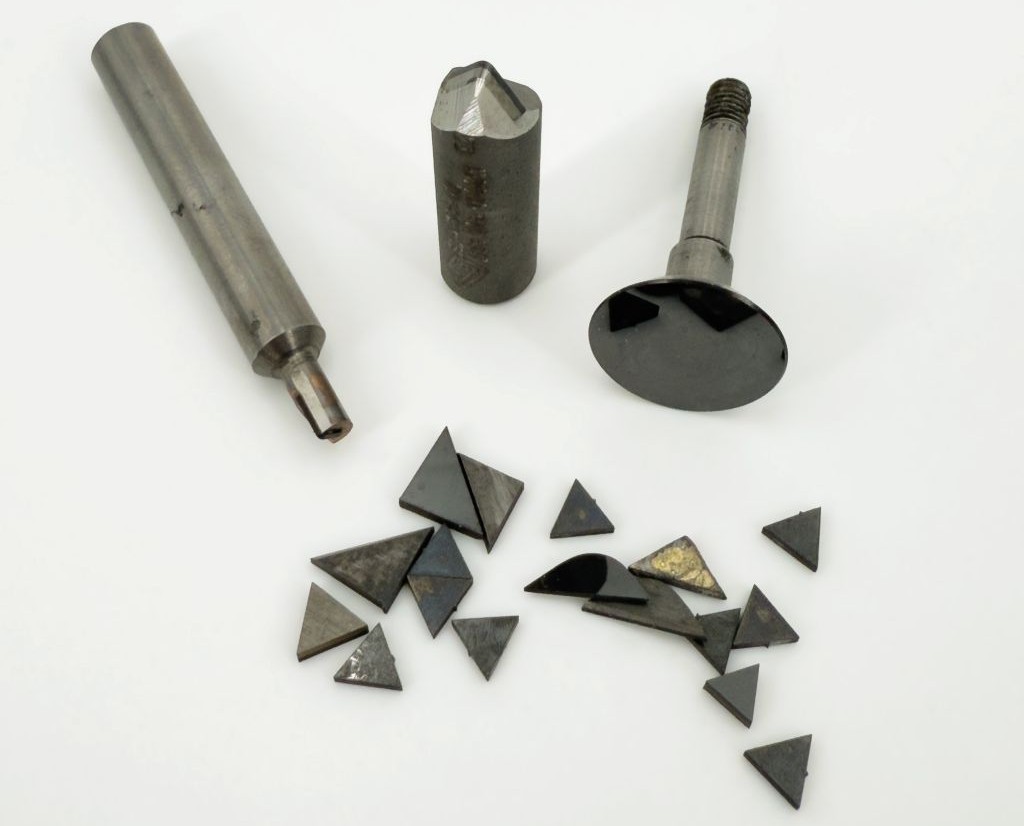
Saint-Gobain Diamond Tools GmbH offers PKD in six basic grain sizes. The optimal size primarily depends on the type of application. For very demanding rough machining, a coarse mixed grain (2-25 µm) leads to the best results. For machining very hard materials, a coarse grain (~25 µm) should be chosen. The medium mixed grain (2-10 µm) is suitable as a standard type for various applications and impresses, among other things, with higher wear protection. The medium grain (~10 µm) is also used in various applications with excellent results.
For a very fine or finest surface quality, a fine (~2 µm) or very fine grain (~1 µm) with wear protection is recommended.
CVD - one quality, various thicknesses
CVD is available exclusively in one quality. However, the cutting material differs in terms of the offered layer thickness: For cutting tools, layer thicknesses of 0.3 mm, 0.5 mm, and 0.8 mm are offered, and for dressing tools and wear protection, thicknesses of 1.0 mm and 1.5 mm are available. A layer thickness of 1.5 mm is perfect for wear protection.
Versatile application - individual adaptation
The areas of application for diamond tools include the processing of a variety of different materials such as:
• Acrylic glass
Synthetic diamonds are among the few cutting materials that achieve a very good surface in the production of aircraft windows, headlights, or optical lenses - especially in edge and drilling processing.
• Composite Materials
Composite materials are used, among other things, in the production of wind turbines or for bumpers in automotive construction. Due to high wear resistance and maximum cutting speeds, economical processing is only possible with PKD.
• Green machining of ceramics and hard metals
PKD and CVD tools are perfect for machining such as turning, milling, and drilling. They are recommended for the rough and finish machining of workpieces, such as insulators, and for the prefabrication of turning and milling tools.
• Machining of non-ferrous metals
When processing aluminum alloys, predominantly with a high silicon content, PKD and CVD tools achieve a high surface quality, where other tools show very high wear. Workpieces include engine blocks, aluminum housings, rims, bushings, and components made of copper and copper alloys.
• Centering tips
The workpiece speed is limited by the material of the centering tips. PKD centering tips have lower friction and better thermal conductivity. This allows for higher machining speeds and, combined with high wear resistance, higher productivity.
• Wear protection
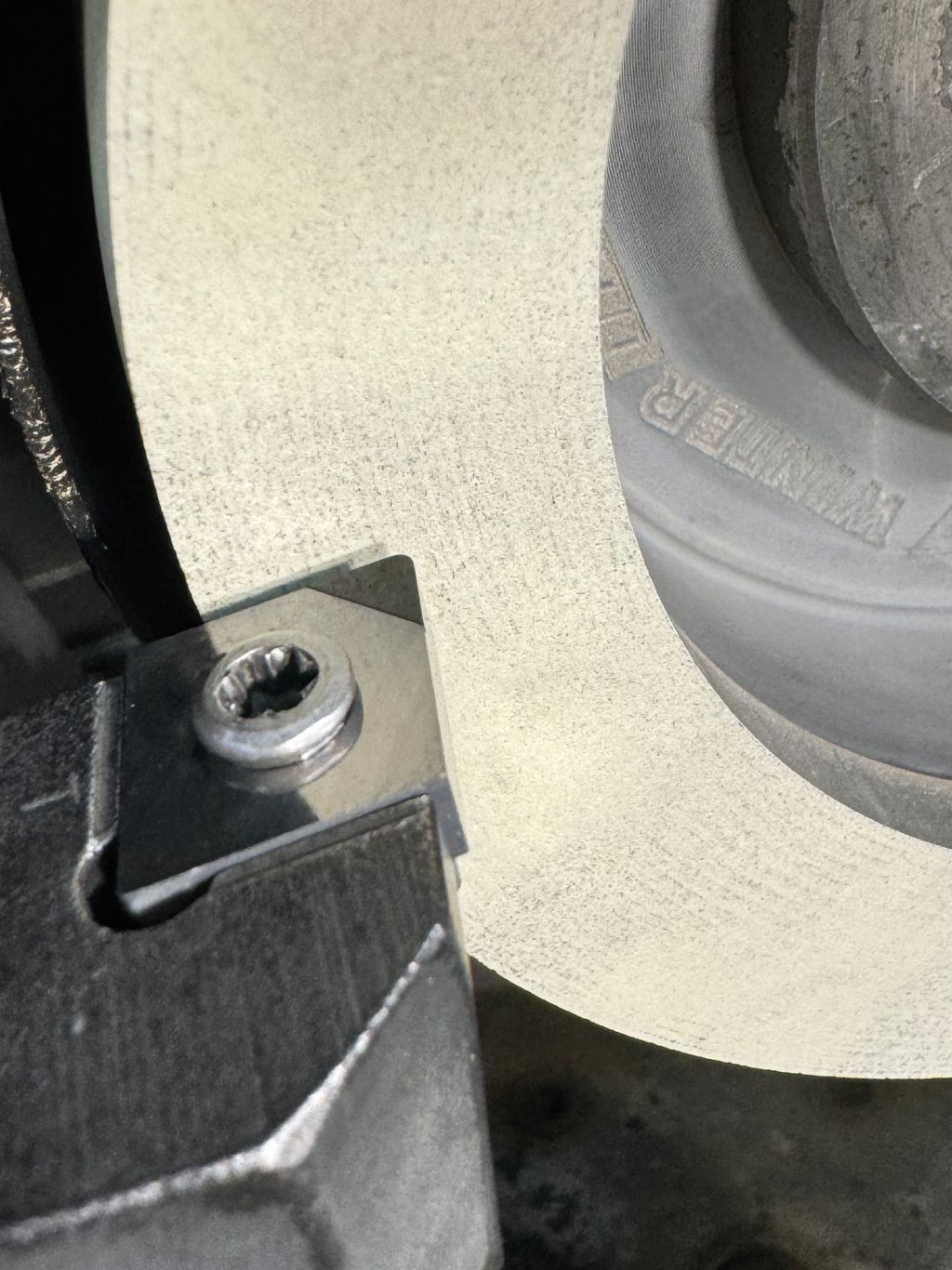
Synthetic diamonds are excellently suited for wear protection. Compared to carbide, coatings made of PKD and CVD allow for significantly higher tool life and consistently high quality. Furthermore, the number of tool changes is reduced. Typical applications include coatings for grinding crankshafts and camshafts, coating rails for centerless grinding, stops, and prisms, as well as measuring probes.
• PKD knives for stripping
PKD knives prove to be extremely wear-resistant, fast, and durable when precisely stripping insulated wires according to DIN standards. This allows diamond tools to achieve particularly high economic efficiency and are perfectly suited for series production with high machine utilization.
Contact: