
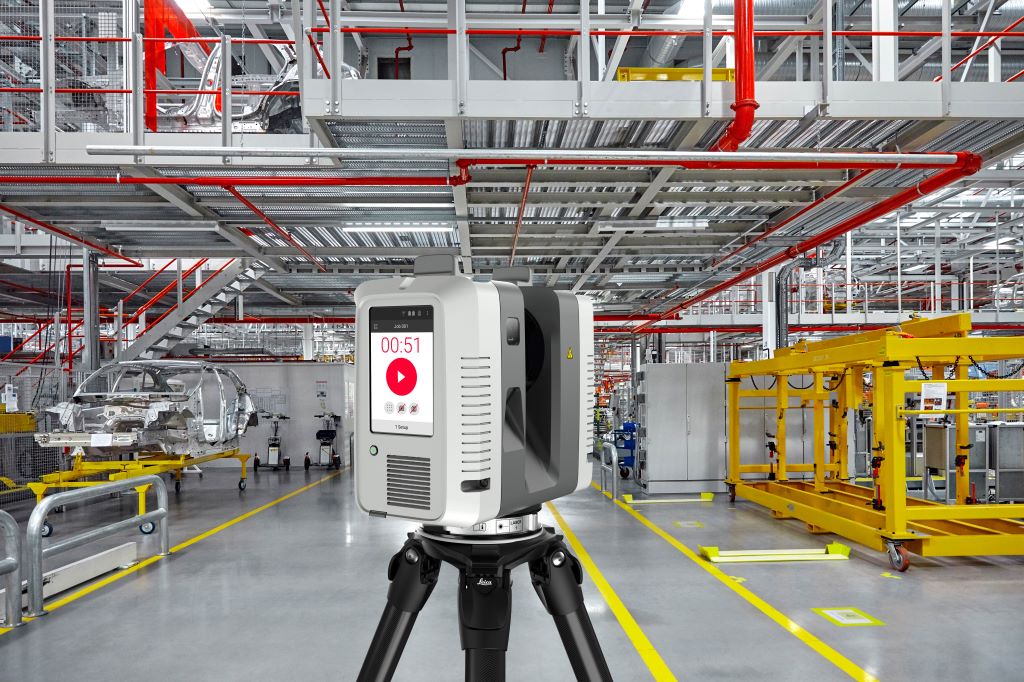
Four 'scan days' by two employees, night shifts on two weekends, over 780 scans and a measured area of 13,000 sqm. These are the relevant facts of a project carried out by the 3D scanning service provider 3D Scanworks with laser scanners at an automotive manufacturer to provide a data basis for the conversion of the support system in final assembly.
As part of the transformation, a southern German premium manufacturer plans to launch a new electric vehicle fleet. In parallel with the introduction of the necessary, completely new vehicle line, the existing support system is to be modernized or replaced with large-scale steel constructions. 'The goal is to adapt the existing assembly systems to new loads and dimensions. Three important conveying elements for the final assembly of vehicles were the focus,' emphasizes Mark Bermpohl, managing director of 3D Scanworks. 'Extensions and an extensive replacement of the systems were planned. The planning basis was a 3D scan of the entire production hall.'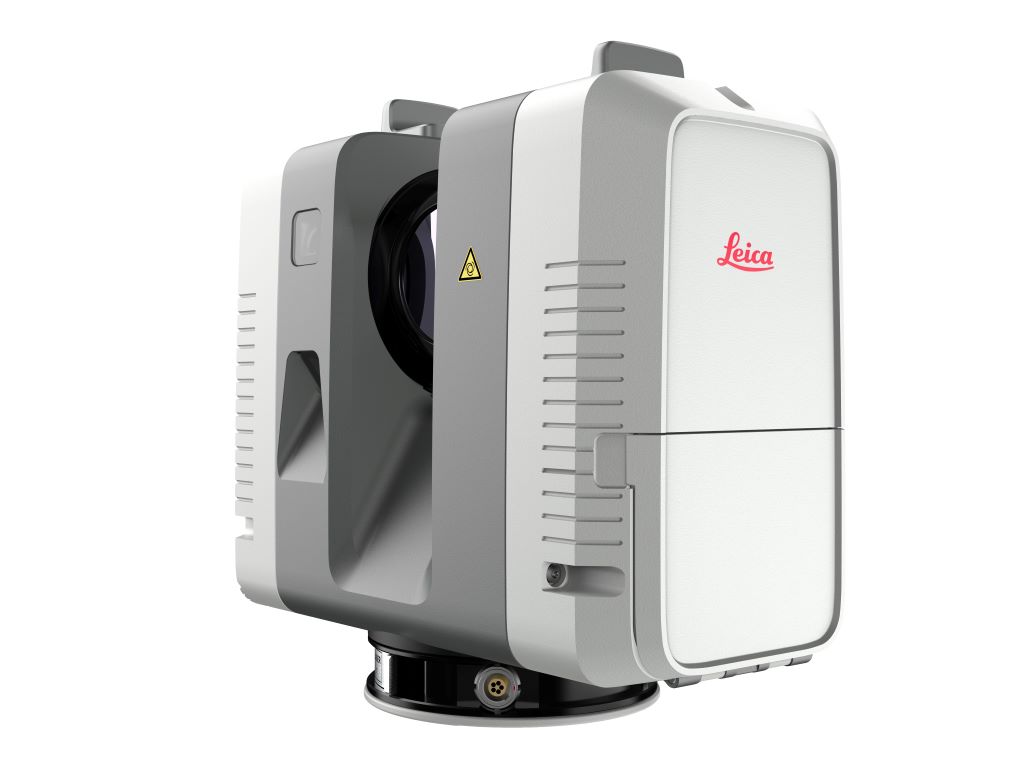
The client set high demands on measurement accuracy and detail resolution, hence only terrestrial, position-based 3D laser scanners were suitable for the measurement task. Specifically, the client requested the use of the RTC360 laser scanner from Leica Geosystems - as they themselves have this system - by an experienced measurement service provider. The generated 3D point cloud was to be handed over later as a structured dataset according to specifications and create the data basis for the conversion planning of the support system.
The heavy and tiltable support system is to be completely replaced. This means that the supports, rails, trusses, and stations will be scrapped and new ones installed in the same place. Therefore, 3D scans of the current state, including the steel construction, are required to check for collisions/interfaces and identify problematic areas that require increased attention.
As part of the selection process, the offers of several service providers were reviewed. The decision ultimately fell on 3D Scanworks. For the Cologne-based company, not only the two available RTC360 scanners spoke in their favor, but also the experience of quickly and professionally implementing projects of this magnitude, as well as the flexibility to carry out measurements on weekends and night shifts - to avoid production disruptions in the plant.
Thus, the measurements were carried out separately by two employees over two weekends during the night between 10:00 PM and 6:00 AM. They conducted more than 780 scans over a gross measurement area of 13,000 sqm. Always following the order to deliver a 3D scan of the building with all the data necessary for creating a digital model of the environment to measure, reposition, and implement new systems.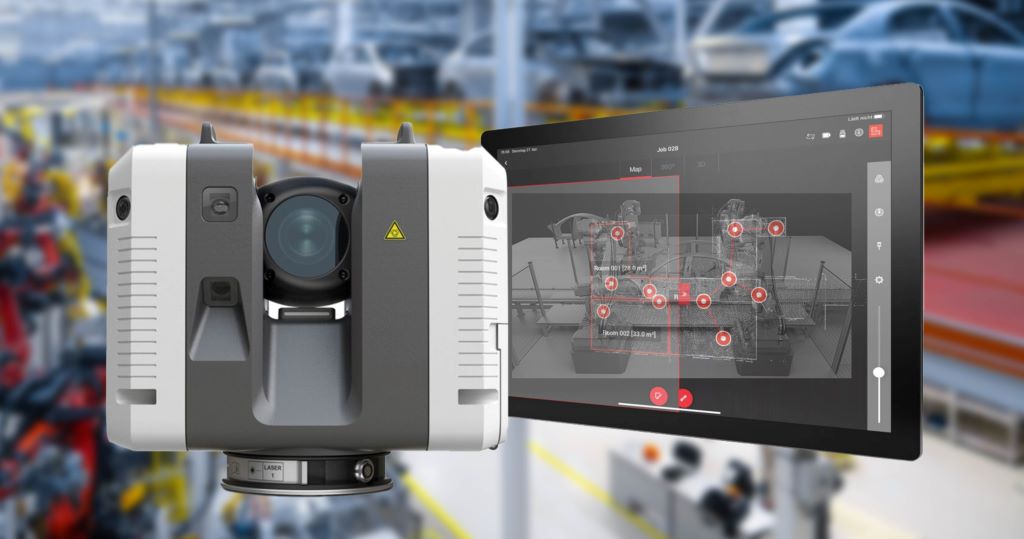
Of particular interest for the 3D scan were the steel construction under the roof structure up to about 10 meters above the ground as well as the platforms (maintenance, cabinets) and all types of pipes (ventilation, water, high pressure). Additionally, cable trays, cabinets on the floor, and columns also needed to be considered. Access to the platforms was usually via stairs or ladders.
The scans were processed with Leica Cyclone software, while the online tool 'Cintoo' was used for providing the 3D point clouds. This allowed the client to download the data themselves. After all, it often poses a problem to send large amounts of data or to handle it for the client. Through 'Cintoo', they can also download partial areas as needed. The point clouds were then read into their CAD software AutoCAD Inventor by the responsible designers and further processed. 'Through the precise and detailed digital representation of the production facilities and elements of the hall structure, the designers are able to create their designs in advance with millimeter accuracy, so that they can later be easily integrated into the existing structural frameworks. In this way, installation situations can also be safely simulated or interference contours recognized,' explains Mark Bermpohl. 'We are pleased about the equally challenging and successful project and the great satisfaction of the client with the results achieved. They are already planning a new project with us.'
Contact: