
The machining production is in the tension field of increasing variety, decreasing batch sizes, and growing demands for precision in the micrometer range. At the same time, the pressure on resources and skilled personnel is continuously increasing.
Against this background, traditional methods of process monitoring are increasingly reaching their limits. In particular, Statistical Process Control (SPC), long the standard for quality assurance, shows structural weaknesses in highly dynamic manufacturing environments.
With Automated Process Control (APC), an approach is establishing itself that goes beyond mere monitoring and enables active, automated process regulation.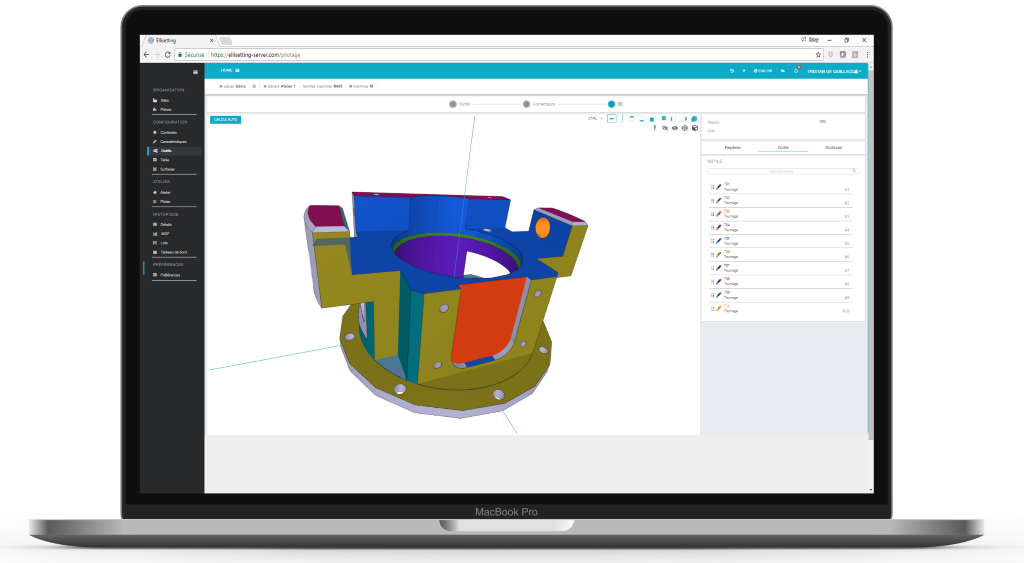
From SPC to APC: A Necessary Paradigm Shift
SPC systems are based on the analysis of measurement data and the subsequent manual reaction to detected deviations. This principle assumes that:
• Deviations are recognized in a timely manner
• Operators interpret correctly
• Appropriate measures are implemented promptly
In practice, however, this often leads to delayed interventions. The process drifts, corrections are made late, and process stability is restored reactively.
APC follows a fundamentally different approach:
Deviations are not only recognized but immediately and automatically compensated.
The key features:
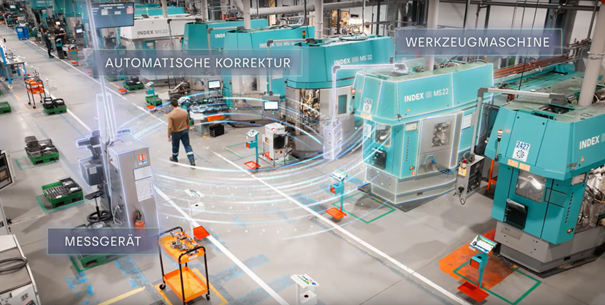
• Real-time processing of measurement data
• Predictive detection of trends and drift
• Automatic adjustment of machine parameters
• Closed control loops without manual intervention
This shifts the role of manufacturing from a supervisory to a self-regulating instance.
Setup Time Optimization through Holistic Correction Models
A central efficiency barrier in machining lies in the startup phase of new or retooled processes. Traditionally, optimization occurs iteratively: several workpieces are produced, measured, and corrected step by step.
APC significantly reduces this effort. A reliable process release can occur after the first manufactured component.
This is made possible by:
• The simultaneous consideration of all machined surfaces
• The inclusion of tool interactions
• The algorithmic linking of measurement deviations and correction parameters
The result is a significant reduction in setup times while simultaneously increasing process reliability.
Increasing Manufacturing Autonomy
A major obstacle for highly automated manufacturing systems is the necessary interruption of processes for quality assurance. Traditional measurement concepts often require downtimes or manual interventions.
With APC, quality assurance can be directly integrated into the process flow:
• Automated, process-close measurements can be realized
• Integration of tactile and optical measurement systems
• Continuous connection to machine controls
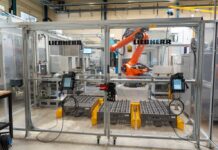
This integration allows manufacturing cells to operate with a significantly higher degree of autonomy and forms the basis for the extended use of robotics.
Relief for Operating Personnel
The manual correction of manufacturing processes is not only time-consuming but also prone to errors. Operators must:
• Calculate and document correction values
• Clearly assign tools
• Perform interventions at the machine control
• Consider additional influences such as thermal effects
APC fully automates these steps. This significantly reduces the operational burden on personnel while simultaneously increasing process quality. The operator is decoupled from reactive interventions and can focus on higher-level tasks.
Conclusion
The increasing complexity of modern machining processes requires a rethink in process management. Reactive approaches reach their limits where dynamics, precision, and efficiency are simultaneously required.
Automated Process Control transfers manufacturing into a state of continuous, automated regulation. Processes are no longer just monitored but actively controlled. Thus, APC represents a crucial development step towards autonomous manufacturing in machining – with measurable advantages in process stability, resource efficiency, and scalability.
Contact: