
The machining of aluminum presents machinists with a number of challenges: long, sticky chips, high heat input, vibrations, oscillations, and welding can lead to damage to the workpiece and the tools and reduce the quality of the surfaces. ISCAR has the right standard tool in its portfolio for all tasks in the economical machining of this abrasive material.
Aluminum is the most common metal in the Earth's crust, but it occurs almost exclusively in bound form in nature. It is mainly extracted as bauxite. Due to improved manufacturing processes, it quickly became a widely used and affordable material in the second half of the 19th century, offering the industry numerous advantageous properties: it is very light, does not rust, has good conductivity for heat and electricity, is easy to shape and machine, non-magnetic, and does not produce sparks. This makes the material a sought-after and often-used material in the electronics industry, mechanical engineering, construction, aerospace, railways, and automotive manufacturing.
Basically easy to machine, but …
"Aluminum can generally be machined quickly and easily," says Frederik Schmalbach, Product Manager Non-Rotating Tools at ISCAR Germany. "Nevertheless, the user must be aware of some peculiarities of the material." Aluminum is very abrasive, which increases tool wear. Adhesion also negatively affects the process. On the one hand, the long and sticky chips can wrap around the tool.
This can cause it to break and damage the workpiece. On the other hand, there is a risk that aluminum will weld onto the tool, which affects the cutting edge. "Additionally, the user must keep an eye on the heat input," adds Patrick Muller, Product Manager Drilling at ISCAR Germany. "Although the material dissipates high temperatures well, it can lead to tool wear and surface damage if the heat is not efficiently dissipated. The easy formability is both a blessing and a curse. Because aluminum deforms easily - sometimes with unwanted effects on dimensional accuracy and shape precision."
Machining made easy
"The different industries have varying requirements for surface qualities and tolerances, but they agree on the demands for the machining tool," says Herbert Volk, Product Manager Milling at ISCAR. "It must enable fast and process-safe machining and be solution-oriented. High-volume machining is the magic word here. The tools used should allow for large machining volumes, enable high speeds, and cut as smoothly as possible."
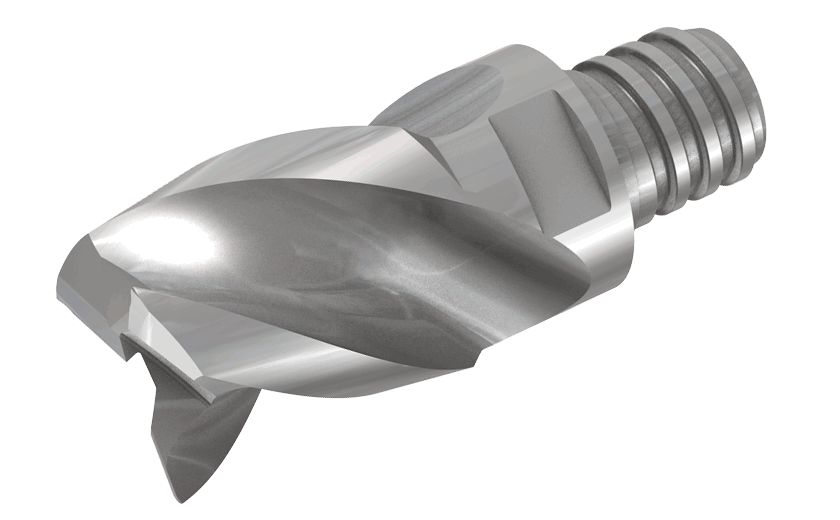
The high cutting parameters in aluminum machining also have an important effect - regarding the active machining time per component. Machine runtimes are significantly reduced, saving energy and decreasing CO2 emissions. "Additionally, indexable tools with interchangeable cutting inserts and heads increase the resource efficiency of valuable raw materials, as only the cutting set needs to be replaced, not the entire tool," explains Herbert Volk. "Solid carbide tools should only be used when the high cutting depth potential can be realized. For cutting depths up to 1xD, the modular MULTI-MASTER interchangeable head milling cutters from the MM EA-CF series offer an interesting alternative for effective aluminum machining."
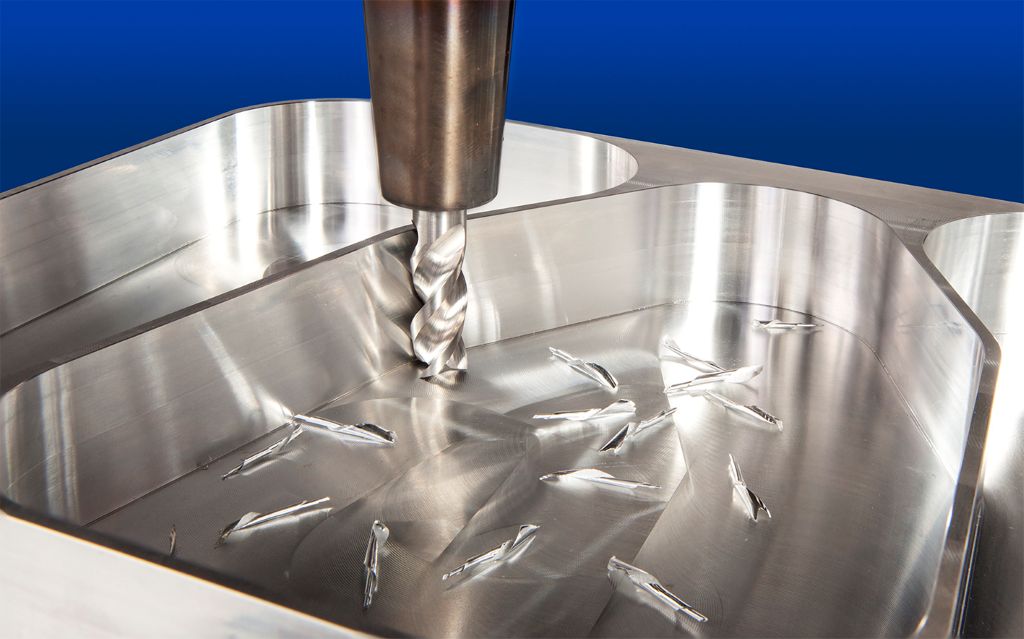
The choice of the right cutting geometry is crucial for the efficient machining of aluminum. The carbide tools must have sharp edges, suitable chip breakers, and special coatings to prevent sticking and increase tool life. The right cooling, which transports the coolant directly into the cutting zone, can efficiently dissipate heat and chips and improve surface quality.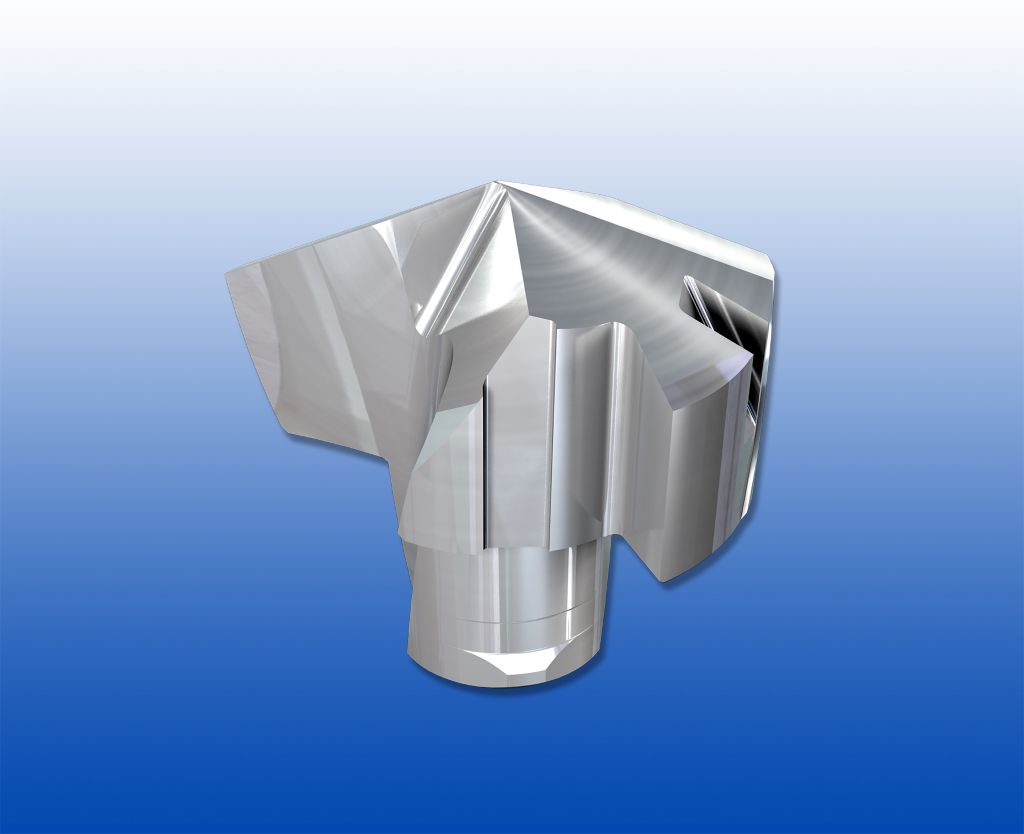
"Ultimately, it also depends on the appropriate machining strategy with adjusted cutting parameters," explains Patrick Muller. "Optimized cutting speeds, feed rates, and cutting depths reduce vibrations and make chip formation controllable." This is where ISCAR comes into play. The tool specialists offer a wide portfolio of tools for milling, drilling, turning, and grooving that enables a fast, process-safe, and economical solution for every task.
Roughing and finishing
"Specifically for roughing and finishing aluminum, ISCAR offers a whole range of standard tools," explains Herbert Volk.
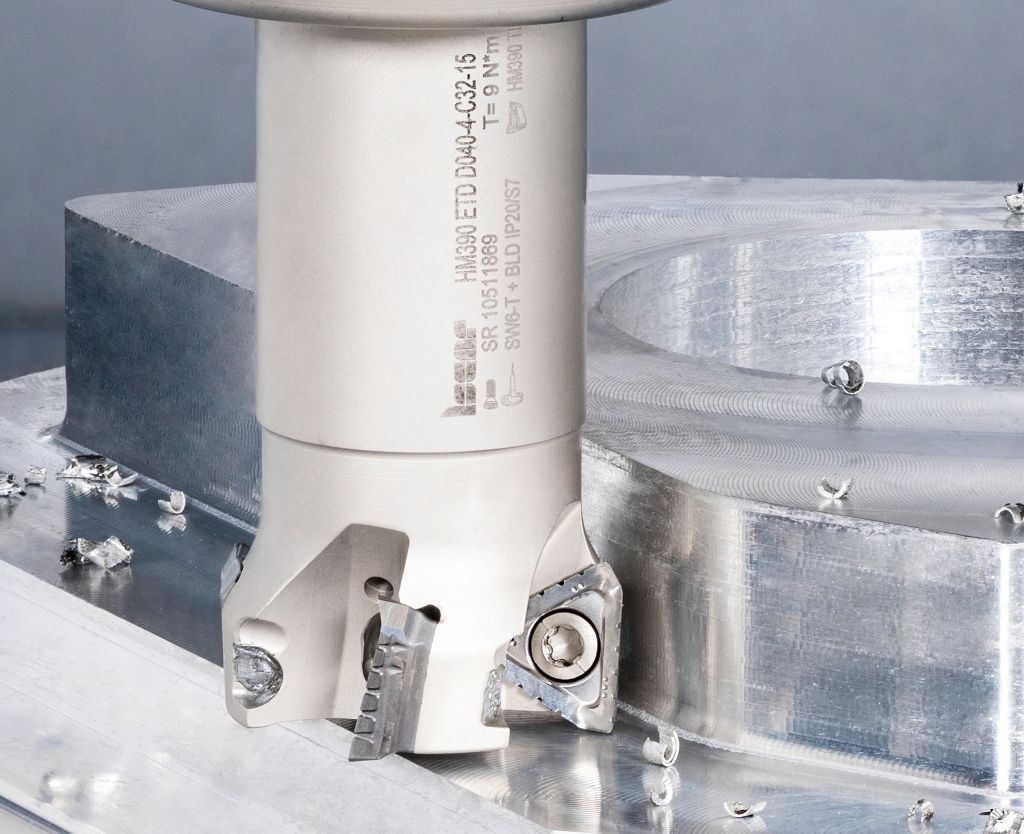
For example, the HELIIQMILL for trigon indexable inserts with three helical cutting edges for machining 90-degree shoulders, the HELIALU with two-edged, rhombic indexable inserts for shoulder, full slot, and face milling at extremely high speeds, and the polished ECA CHATTER-FREE solid carbide (VHM) high-performance end mills, which are also available in combination with the new hard carbon DLC coating. "DLC stands for diamond-like carbon coating," explains Herbert Volk. "It is a nanocomposite coating with the properties of a diamond, offering low friction, high hardness, and great corrosion resistance." The chips are better evacuated due to the DLC coating, and the smooth surface reduces built-up edge formation.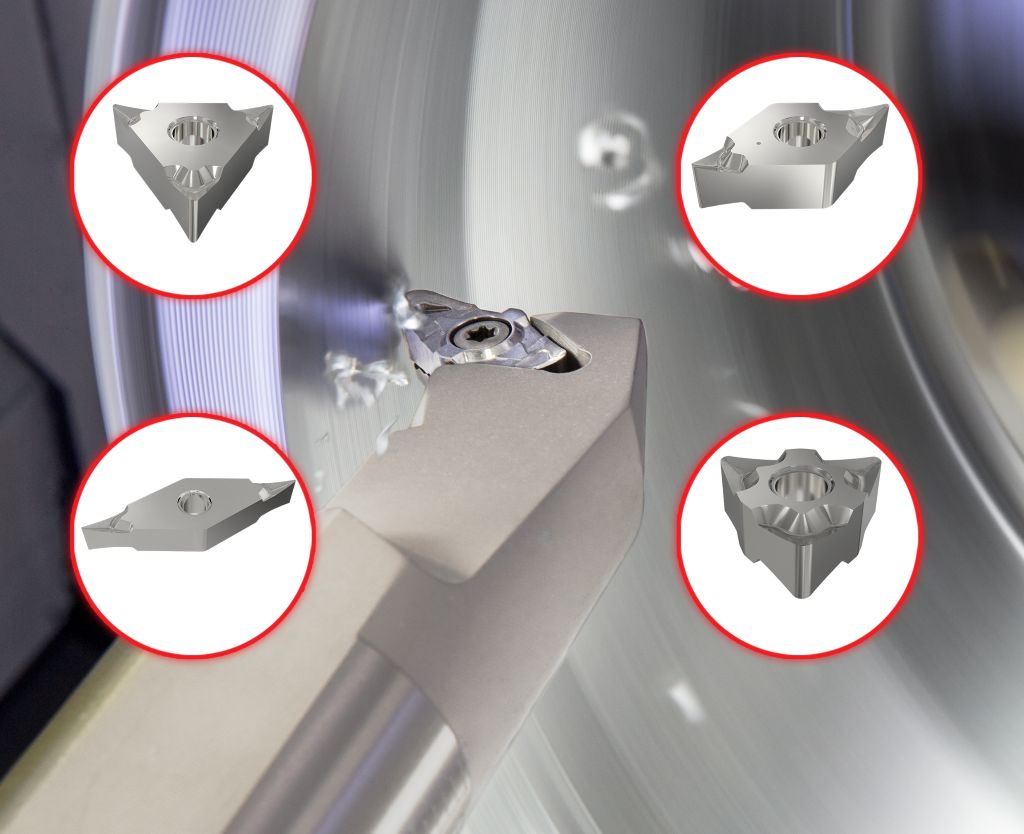
Brand new is also the HELIALU with targeted JHP cooling. This allows for roughing and pre-finishing deep pockets and shoulders. The precise, targeted cooling of each individual cutting edge increases surface quality and produces compact chips with fewer chip entanglements. The user benefits from high process reliability due to optimal chip removal and long tool life, with significantly fewer built-up edges forming, and efficiency increases due to improved cutting parameters.
For high machining performance in face, pocket, and contour milling even under unstable conditions, there is the HELI3MILL. Its three sharp, helical, and segmented cutting edges with adapted wide finishing edges ensure stability and high surface quality. Thanks to targeted internal cooling, short chips are produced that can be easily evacuated. The HELI3MILL reduces cutting forces, vibrations, and temperature in the cutting zone.
Drilling - with interchangeable head or WSP
"To economically create holes in aluminum workpieces, ISCAR offers two standard solutions," explains Patrick Muller. "On the one hand, the special aluminum WSP for the indexable drills of the DR-TWIST series and the ICN interchangeable drill head for the SUMOCHAM."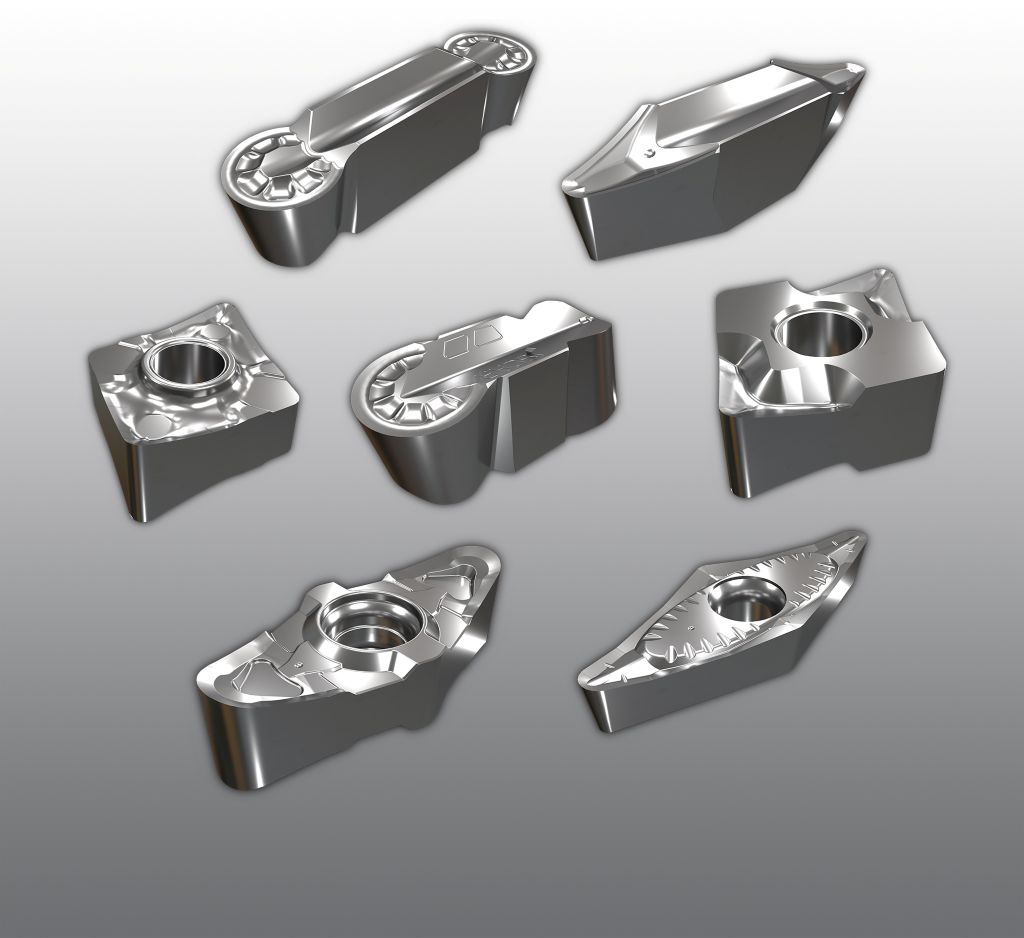
ISCAR's DR-TWIST drills can be equipped with specially developed, four-edged indexable cutting inserts for aluminum machining. These extensively ground inserts feature sharp cutting edges and polished chip surfaces that prevent built-up edges. They are made of the uncoated fine grain grade IC08. Helical coolant channels run through the entire drill body, but not through its core. This makes it resistant to torsional forces. This design improves their stability and chip removal. DR-TWIST drills are available for drilling depths of 2xD, 3xD, 4xD, and 5xD and in diameters from twelve to 60 millimeters.
For the SUMOCHAM exchangeable head drills with diameters from ten to 19.5 millimeters, ISCAR has special drill heads for aluminum machining in its program. The drill heads with ICN geometry are equipped with sharp cutting edges and polished flutes. They allow drilling tolerances of IT eight to nine. They are made of the uncoated fine grain grade IC08 but can also be provided with a DLC coating.
Turning and grooving
"When it comes to finishing and roughing aluminum, the ALUPTURN is a good choice as a standard tool," says Frederik Schmalbach, Product Manager Non-Rotating Tools at ISCAR Germany. "The inserts offer an attractive price per edge and enable long tool life. ISCAR has designed the double-sided, ground and polished, positive indexable cutting insert with four cutting edges specifically for aluminum and other non-ferrous metals. It is equipped with an extremely positive F3N-P or M3N-P chip former with a polished chip surface. Its positive rake angle reduces the cutting forces and achieves a smooth cut, while the smooth chip surface prevents built-up edges.
In addition, ISCAR offers a whole range of standard ISO indexable cutting inserts with the new DLC coating for the ISOTURN and CUTGRIP series. "The coating allows the user to economically turn and groove aluminum," says Frederik Schmalbach. "Thanks to different substrates, shapes, rake angles, and cutting geometries, there is the right tool for every application. And if not, a special solution can always be designed – this also applies to milling cutters and drills."
Contact: