
Titanium and nickel-based alloys are among the most demanding materials in machining. They combine high strength, low density, and excellent resistance to corrosion and heat. These properties make them indispensable for aerospace, but they also significantly complicate machining. For manufacturing, this means short tool life, high thermal stress, and rising costs. ISCAR addresses these challenges with tailored tool strategies aimed at stable processes and reproducible results.
Titanium and nickel-based alloys are preferred in aerospace due to their high mechanical strength, very good corrosion resistance, and thermal stability under extreme operating conditions. Despite these advantages, they pose significant challenges in machining that directly affect tool life, surface quality, and process stability. The focus in developing new tool systems is on increasing tool life and enhancing cost-effectiveness in manufacturing.
Aerospace components are made from materials specifically designed for use under high mechanical loads, elevated temperatures, and aggressive environmental conditions. Titanium and nickel-based alloys offer an excellent strength-to-weight ratio as well as outstanding heat resistance. This makes them essential for structural components, engine parts, and other safety-critical assemblies. At the same time, these very properties lead to challenging machinability compared to steel or aluminum alloys. Low material removal rates, increased tool wear, and high quality requirements significantly contribute to rising manufacturing costs.
High temperature input into the tool
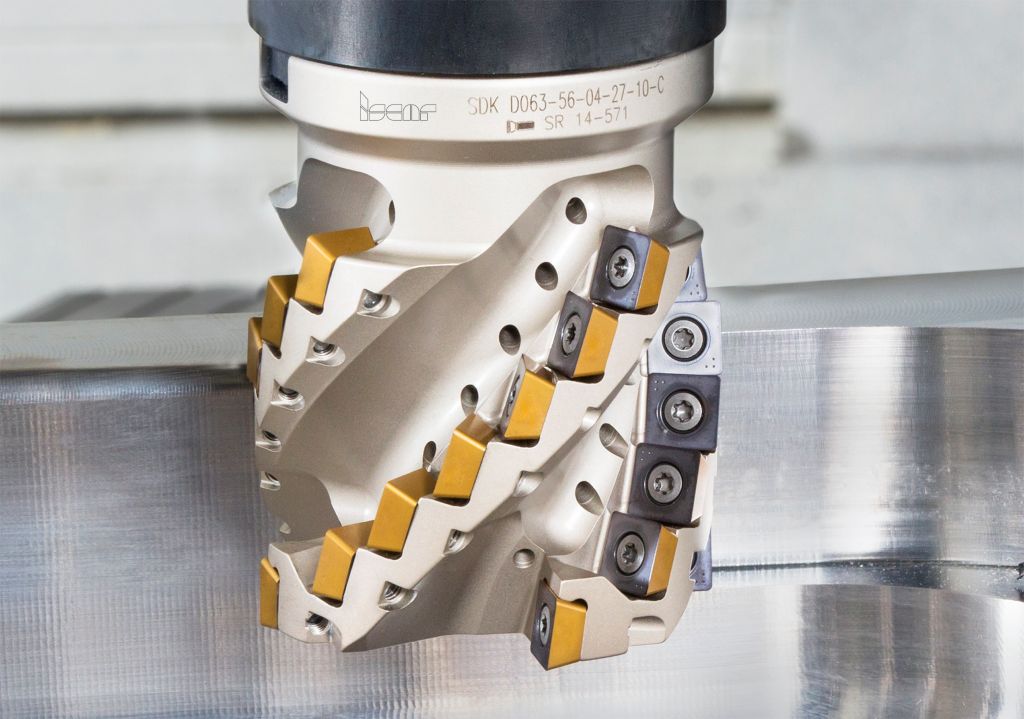
Titanium alloys combine strength with low density and excellent corrosion resistance. Due to this unusual combination of properties, titanium is used in many technical specialty areas despite its cost. The mechanical properties of titanium alloys, particularly the high specific strength with very low elongation at break, combined with low thermal conductivity, place significant demands on the machining process.
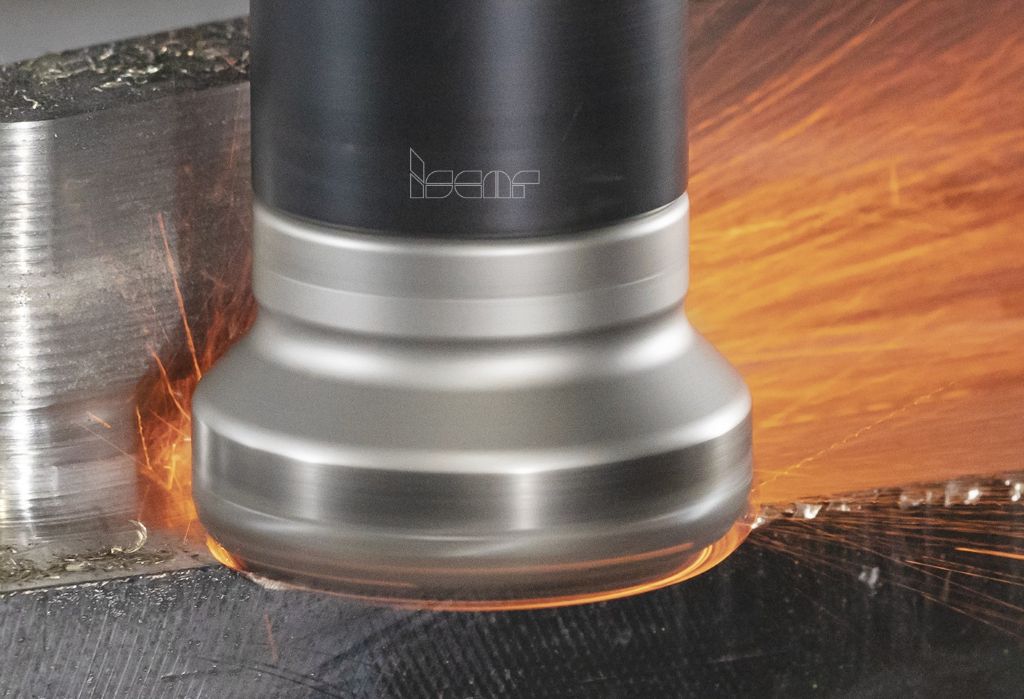
To clarify: When machining steel, the ratio of heat dissipation from the chip to the carbide tool is about 50 percent. This means that half of the generated temperature is dissipated by the chip to the cutting edge, while the other half remains in the chip. In the machining of titanium, 80 percent of the generated temperature goes into the cutting edge. Thus, the thermal stability of the cutting material used is of great importance.
Moreover, titanium has a high chemical affinity for cutting materials. Particularly at low cutting speeds, this promotes the formation of built-up edges and material adhesion.
Due to these challenges, ISCAR uses fine-grained carbide substrates and innovative PVD coatings. These are used, among others, in tool families such as HELIDO, CHATTERFREE, and various solid carbide end mills. They increase the stability of the cutting edges and reduce friction and heat generation.
Special edge preparation and thermally stable coatings
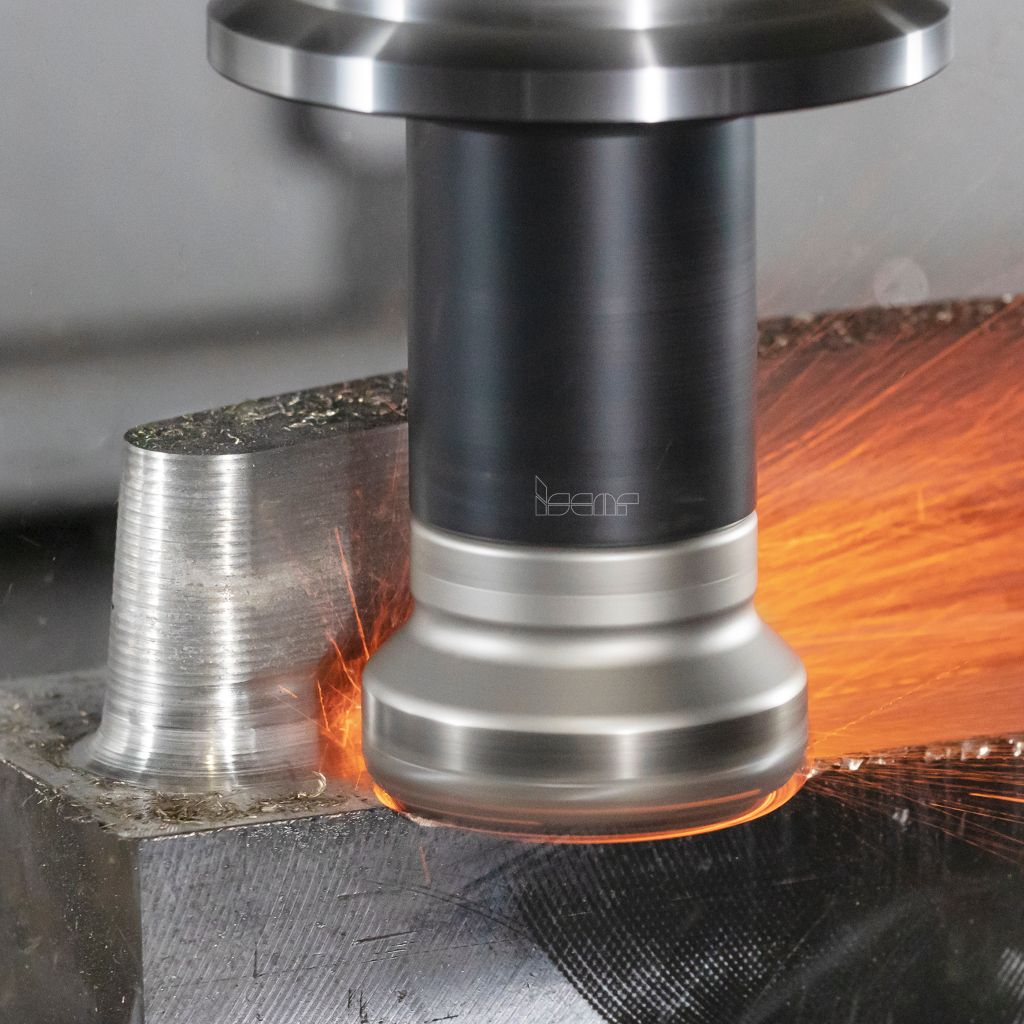
Nickel-based alloys present different, but equally demanding challenges for the cutting tools used. Nickel materials retain their strength even at high temperatures and exhibit pronounced cold hardening behavior during plastic deformation – they become harder and more brittle.
In machining, this leads to increased cutting forces, cold hardening, as well as notch, diffusion, and pitting wear. To limit heat generation, machinists typically work with reduced cutting speeds. However, this negatively affects productivity.
ISCAR addresses these challenges with cutting inserts featuring special edge preparation and thermally stable coatings. These are particularly used in SUMOTEC cutting material grades, including in the tool families HELITURN and LOGIQTURN. They are specifically designed for predictable wear behavior over longer service times.
The right cutting material is crucial
Machining processes for aerospace components are subject to strict requirements that go far beyond mere dimensional accuracy. Typical tolerances often range between five and ten micrometers. At the same time, high surface quality must be ensured. The goal is to avoid micro-cracks, material buildup, and residual stresses, as these can negatively impact fatigue strength. Additionally, thin-walled component structures, complex geometries, and interrupted cuts often increase susceptibility to vibrations and tool deflection. Milling tools with variable pitch and helix, as used in the ISCAR families CHATTERFREE and HELIMILL, are specifically designed to reduce vibrations and enhance process stability.
To withstand mechanical and thermal stresses and to reduce chipping at the cutting edge, the utilized cutting materials must have a balanced relationship between hardness and fracture toughness. Fine-grained carbide grades are usually used, as they are very wear-resistant and sufficiently tough even under unstable cutting conditions.
PVD coatings are often used for machining titanium and nickel-based alloys. They are characterized by high adhesion, thermal stability, and reduced friction. At the same time, they act as a thermal barrier, slowing down the heat input into the tool and promoting a uniform and predictable wear behavior.
Solutions for milling, turning, and drilling
In milling – particularly of thin-walled components – tools with variable pitch and helical cutting edges are needed to minimize vibrations.
When machining titanium alloys, high-feed systems, such as the HELIMILL-HFM tool, enable reduced radial engagement while simultaneously increasing feed per tooth. This reduces the cutting forces and limits heat generation.
In contrast, when machining nickel-based alloys, the focus is on stable engagement and uniform chip thickness to minimize local wear – particularly notch wear in transition areas.
To withstand the high mechanical loads in turning and grooving processes, tools require particularly stable clamping systems for the indexable inserts. Systems like HELITURN, JETCUT, and LOGIQTURN are designed accordingly. They feature stable insert seats and optimized cutting edge preparations for optimal cutting conditions.
Reliable chip control is very important when machining titanium alloys. Long chips disrupt the machining process and can cause damage to the component and the tool. In turning superalloys, cutting geometry and edge preparation play a central role in preventing notch wear and enabling longer tool life.
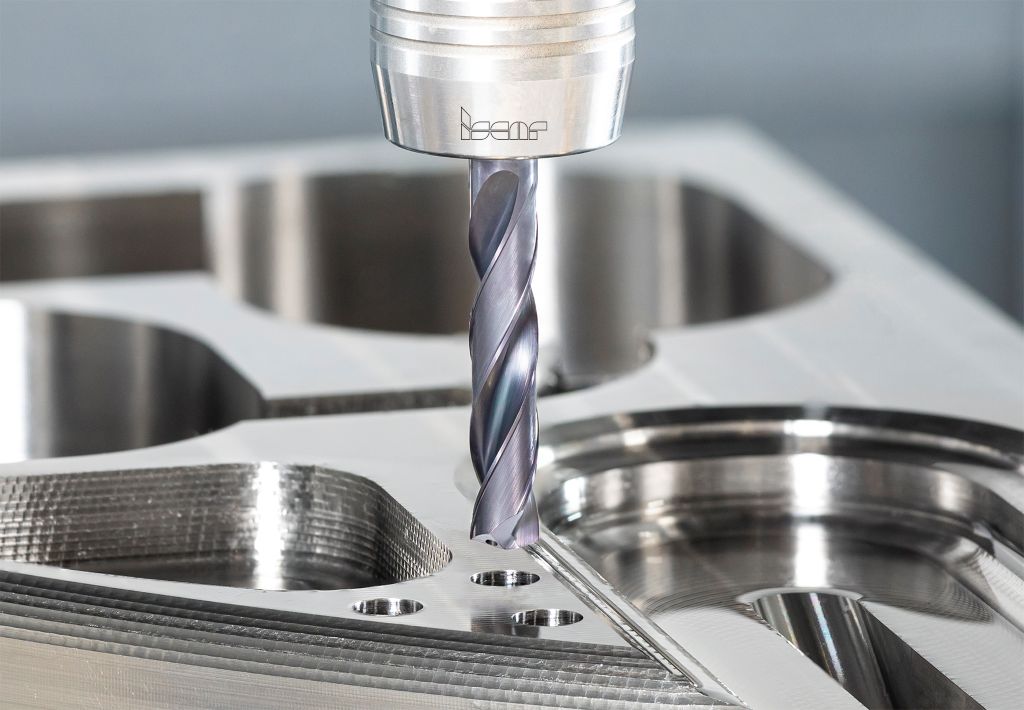
The quality of the bore has a direct impact on the assembly integrity and fatigue strength of aerospace components. Systems like SUMOCHAM, QUICK-3-CHAM, as well as indexable insert systems like DRTWIST and TRIDEEP offer optimized cutting geometries and internal coolant supply. This improves chip removal and reduces thermal stress. Users benefit from consistently high bore quality across different materials and geometries.
Process reliability and tool life in focus
The complex interplay of cutting parameters, tool geometry, cooling strategy, and machine rigidity determines the tool life. Even a moderate reduction in cutting speed by just ten to twenty percent can lead to significantly longer tool lives when machining nickel-based alloys. ISCAR focuses on reproducible and predictable wear behavior, rather than maximum theoretical tool life. This helps users avoid tool failures and increases process reliability.
Examples from the machining everyday life illustrate that users can significantly increase tool lives by employing optimized tool geometries, tailored coatings, and suitable cutting parameters. One user was able to increase tool life by 30 percent by using a variable helix end mill. At the same time, surface quality improved significantly, and they benefited from higher process stability and lower scrap rates.
The integration of digital tool libraries into CAM systems is becoming increasingly important in aerospace. ISCAR offers digital platforms with standardized tool data that enable consistent selection and parameter definition. This reduces setup fluctuations and shortens process development times. Simulation and verification tools also allow for the evaluation and optimization of machining strategies even before implementation in production. This minimizes risks in the manufacturing of high-quality components.
The improved tool lives and stable processes have a direct impact on economic efficiency. They reduce scrap and lower energy consumption per component. Given the high material costs in the production of complex aerospace components, even small efficiency gains lead to significant savings. At the same time, optimized processes contribute to sustainability through reduced material consumption and better tool utilization.
Contact:
www.iscar.de