

SPK Cutting Tools, a brand of CeramTec, showcases at AMB where ceramic cutting materials and CBN make a difference in practice: in processes that push conventional tools to their limits.
- BST 300 (CBN): high cutting speeds and surface qualities
- LST 350 (SiAlON): Roughing and pre-finishing of nickel-based alloys - even through the forge skin
- Turning of workpieces made of HRSA materials with high-pressure cooling: Delivers the coolant directly to the working area
- Tungsten and cobalt-free SiAlON carrier for corner-coated CBN cutting inserts

HRSA materials like Inconel or Waspaloy cannot be machined with compromises. High temperatures, low thermal conductivity, strong cold hardening - where other cutting materials thermally reach their limits, ceramic cutting materials and CBN maintain performance in their respective applications. This translates directly: more parts per layer, predictable tool life, no forced retreat into the slower process window.
At the trade fair, SPK presents coordinated tool solutions for the entire process chain from the first cut through the forge skin to the finished contour. 'The AMB is the right place for us to showcase our cutting material systems, including the BST 300 as a series product for the first time. For all users who want to get more out of their processes,' says Patrick Leonhardt, Product Manager CBN at SPK Cutting Tools by CeramTec.
Three stages. One system.
The BST 300 cutting insert made of CBN takes over the finish cut: 200 to 350 m/min, continuous to slightly interrupted cut, surface qualities of Ra <0.8 µm are possible. What technically distinguishes it is a corner rounding in the µm range - produced in a newly developed process that sharpens the working geometry. Cutting forces and vibrations decrease, the dimensional stability of expensive HRSA components remains secure.
LST 350 turns nickel-based alloys at 150 to 250 m/min, cutting depths up to 3.0 mm, even through the forge skin and under varying engagement conditions. The SiAlON cutting material is designed for roughing and pre-finishing and holds up where the process is thermally and mechanically most demanding. In addition to longitudinal turning, LST 350 also covers profiling and clearing; cutting inserts in special geometries are also possible.
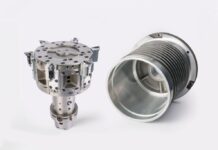
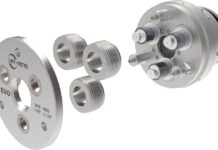
In turning, the coolant exits directly through the clamping finger and the turning tool into the working area at up to 200 bar. This keeps the cutting zone thermally stable and clears the narrow turning channel of chips. An advantage that directly impacts process reliability and tool life with tough HRSA materials. The tool system is available, among other things, as a shank or Capto variant.
When process heat becomes the tool

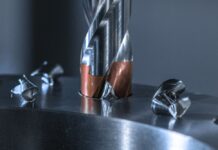
When milling HRSA and hardened materials (≥45 HRC), solid ceramic end mills made of SiAlON take high-feed milling to a new level. The principle: small cutting depths, high tooth feeds - and a cutting material that not only withstands process heat but actively utilizes it. SiAlON selectively softens the material in the shear gap, making the cutting process more efficient. In suitable applications, the process runs dry or with air support: less effort around the coolant, clearer processes.
'The crucial question is not whether ceramic lasts longer. The question is how many parts come out per machine hour. Those who use ceramic in a well-defined process window reduce machining times, alleviate bottlenecks, and calculate predictable piece costs - this is a tangible advantage in an economically demanding environment,' says Frank Hoeing, Head of Application Technology and Engineering at SPK Cutting Tools by CeramTec.
Tungsten and cobalt-free - plus engineering
SPK offers tool manufacturers a ceramic SiAlON base carrier for corner-coated CBN cutting inserts, which is produced in Germany without tungsten and cobalt. The carrier withstands high thermal loads and thus enables reliably high cutting speeds. The ceramic base carrier proves itself even under demanding conditions such as interrupted cuts, high feeds, and extreme temperatures. This ensures predictable stable processes and reproducible results. End customers receive a cutting insert concept that meets growing demands for compliance and sustainability - with full process reliability.
Ceramic cutting systems demonstrate their advantage where the use is consistently aligned with the right process window: The output per machine hour increases, and the tool cost structure detaches from the raw material price cycles of conventional cutting materials.
SPK Cutting Tools by CeramTec in Hall 1, Stand 1B60
Contact: