
Instrument making is craftsmanship, experience, and a lot of feeling. At Musikhaus Beck in Dettingen an der Erms, modern CNC technology and flexible clamping devices are now also part of it. The owner-managed company develops and manufactures numerous components for its brass instruments itself – from mouthpieces to screws and covers, as well as the tools needed for their production. With a DMG CTX 350 and clamping technology from Hainbuch, production today is significantly faster and more flexible.
Own ideas instead of standard goods
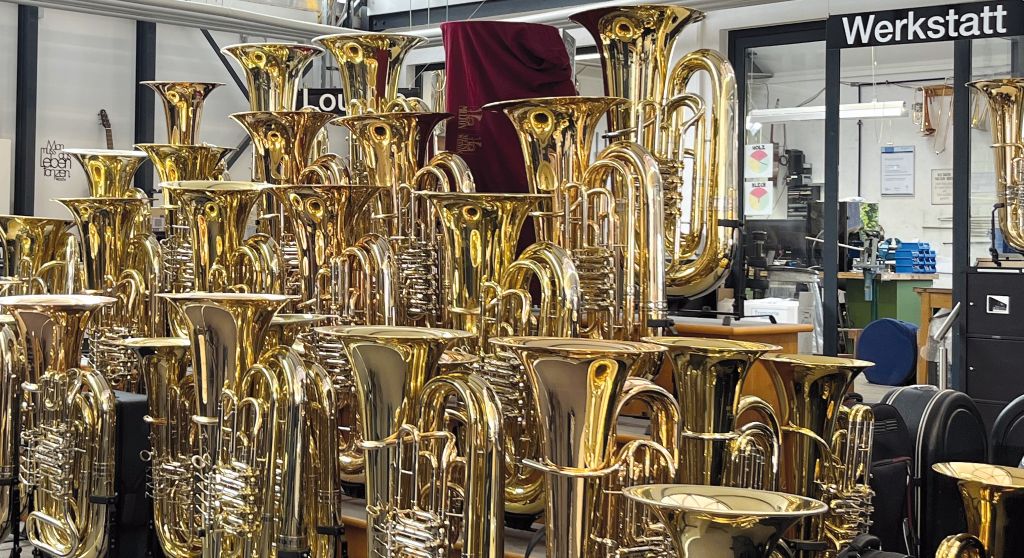
Musikhaus Beck was founded in 1975 and today combines consulting, sales, and instrument making under one roof. In its own master workshop, specialist advisors and instrument makers, who are also active musicians, work together and therefore know exactly what is important for an instrument.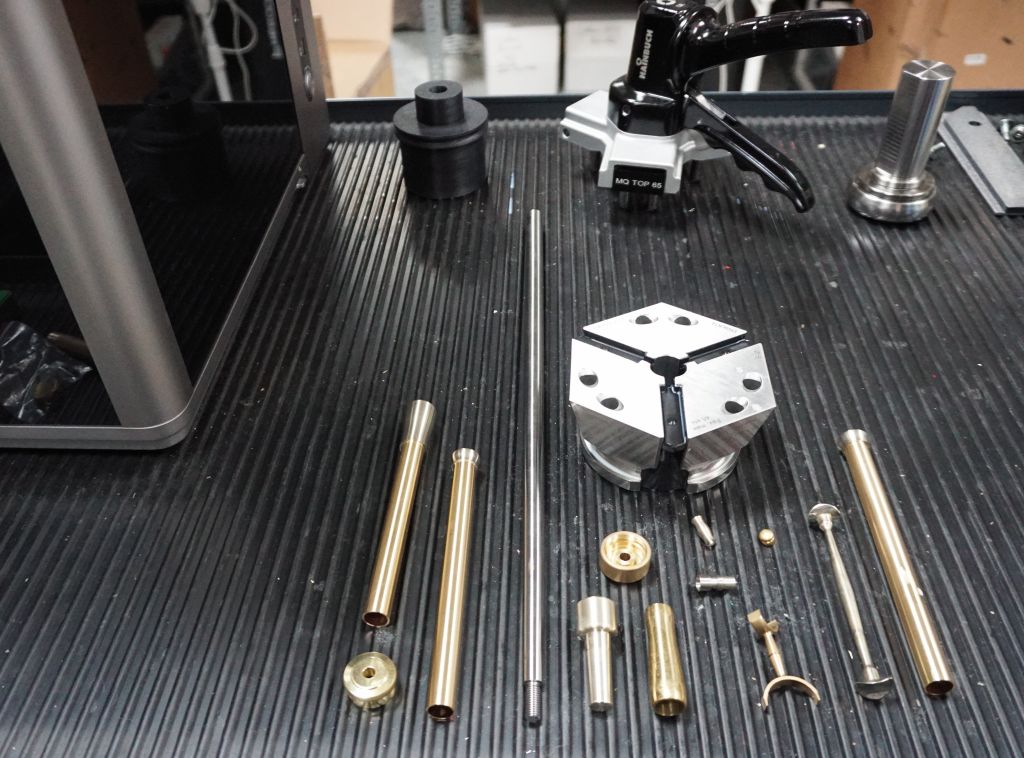
The company develops and manufactures its own brass instruments and constructs numerous components itself. 'We want to continue to evolve and also try things that may not be obvious for a company of our size,' explains Daniel Kössling, master brass instrument maker and active trombonist. 'When we have an idea for a component, we want to be able to implement it ourselves and not depend on whether there is a suitable standard part available somewhere.'
Single parts and small series of up to 100 pieces are produced. Mainly non-ferrous metals such as brass and copper are processed, but also titanium, steel, stainless steel, and alloyed steels. The range extends from solid material to extremely thin-walled tubes with wall thicknesses of only 0.35 millimeters.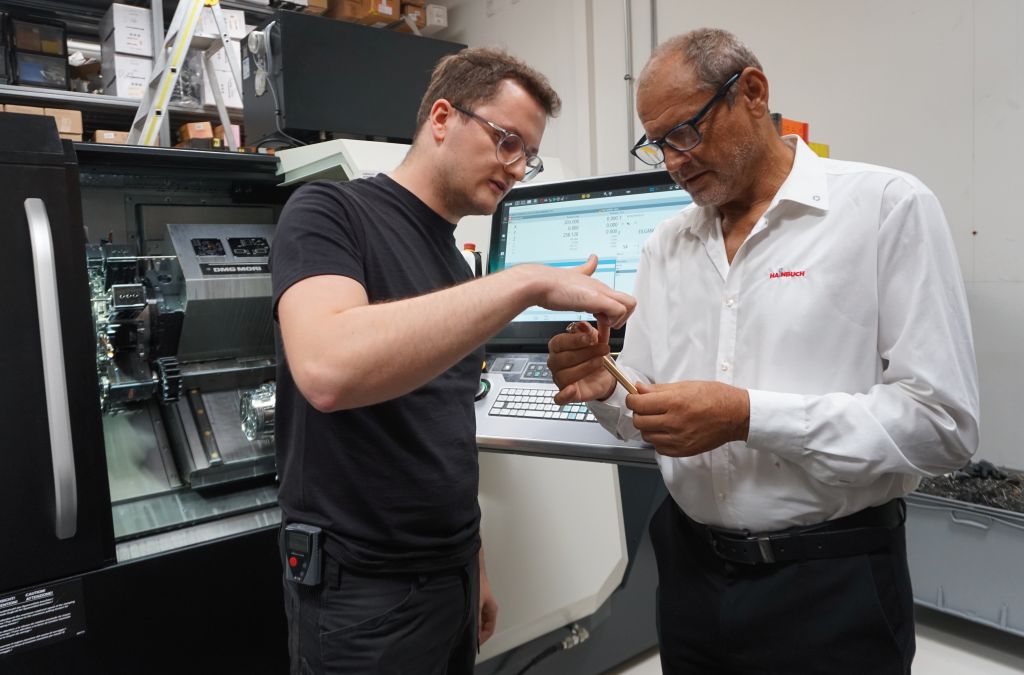
New machine – new requirements for clamping technology
With the acquisition of a DMG CTX 350 about a year ago, Musikhaus Beck made the transition from predominantly conventional turning to modern CNC manufacturing. DMG brought Hainbuch as a clamping tool supplier into play with a Spanntop clamping chuck. However, after a visit to the Hainbuch trade fair stand at AMB, the team opted for the compact Toplus mini clamping chuck.
The decisive factors were the low interference contour, the high achievable speeds of up to 5,500 min⁻¹, the insensitivity to contamination, and the flexibility provided by different clamping heads and adaptations. Axial and axial-fixed versions are used on the main and counter spindle. For larger clamping diameters, a jaw module complements the system.
'With such a range of parts, a clamping device must hold securely and stiffly while remaining flexible,' explains Hainbuch consultant Uwe Fischer. 'The hexagonal clamping geometry of the Toplus ensures high stiffness and holding power. At the same time, the user can quickly respond to new workpieces with different clamping heads and adaptations.'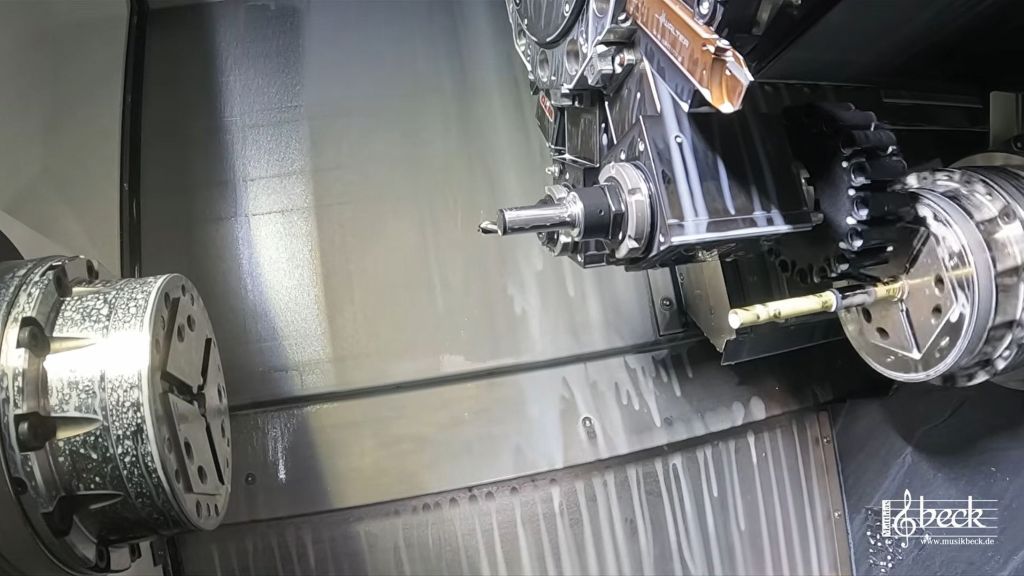
Secure clamping without leaving marks
The thin-walled and deformation-sensitive instrument components are particularly challenging. Too much clamping force can deform them, while too little jeopardizes process reliability. Therefore, Musikhaus Beck also uses differential pressure clamping over the machine, allowing them to adjust the clamping force to the respective workpiece.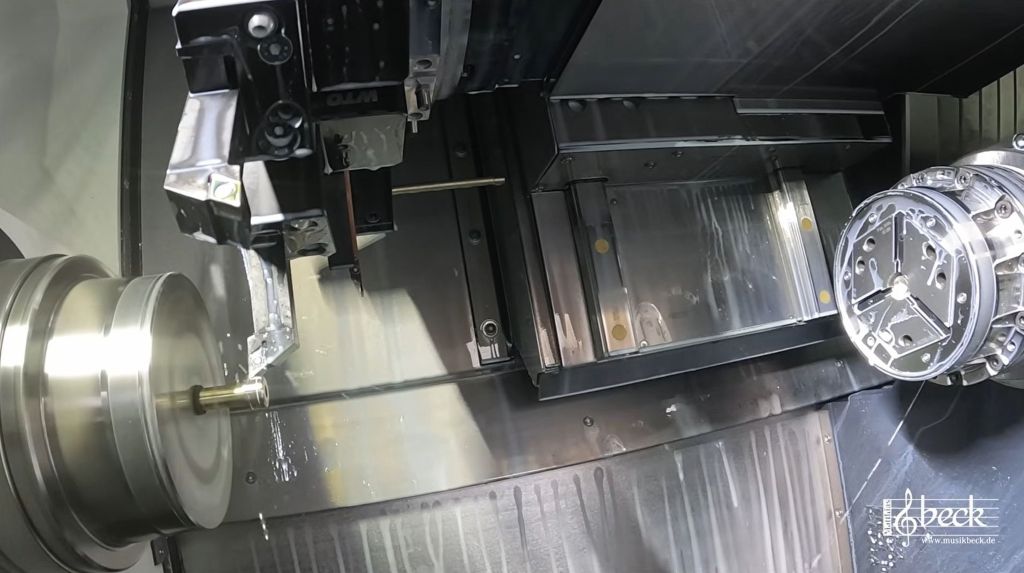
For the sensitive surfaces, Musikhaus Beck uses clamping heads with smooth bores. Clamping marks should be avoided, as many parts are only polished by hand after machining and subsequently silver-plated or gold-plated.
'Our parts must be securely clamped but must not be deformed or get clamping marks,' explains Kössling. 'Especially with very thin or soft materials, this is crucial. In short: The parts come out of the machine just damn well.'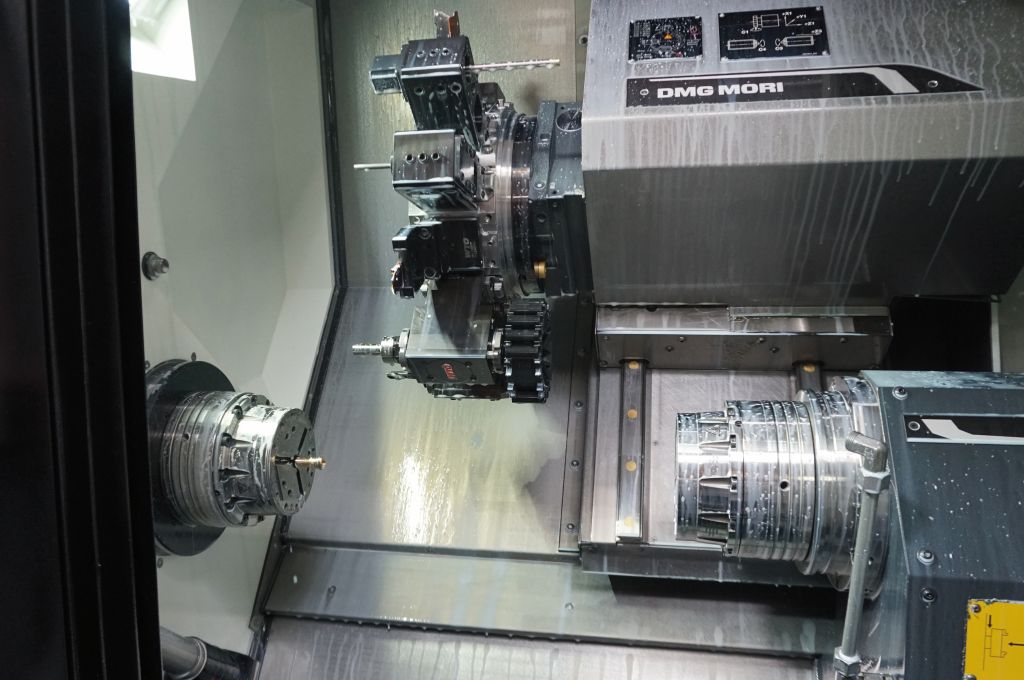
From 45 to 15 minutes
The difference to previous manufacturing is particularly evident with a mouthpiece. On the conventional machine, Musikhaus Beck needed about 45 minutes for this. Today, the component is produced on the CTX 350 in about 15 minutes – a reduction in manufacturing time of two-thirds.
The approximately 17-centimeter long, thin workpiece is processed in several steps on the main and counter spindle. First, the round material is loaded onto the counter spindle and pre-turned using a self-constructed loading aid.
'With a long and very thin workpiece, vibrations can quickly arise,' explains Fischer. 'Here, the Toplus shows its strengths with its high holding power and stiffness. The workpiece is stabilized directly at the clamping point.'
Subsequently, the workpiece is supported on the main spindle with a tip and further processed. For individual machining steps, the thin-walled tube is additionally filled with liquid to stabilize it further and reduce vibrations.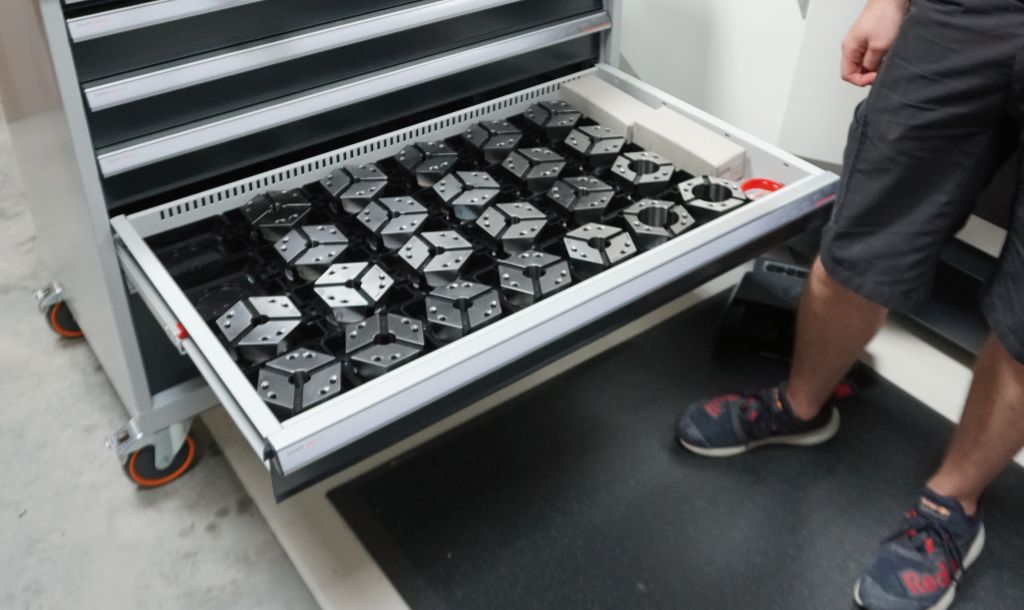
Another special feature: Depending on the design, the mouthpiece has diameters between 10.4 and 12 millimeters. To ensure that the same clamping head with a clamping diameter of 15 millimeters can always be used, the machine automatically places a reducing sleeve on the workpiece. The outer contour and inner cone are then finished – the entire process runs on one machine.
'We are incredibly flexible today,' says Kössling. 'We can manufacture very different parts and quickly try out new ideas. That is crucial for us.'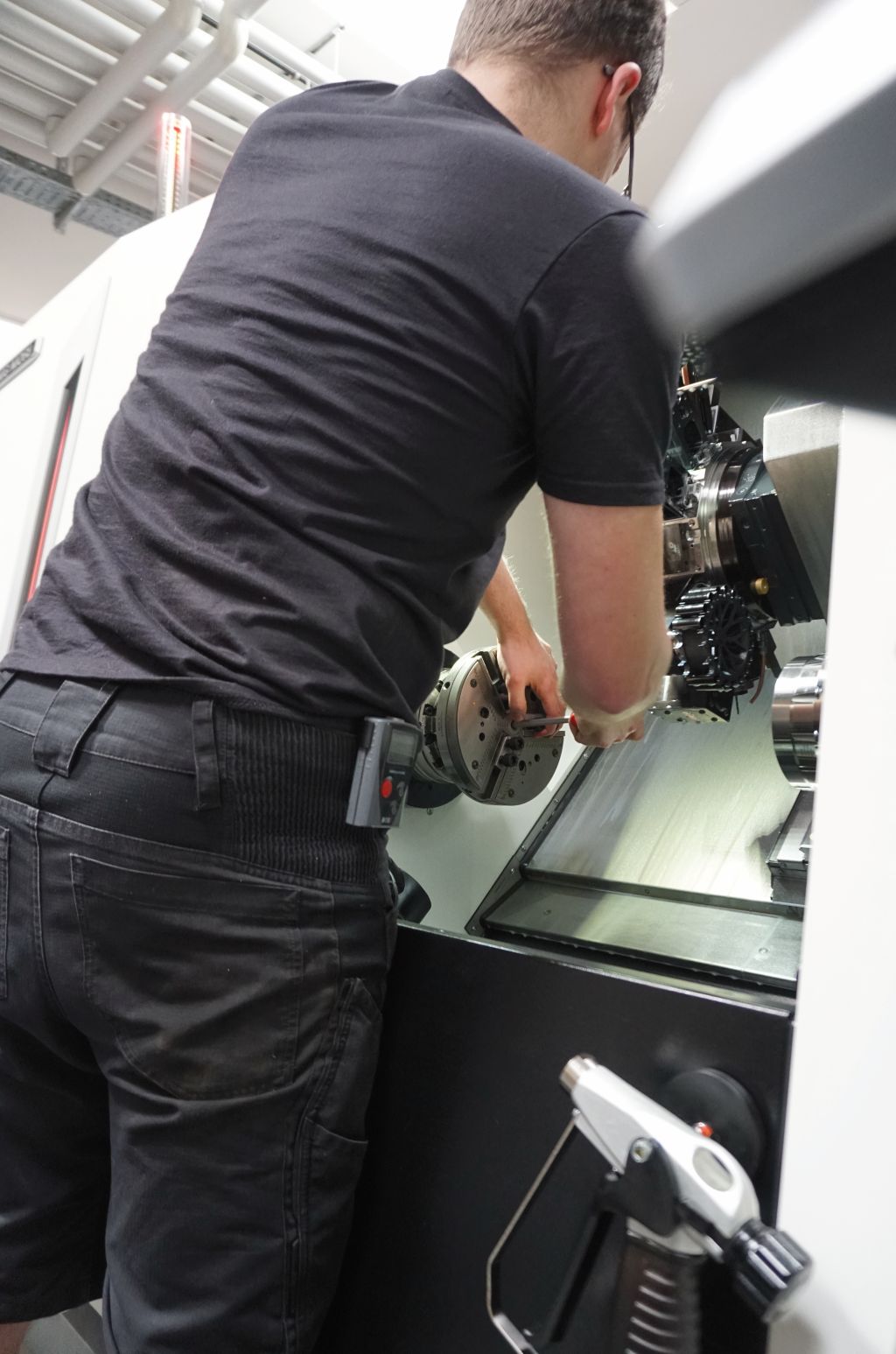
In two minutes from instrument part to tool
The CTX 350 not only manufactures instrument components. Musikhaus Beck also produces many of the necessary tools itself, such as molds for the production of sound elements.
Since these tools have larger diameters, a jaw module from the Hainbuch system complements the Toplus mini. It is inserted directly into the existing clamping chuck instead of the clamping head. The change to the larger clamping range takes about two minutes, and no alignment is required.
'This is where the system concept comes into play,' explains Fischer. 'The basic clamping tool remains on the machine. Instead of completely retooling and realigning the entire chuck, only the appropriate adaptation is inserted.'
Musikhaus Beck also manufactures long conical mandrels for pipe production itself. The CTX 350 is used almost like a long-turning automatic: The material runs through the clamping head and is supported there. The counter spindle pulls it out of the clamping tool in the Z-direction, while the turret moves in the X-direction and creates the conical contour. Thus, not only the instrument components are produced on the same machine, but also the tools for their manufacture.
Craftsmanship and modern manufacturing under one roof
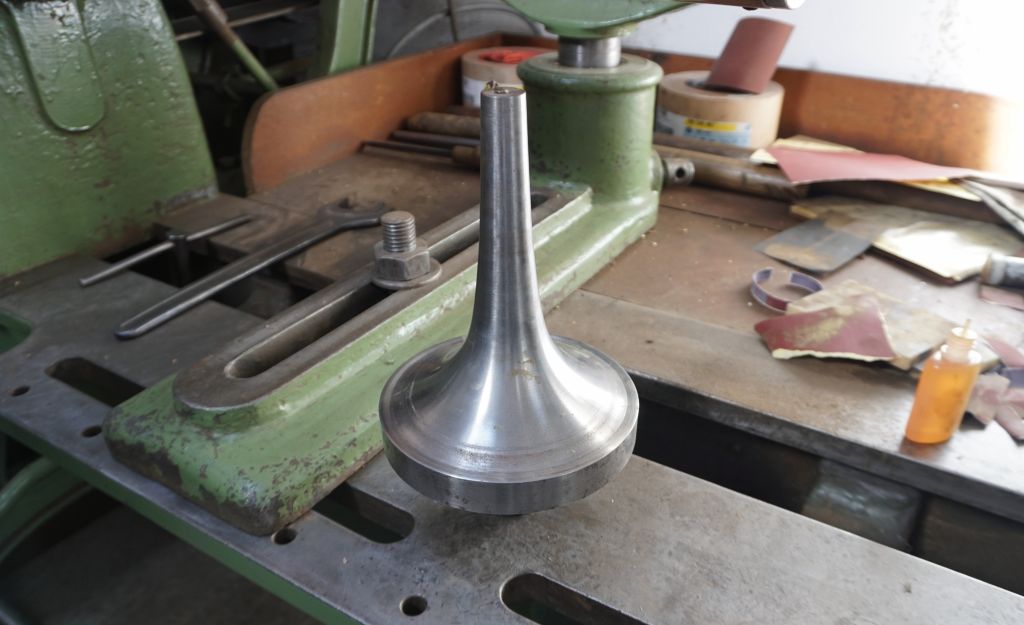
For Musikhaus Beck, the new manufacturing solution means much more than shorter machine times. Individual parts, prototypes, and small series can be produced at short notice, allowing new ideas to be tested and further developed immediately.
In choosing its partners, the company consciously relies on providers from the region. Short distances and direct support were also important factors in the decision for Hainbuch.
At Musikhaus Beck, traditional craftsmanship, the experience of active musicians, and modern manufacturing technology come together. And sometimes progress can be measured quite simply: a mouthpiece that used to take 45 minutes is now finished in about 15 minutes.
Contact: