
With the new generation of the OptiMill-Tro-Uni, MAPAL is further developing its trochoidal milling cutter for the demands of modern machining strategies. The focus is on high process reliability, reproducibly stable processes, and a high material removal rate.
Trochoidal milling has established itself as an efficient machining strategy for cutting. Characteristic are low radial engagement widths with simultaneously large axial feeds and constant engagement conditions. More powerful machines and increasingly dynamic CAM strategies that generate adaptive tool paths with changing engagement conditions, however, increase the demands on the trochoidal milling cutters used. Against this background, MAPAL has fundamentally revised the OptiMill-Tro-Uni for steel and cast materials, thereby defining a new standard for process reliability and material removal rate in trochoidal milling. The new generation will gradually replace the previous tool solution after about ten years of use.
Changed framework conditions are the main driver for the new development. More dynamic machines, optimized CAM strategies, and increasing cost pressure require tools that not only achieve high performance under ideal conditions but also ensure reproducibly stable processes under real operating conditions. The redesign of the OptiMill-Tro-Uni reflects these requirements in a coordinated combination of tool design and application-oriented process design.
Designed for dynamic process requirements
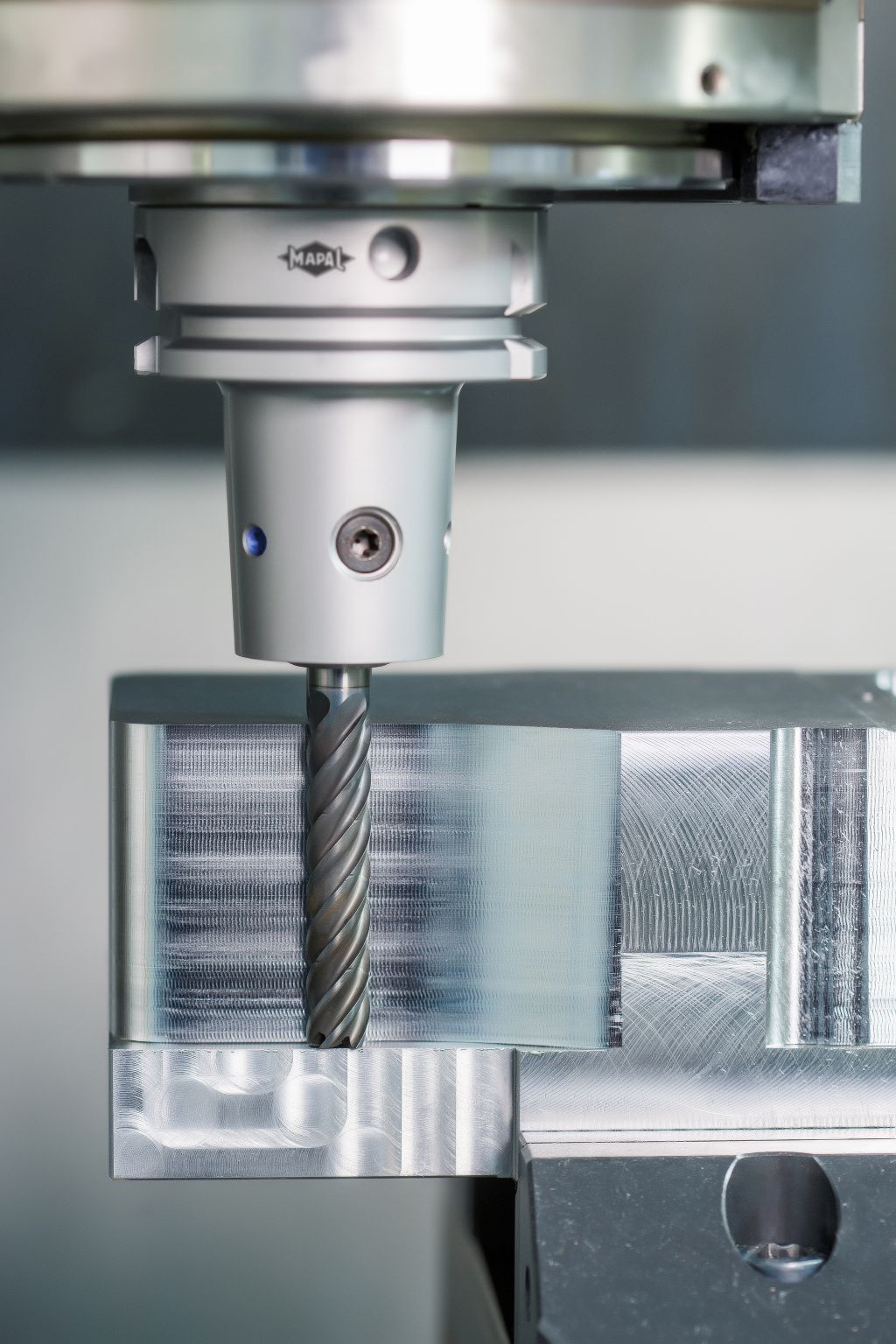
Compared to conventional milling strategies with larger radial engagements, the tool in trochoidal milling is subjected to high dynamic load changes. Changing engagement conditions, high feeds, and large axial cutting depths place special demands on stability, chip removal, and wear behavior, making the use of a trochoidal milling cutter necessary.
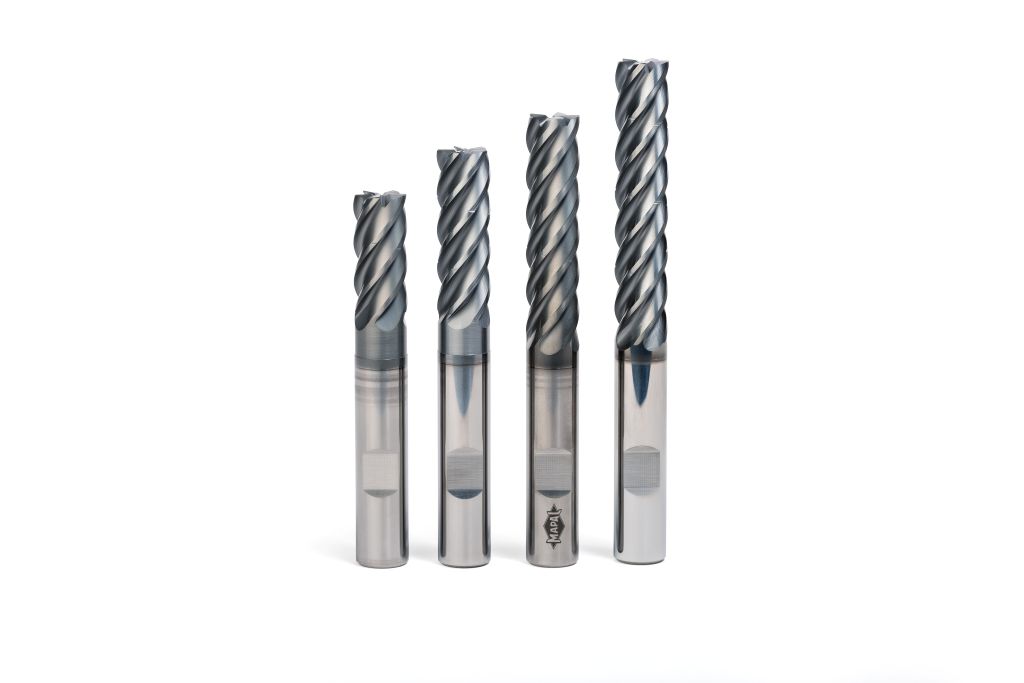
The core of the new generation of the OptiMill-Tro-Uni from MAPAL is a modified tool geometry. The core diameter adjusted according to length increases the bending fracture strength, especially with larger overhangs. The design with five cutting edges allows for high feed performance without compromising chip removal, thus ensuring high cost-effectiveness. Adjusted spiral angles and an asymmetrical cutting edge design reduce vibrations and ensure smooth operation. These are the essential prerequisites for stable processes at high feeds and axial engagements.
Chip formation has also been adapted to the requirements. Newly arranged chip breakers produce short chips. Especially with high axial engagements, optimal chip formation and removal contribute significantly to maintaining a stable machining process and enabling a high material removal rate under controlled conditions.
Adapted to different CAM strategies
In addition to tool design, the respective CAM strategy also significantly determines the loads to which the cutter is subjected during the process. Modern CAM systems have different approaches to implementing trochoidal milling strategies, such as tool path guidance, dynamic profiles, or radial engagement widths. Depending on the application, this results in different loading scenarios for the tool. The OptiMill-Tro-Uni covers this range of requirements, taking into account different dynamic levels and ensuring a stable implementation of the respective machining strategy.
Tool and process as a coordinated overall system
For the cost-effectiveness of a trochoidal milling process, not only the tool is crucial but also the coordinated design of the entire machining process. With its expertise, MAPAL takes this into account with the OptiMill-Tro-Uni and provides significant added value: Customers receive specially adapted cutting parameters in three dynamic levels with the trochoidal milling cutter, providing differentiated and practical starting values for their respective machining situation, tailored to the machine, clamping, and process conditions. While the market often only provides individual standard values, MAPAL supports the user with much more precise and application-specific information on tool use. The potential of the trochoidal machining strategy can thus be reproducibly and process reliably exploited.
Cost-effectiveness under real operating conditions
The combination of tool geometry, coordinated cutting values, and stable process management directly affects cost-effectiveness: Higher material removal rates, longer tool life, and stable machining contribute to lower component costs. Practical tests under real operating conditions show that especially the coordinated interplay of tool and process design contributes significantly to performance enhancement.
The second generation of the OptiMill-Tro-Uni will be launched at the AMB in Stuttgart. The existing product of the first generation will be gradually replaced by 2028. The trochoidal milling cutter for machining steel and cast materials will be available from September 2026 in diameters from 4 to 25 mm and in lengths from 2xD to 5xD. MAPAL specifically targets the automotive industry, mechanical and plant engineering, as well as tool and mold making.
Contact: