
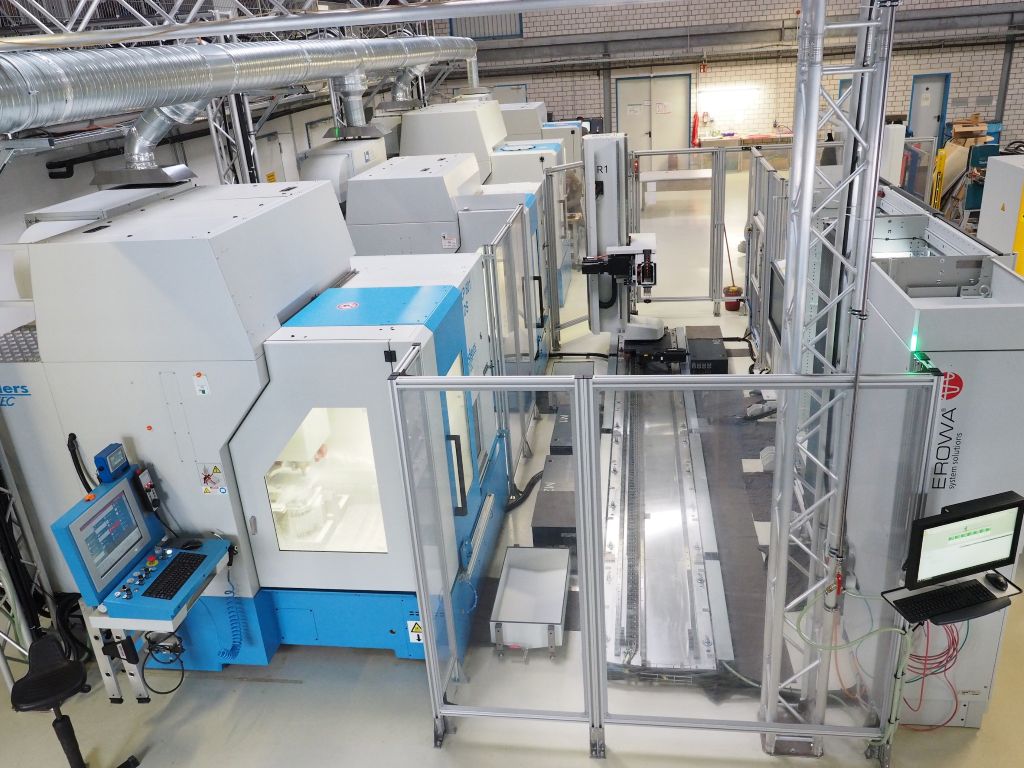
Silicon nitride is one of the hardest materials in technical ceramics. As it is a very good heat conductor, Bach Resistor Ceramics (Bach RC) manufactures powerful and highly dynamic heating elements from it based on their own formulations. In the hard machining of ceramic parts with tolerances of a few micrometers, the Brandenburg company relies on four precision milling and grinding machines from Röders.
Components made of silicon nitride offer many advantages: Due to the combination of high strength, low thermal expansion coefficients, and relatively large modulus of elasticity, they can be heated to temperatures of up to 1,000 °C within seconds. Thanks to integrated cooling channels for compressed air or nitrogen cooling, they can also be cooled down in the shortest time without damage. Heating rates of up to 150 K/min and cooling rates of up to 30 K/min are achieved.
This property makes them interesting for many application fields, especially for the semiconductor industry. At Bach Resistor Ceramics, about half of the revenue comes from heating elements for this high-tech sector. Additionally, the products are used in packaging technology – especially for food – in medical and furnace technology, in 3D metal printing, and in special applications.
Today, the range of parts from the Brandenburg family business based in Seefeld, near Berlin, includes over 1,000 standard components. They manufacture single pieces and small series – from a few grams lightweight, postage stamp-sized elements to heating plates and semiconductor heating chucks weighing several kilograms and up to 400 mm in diameter. While small heating elements ensure that coffee pads or cream portions for the gastronomy are sealed with heat, larger parts help securely connect brake pads with their saddles.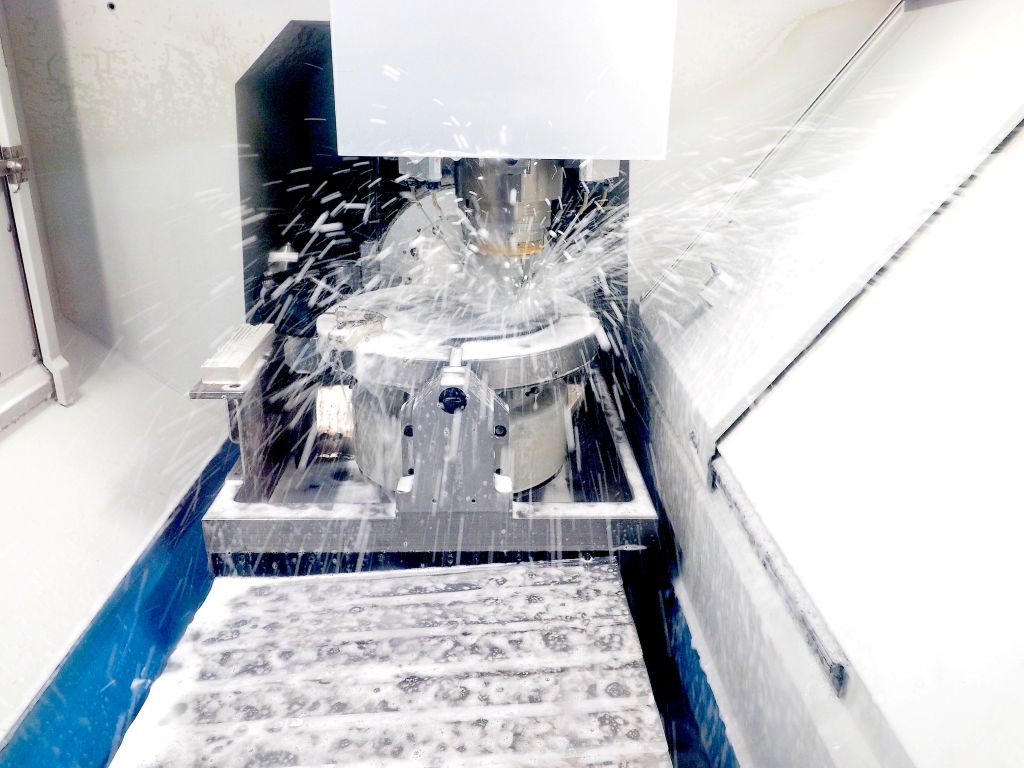
Monolithic sintered parts are unique worldwide.
Founded in Berlin in 1994, the company claims to be the only provider in the world capable of monolithically producing electrically conductive and insulating silicon nitride phases in a single sintering process. Thanks to this manufacturing technology, the heating elements from BACH RC are more homogeneous and significantly more powerful compared to components with printed conductors.
The advantages are appreciated worldwide: In 2025, 60 employees generated around 10 million euros in revenue. Bach RC is close to its international customers thanks to distribution partners in Japan, South Korea, Taiwan, China, the USA, Denmark, Italy, Austria, and Switzerland.
Challenge of hard ceramic machining.
Manufacturing at the only production site near Berlin begins with mixing silicon nitride powder according to their own formulations. This is followed by granulation, foiling, punching, and debinding. The resulting green parts are then hot-pressed at up to 1,800 °C in four sintering systems. Each process involves three to five parts with diameters of up to 400 mm, which undergo the sintering process in about 24 hours. The resulting workpieces then have their final hardness of up to 2,000 HV and exhibit almost no pore volume.
The high hardness of the components imposes high demands on precise machining. Fitting holes must be placed, pockets and grooves milled, and surfaces and edges ground. The standard tolerances here are ±5 µm, and in the semiconductor sector, even just ±2.5 µm.
In this context, the right tool is important, but the machine plays a crucial role: It must exhibit high stiffness, ensure the required dynamic accuracy, have a correspondingly fast spindle, and reliably maintain its precision over long periods. Furthermore, the machine must be designed in such a way that the abrasive grinding water does not cause damage.
In addition to milling machines, like those from Röders, a pure coordinate grinding machine was also discussed. 'While it would have been technically suitable for our requirements, it was oversized and too expensive. Moreover, the solution would not have offered full five-axis functionality, which was essential,' explains René Mielke, Senior Manager and responsible for machine purchasing.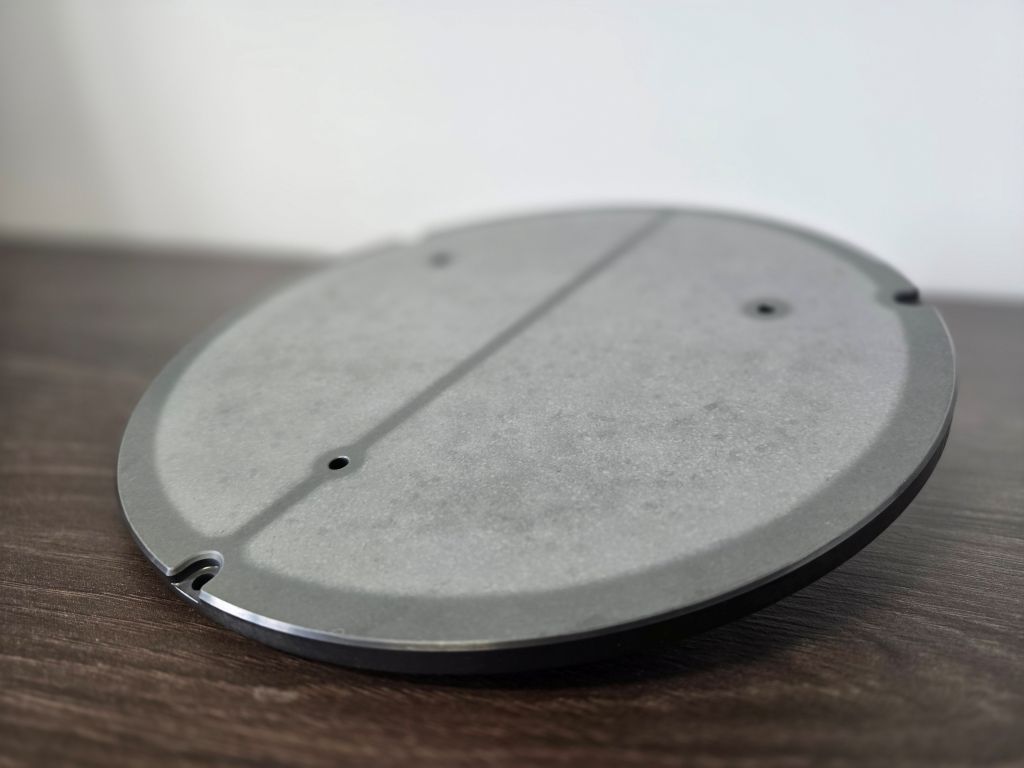
Why Röders was awarded the contract.
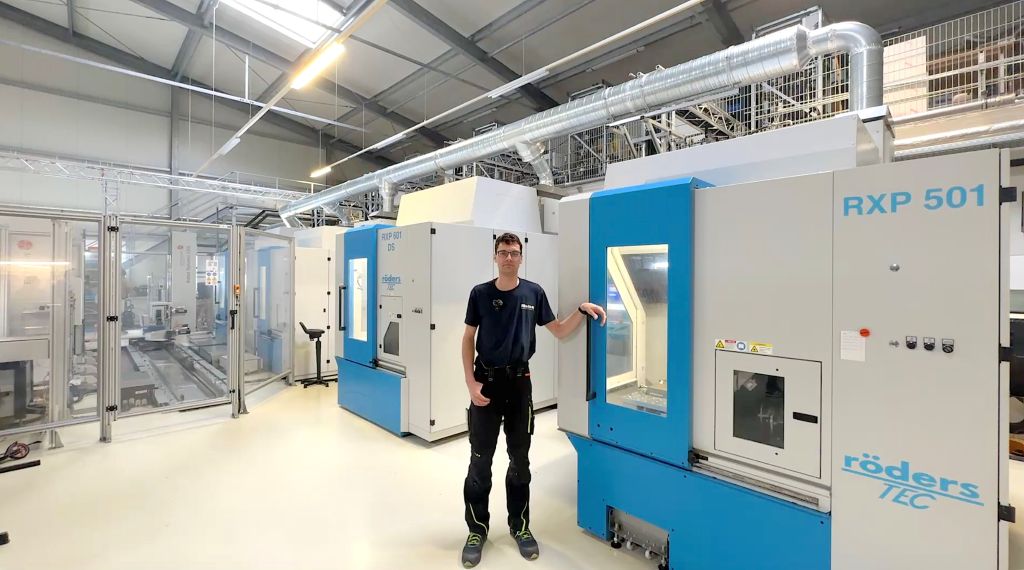
In 2018, BACH RC was the first to choose a 5-axis milling and grinding center from Röders GmbH. According to Mielke, several reasons spoke in favor of the manufacturer's machines, including their high stiffness, very high accuracy, and wear-free linear direct drives – essential for interpolated high-speed grinding of ceramics at up to 30,000 mm/min stroke speed.
Details such as frictionless weight compensation via vacuum and the control with an otherwise unmatched control frequency of 32 kHz also convinced him.
Effective seals that reliably prevent the penetration of cooling emulsion into guides and drives were also important to him. Other advantages included the user-friendly, Windows-based Röders control and the temperature stability of the machines; they achieve the required qualities even without a complex climate-controlled environment.
Last but not least, the quick service and appreciation from the machine builder pleased Mielke: 'Röders has always been open to our ideas from the very beginning – we always had close communication at eye level with intensive consulting. It was enjoyable and convinced us.'
Whether with three or five axes: Röders machines impress.
Even the first 5-axis machine from the manufacturer from Lower Saxony's Soltau thrilled users. Soon after, BACH RC acquired a 3-axis center. In 2024, two identical machines followed in one go – this time including automation with EROWA linear handling.
Both the 3-axis centers of the type RXP 501 and the two 5-axis centers RXP 601 DS are equipped with HSK-40 spindles and up to 42,000 min⁻¹, and feature the complete grinding package with dressing spindle, body sound sensor technology, grinding cycles, and parameter database.
'In light of increasing order intake, we had to expand our capacities; furthermore, we want to maintain redundant manufacturing,' explains Mielke the background of the investment.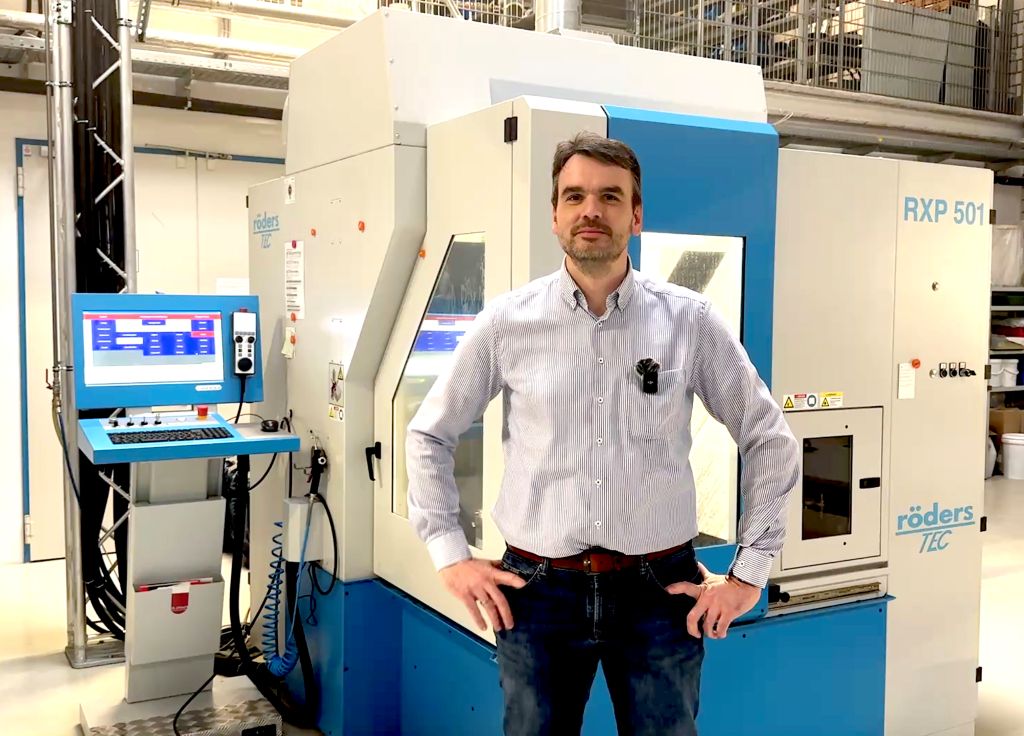
Automation extends machine runtimes.
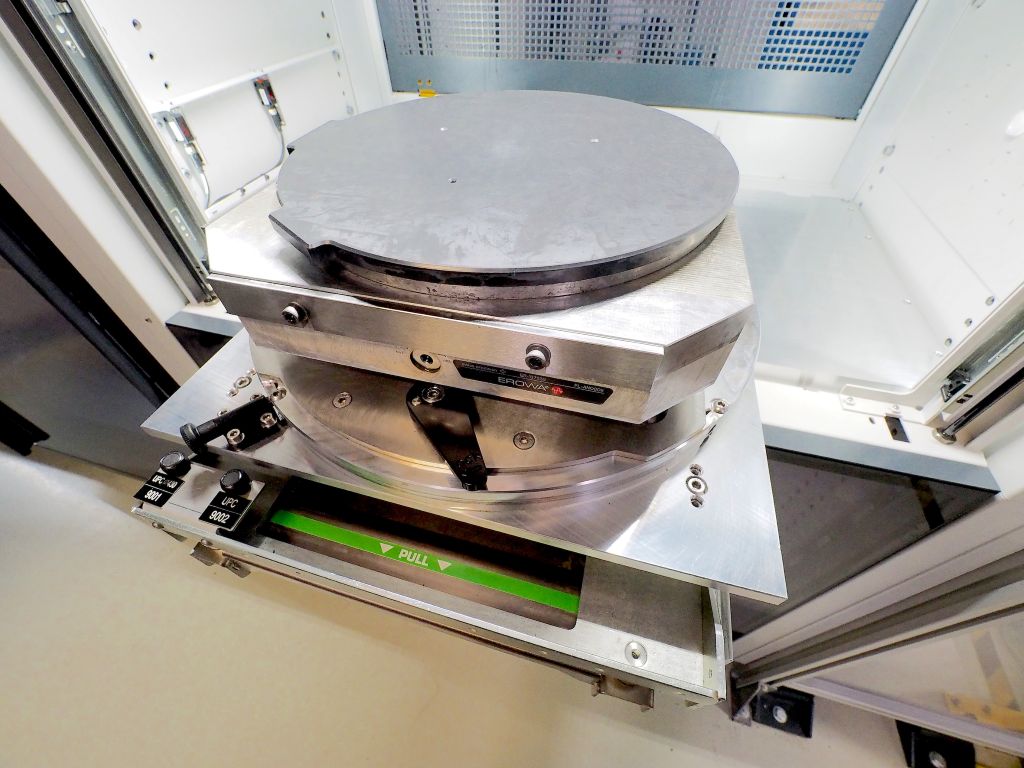
Linear automation has four advantages for BACH RC: Although the operation works in a single shift, automation allows the machines to continue running after working hours. For the several-kilogram heavy heating chucks for silicon wafers with a diameter of 300 mm, flatness of less than one micrometer is required; processing times can take up to 14 hours. Now they also continue running after hours and on weekends.
If an error occurs during unmanned machining, for example, because a tool is missing or the machine detects damage through its break control, precautions are in place. The system then automatically ejects the component and processes the next workpiece. This way, automation prevents downtime.
A third advantage: Workpieces remain clamped on their pallet throughout the entire process, eliminating setup times, increasing accuracy, and reducing setup effort.
Lastly, the pallet storage serves as an additional tool storage, from which the machines can be centrally supplied with tools. This is an advantage that further simplifies the operation of the system.
According to Mielke, experiences with automation are very good, so soon the first two 'Röders' machines will also be included to further increase the available processing hours.
Programming, cycles, and processing strategies
Machining technician Patrick Matzke appreciates, as a user, not only the high and reliable processing quality but also the very flexible and easy-to-use Röders control RMS6. Important parametric grinding cycles have been developed by the team in close collaboration with Röders support based on the cycles of the control itself. Most of the time, he and his colleagues program the processing of components directly at the machine like with a classic CNC control. 'The simple control and the high precision of the machines provide me with the decisive advantages when processing high-strength silicon nitride ceramics.'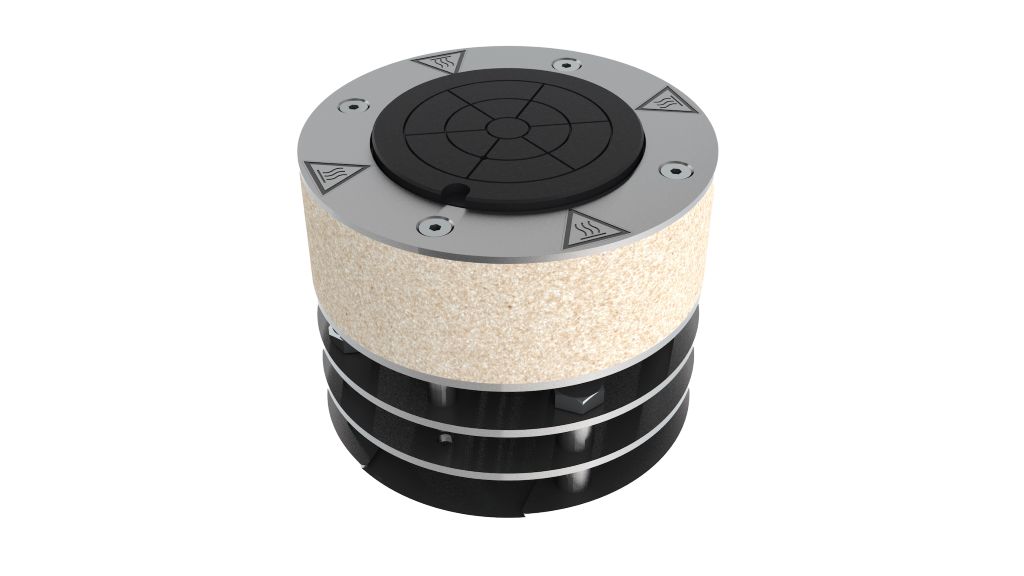
The interpolated high-speed grinding on the 5-axis machines is also positive. Thanks to linear direct drives, precise 2D contours can be ground at high lifting speeds, which would not be achievable with pure helical grinding in the required accuracy. Surface quality and tool life have also significantly improved compared to conventional grinding.
For processing, Matzke and his colleagues primarily use diamond tools from manufacturers Schott and Schell with internal cooling via emulsion at 80 bar. This makes it possible to reliably produce holes starting from 1.5 mm in diameter.
'Our expectations for the machines have been fully met,' Mielke is pleased to say. He is also satisfied with the utilization; the order situation at BACH RC is at a healthy level.
Contact: