
Pump manufacturer Munsch is a pioneer in digitization, which now extends from product configuration to assembly. Within production, tool management plays an important role. In close collaboration with HAIMER, the machining team has implemented a digital process that spans from the management software WinTool, through the dispensing system Toolbase, the HAIMER Microset presetting device UNO, shrink and balancing technology, to tool holders and tools.
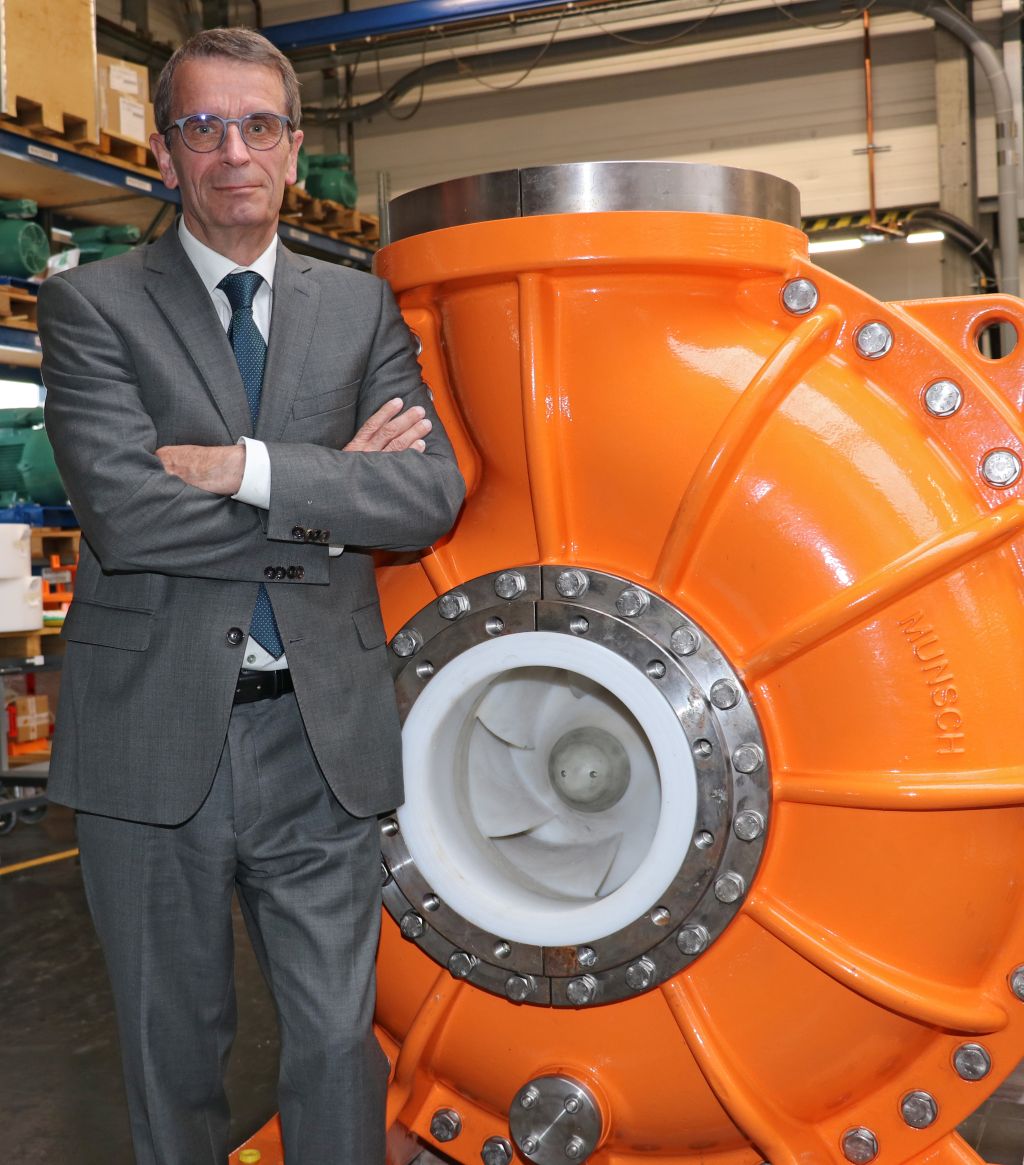
Companies that work with toxic, highly corrosive, and high-purity media place the utmost importance on guaranteed operational safety. Plastic pumps from Munsch GmbH in Ransbach-Baumbach can provide this, as Managing Director Stefan Munsch explains: 'In our pumps, the medium only comes into contact with a selected plastic, allowing us to ensure universal chemical resistance and tolerance to solids.'
The applications for such plastic-lined pumps are diverse, with Stefan Munsch pointing out that 'until the financial crisis in 2009, about 70 percent of our customers came from the steel industry. When that market collapsed, we increasingly turned to the chemical, semiconductor, and fertilizer industries as well as mining.'
This had consequences. The requirements of these industries are very different, leading to a twentyfold increase in the variety of pumps offered by Munsch in a short time.
Starting into digitization
'In order to cope with the changed requirements, we underwent a massive organizational upheaval,' recalls the company head. 'The great variety of options forced us to start digitization.' Munsch developed an initial product configurator at that time, which allowed for the derivation of an individual, customer-specific order list from a maximum part list in a very short time. 'This brought us back to the forefront, as we were much faster than the competition,' summarizes Stefan Munsch.
Motivated by success, Munsch refined his configuration system over the years and continuously developed the digitization of processes. Essentially responsible for this is Oliver Herz, head of IT application development. He manages the ERP system, which is the central element at Munsch for digitally managing all processes. Herz emphasizes: 'Every software in our company must be able to communicate with the ERP system to ensure a continuous flow of data - from incoming deliveries, through order management, development, and production, to shipping and downstream obligations.'
Single part manufacturing often requires frequent retooling
Currently, Munsch builds about 2500 pumps a year. Each is unique, defined by the customer and their application. They differ in terms of flow rate
and height, conveyed material, solid content, and connections, as well as various industry- and country-specific regulations. 'For this, we now provide a solution space in the ERP system that contains all possible components, casting materials, and plastics and can be continuously expanded,' explains Oliver Herz.
From this solution space, the individual pump is automatically configured according to requirements. Additionally, self-developed software defines every work step needed in production.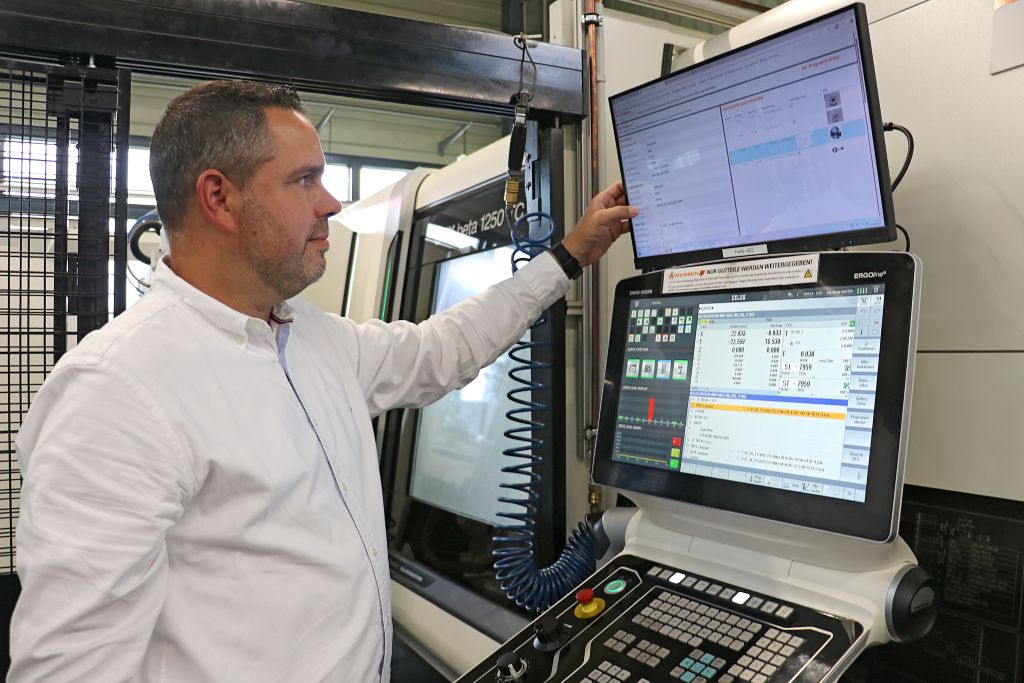
'We have 16 modern, mostly automated CNC machines,' says Oliver Herz. 'However, due to the variety of options, we have to retool up to 40 times a day.' An effort that can only be managed with digital support. That is why Munsch invested in the tool management software WinTool nine years ago, which acts as a data bridge between the ERP system, CNC machines, and tools. 'It can communicate with our ERP system and exchange data in both directions,' explains Oliver Herz, highlighting a fundamental feature.
'Furthermore, WinTool allows us to use the interface of our ERP system on a workshop terminal as a user interface. We can enter data and commands here, process them in WinTool, output them, and save them back in the ERP. WinTool operates completely in the background for us.'
Digital Tool Management
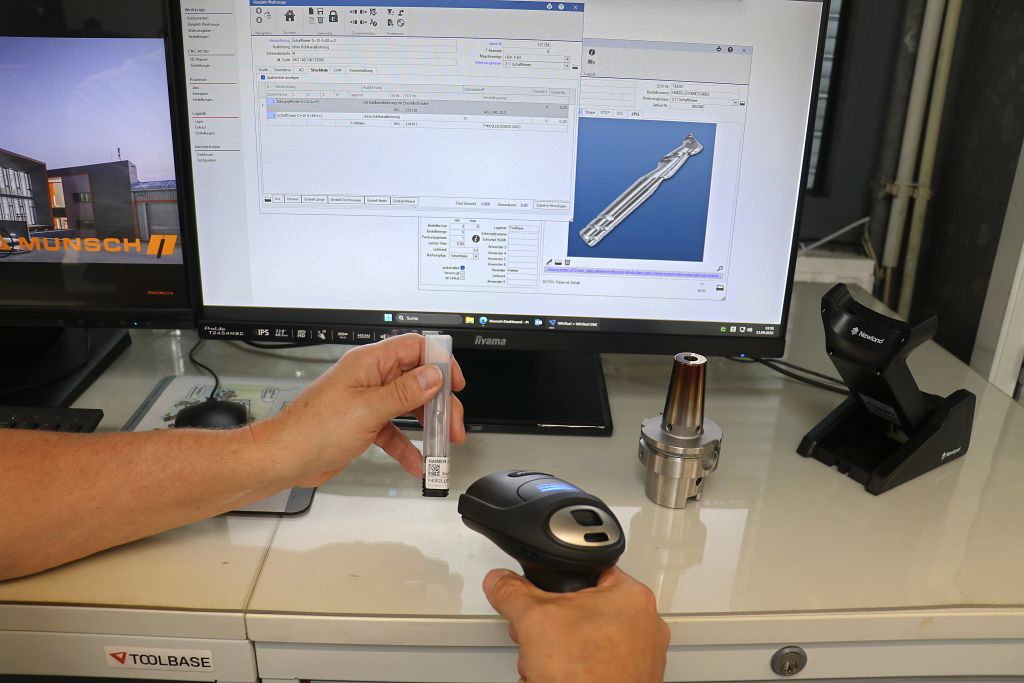
At Munsch Chemie-Pumpen, the tool management system WinTool is now the central place where all individual components of a complete tool are recorded: cutters, drills, indexable inserts, tool holders, spacer plates, spare parts, etc. From these, complete tools can be assembled and managed as digital twins in WinTool.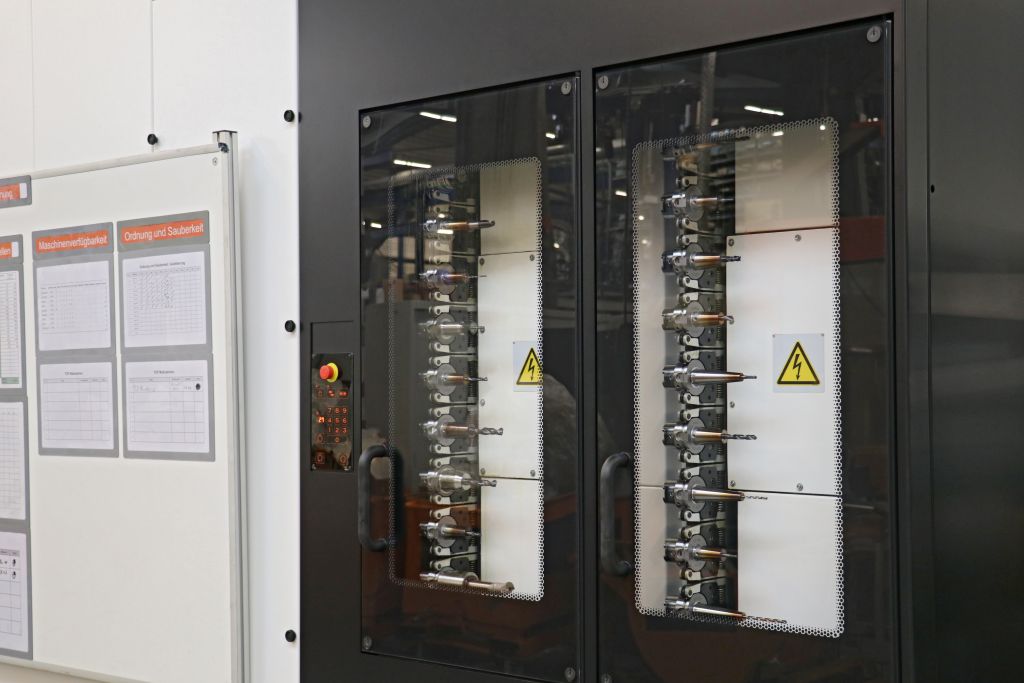
The bridge to the physical tools is a QR code, which uniquely identifies each individual part. During actual assembly, this is captured with a scanner, ensuring the assignment to the digital counterpart. The storage of complete tools - whether in the dispensing cabinet or in the tool magazine in the machine - is also documented via a QR code and stored in WinTool.
'Thus, we know exactly where each tool is located. We can even track the tool's service life this way,' explains Oliver Herz.
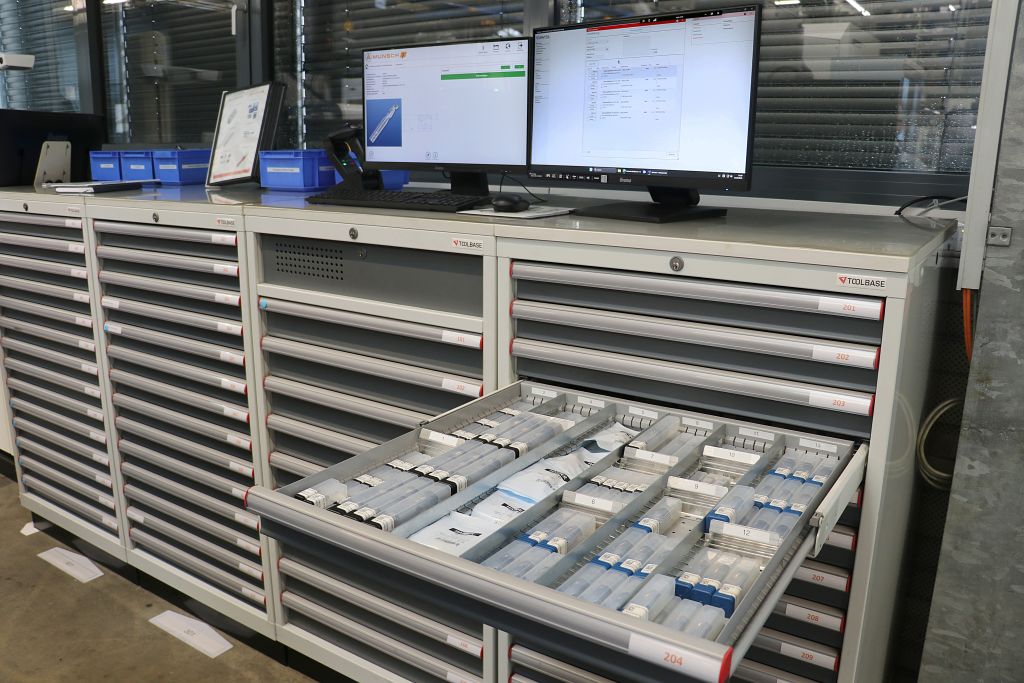
To optimize the connectivity of WinTool to the tool dispensing system, the responsible parties at Munsch decided to switch to Toolbase cabinets and the corresponding software. Since WinTool and Toolbase come from the same company, the standardized interface was set up within a day. The result: optimized processes. When Munsch employees create new components in WinTool, they can transfer them along with images to Toolbase. They are assigned a storage location in a Toolbase cabinet, which is confirmed back to WinTool after occupancy.
Digital Tool Management
Responsible for tool management at Munsch is Marcel Weiner. His tasks include closely collaborating with Oliver Herz to implement the digital transformation in machining. 'With WinTool and Toolbase, we have created a solid foundation that makes our manufacturing flexible and process-safe,' reports the trained machining mechanic.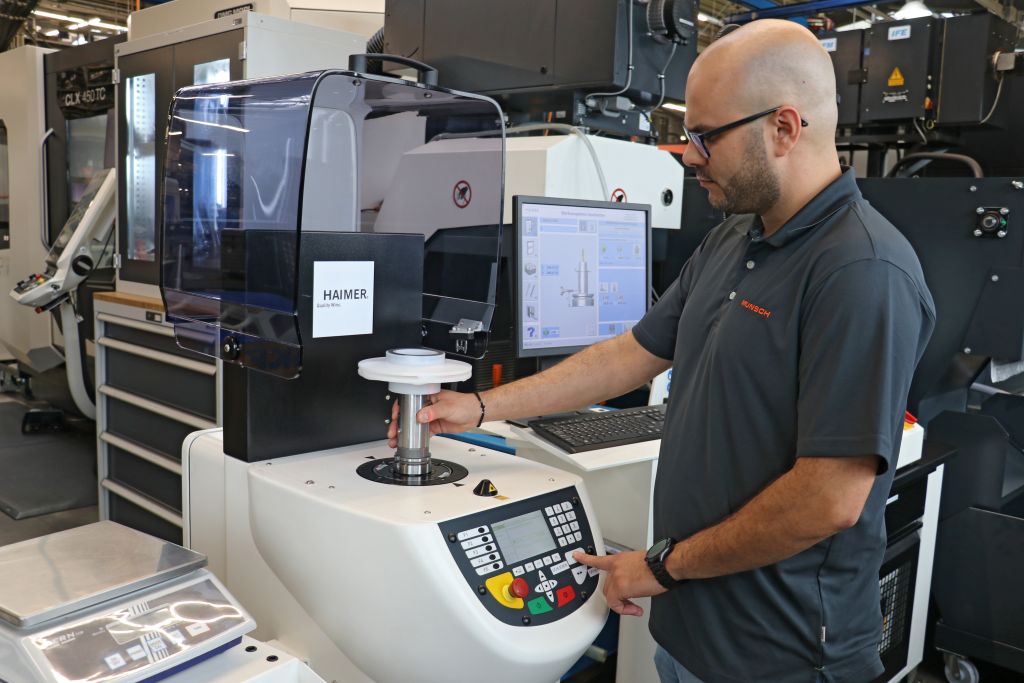
The NC programs are also integrated into the digital processes and into WinTool. Marcel Weiner explains: "When we write an NC program for a component, we create it parametrically for all possible variants and store it in our NC pool, which now contains over 5000 such programs." When a component or a work step is due for production, the configuration software automatically retrieves the appropriate NC program from the pool. The ERP system applies the corresponding parameters, and then it is sent to the machine in an NC folder for processing.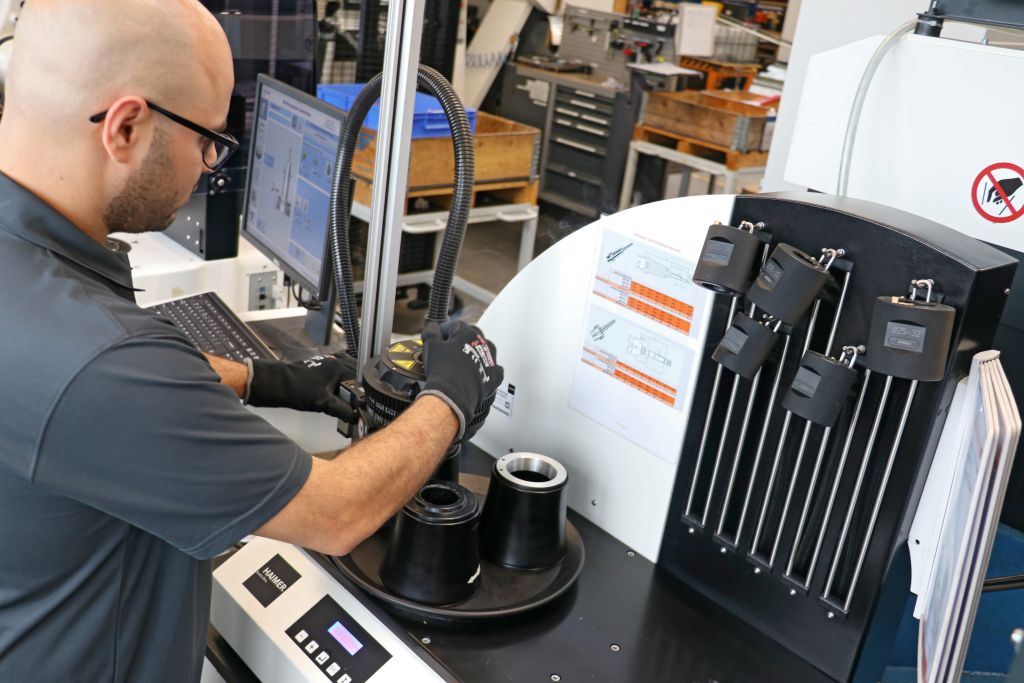
"This NC folder is assigned 1:1 to a work step on a machine," explains Marcel Weiner. When the work step is due, the operator can call it up on the workshop terminal. In it, he finds the required setup data, such as tool list, drawings, documents, links, etc. – in other words, all the necessary resources to set up the machine and complete the work step. "With WinTool and the associated digitization and automation, we have eliminated sources of error and significantly accelerated the setup process," says machining expert Weiner.
A reliable partner for comprehensive tool management
For several years, Munsch has been further expanding digitization in the tool area. For this purpose, the management has a partner in Haimer GmbH, whom Managing Director Stefan Munsch particularly appreciates: "I have known the company HAIMER since 2018, when I was able to participate in a factory tour in Igenhausen as part of a VDMA event. It was an impressive experience for me: throughout the company and in conversations with the owner family, I could sense the spirit of innovation and customer orientation. I was sure that HAIMER would also be a perfect partner for us."
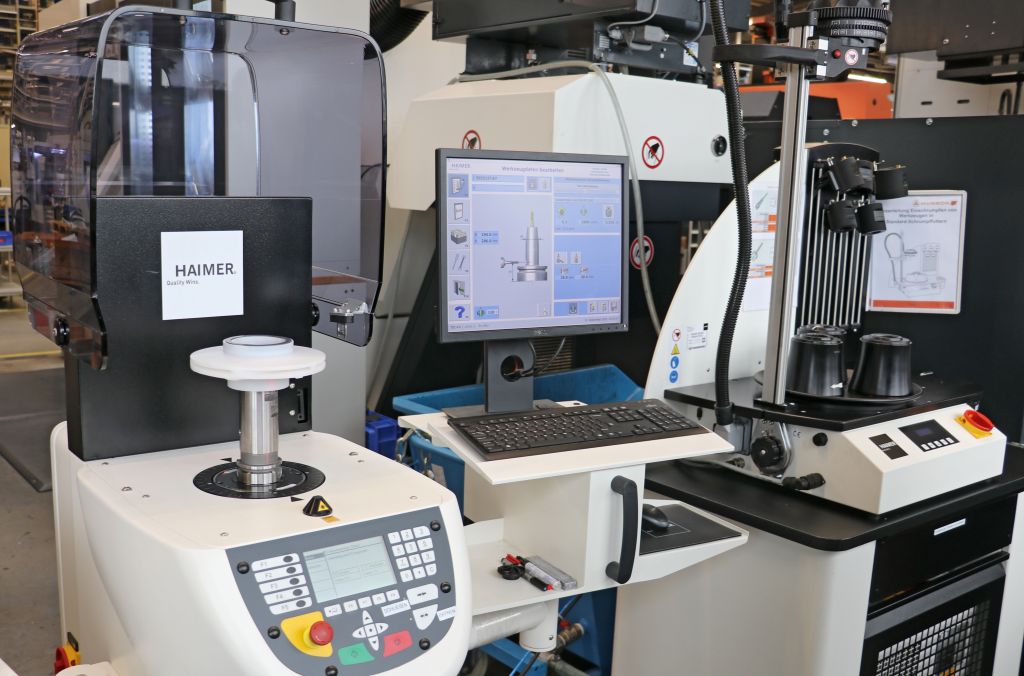
When Munsch later had to invest in a new tool presetting device, the choice fell on the HAIMER Microset device UNO 20/40, which – equipped with a corresponding post-processor – integrated perfectly into Munsch's tool management. Each assembled complete tool is checked against target data and the measured actual data is transmitted to WinTool.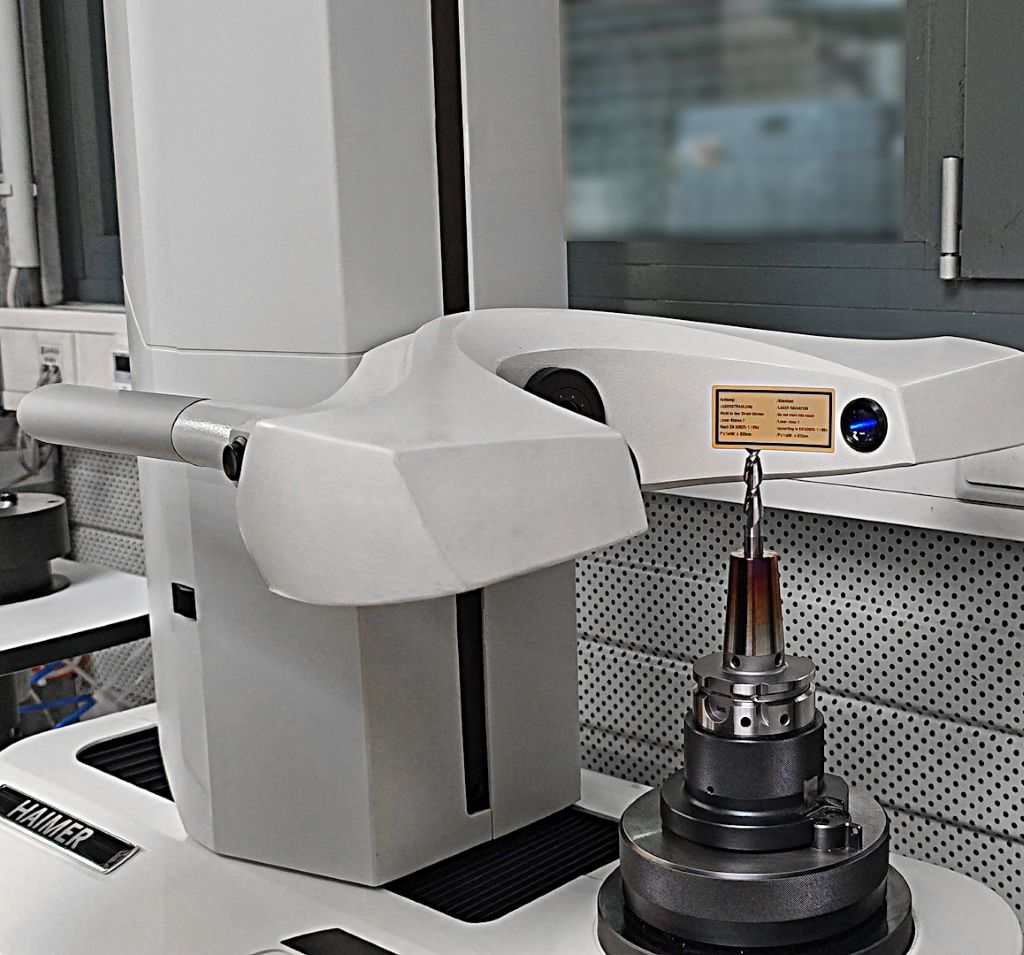
Since this investment, the contact with HAIMER has intensified. Karl-Heinz Adelbrecht, the responsible technical sales representative from HAIMER, provides extensive advice to the machining team led by Marcel Weiner. After all, HAIMER is the leading complete provider in the tool sector. Karl-Heinz Adelbrecht reports: "Together we have reviewed the tool inventories, made suggestions for tool holders, and introduced shrink technology. This has already led to noticeable improvements that we were able to further expand after corresponding trials in combination with HAIMER carbide tools."
Marcel Weiner gets specific: "In casting processing, we have managed to achieve time savings of up to 40 percent with shrink technology and 20 special cutters, radius 4 and 5."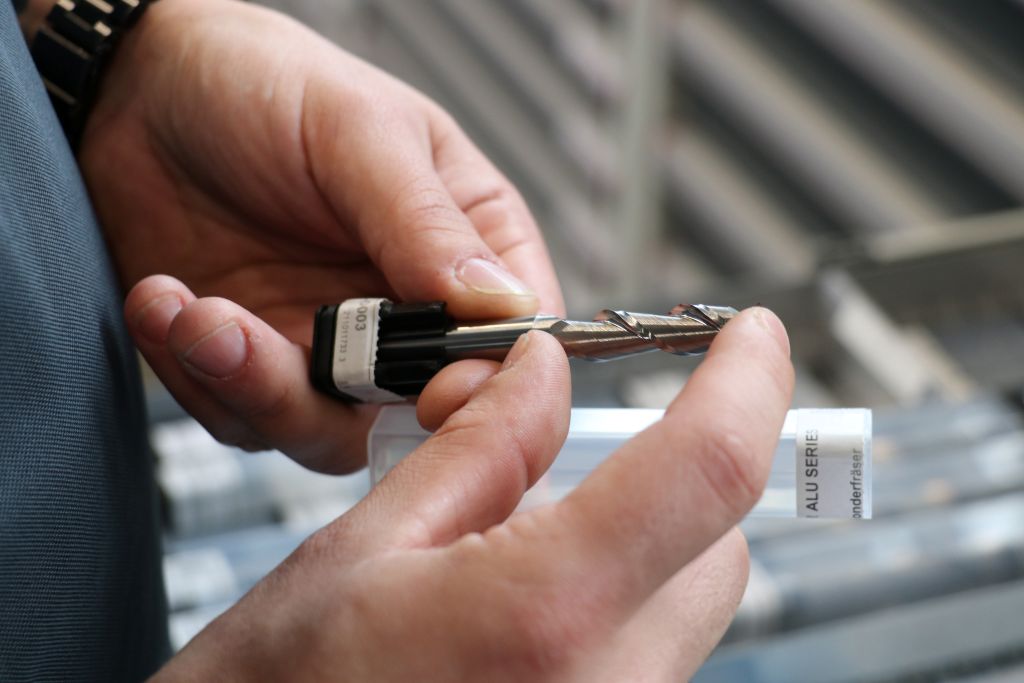
Balancing device for tools and small impellers
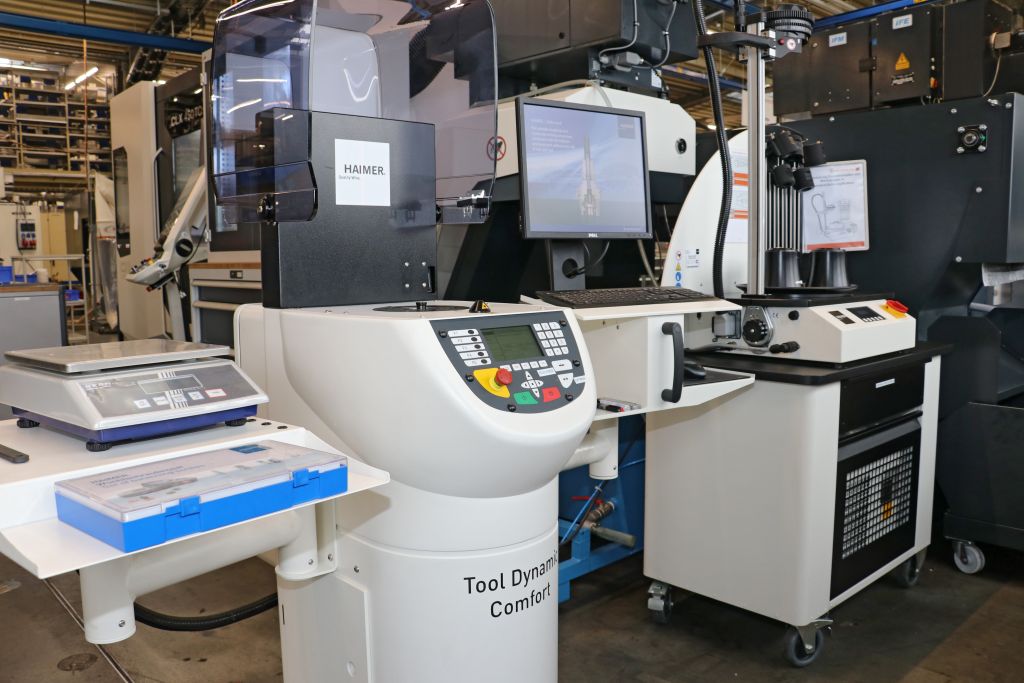
Marcel Weiner was also open to the HAIMER balancing device Tool Dynamic TD Comfort i4.0. After all, various improvements can be realized through the optimized balancing quality of a complete tool. "The service life of balanced tools increases by an average of 20 percent," as tool expert Adelbrecht mentions.
In addition, balanced tools allow at least 10 to 15 percent higher speeds without reducing tool life. Arguments that Munsch was able to verify shortly thereafter. Another benefit arose, as Marcel Weiner confirms: "With the HAIMER balancing device, we can also balance the small pump impellers, for which our large balancing system is not suitable."
Digitization also has a positive effect here. On the one hand, the balancing device receives all the necessary data via the ERP system, so the operator only has to press the start button. After the balancing process is completed, the device generates a balancing protocol that is automatically assigned to the respective impeller.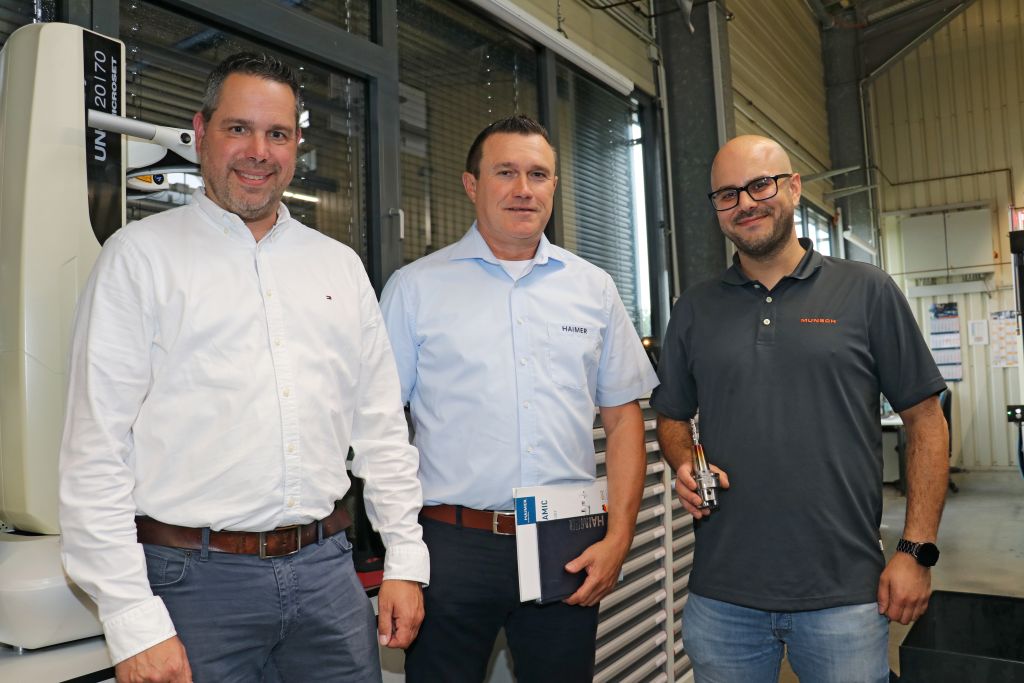
Digitization expert Oliver Herz is very satisfied with the progress in manufacturing: "With WinTool and Toolbase, we have acquired perfect systems for our tool management. Since HAIMER will acquire a 25 percent stake in WinTool AG in March 2024 and has established a strategic partnership with the TCM Group, our entire tool equipment has become even more closely integrated. Now we receive support for all areas from a single source."
Contact: