
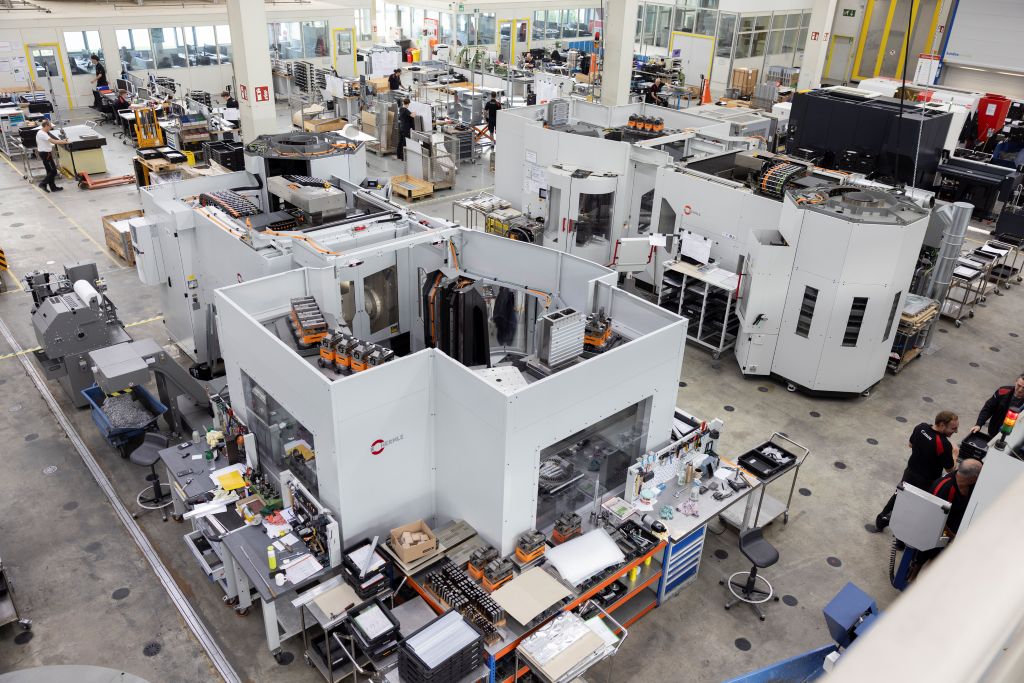
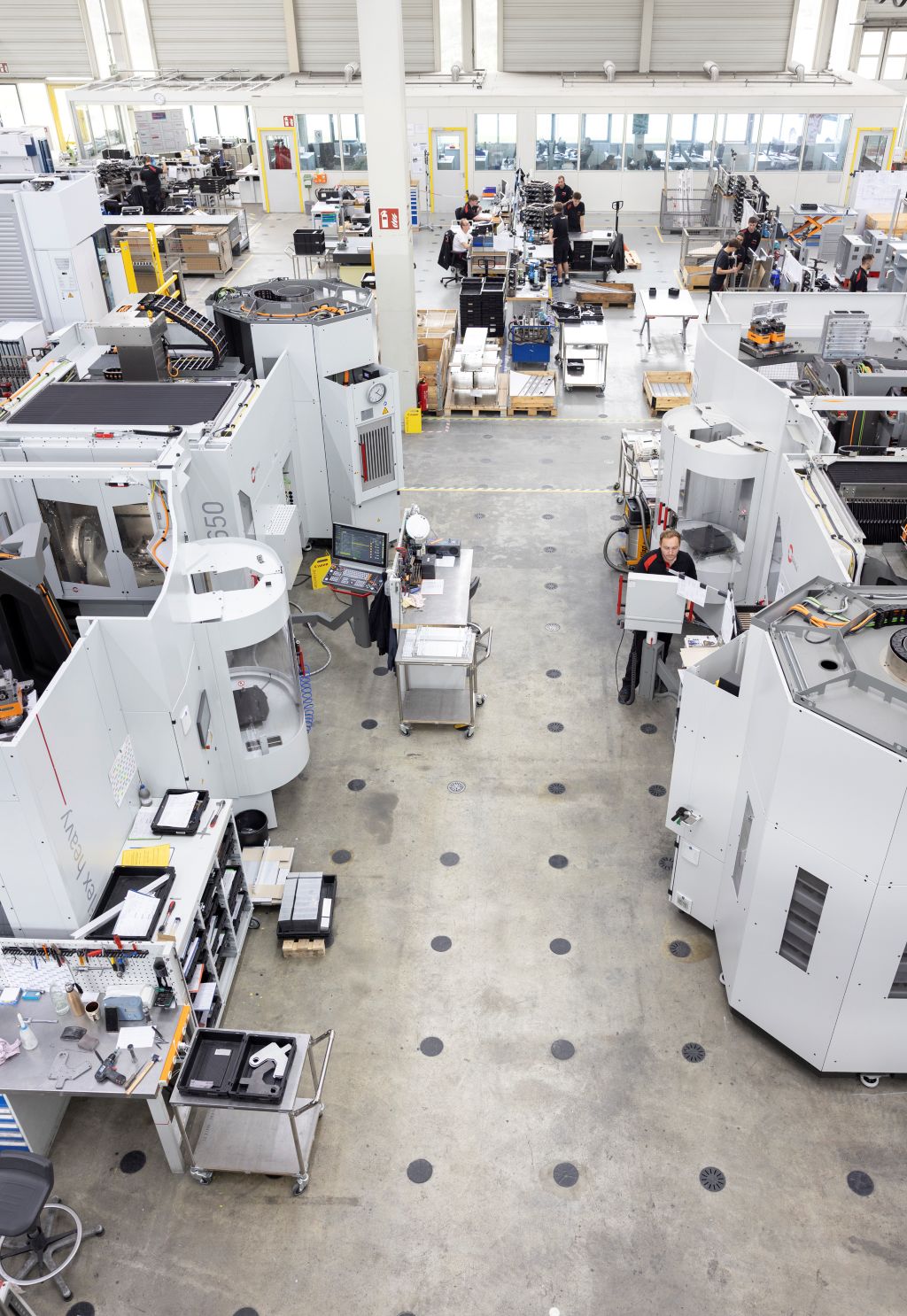
Anyone who reads a book, receives an invoice, or buys a lottery ticket may have already held a piece of Poing in their hands. In this small community on the outskirts of Munich, machines are produced that deliver top performance in printing houses worldwide. Here, Canon Production Printing has one of its manufacturing sites and employs about 1,000 people to produce digital printing solutions for various industries. This includes high-speed digital printers designed for large volumes and speeds – thus ensuring high productivity. In addition to manufacturing, the innovation and technology center for high-speed web printing systems is also located here.
Canon Production Printing is part of the large Canon family based in the Japanese capital Tokyo. The corporate group employs approximately 170,000 people worldwide and generated a revenue of 4.5 trillion Japanese yen (approximately 27.3 billion euros) in 2024. Canon Production Printing originated from the company Océ, which was founded in 1877 in Venlo, Netherlands. It evolved from a manufacturer of butter color to blue printing paper and then to a specialist in copying technology on plain paper. In 2010, Canon acquired Océ, becoming the global market leader in digital production printing. Since 2020, this division of Canon has operated under the name Canon Production Printing.
Precision and Efficiency
The goal of Canon Production Printing: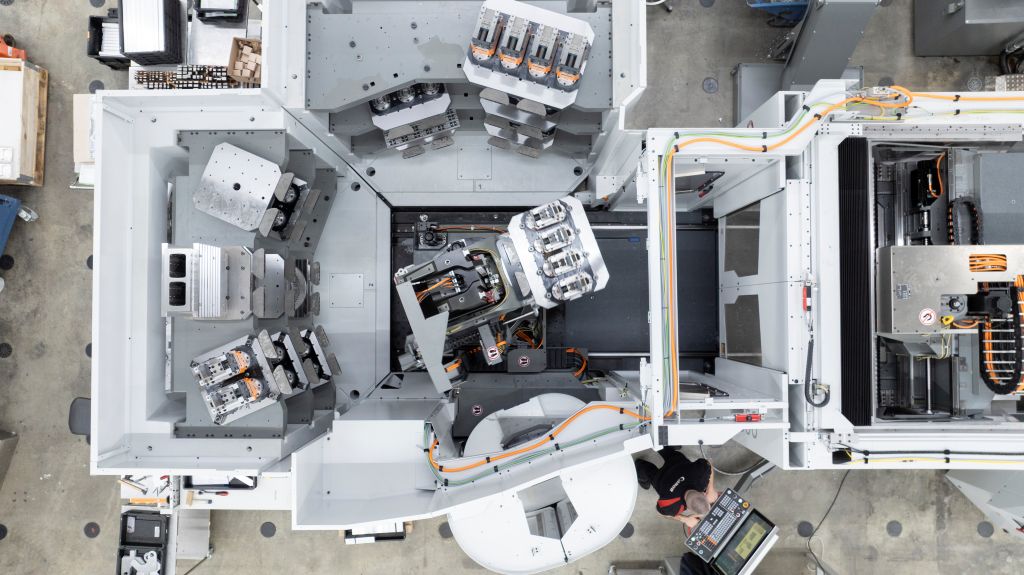
To provide its customers with high-quality digital printing solutions that guarantee excellent color accuracy and image quality – while simultaneously optimizing printing processes through suitable workflow software applications to save them time and costs. 'Efficiency and excellence characterize our products,' emphasizes Michel Detische, Head of Procurement NPR Investments at Canon Production Printing.
'And we have the same expectations for our own manufacturing.'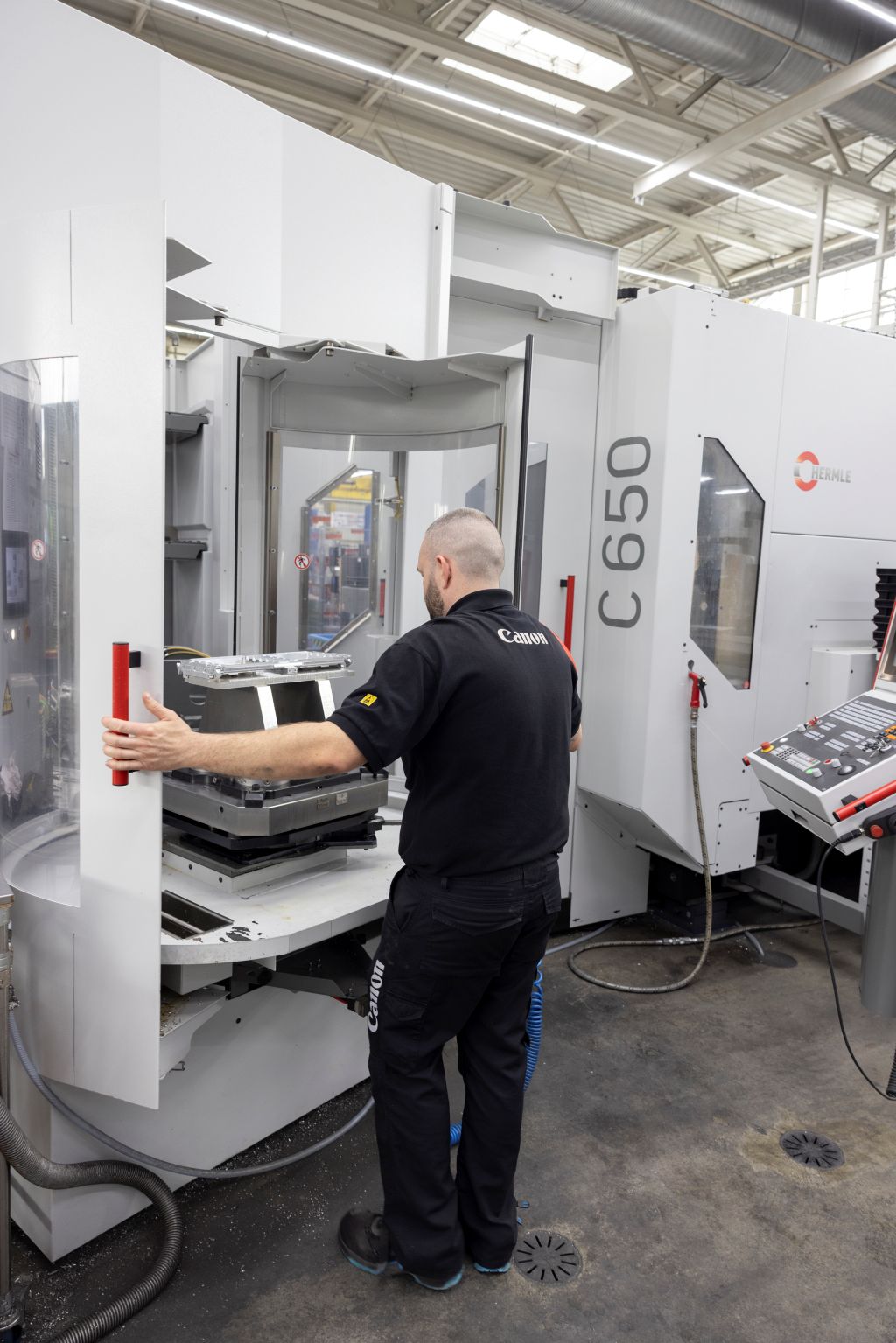
That’s why the company relies on 5-axis machining centers from HERMLE. Two C 650 U with adapted handling system HS flex heavy machine aluminum, steel, and stainless steel from single parts for prototype construction to series production. 'The precision and repeatability of the machines are excellent,' says Florian Neumair. As a team leader in the milling department, he gained a lot of experience with the machining centers and is now responsible for CAM programming. Production manager Dr. Lars Jörgens adds: 'It was also important for us that the combination of machine and adapted automation is compact and takes up little space in the production hall.'
Convincing all along the line
'We started in 2021 with our first automated C 650 U,' recalls Lars Jörgens. At that time, the company was using a milling center from another manufacturer, which was already 20 years old. 'The table could be rotated 180 degrees, allowing the specialists to clamp the next workpiece in parallel during peak times,' he recalls.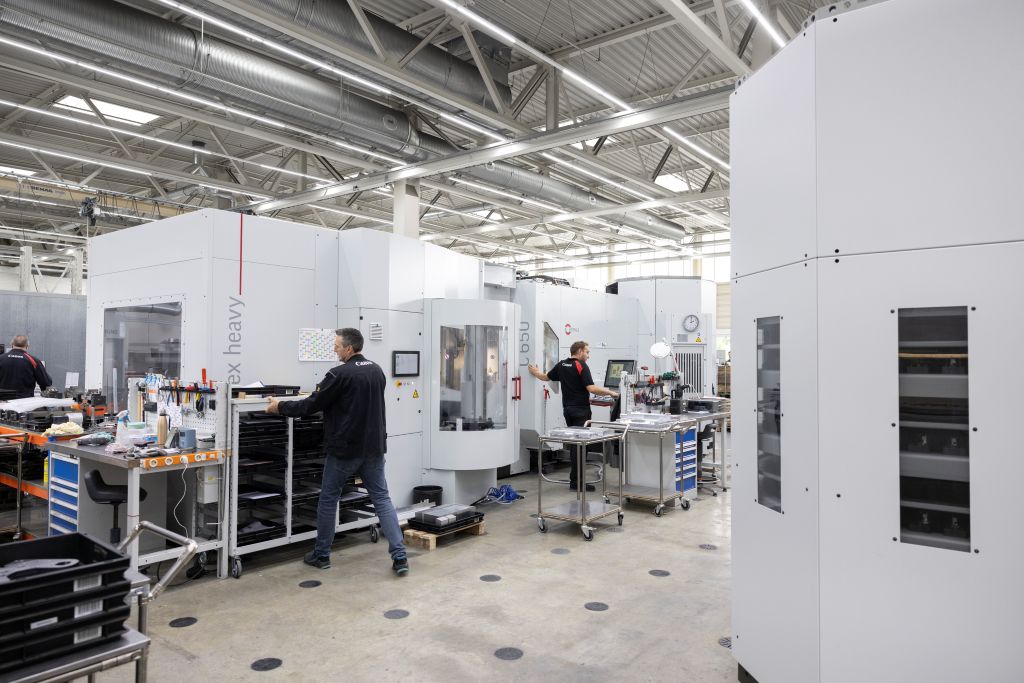
'But of course, that is far from manufacturing unattended in a third shift.' As part of a larger benchmark, Canon Production Printing determined which system best fits its own requirements in terms of precision and automation. 'We compared setup area, tool and pallet storage, and of course the costs. The clear winner was HERMLE,' adds Michel Detische.
Identical Twins for Maximum Flexibility
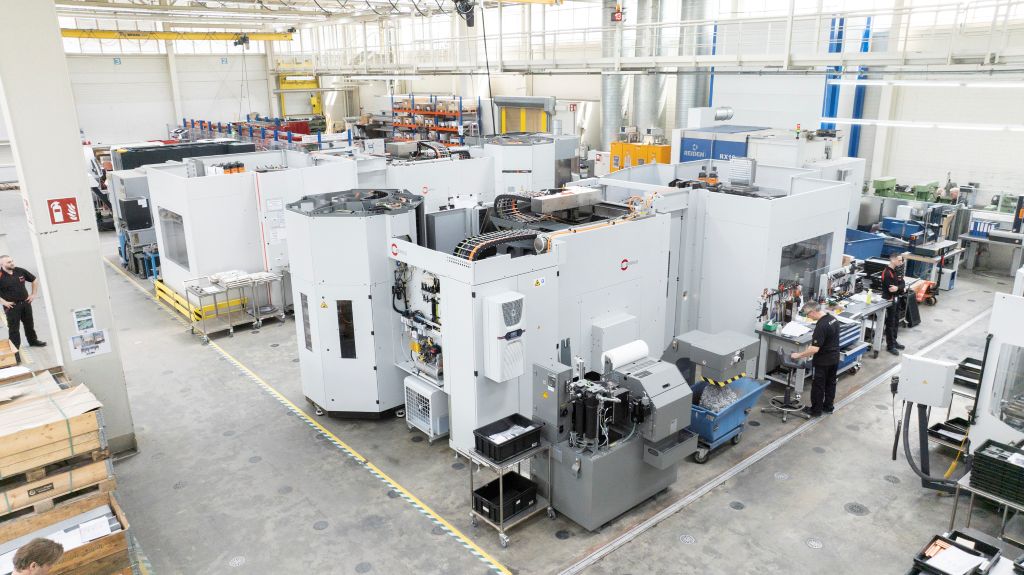
For four years, the C 650 U has been machining prototypes and series parts. Thanks to the handling system with 15 slots and the additional magazine ZM 216 with 216 tools, Canon can continuously produce around the clock six days a week. 'And still, the capacities were not enough, which is why we ordered the next system in 2024,' says Lars Jörgens. 'At that time, we had to juggle many appointments and machine workpieces on other machines that would have run much more efficiently on the HERMLE.'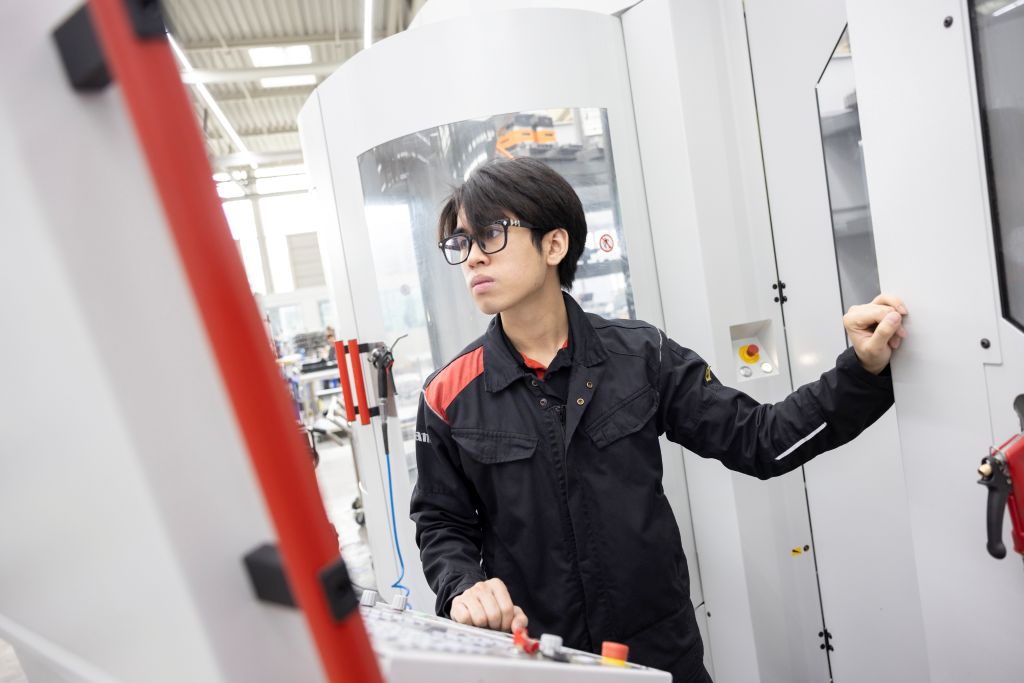
The second C 650 U was delivered in May of this year, also has an adapted handling system HS flex heavy, and matches the existing machine in equipment. 'We deliberately wanted an identical system because it gives us maximum flexibility with our orders, and the operators are familiar with the new HERMLE from the start,' says Lars Jörgens. 'We can manufacture the workpieces without adjustments on either machine.'
The two machining centers differ only in one detail: the new model belongs to GEN2 – that is, the second generation of the proven product line.
Setting Standards
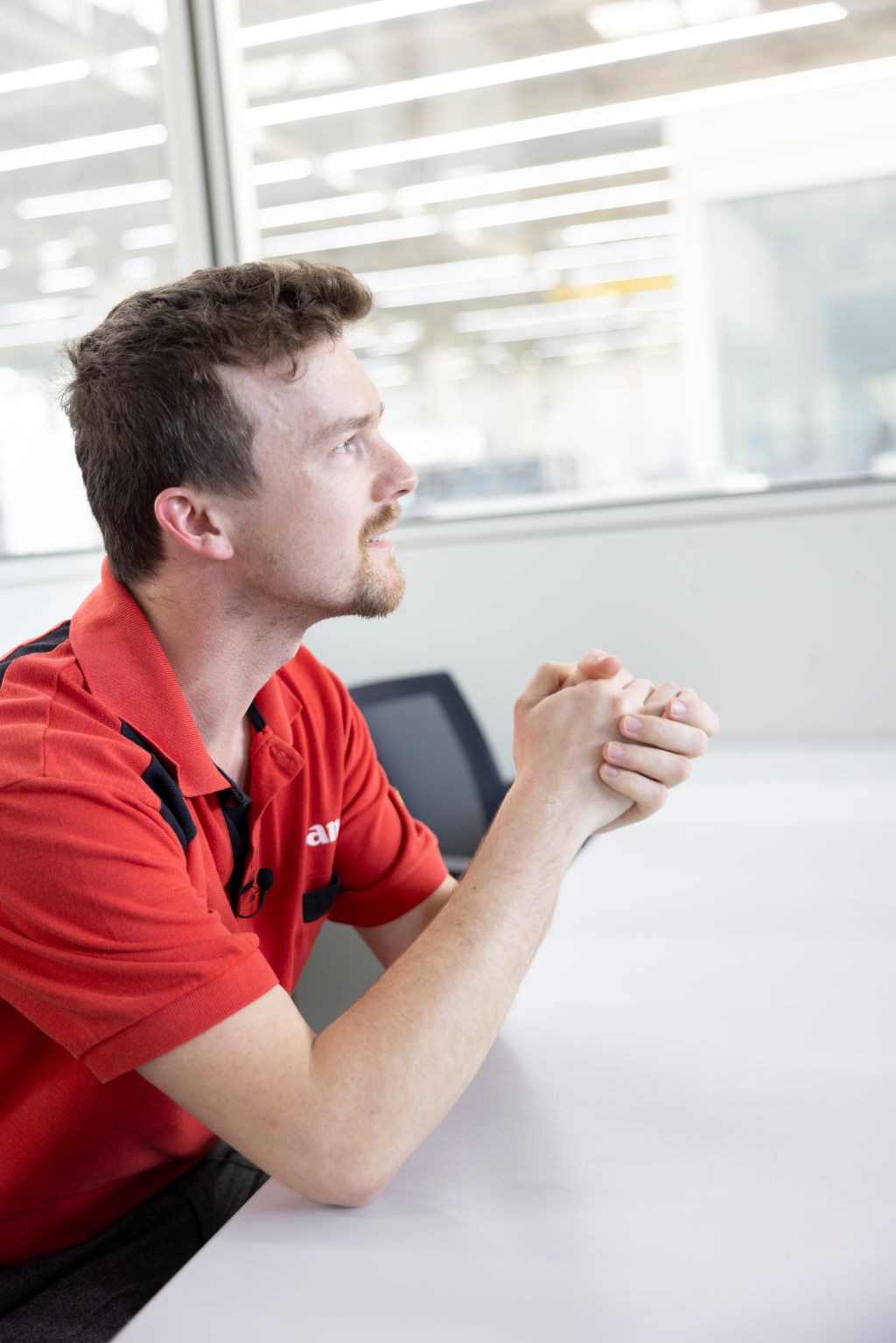
The HIMS-Tool (HERMLE Information-Management-Software) provides real-time insights into the machine status – even via live messenger. HACS (HERMLE Automation-Control-System), a clever software solution for automation, not only calculates runtime and tool usage in advance but also dynamically adjusts the schedule. The standard control for GEN2 is the TNC7 from Heidenhain, an advancement over the older TNC 640. HERMLE simplifies programming and operation with extensive additional features. 'The control is now much more computer-like; for example, I can open multiple windows simultaneously or work with tabs,' says Florian Neumair.
The new generation relies on integrated energy recovery and efficient servo drives. Users benefit from low operating costs and increased sustainability. Thanks to updates in electronics, sensors, and energy efficiency, it is a gain for productivity.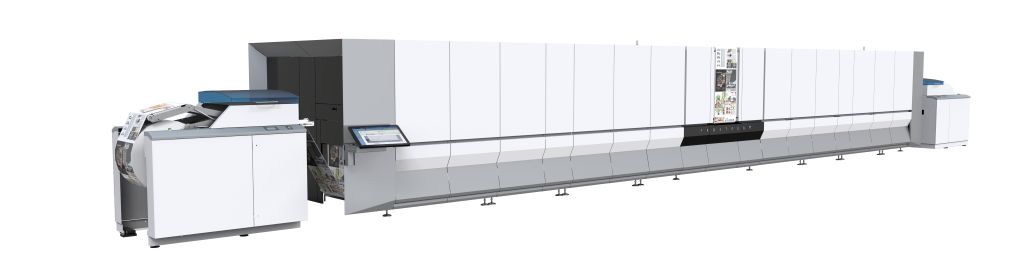
Ready for the Future
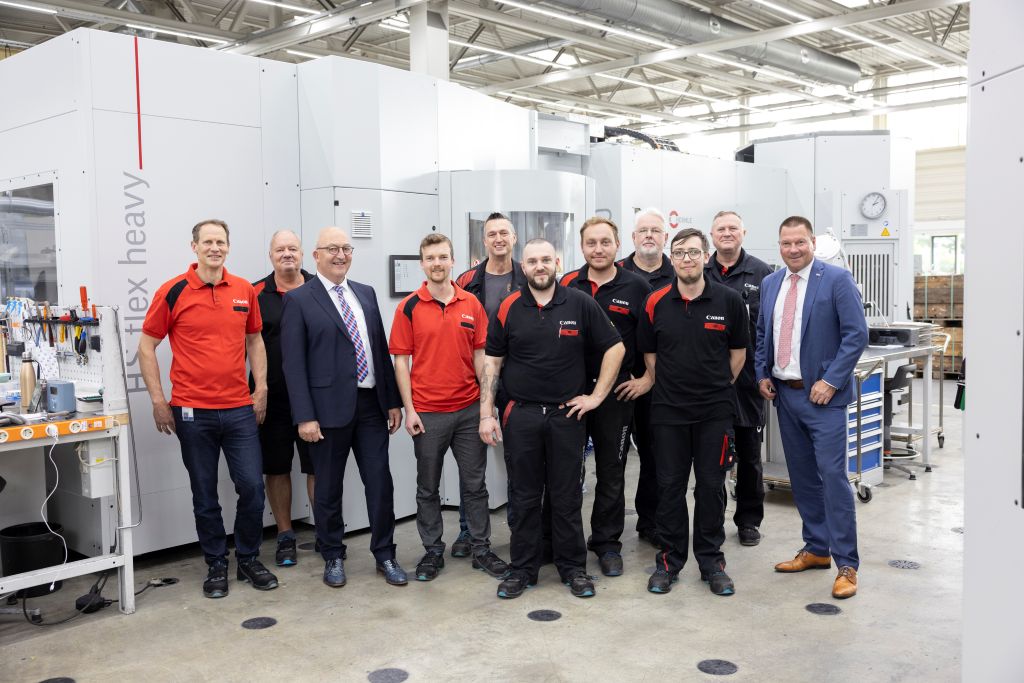
Since June of this year, the second C 650 U has been operating regularly. 'The installation and setup went smoothly again, and after four days, the machine was ready for use,' says the production manager. 'The employees received a brief introduction from HERMLE, and then we could start with the first productive parts,' Lars Jörgens is pleased to report.
Contact: