
At Getsch+Hiller Medizintechnik GmbH, the quality demands on the machining machines and accessories are extremely high. Therefore, workpiece measuring probes and tool probes from Blum-Novotest play an important role in the production of medical instruments at the Tuttlingen company.
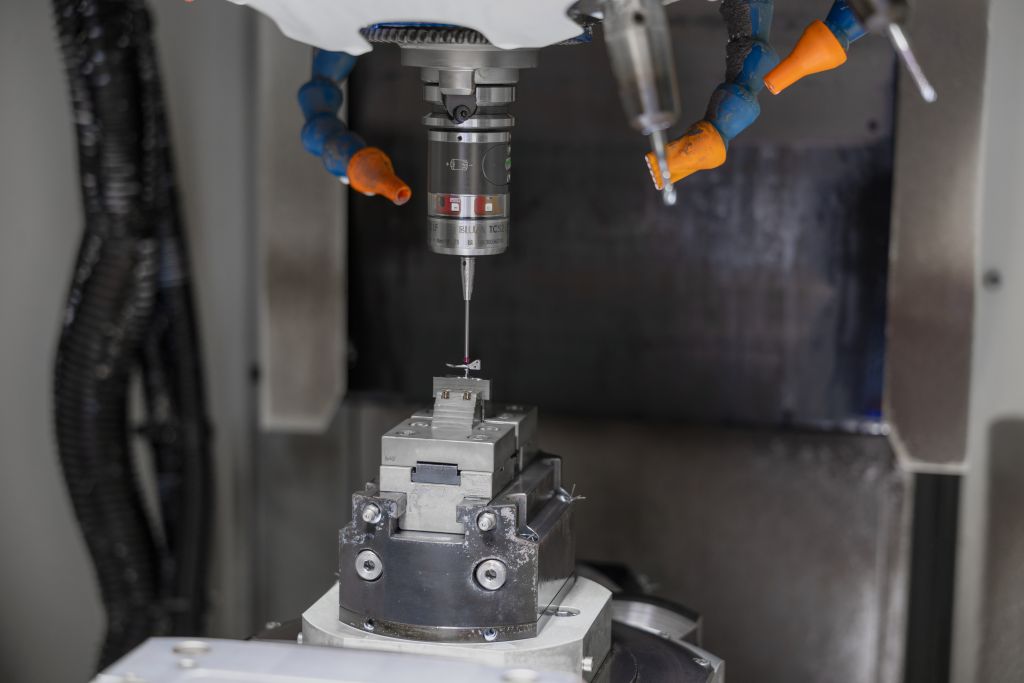
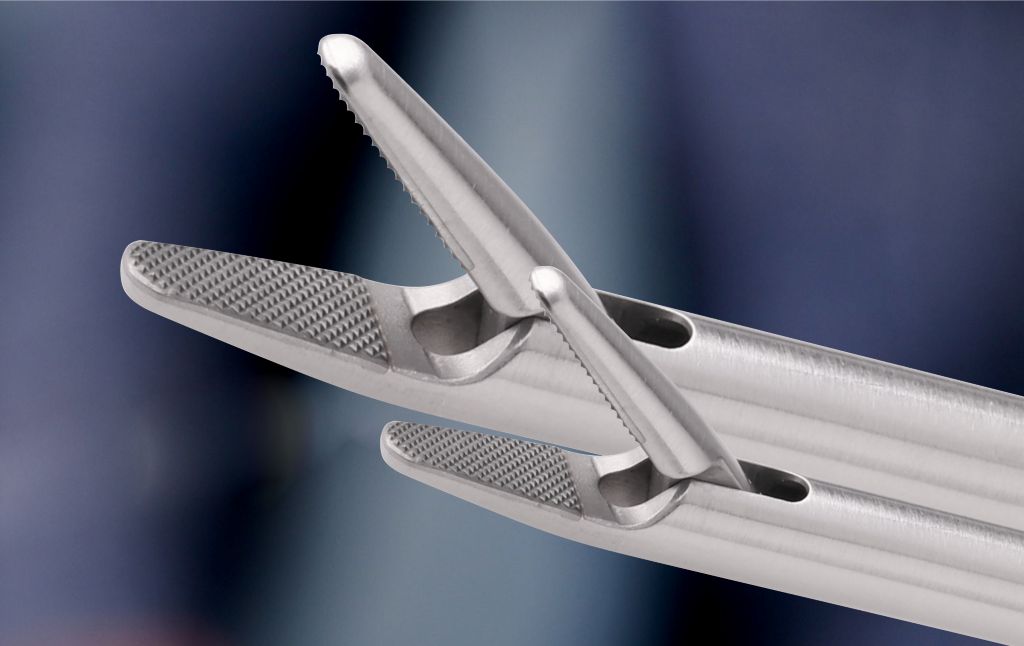
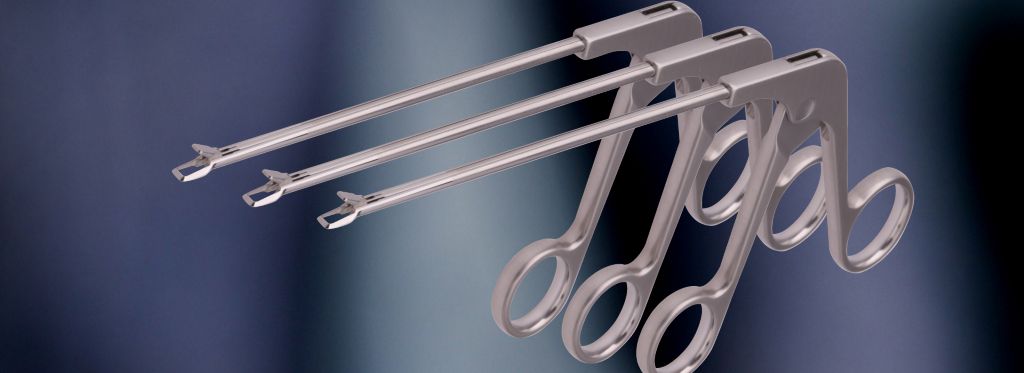
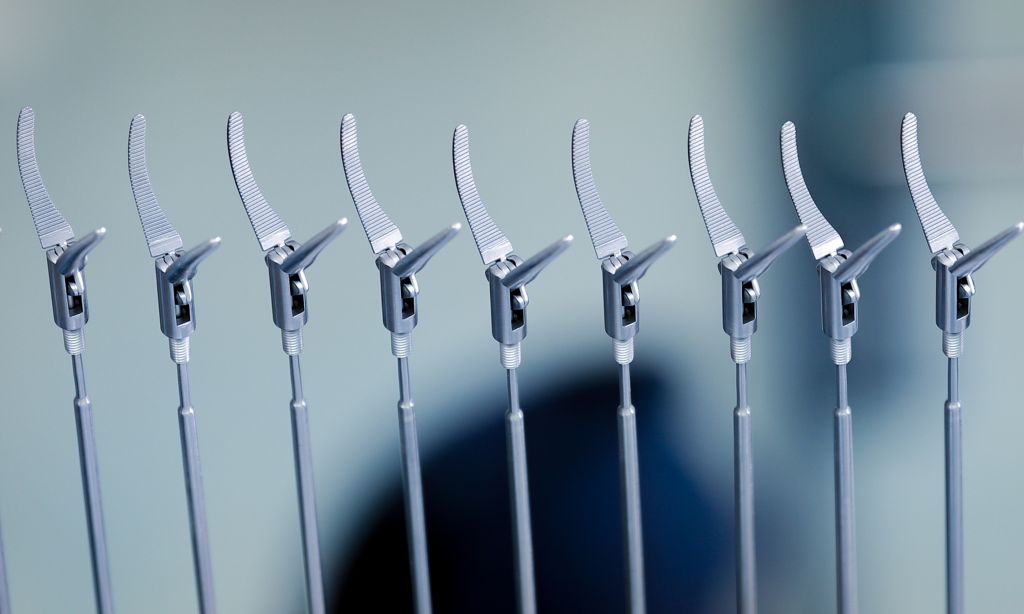
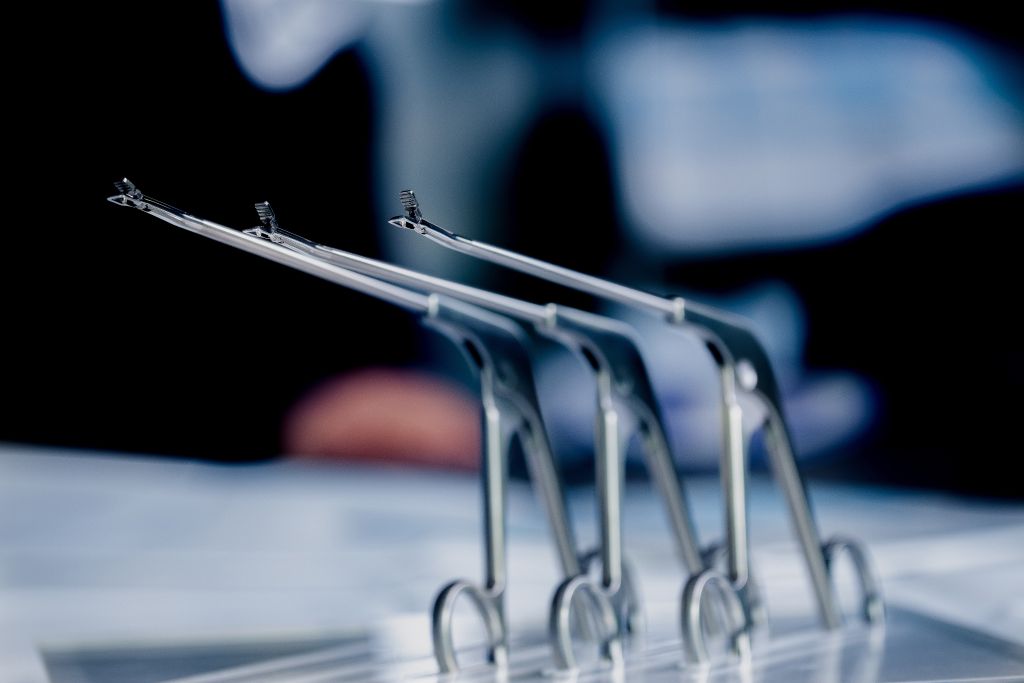
We manufacture instruments for various areas of the body and medicine, including scissors, forceps, drills, and biopsy spoons for taking tissue samples. Our customers expect the highest quality from us, after all, they work with our products on and in people,” emphasizes Wolfgang Epple, head of the milling department, as he leads through the closely arranged machining centers in production. Most of the 21 milling machines are Robodrill systems from Fanuc, along with some machines from Brother and Haas.
In addition, Getsch+Hiller operates nine long-turning machines, most of which are equipped with automation for loading and unloading.
The products manufactured by the company are predominantly developed and produced on behalf of customers and distributed through wholesalers. The name Getsch+Hiller often does not appear on the products. Many products are very similar because different customers have comparable, but not identical, instruments manufactured in Tuttlingen. The quantities range from single pieces to small series, with one customer being supplied with 200 forceps per week.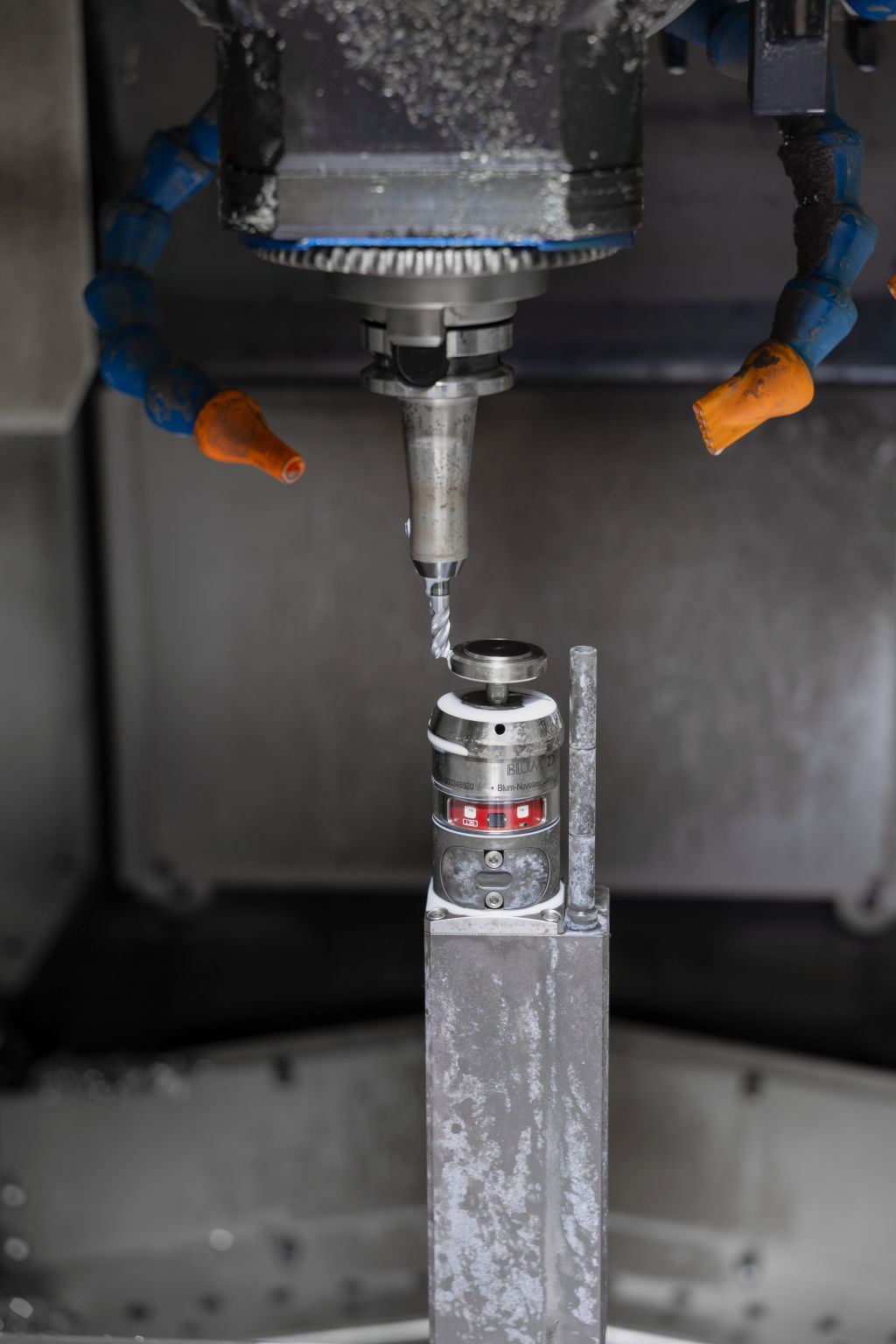
The development of new products is the result of an ongoing dialogue between internal developments and the ideas, suggestions, and requirements of customers. Our in-house designers develop products based on these ideas or implement optimizations for the customer.
Our CNC programming is also very important, as the efficient manufacturing of components is the foundation of our company's success,” emphasizes Wolfgang Epple. “Our assembly department then combines the components into high-precision instruments. In production, we predominantly process stainless steel, although some instruments have handles or other components made of plastic or aluminum.
The production of products in first-class quality places the highest demands on the manufacturing of Getsch+Hiller. The parts are electropolished by robots after milling and are then partially coated black. If even the slightest discoloration or other surface defects in the micro area are detected, the customer rejects the entire delivery. Constantly low tolerances and the highest possible surface qualities are therefore a must even in milling production to achieve optimal results during polishing and coating. Over two to three years, the process has been optimized, and now stable production is taking place in Tuttlingen.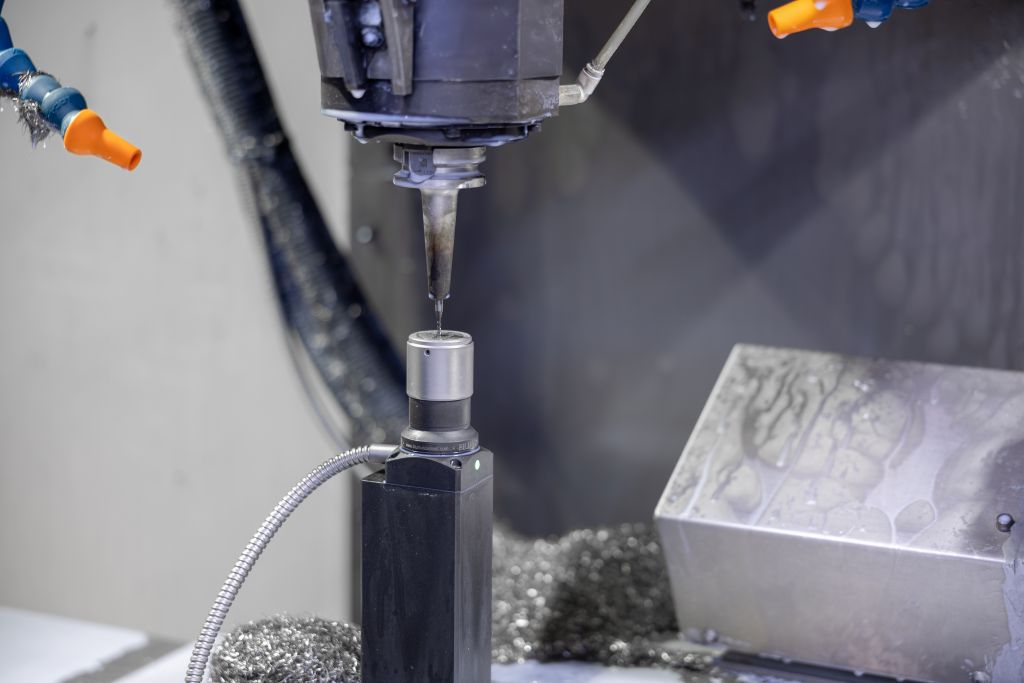
At the same time, the machines must run around the clock and on weekends to achieve the required quantities,” adds Wolfgang Epple. “That’s why the systems are predominantly equipped with a robot that loads raw parts from a tray magazine into the machine and places finished parts back on the tray in holders.” Many machines share a robot and a magazine with 20 trays.
Essential for such manufacturing, which requires as long unmanned operation, uninterrupted production, and the highest precision, is automated quality control and process monitoring. Getsch+Hiller uses the spindle measuring probe TC52 from BLUM and the tool measuring probe ZX-Speed IR in the Fanuc machines, and tool measuring probes Z-Nano are also installed in the Brother machining centers.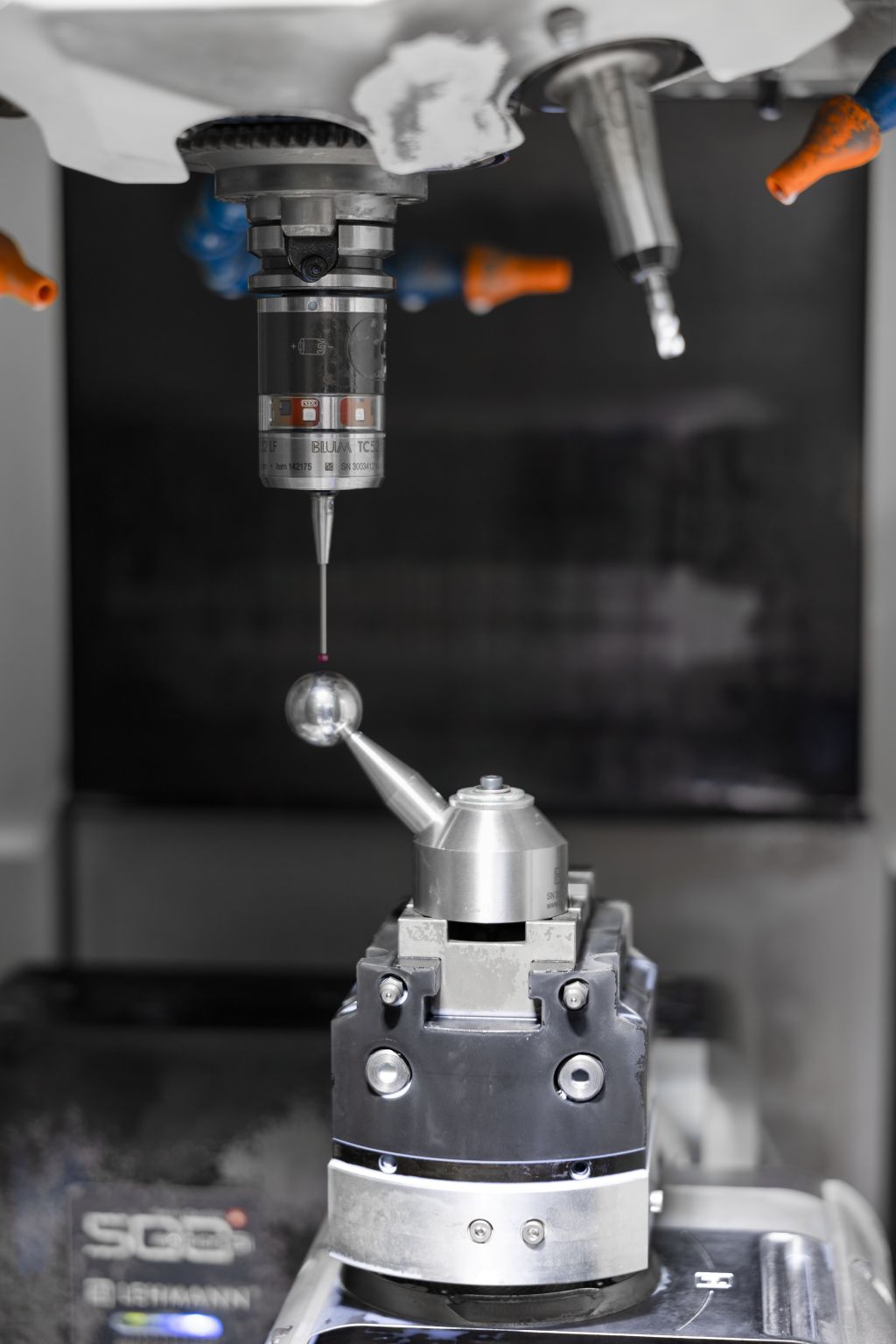
The tool measuring probes are mainly used for break and wear control, with the ZX-Speed IR probe being able to be probed not only in the vertical Z-axis – like the smaller Z-Nano – but also in the horizontal axis. “This allows for measuring the tool length – and thus detecting breaks – by approaching the probe axially from above,” reports Erhard Strobel, sales technician at Blum-Novotest. “On the other hand, the diameter can be measured by radial probing from the side, for example, to detect wear.
Break control is very important; the tools are measured after each machining step. This prevents the next tool from entering a workpiece that has not been fully machined due to a tool break and also breaking. After a tool break, the defective workpiece is ejected, and – if possible – the next part is machined with a sister tool. If no replacement is available in the machine, the machining stops and the operator is informed.
The TC52 probes are mainly used during machining. For the forceps for customers, the width of the forceps is specified with very tight tolerances because the subsequent manual surface grinding is carried out by a robot. “To achieve consistent results, high dimensional accuracy is required here,” explains Wolfgang Epple. “By measuring the first machined side and adjusting the coordinate system of the machining accordingly to the measurement, the deviation between the forceps of a series can be reduced to less than two hundredths of a millimeter.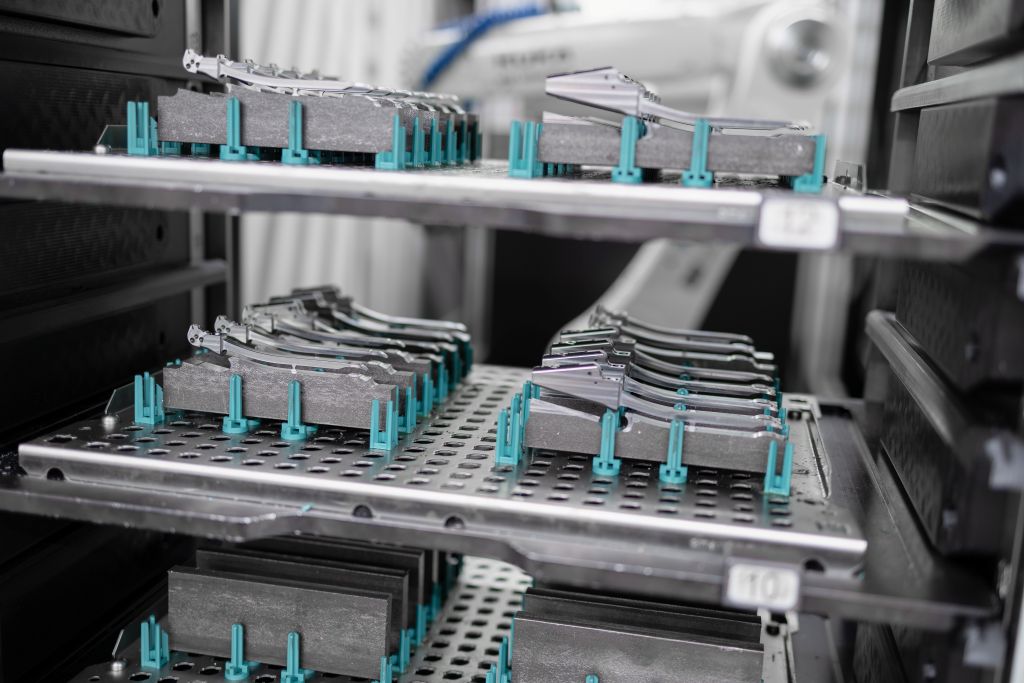
In addition to typical measuring tasks during machining, such as zero point detection of the raw part, the TC52 measuring probes are also used with the BLUM software KinematicsPerfect. The software allows for measuring and analyzing the rotary axes on 4- and 5-axis machine tools. By measuring on a calibration sphere, the software recognizes the alignment and positioning accuracy of the axes as well as mechanical shape deviations and potential bearing damage.
Machine problems due to incorrect machine settings, collisions, or wear can be quickly and reliably detected based on the measurements. Using the supplied measuring cycles, predefined points are approached under different probing conditions, and the deviation in space is calculated. Based on the values, the kinematic parameter tables can be automatically updated, compensating for the error in space that occurs during swivel movements. Such measurements are typically performed during commissioning, in service cases, or in series production as a continuous check of the machine's condition.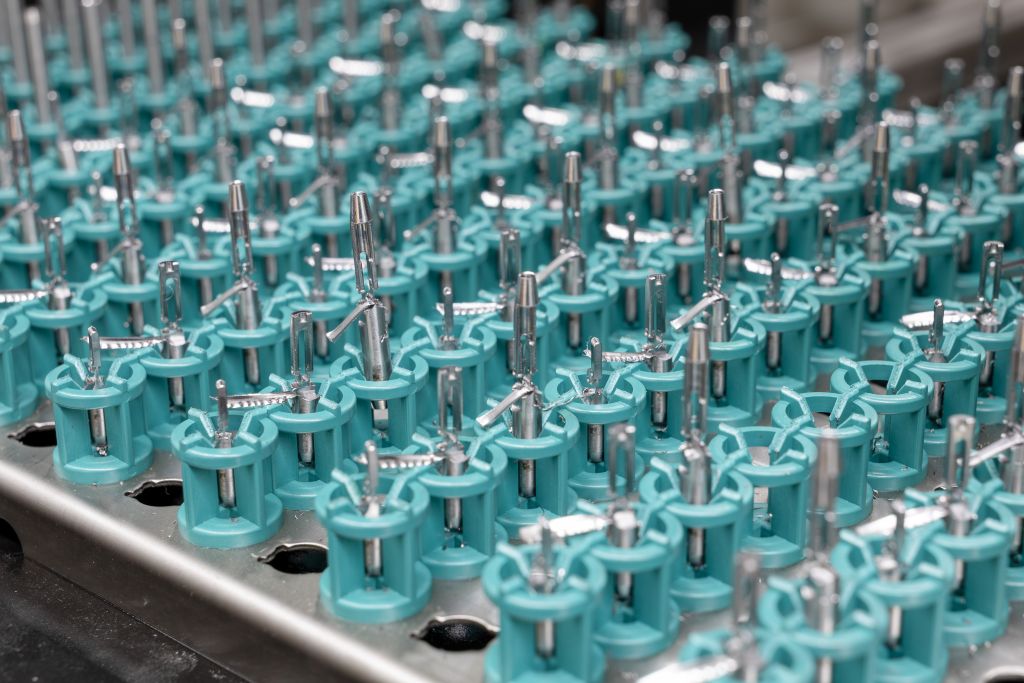
"We primarily want to bring more consistency to our manufacturing processes and recognize whether machines or tools are responsible for deviations. This way, many problems and time losses can be avoided," explains Wolfgang Epple. "In addition, measurement protocols are created directly in the machine, so all measurements are documented and traceable. Our goal is to be able to manufacture unmanned for 30 to 35 hours – without deviations between the parts."
At Getsch+Hiller, they are particularly impressed by the maximum possible approach speeds allowed by BLUM – especially since they look breathtaking. But with the BLUM probes, breakage control on the Brother and Fanuc machines is significantly faster – speeds of up to 2 m/min are possible – which in turn pays off in the cycle time.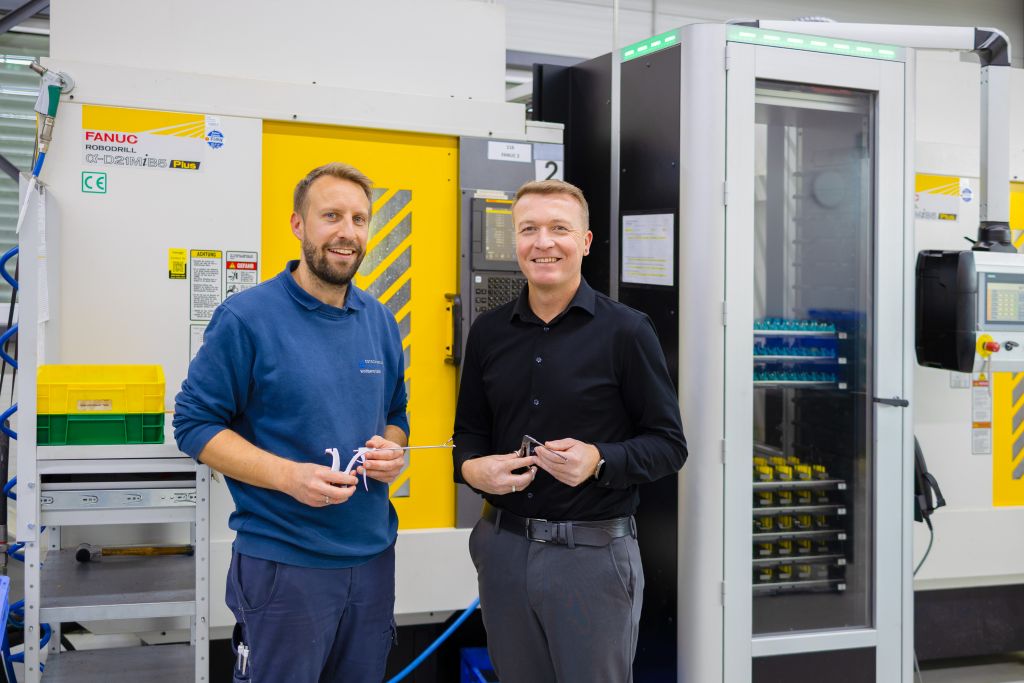
Currently, twelve machines in Tuttlingen are automated, and the specialists at Getsch+Hiller are working to equip the rest with robots. "My goal is to quickly go to the company on Sunday morning, refill the magazines, and control the quality with just a few measurements because I want to finish quickly. That's exactly what the measurement systems from BLUM offer me," summarizes Wolfgang Epple.
"The company benefits from reliable, automated processes with the highest quality – after all, in our industry, the customer is king, and if we do not deliver the desired quality, they will look for a new supplier. BLUM gives us the assurance that we can manufacture efficiently and with the highest quality at the same time."
Contact: