
Time is money – this saying is particularly true for contract manufacturers who need to produce large quantities as economically as possible. Therefore, the team at Stork Automatendreherei was quickly convinced by ISCAR's modular turning system NEOSWISS for its long lathes. This significantly reduces setup times and allows the company to work more productively and economically.
Stork Automatendreherei in Babenhausen, Hesse, has been a sought-after contract manufacturer for nearly 60 years. The 15 employees produce a large number of different series turned parts in a two-shift operation, with diameters ranging from one to 50 millimeters in batch sizes from 50 to 25,000 parts and annual quantities of 1,000 to 1,000,000 pieces for European customers from the automotive industry, (construction) machinery, and hydraulics. The company mainly processes automatic, construction, and tool steel, stainless steel, and non-ferrous metals. 'Our customers expect fair prices, quality, delivery reliability, and flexibility,' says Managing Director Björn Birkholz. 'There is strong competition in our industry. Therefore, we are always open to new solutions that can reduce process, cycle, and setup times. Because – time is money, and at the end of the day, that's how we earn our bread.'
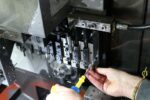
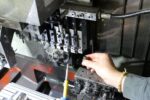
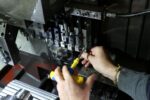
Modular system for shorter setup times
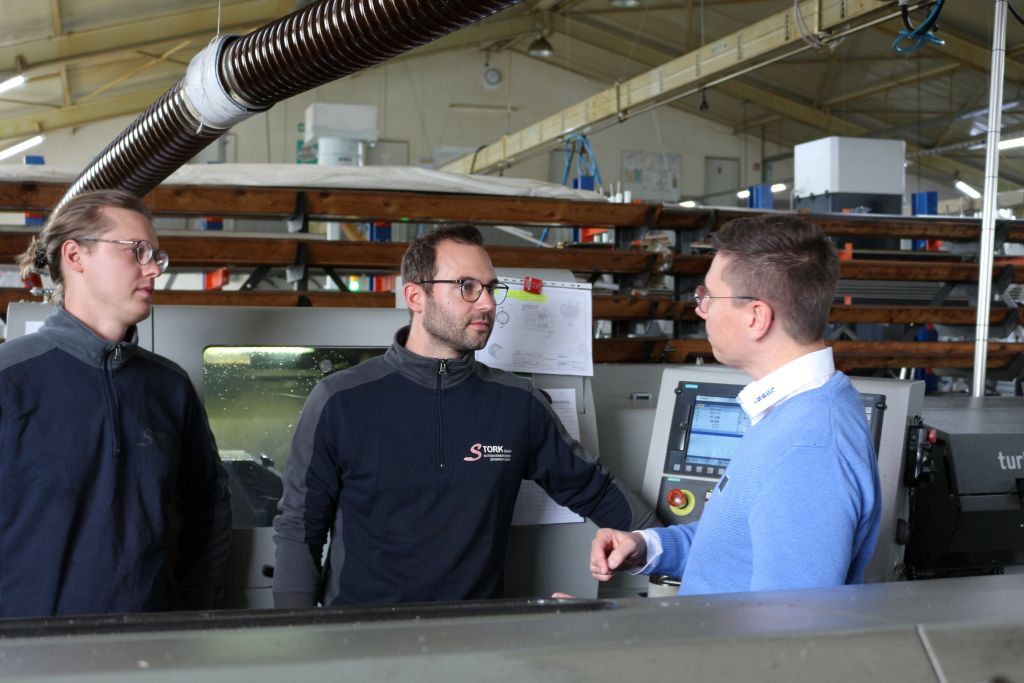
In search of valuable seconds, the managing director receives valuable support: His long-time tool partner ISCAR stands by him with advice, action, and suitable tool solutions. 'During one of my regular visits, the long auxiliary and setup times on the long lathes came up,' says Michel Trill, technical consulting and sales at ISCAR. Until now, the team led by Production Manager Jonas Ecker used monoblock holders.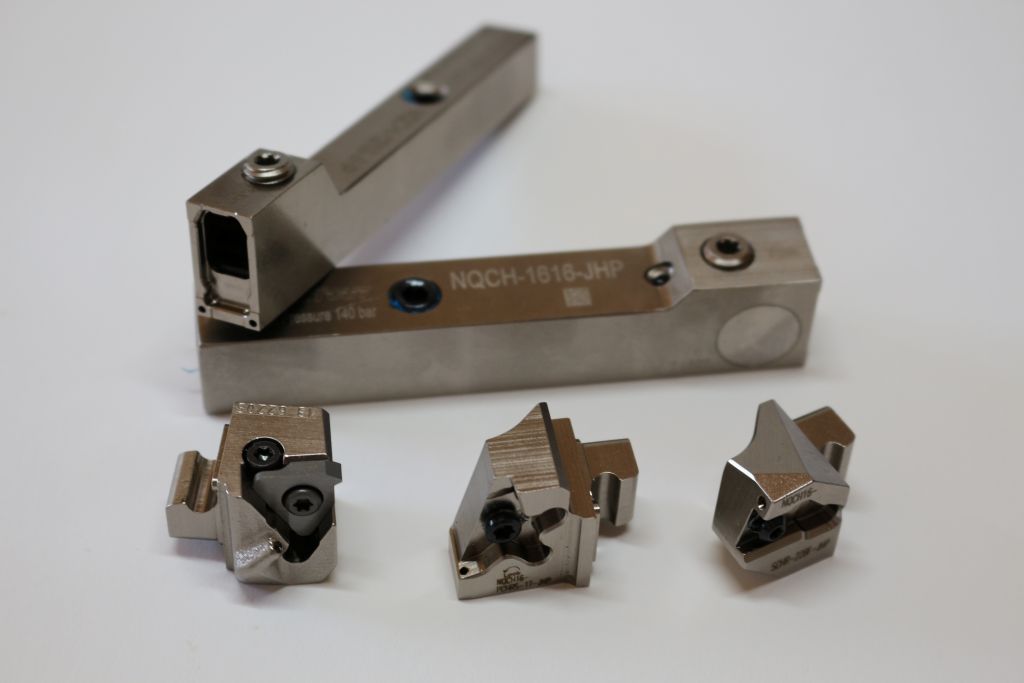
Their replacement in such a machine is not entirely straightforward, the machine room is narrow and poorly accessible, dripping coolant makes the tools slippery. Additionally, the entire tool had to be removed for the cutting tool change and re-initialized after reinstallation. 'If the operator is not careful when inserting the holder, he can quickly damage the tool or the material if he hits it,' explains Björn Birkholz. 'In my opinion, all of this took way too long.' Michel Trill had the right solution ready and introduced Birkholz to ISCAR's modular turning system NEOSWISS.
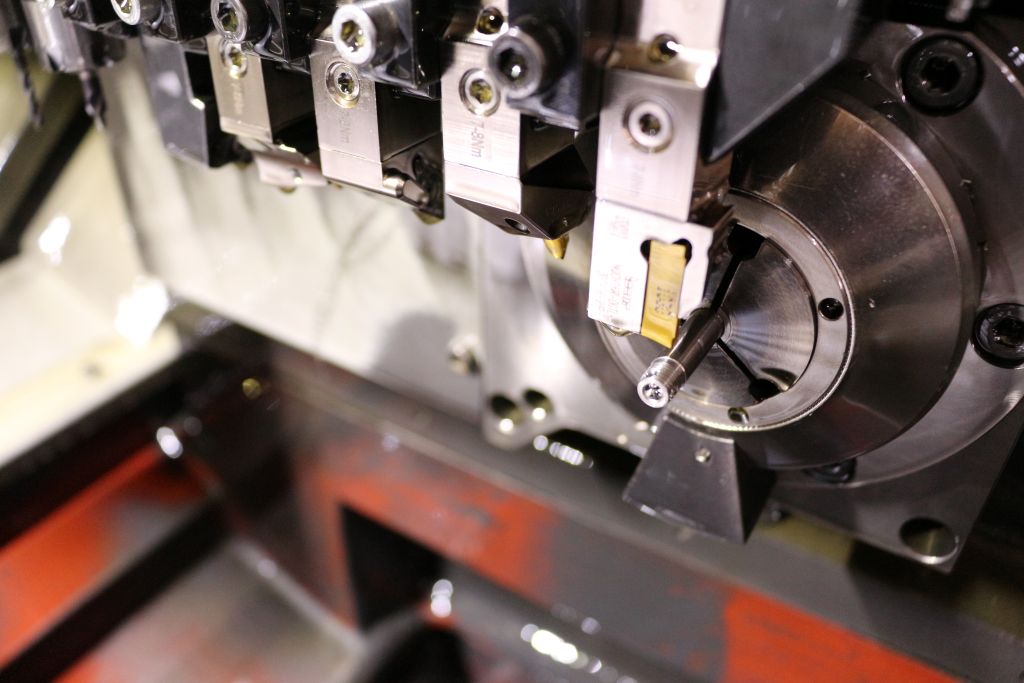
This consists of a shank and different exchange heads for all typical applications such as turning, grooving, and threading. The exchange heads can be equipped with different ISCAR cutting tools, for example, with PENTA 17 cutting inserts as well as ISO or DO-GRIP indexable inserts. The 3D-printed heads feature flow-optimized internal channels that transport the coolant directly to the cutting zone.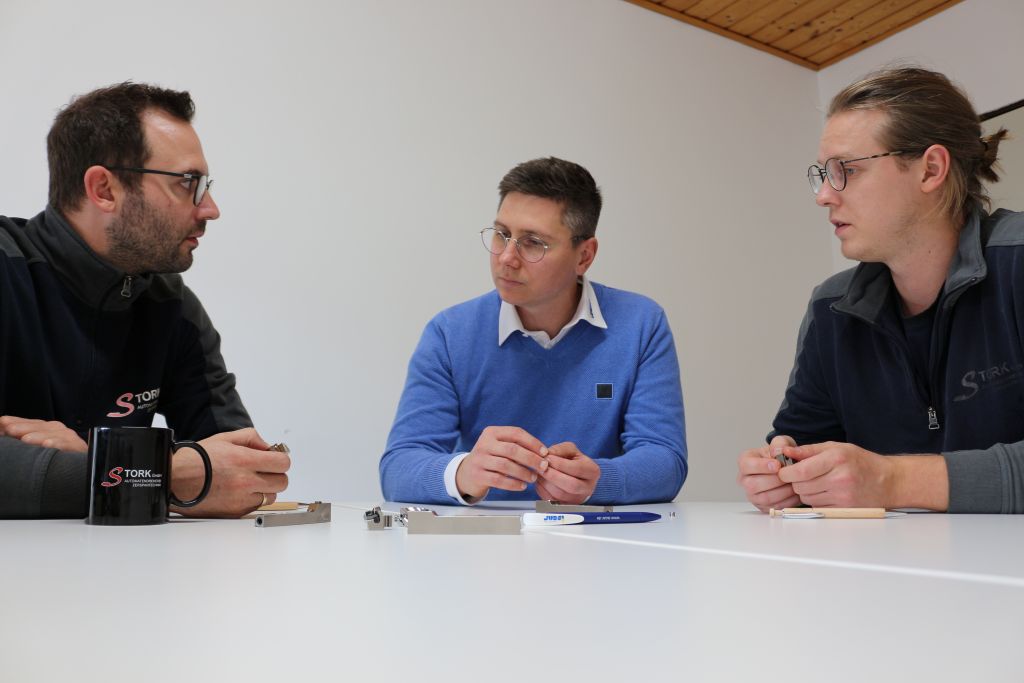
This helps with chip removal and increases the tool life. The heads are user-friendly and secured with just one screw in the shank. Thanks to a special clamping mechanism and four-point support, they sit firmly and securely. Thus, NEOSWISS offers the same stability as a monoblock shank tool. 'The biggest advantage is that the shank remains in the machine during the cutting or tool change,' says Michel Trill. 'The user only removes the tool head, which he simply re-inserts after the cutting or head change. Measurement or re-initialization is not necessary, the system is practically ready for use without setup time.'
Convinced from the start
'I was initially a bit skeptical about whether the tool was stable enough. But since it sounded overall interesting for us, I immediately agreed to the tests,' says the managing director. It quickly became clear that the doubts were unfounded. 'The heads of the NEOSWISS system can be changed easily, quickly, and comfortably,' says Jonas Ecker. 'The person at the machine can hardly make a mistake, the repeat accuracy and stability are very good.' Thanks to the user-friendliness, the setup time decreases, which increases productivity.
'For the cutting tool change, we needed about 20 minutes with the monoblock tools including measurement and corrections,' says the managing director. 'With the NEOSWISS, it goes lightning fast, and after a few seconds, the machine is running again. It was a no-brainer to implement the new system.'
Stork uses the tool system in shank sizes of twelve and 16 millimeters with different exchange heads for planning, roughing, finishing, grooving, and threading – the latest achievement is the NEOSWISS head for grooving and turning on the Y-axis.
Among other things, Stork produces threaded bushings with the NEOSWISS that a customer installs in machines for the food industry. The parts, only a few millimeters in size, are manufactured by the machinist from three-meter-long stainless steel bars. Once the holes are set, the Stork team uses the NEOSWISS to create internal and external threads and cuts off the bushing. A part falls out of the machine every 30 seconds, Stork produces about 100,000 pieces per year. The batch runs in two shifts and with about 10,000 parts per week – a total of ten weeks. 'If I can save ten minutes with every tool change, it adds up,' says Björn Birkholz.
Contact: