
From humble beginnings, the family-owned company MAPAL has risen to become a globally operating group with a world-renowned reputation in its 75-year history. From the very beginning, the company's history has been characterized by continuity and an innovative spirit, fueled as much by Swabian craftsmanship as by the entrepreneurial courage of the Kress family. The intense contact with customers and the reliable intuition for what is important for the future continue to shape the corporate culture today.
The founding of the company in 1950 was quite unusual. Dr. Georg Kress, a trained economist, was working as a tax consultant when he had the opportunity to take over the company of one of his clients that had fallen into financial difficulties. Although he knew nothing about technology, threading tools, and taps, he bought the 'OBA Precision Tool Manufacturing' from Otto Betzler. He sold his well-running tax consultancy in Aalen to become an entrepreneur.
The newly created company name MAPAL stands for 'Machine and Precision Tool Factory Aalen' and indicates that woodworking machines were also manufactured in the early years. Because it was not possible to maintain an economical and efficient production of profile milling machines in the cramped, simple premises on Oberen Bahnstraße in Aalen, MAPAL quickly separated from this business area. The focus shifted to taps, dies, and rolling taps, marking the beginning of today's tool program.
It all started with a reamer
In 1952, the purchase of a patent for a novel reamer proved to be groundbreaking for the long-term success of the company. Unlike previous designs, it works not with four or six cutting edges, but with a single one that is clamped into a slot and is adjustable. The Italian inventor promised lower manufacturing costs and more flexibility in reaming. When Dr. Georg Kress acquired the patent for the single-edge reamer, he went against the technicians in his own company, who considered the tool unsuitable and were fundamentally correct in their assessment.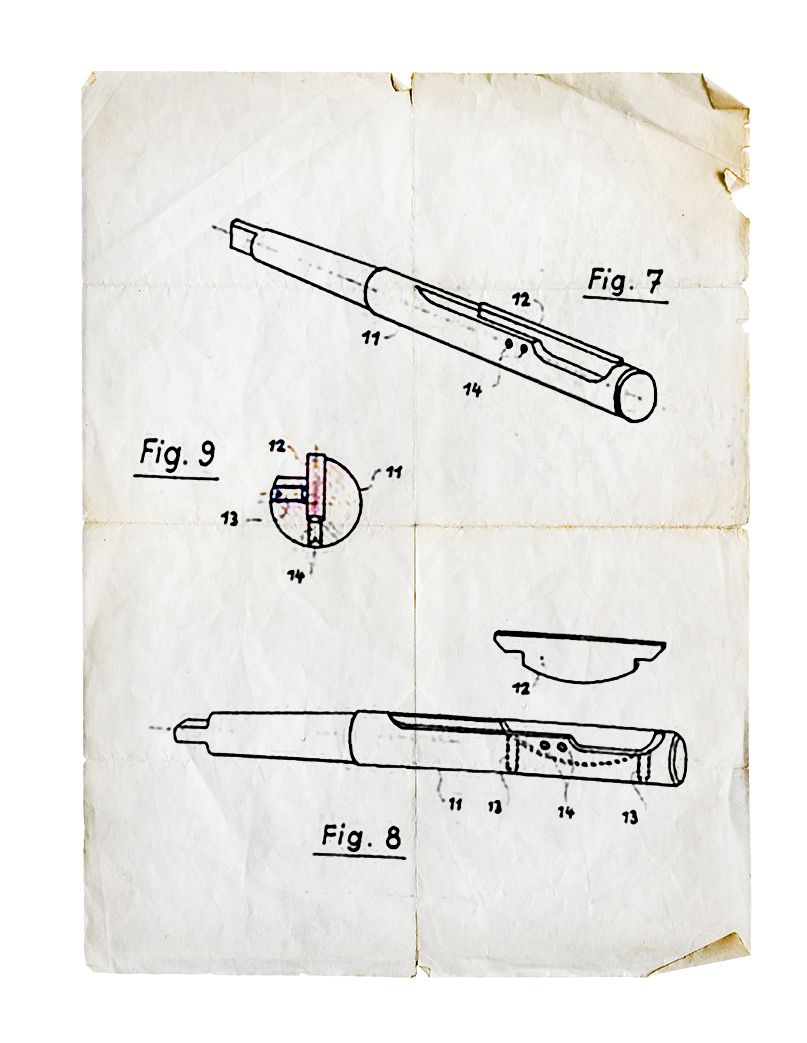
To overcome the initial problems, Dr. Kress focused on research and development. Through painstaking tinkering, the reamer was improved, including the introduction of two guide rails asymmetrically on the circumference of the reamer body. The first single-edge reamer developed by MAPAL with carbide guide rails was patented in 1954, followed by the patent for the reamer with indexable carbide cutting plates in 1962. Both innovations laid the foundation for developing reamers into a highly attractive high-performance tool in the following years. Fine boring became the flagship of MAPAL.
When Dr. Dieter Kress joined the family business in 1969, the founder's son was well-prepared for his future tasks. Unlike his father, he was at home in technology. On his very first day at MAPAL, he designed a new clamping mechanism for indexable cutting plates. It was patented and essentially still forms the technology for clamping indexable cutting plates in MAPAL's reamers today.
Far-sighted product decision
After taking over the management in 1974, Dr. Dieter Kress quickly set about restructuring the product portfolio. The business area of taps and rolling taps was abandoned to focus exclusively on the production of reamers. This happened at a time when MAPAL generated two-thirds of its revenue from threading tools. However, the plan was based on entrepreneurial foresight. There was hardly any potential to differentiate from mostly larger manufacturers who could produce at lower costs with the older products. The single-edge reamer, on the other hand, was something very special, for which there was no direct competition. However, the market had to be developed first.
Gradually, the reamers were further developed to be suitable for industrial mass production. The coating of indexable cutting plates played a role, as did the use of PKD material for the guide rails. With these tools, MAPAL gained a foothold primarily in the automotive industry, where manufacturing technology shifted from rigid transfer lines to flexible machining centers.
In parallel with the technical improvements, MAPAL revamped its sales concept and focused on maximum customer proximity. Independent sales representatives were replaced by in-house technical consultants, whose task was to advise customers on tool design and support them in use. In the automotive industry, the collaboration became so close that the consultants even participated in the development of new engines by introducing conceivable fine mechanical processing options early in the design process. They did not simply sell tools, but solutions.
From a medium-sized company to a global player
In the USA, MAPAL opened its first subsidiary as early as 1977. However, globalization really took off in the 1990s. In rapid succession, MAPAL established numerous foreign branches. MAPAL's internationalization strategy followed the paths of large customers. As these production sites were established almost around the globe, the comparatively small medium-sized company from Aalen had the opportunity to keep up and exploit new market potentials. Today, MAPAL is represented in 25 countries.
To expand its product and service offerings, which also met customer demands, MAPAL integrated a number of specialized companies in Germany. With the acquisition of WWS in Pforzheim, MAPAL expanded its offering to include PKD tools with soldered cutting edges for high-speed machining, especially of aluminum, thereby covering a segment that was becoming increasingly important for customers. From Miller in Altenstadt, solid carbide drills and solid carbide milling tools were added to the program.
Since solid drilling operations precede reaming in the production process, this ideally complemented MAPAL's performance portfolio. The company Weisskopf from Meiningen further strengthened the solid carbide sector.
The acquisition of the traditional Winterlingen company August Beck secured MAPAL's position as a leading manufacturer of reamers. Robert Strom and ISOTOOL complemented the portfolio with ISO and gauging tools. In 2015, the two companies were rebranded as MAPAL ITS, focusing on complex special tools with gauging mechanisms.
The product range was completed with clamping devices from WTE in Ehrenfriedersdorf. MAPAL later made strategic investments abroad as well.
Transformation in full swing
With Dr. Jochen Kress, who has been working as a development engineer at MAPAL since 2000, the third generation joined the management of the family business in 2008. When he took over responsibility for the MAPAL Group as managing partner ten years later, the transformation of the market was already in full swing. MAPAL is proactively accompanying the transition of the automotive industry towards electromobility and has also developed efficient manufacturing solutions early in this area.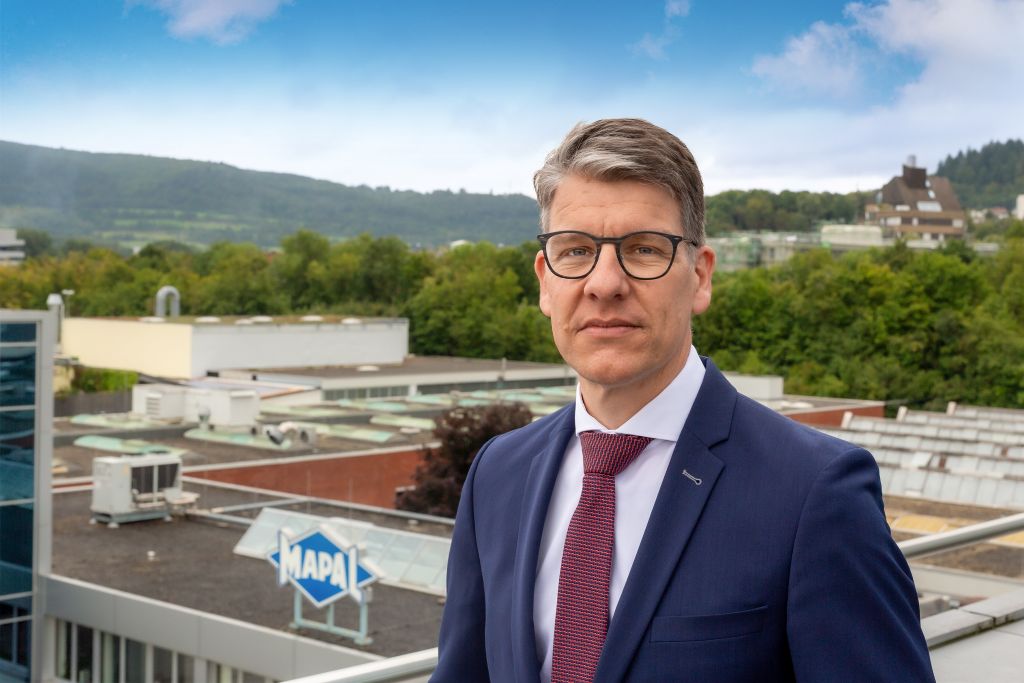
In addition, the strategic expansion of customer segments beyond the automotive industry, which had been a growth guarantee for decades, took place. MAPAL is now also focusing on the areas of aerospace, fluid power, as well as tool and mold making. Digital solutions are provided by c-Com, founded in 2017, which has since been integrated into the MAPAL Group and primarily supports tool management services.
With an environmental management system, the company considers all aspects of sustainable business practices. Many individual measures in the areas of production and administration at all locations contribute to this.
Dr. Jochen Kress has initiated the transformation of MAPAL into a process-driven, globally operating organization. Structures and processes are being adapted to the achieved size of the company, decision-making processes are streamlined and accelerated. The reorganization of the management level at the Aalen headquarters is focused on core processes and key topics. The structural, organizational, and cultural changes initiated by Dr. Jochen Kress will sustainably shape the company and will last well beyond the anniversary year 2025.
Contact: