
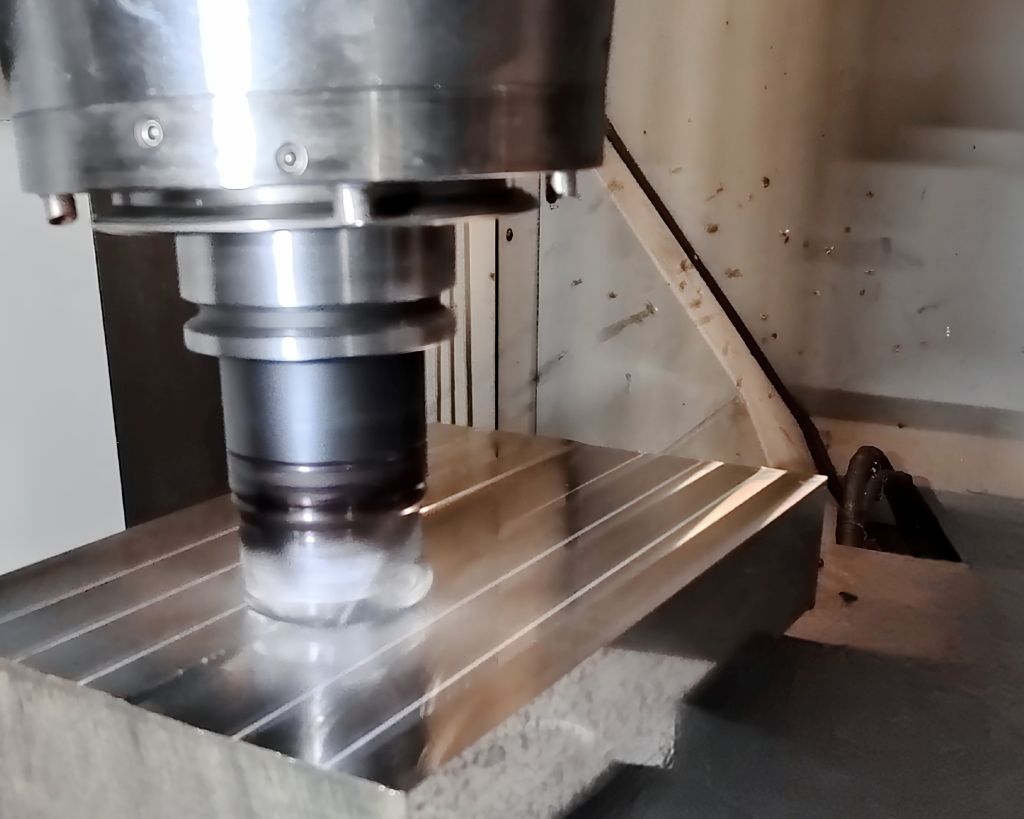
Especially in the machining of difficult-to-machine metallic materials and plastics, cryogenic cooling with CO2 offers significant economic and ecological advantages. These can be effectively utilized in industrial practice through an innovative CO2 cooling module that is fully integrated into CNC machining centers and lathes in terms of machine, control, and safety technology. The new cooling unit, developed as part of a research project, operates with external and internal cooling with automatic tool change comparable to systems for conventional cooling lubricants and can be combined with them if necessary.
High-strength materials, increasing demands on component quality, the desire for maximum chip volume, higher requirements for energy and resource efficiency, reduction of the CO2 footprint, and last but not least, increasing cost pressure present new challenges for machining technology. Cryogenic cooling with CO2 is considered the key to efficiently solving these tasks. 'Cryogenic cooling enables the technological boundaries in machining to be shifted, thus achieving significant improvements in productivity, cost-effectiveness, sustainability, and occupational safety,' explains Lucas Günther, project engineer in the machining technology research group in the team of Prof. Dr.-Ing. Uwe Teicher at the West Saxon University of Applied Sciences Zwickau (WHZ) and at the Research and Transfer Center e.V. (FTZ) of the university. His colleague Andreas Zinke adds: 'Due to the great interest in a fully integrated cooling system solution both in the machine tool industry and among users, WHZ and FTZ, together with the cooling system manufacturer acp systems, the machine builder Chiron, the manufacturer of clamping technology and rotary unions Ott-Jakob, and other industry partners from the fields of tool manufacturing and safety technology, initiated a research project. The Industrial Working Group on Machining with CO2, founded in Zwickau in 2015, was also involved.
Fully integrated, CNC-controlled cryogenic cooling
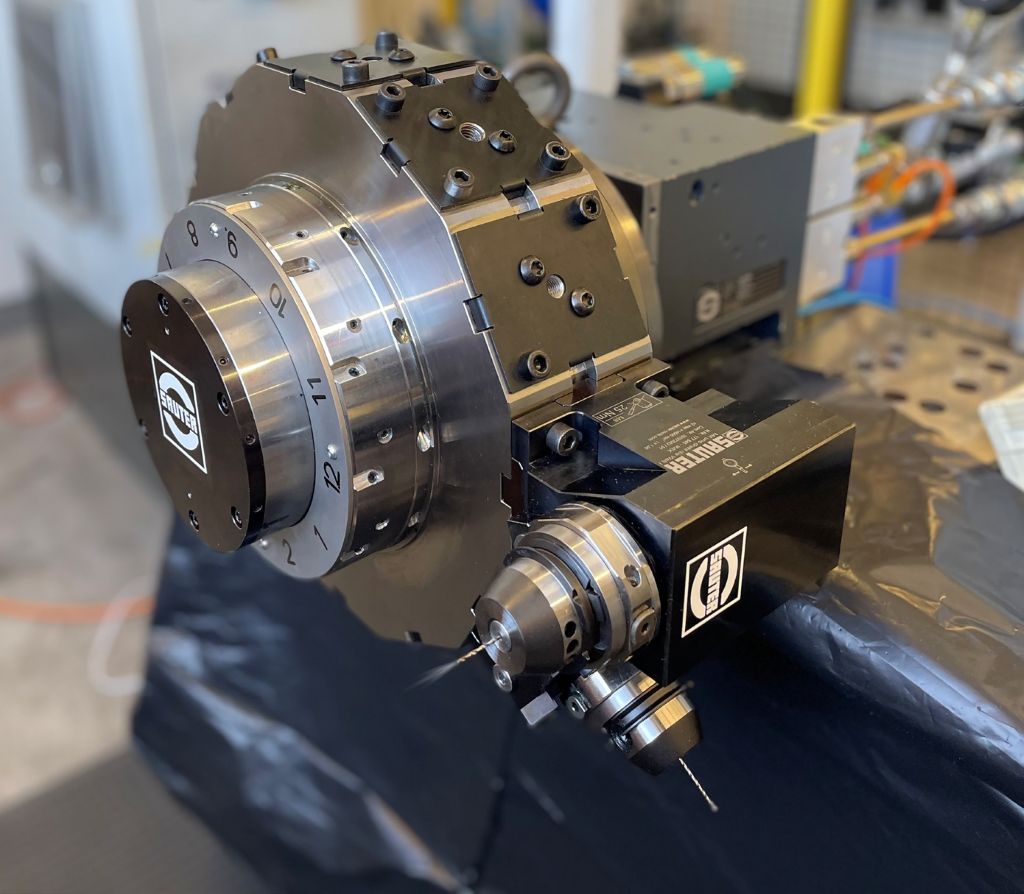
The goal was to develop a cryogenic cooling solution for external and internal cooling that can be fully integrated into machining centers and lathes in terms of media supply, control, and safety technology and can be CNC-controlled, as is the case with systems for conventional cooling lubricants. Various challenges had to be overcome for this. The first was regarding the size or space requirements of the cooling module. Regardless of the fact that it was developed for use in a Chiron Mill 800 with the tool interface HSK 63, it must be adaptable to the machine concepts of other manufacturers and to other interface systems without major effort.
In addition, we developed a suitable media distributor for the machine technical integration. This allows the cryogenic cooling to be selected analogously to conventional cooling solutions as external cooling at the tool or as internal cooling through the tool,' describes Lucas Günther another challenge. This includes the possibility of operating a machining center in combination – both cryogenically and with emulsion cooling or minimum quantity lubrication. The control and safety technical integration of the system was carried out via standardized interfaces and CO2 safety sensors. 'The cryogenic cooling system can thus be completely controlled via the machining center,' specifies Andreas Zinke. 'Furthermore, the safety technology of the machining center and the cooling system is linked. If one of the systems is shut down, the other is automatically shut down as well.'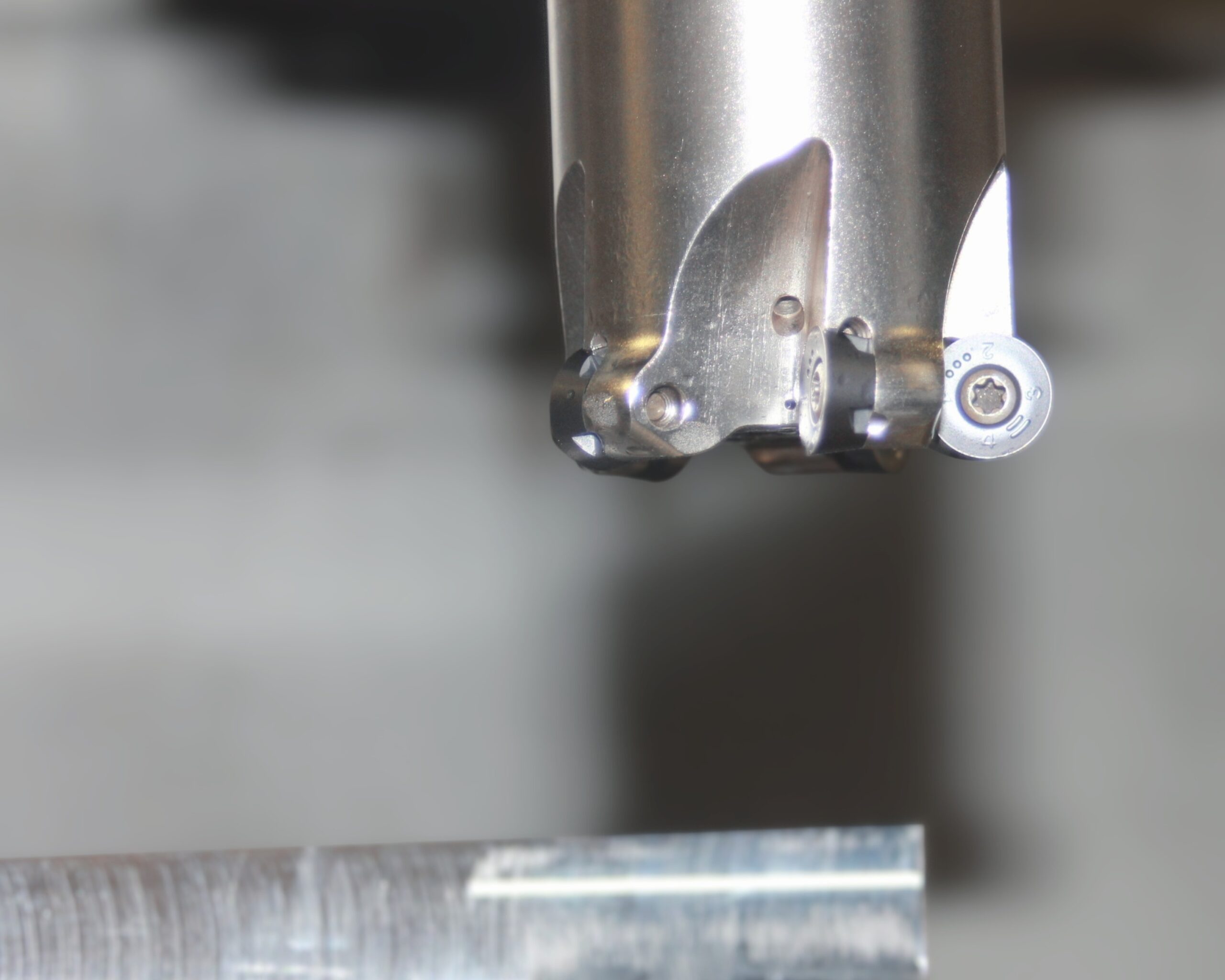
Limit value of 5,000 ppm CO2 is reliably maintained
In addition to the cooling module, FTZ developed a concept for the safe operation of machine tools with cryogenic CO2 cooling based on extensive investigations and tests. To determine the potential hazards for employees in manufacturing, the researchers worked with two test scenarios: In the first, CO2 was used in small, medium, and large quantities in machine tools with open or semi-open working space.
In the second test setup, the working space was closed, and different CO2 quantities were also used here. The CO2 concentrations were measured with external suction on and off in the machine and hall environment.
'Based on this, we defined what safety technology is required, how it should be used for safe operation, and where it needs to be placed. Accordingly, acp systems integrated CO2 monitoring sensors for concentration measurement and shutdown technology into the overall system,' reports Andreas Zinke. 'The workplace limit value for CO2 of 5,000 ppm in the ambient air is reliably maintained. Basically, the quantities of CO2 used in machining can be considered low.'
Increasing productivity, cost-effectiveness, and sustainability coldly
Research on cryogenic cooling has been ongoing at WHZ and FTZ for 15 years. Extensive fundamental studies with different materials and various machining applications demonstrated the effectiveness of CO2 cryogenic cooling. Especially with difficult-to-machine metallic materials, including stainless steels, nickel, cobalt, and titanium alloys, as well as with plastics, fiber-reinforced composites, and polyether ether ketone (PEEK), higher time chip volumes, lower tool wear, and longer tool life were achieved compared to conventional cooling lubricants (KSS).
These advantages were confirmed by various application and component-related projects with industry partners. Furthermore, the cooling is residue-free, which minimizes the cleaning effort on components and machine tools and significantly facilitates the recycling of chips. 'Moreover, the use of CO2 often results in improved surface qualities and reduced burr formation,' adds Lucas Günther.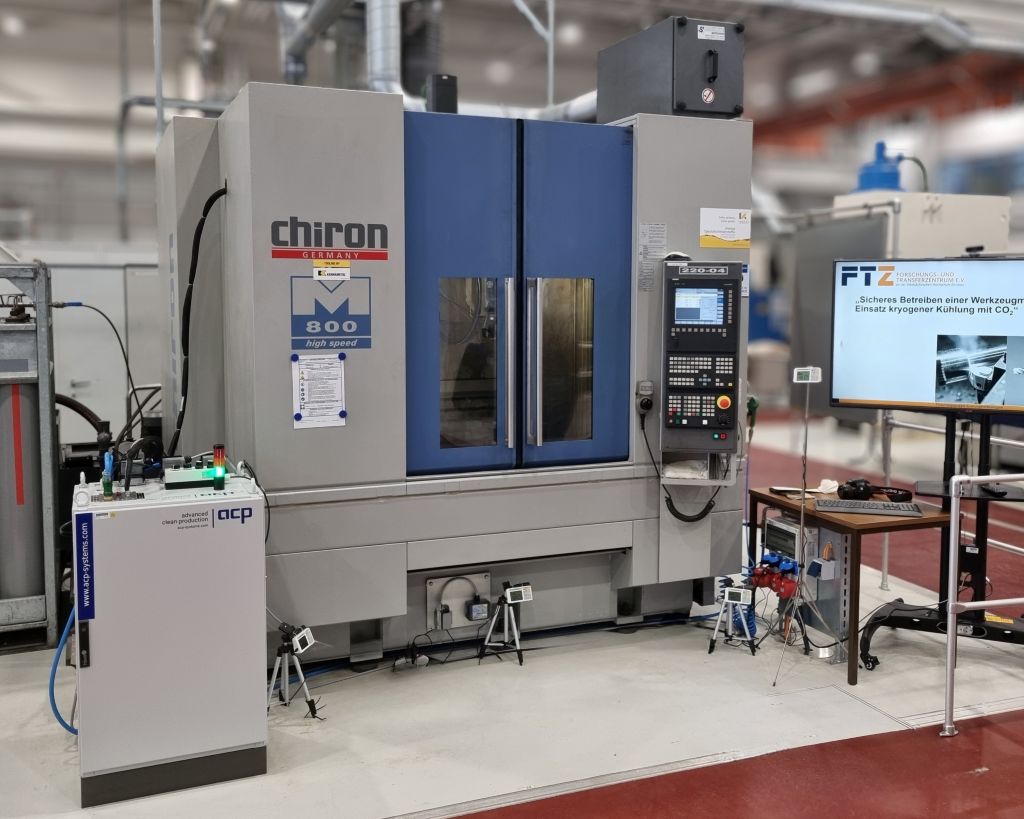
The cooling technology also offers advantages from ecological and occupational safety perspectives. The recycled, liquid CO2 used for cryogenic cooling is produced in chemical production processes and in energy generation from biomass. In contrast, conventional KSS is a chemical product that must be disposed of at the end of its service life. Furthermore, it can pose a hazard to employees due to components of cooling lubricants, such as additives or bactericides. In terms of the CO2 footprint, cryogenic cooling also performs better.
"Initial investigations and comparative calculations regarding energy consumption have shown that the power consumption of oil/emulsion cooling systems of medium size is in the range of several kilowatts, while high-pressure cooling systems can even reach 10 kW. In contrast, cryogenic cooling consumes less than 100 watts," reports Andreas Zinke. This allows for significant energy savings, which positively impacts the CO2 footprint.
With the newly developed CO2 cooling module from acp systems, machining now has a solution that can be fully integrated into the tool or lathe machine or machining center, regardless of the manufacturer, and can be operated process-safe under CNC control. This enables a significantly higher performance capability compared to conventional cooling with KSS, along with the realization of the technological, economic, and ecological advantages of cryogenic cooling.
Contact: