
Since 1977, INGERSOLL WERKZEUGE GMBH has been manufacturing tools for gearing with indexable inserts, and hobbing (skiving) has also been a recurring topic since 2014. However, for a machining task at HKS Dreh-Antriebe GmbH, the tool manufacturer had to leverage all its know-how to push the limits of skiving. The TechCenter in Haiger played a crucial role in this.
Since 1976, HKS has been producing hydraulic rotary drives for industrial plants and construction machinery. The family-owned company in its third generation has developed into an internationally leading manufacturer with standard products, custom solutions, and prototypes in this area. The hydraulic and pneumatic compact drives are designed to rotate, position, accelerate, and decelerate masses precisely, safely, and reliably – often in demanding continuous operation.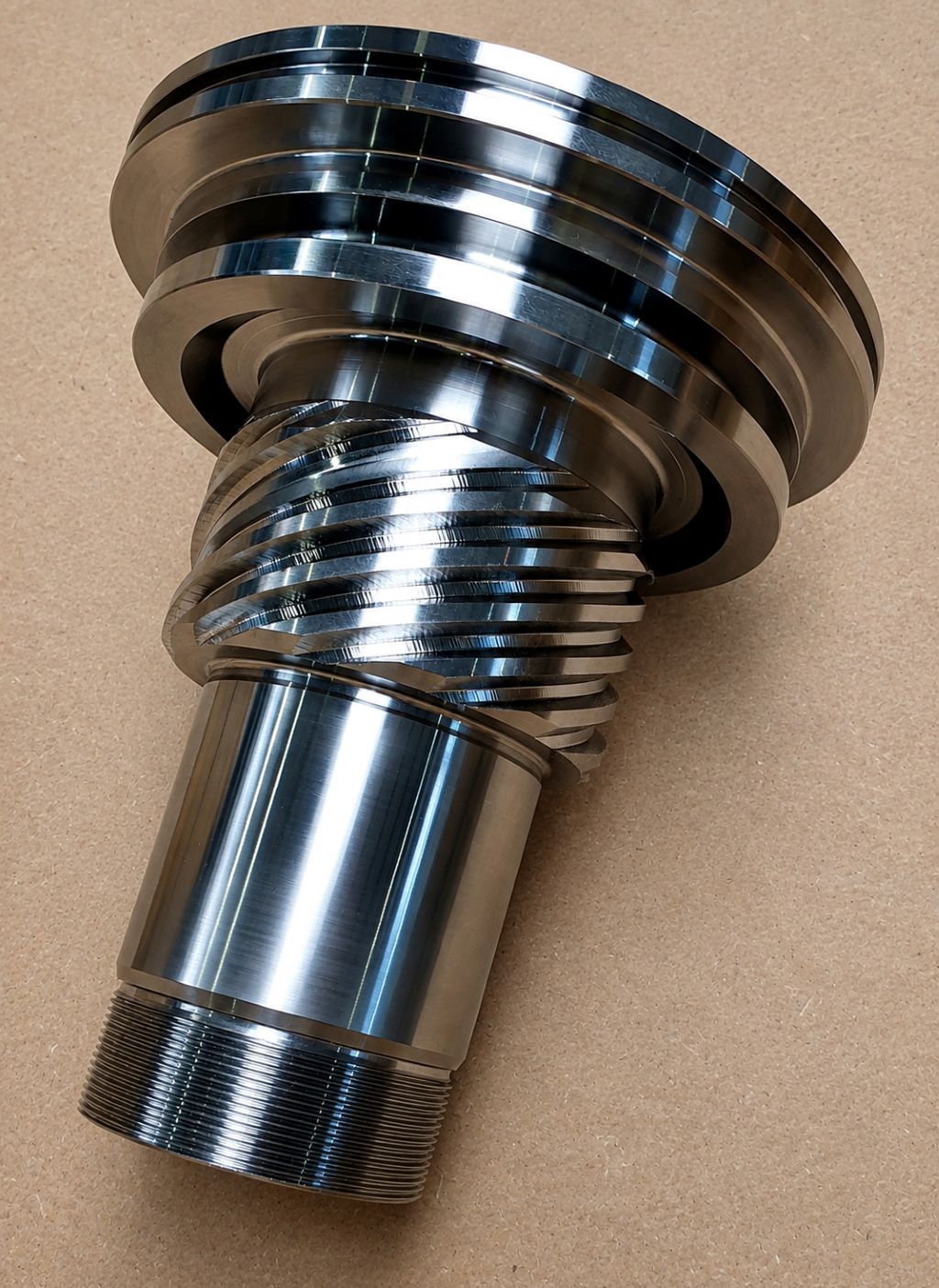
HKS is represented in 20 countries and generates more than half of its revenue abroad. The company has two locations in Wächtersbach-Aufenau. A third plant is located in Neukirch/Lausitz, where larger rotary drives and products in higher quantities are manufactured. HKS employs around 280 people, with a production area of 7,200 square meters.
When the company was founded in 1970 by Walter Höhn in Frankfurt, it primarily focused on contract manufacturing. Today, HKS develops and produces hydraulic and pneumatic rotary drives for industrial plants and construction machinery. The products are used worldwide in demanding applications and stand for precision, reliability, and durability.
Bottleneck in Gearing
With its high manufacturing depth, HKS is able to produce a large part of the components in high quality in-house. Among the approximately 60 machining centers in the machine park are machines from various manufacturers and generations, which are continuously supplemented by modern manufacturing technologies.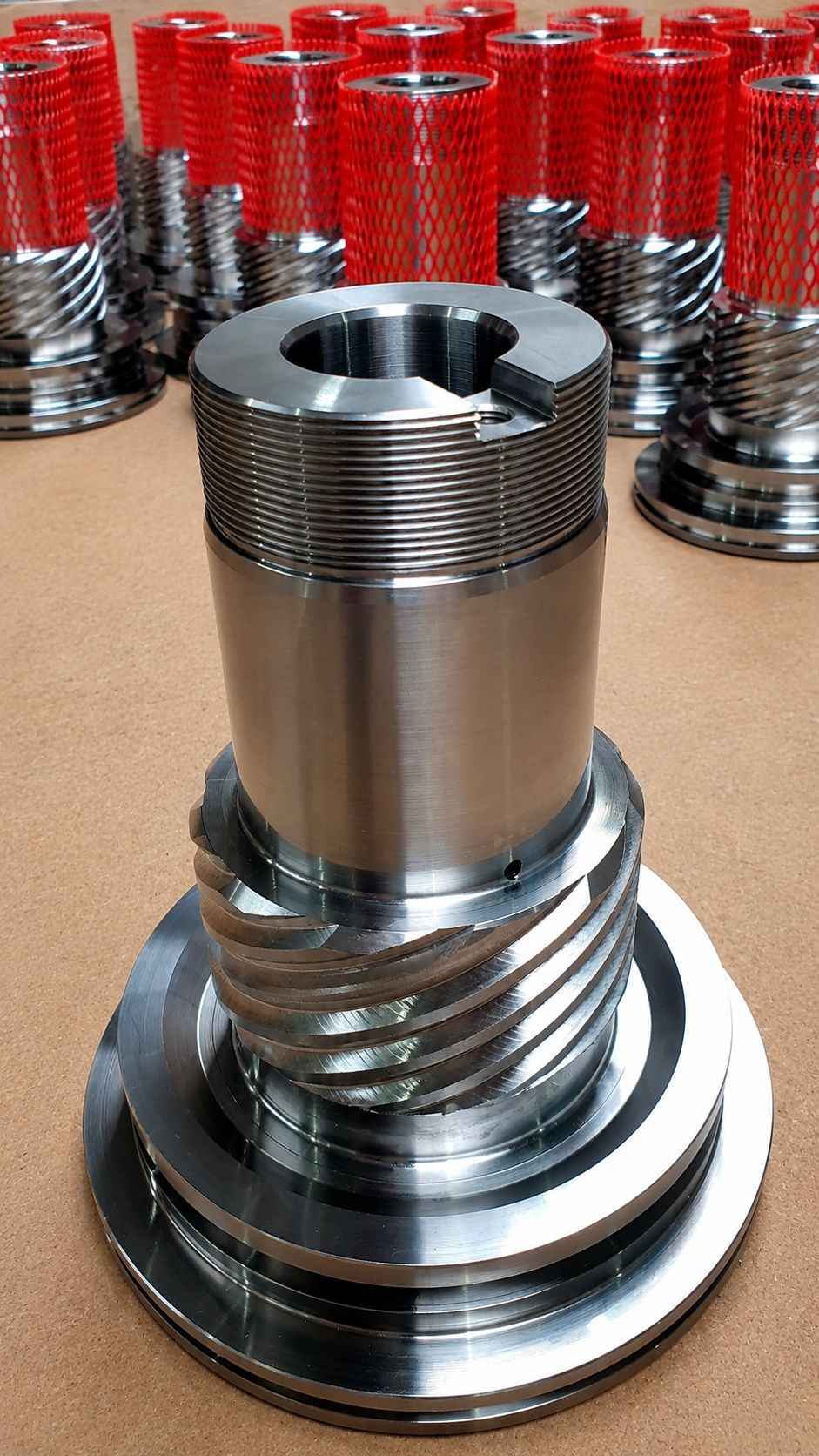
In the components, milling often proved to be the bottleneck. The gearing is the core of HKS's products, encapsulating the entire expertise of the company. The piston is the link between the housing and the shaft. To allow for adjustments if necessary, it is fundamentally manufactured first.
Since acquiring an Okuma Multus U3000 three years ago, the plan has been to use hobbing for increased productivity. 'We cannot afford to stand still in our production,' explains Jens Dickert, shift leader in the turning department. 'Knowing that the machine can handle it, we wanted to use skiving to improve ourselves.' The contact with INGERSOLL came through Okuma. The machine manufacturer and the tool manufacturer have long cooperated and have already implemented various projects in the gearing area, achieving high quality.
Great Challenges
This time, however, the challenges were particularly high, as Christopher Hees, application technician at INGERSOLL, explains: 'The gearing that was to be produced here has an extreme ratio. The large angle of inclination and the very small relief to the shoulder posed great challenges for our design engineers, which they mastered with flying colors.'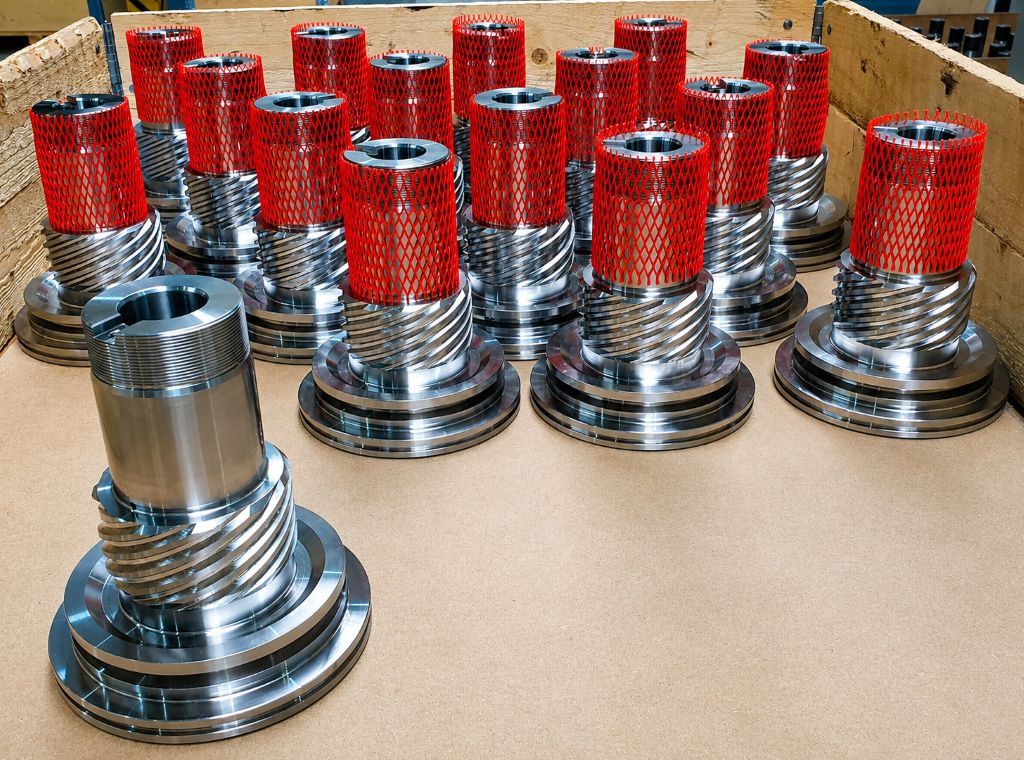
To spare ongoing production at HKS and fully utilize its manufacturing competence, INGERSOLL involved the TechCenter in Haiger. An Okuma Multus is also available there, allowing for directly comparable tests. The machine manufacturer supported the project, where it was not initially certain that it could be implemented at all. Peter Schwarz, technical consultant at INGERSOLL, describes the approach:
'To design a suitable tool for this, we brought a component from HKS to our TechCenter. We chose the most difficult workpiece with a small number of teeth and a large angle of inclination. Our thought was: If we can manage this, the other parts will be easier to manufacture – and we succeeded.'
Optimization in the Tech Center
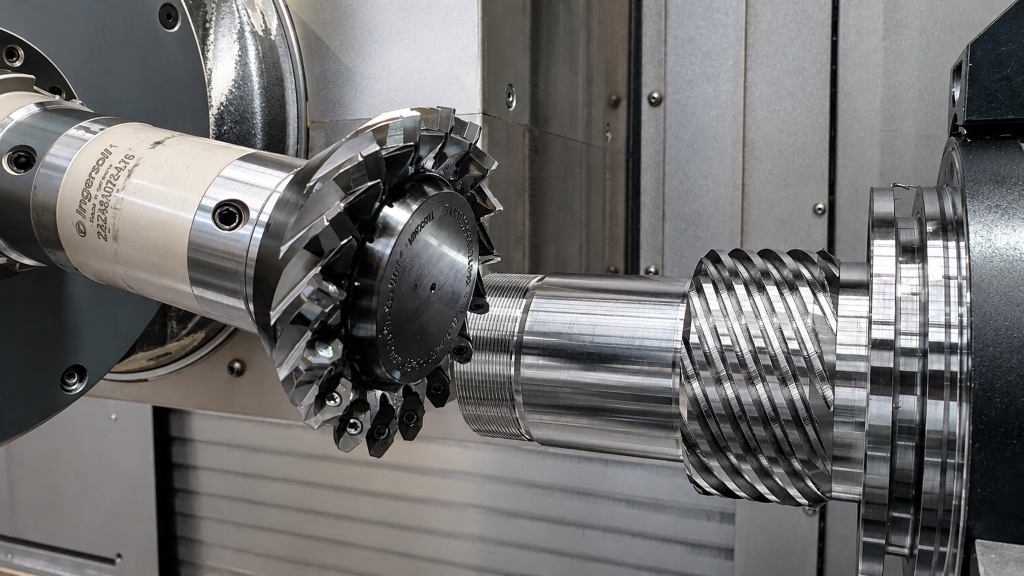
In Haiger, it was analyzed how the hobbing tool should look. A collision check was performed using software. Since HKS uses a custom-developed technology rather than a standard gearing, there are no official gearing data for it. To design indexable inserts and adapt them to the customer-specific tool, INGERSOLL first had to measure the component. For machining the 11 teeth of the selected shaft, INGERSOLL developed a hobbing wheel with 17 teeth. The first tool use in the TechCenter worked immediately, but corrections to the technological data and minor modifications to the tool were necessary, reports Peter Schwarz.
The optimized tool was sent to the customer along with proven cutting values, where it was used in production. On-site, only modifications to the gearing software on the Multus needed to be made to get the best out of the machine and tool. Jens Dickert compares it to the previously used finger mill:
'With one cutter for roughing and one for finishing, we managed about 50 components. With the hobbing wheel, we now achieve 400 pieces with less effort.' The machining time of about 30 minutes could be reduced by 90 seconds. For shafts with more teeth, Dickert expects even greater savings.
Improved Productivity and Quality
When using a finger mill, wear is uneven. An advantage of hobbing is the even wear across the entire profile. In addition to higher productivity, the quality of the gearing was also improved through hobbing.
'The new tool produces a uniform surface and delivers more precise results. We no longer have any play and practically nothing needs to be corrected,' says Jens Dickert, who explicitly praises the good collaboration with INGERSOLL.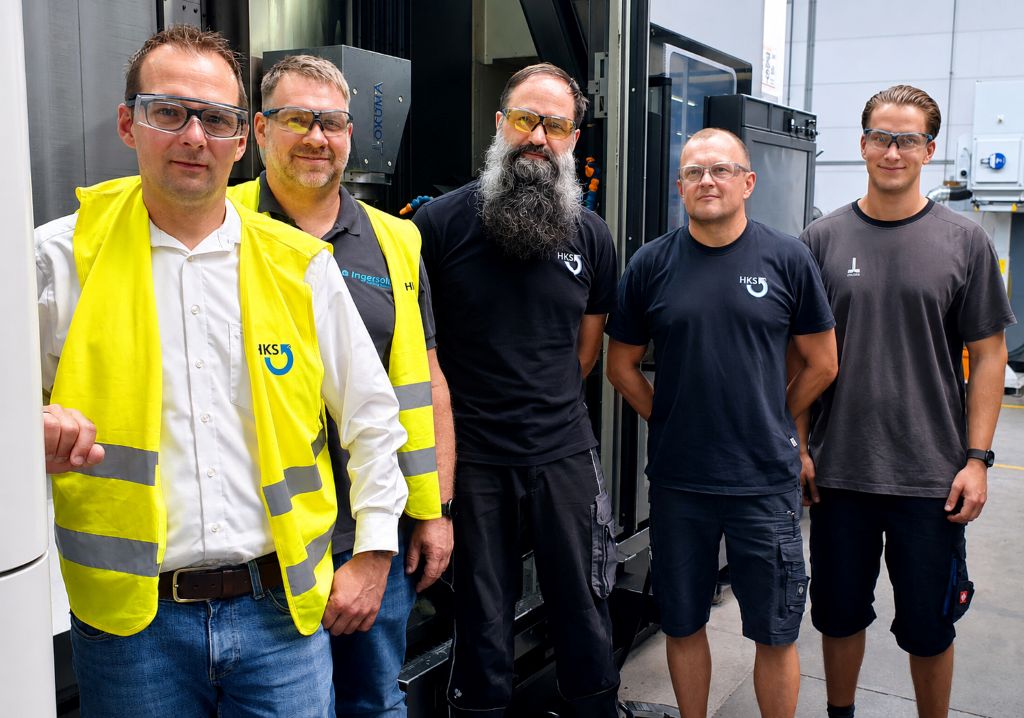
Skiving is used in the field of industrial drives, of which HKS manufactures several thousand per year. A total of four gearings are required per component for the shaft, housing, and piston. Looking ahead, the entire drive is to be produced using skiving, announces production manager Steve Oschmann. The process started with the external gearing of a shaft made from CrMo40. To absorb vibrations due to the extreme conditions and avoid breakouts, INGERSOLL chose its tough substrate IN2030 for the coating of the indexable inserts.
"If both parts are manufactured by skiving, I hope for a further improvement in the load distribution of the gearing, which already improved with the first component," says Steve Oschmann. Positive effects on the products can be directly measured on the test bench at HKS. The torque absorption at the gearing could be significantly increased.
For Christopher Hees, the completed project with skiving has reached a limit: "If it gets any more extreme, the process can no longer be represented because the engagement conditions are too unfavorable. The tool can no longer properly enter the cut, and the machining cannot be carried out."
The production manager is not pleased at all. "We have even more demanding components to process that I would also like to skive," says Oschmann. He is particularly thinking of excavator drives, which not only have different proportions but are also produced in higher quantities. As of today, skiving is not possible here. At least the limits of what is technically feasible could continue to shift. Like his customer, INGERSOLL is also striving to continuously develop and present innovative solutions.
Contact: