
From unsorted raw parts to finished toothed pump shafts: With a highly automated production line, Liebherr-Verzahntechnik GmbH has implemented a seamless process chain for the pump manufacturer Rickmeier GmbH from Balve. It ranges from bin picking at the line entrance through several processing stations including gear hobbing to automatic finished part storage. The result: higher productivity, stable processes, and maximum flexibility.
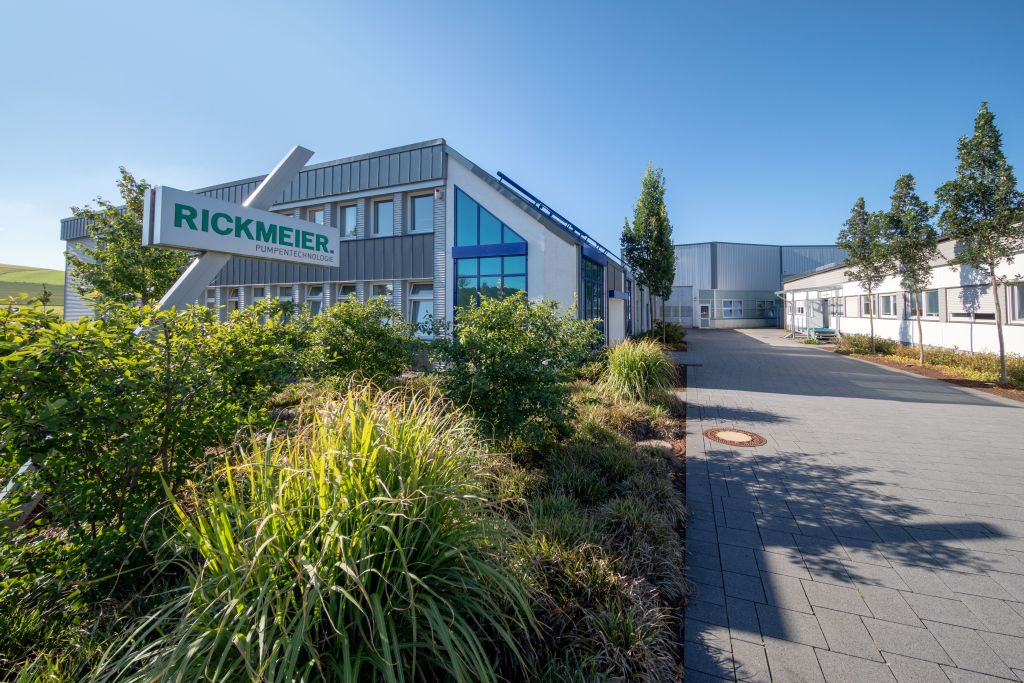
When mechanically driven gear pumps are to operate reliably, every detail matters – especially the quality of the toothed drive shafts. These components are manufactured by Rickmeier GmbH in southwest Westphalia Balve as part of their own gear pumps. The company, with over 230 employees, is one of the recognized global market leaders in gear pumps, valves, and oil supply systems for international mechanical engineering. Development and production are consolidated at the site.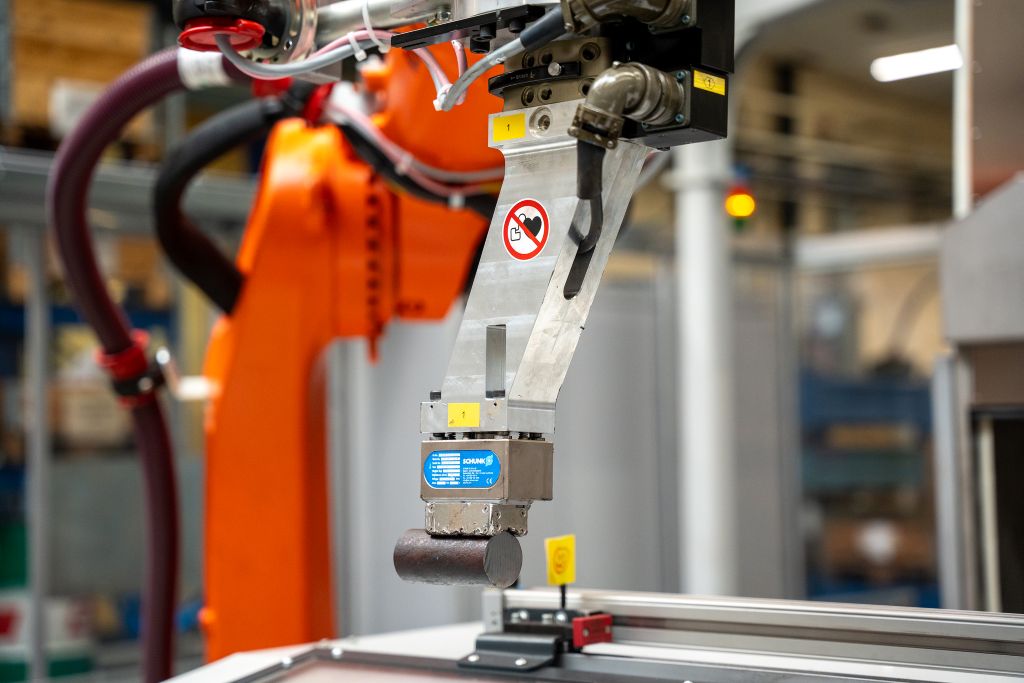
To meet increasing demands for productivity and availability, Rickmeier decided to replace an existing semi-automated production facility. The goal was significantly higher automation and more flexibility for the large variety of parts. 'We are a relatively small company with many variants,' explains team leader Elmar Schierhoff. 'Our production must therefore run flexibly, efficiently, and reliably.'
Seamless automation from raw part to finished part
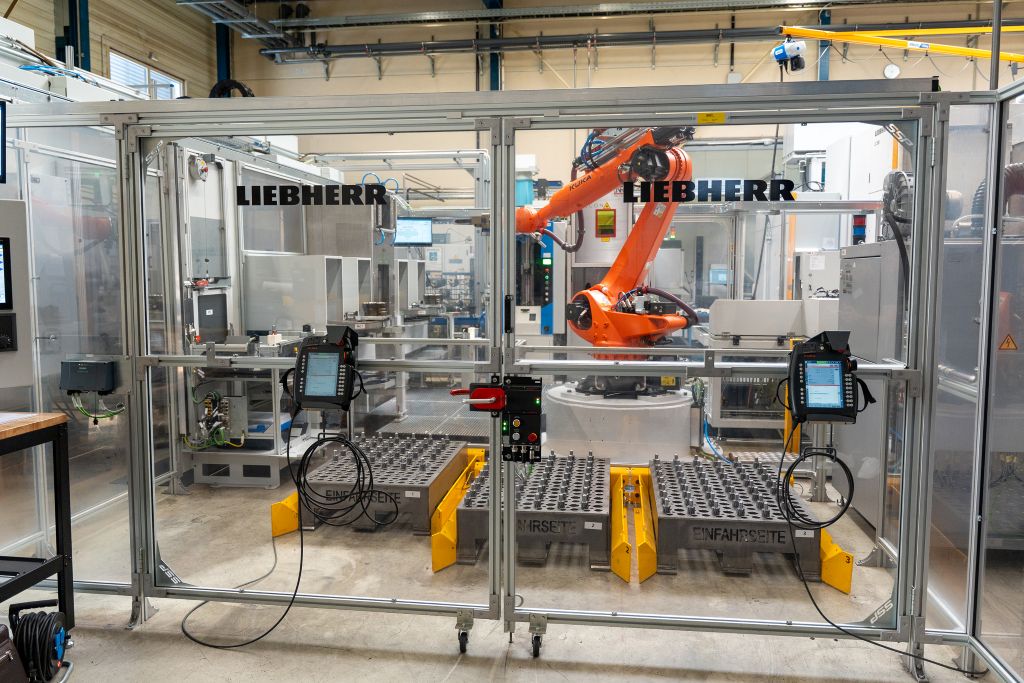
The new system automates the complete manufacturing of toothed shafts. At the line entrance, cylindrical raw parts are provided unsorted; depending on the part size, a box holds between 50 and 1,000 parts. In a bin-picking cell with a stationary 3D camera, the software LHRobotics.Vision detects the position of the parts in the container. A robot with a magnetic gripper automatically retrieves them and places them, guided by the LHRobotics-Vision software, oriented into an insertion prism of the deburring station. There, the blanks are first deburred and planed – a process step that was previously performed manually.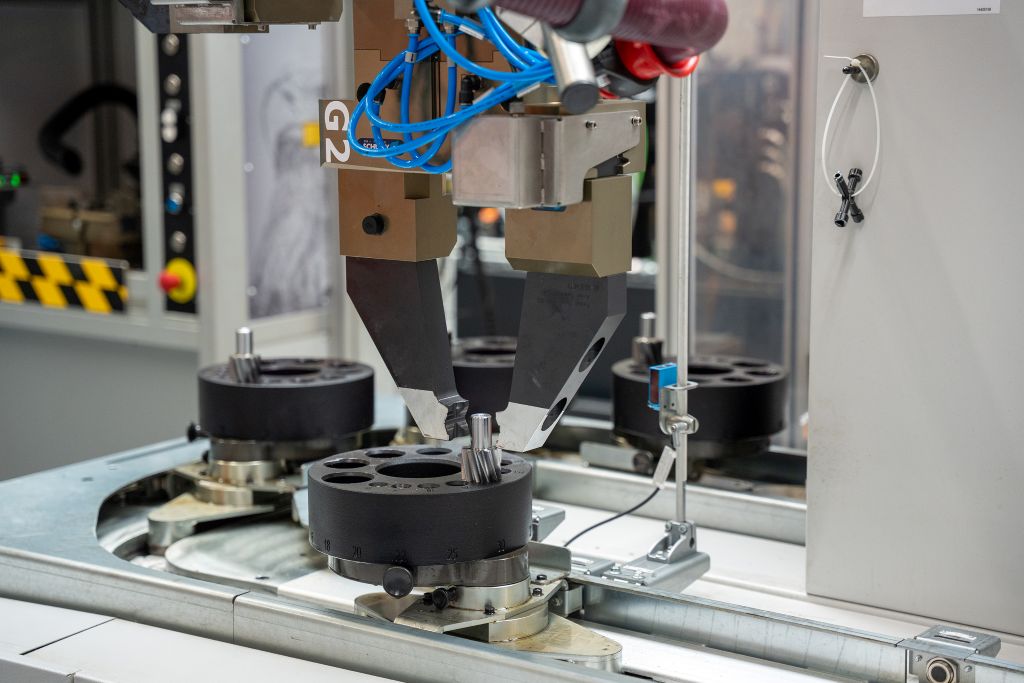
A second robot then takes over the entire material flow within the system. With a pneumatic parallel double gripper, it retrieves the parts from the deburring station and hands them over to one of the two connected lathes. Subsequently, it transports the components to a blow-off station for cleaning and further to a laser station, where a marking for part traceability is applied.
In the next step, the parts are inspected in an optical measuring station. The robot then places them on the integrated plastic chain conveyor (KKB) of the Liebherr gear hobbing machine LC 300, through which the machine is automatically loaded with the parts. After gear hobbing, the components pass through a washing machine and are finally sorted and placed on part pallets at the line output.
The integration of the entire system was in the hands of Liebherr-Verzahntechnik GmbH. In addition to its own machines and systems, the company also coordinated the integration of other machine manufacturers. 'The overall concept from Liebherr convinced us,' explains Elmar Schierhoff. 'Experience, competence, and the combination of gearing technology and automation from a single source were decisive.'
Challenges: high variety of parts, limited space
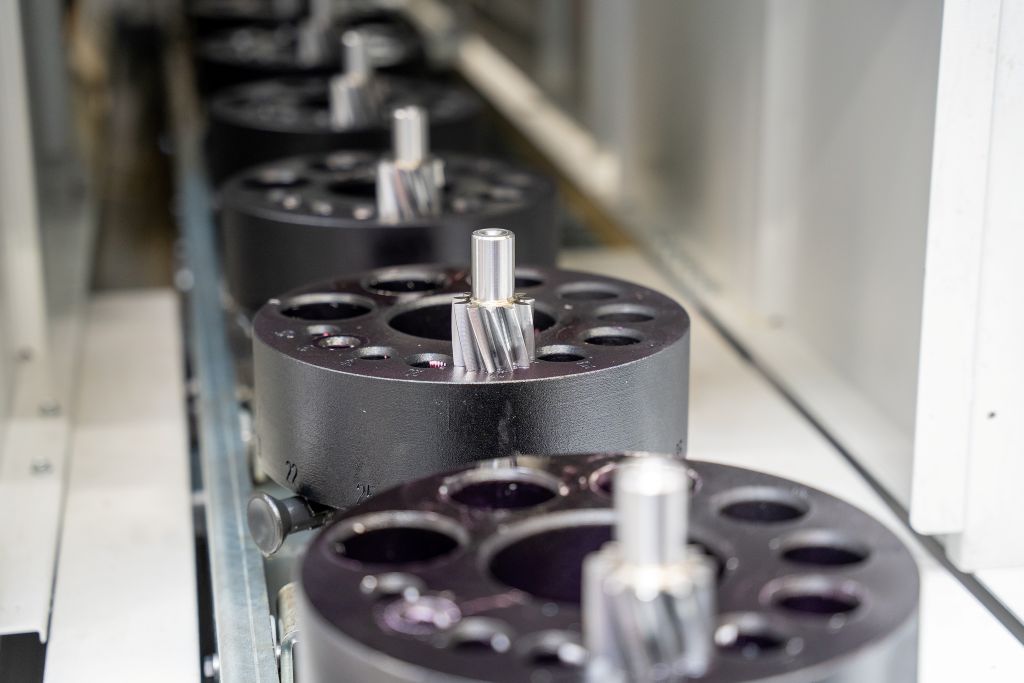
A central challenge in designing the system was the large variety of variants: approximately 750 different finished part variants are produced from around 50 different raw parts. To efficiently handle this range, Liebherr developed a flexible storage concept. Revolver stores and pallet systems with differently sized fixtures are used, allowing for intermediate buffering of the parts.
The part fixtures were manufactured by Rickmeier in-house – constructively coordinated with Liebherr. 'Our goal was a system with minimal setup effort despite high variety of parts,' says Marcel Mutzenbach, Head of Industrial Engineering & IT.
An even greater challenge was the limited space conditions in production. The entire system had to be accommodated in a relatively small area – a task that required very precise planning. 'It was real centimeter work,' says Elmar Schierhoff. 'The starting situation was anything but easy for the Liebherr team – but in the end, everything fit.'
More autonomy for production
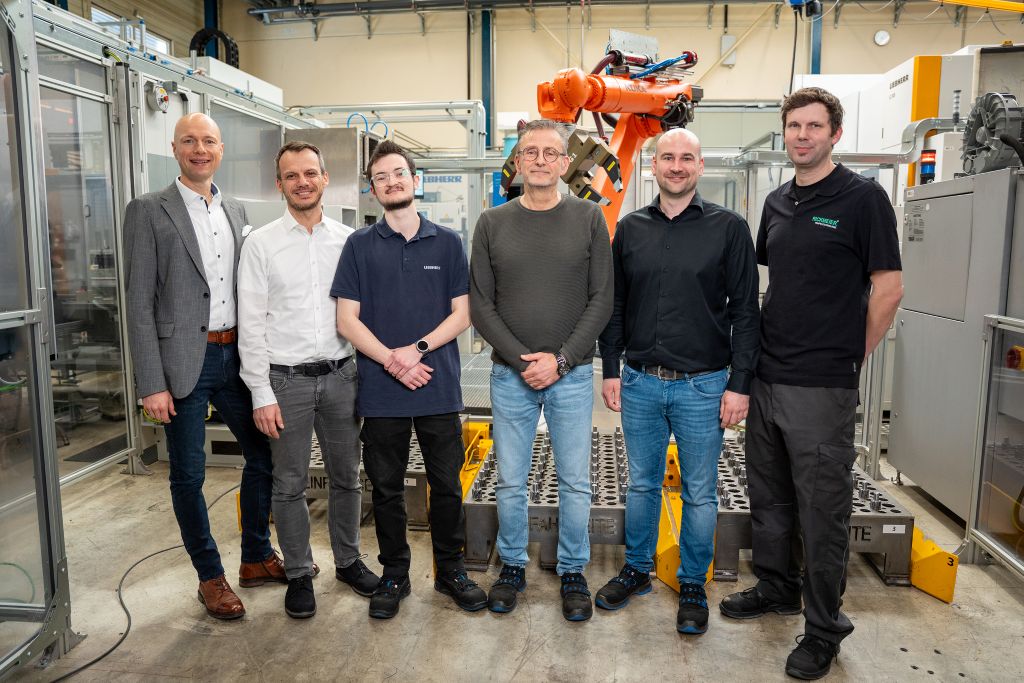
In addition to productivity and quality, the ergonomic relief of employees also played an important role. The automated bin picking now handles even heavy parts – individual raw parts can weigh up to 20 kilograms. 'Previously, these parts also had to be deburred manually,' says Marcel Mutzenbach. 'Today, the system fully automates this step as well. Our employees can focus more on more demanding tasks.' The operating effort remains low: on average, around 1.5 employees per shift are needed for operation, monitoring, and setup processes.
Collaborative project implementation
The project started at the end of 2023, and the handover of the complete system took place at the end of 2025. During this time, the teams from both companies worked closely together, with weekly fixed meetings ensuring continuous exchange. 'The collaboration was also very constructive and pragmatic for us – in this form, certainly not always a matter of course,' says Ingo Baldermann, who is responsible for the project at Liebherr-Verzahntechnik GmbH.
Even after commissioning, Liebherr service remains reliably available. 'Response times are very fast – even in remote support,' reports Elmar Schierhoff. 'You have fixed contacts, reach the right people directly – if necessary, even outside of normal working hours.'
Foundation for further growth
With the new production line, Rickmeier was able to expand production capacities while simultaneously improving quality and process control. A laser marking also enables traceability of the components. For Rickmeier, the system is therefore not only a technological leap but also an important building block for future growth. 'We continuously invest in our machinery,' says Marcel Mutzenbach. 'We also see Liebherr as a reliable partner for future automation projects.'
Contact: