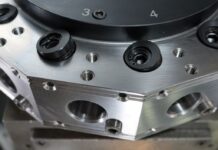

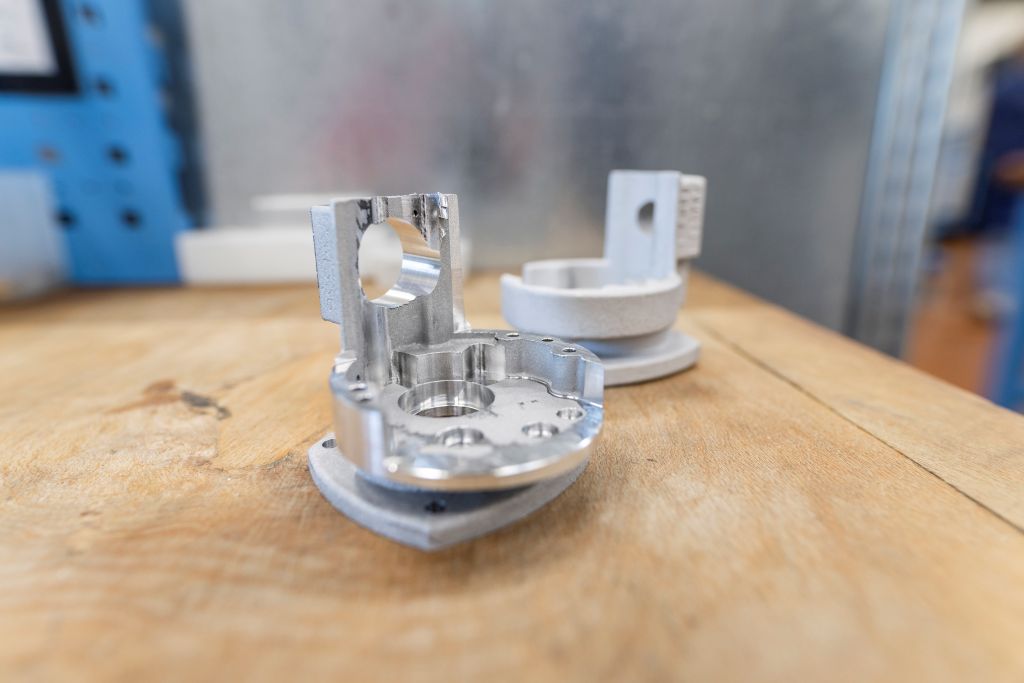
When Sébastien Lelong, head of mechanical manufacturing at MCSA-CELERC, holds a gear in his hand, it fits loosely between his thumb and index finger. It measures less than one centimeter in diameter: small enough to seem inconspicuous, precise enough to fly in aviation. The contract manufacturer machines precision parts in small series. This includes gears, where a single micrometer decides between good and bad. Others call it delicate. Sébastien Lelong calls it everyday life.
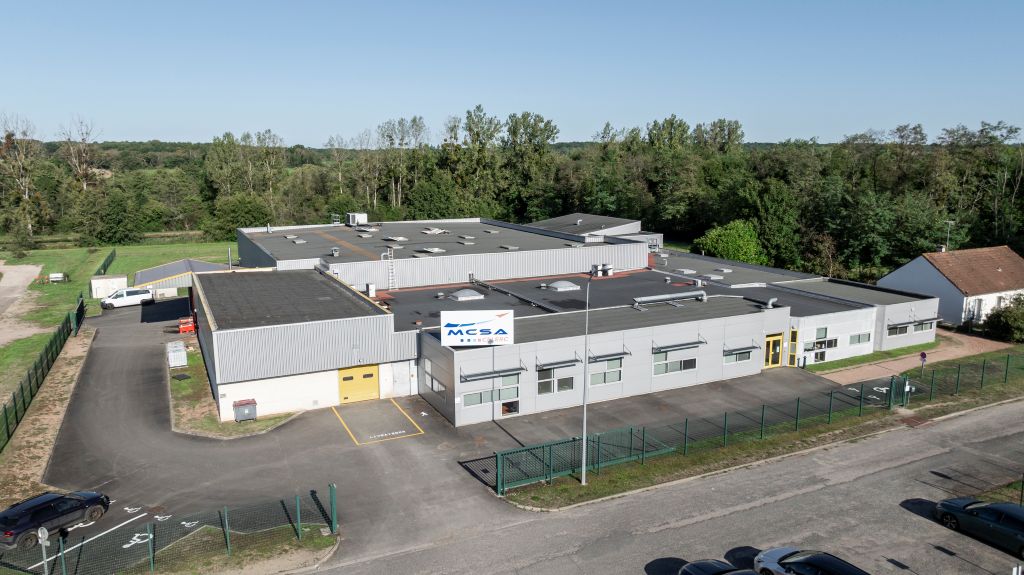
The French group MCSA with its subsidiary MCSA-CELERC in La Guerche-sur-l’Aubois in the Cher department in the Centre-Val de Loire region machines what hardly anyone else can: micrometer-precise components for aircraft, military technology, and trains. Customers include Airbus, Dassault Aviation, Liebherr Aerospace, and Safran. In addition to machining high-precision parts made of steel and aluminum, the company also assembles components and conducts functional tests.
MCSA-CELERC employs around 100, and the group has 250 employees.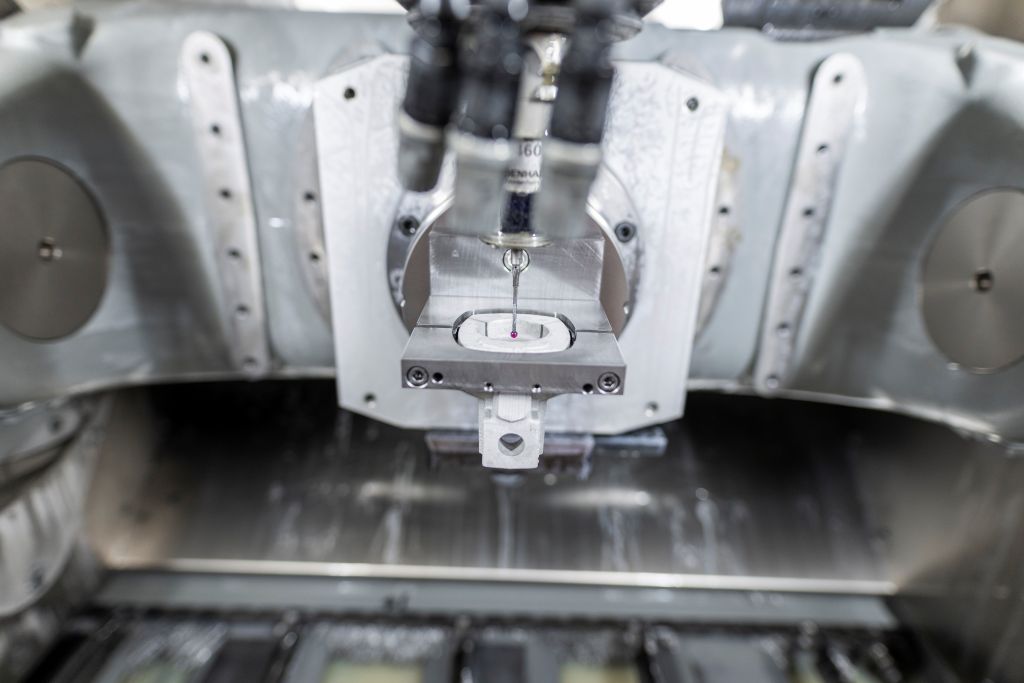
Machines that are fun
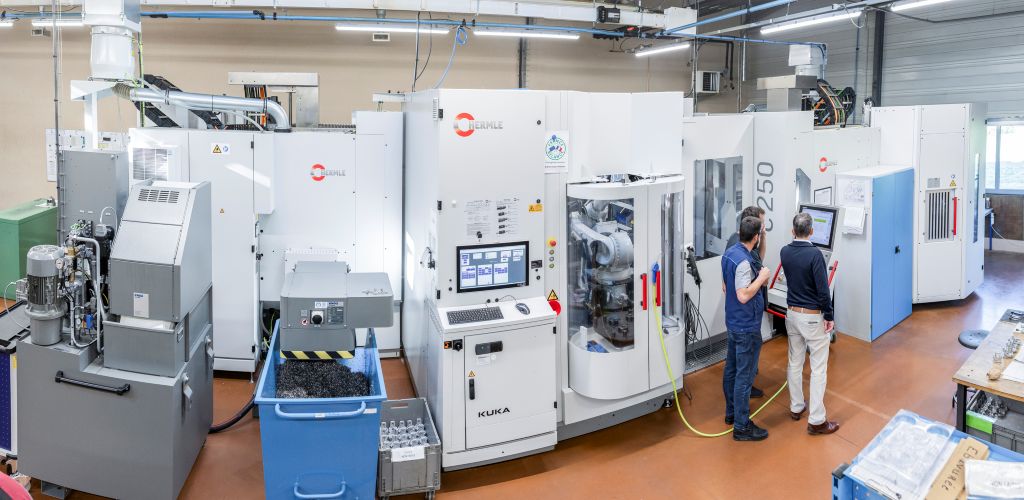
When Sébastien Lelong enters the production hall on Monday morning, both 5-axis machining centers C 250 U have been running for at least 60 hours without a break, even though the employees do not work on weekends. 'The guys have made a competition out of it,' explains the head of mechanical manufacturing. 'They still want to squeeze more out of the machines. Their current record is 107 hours,' he praises.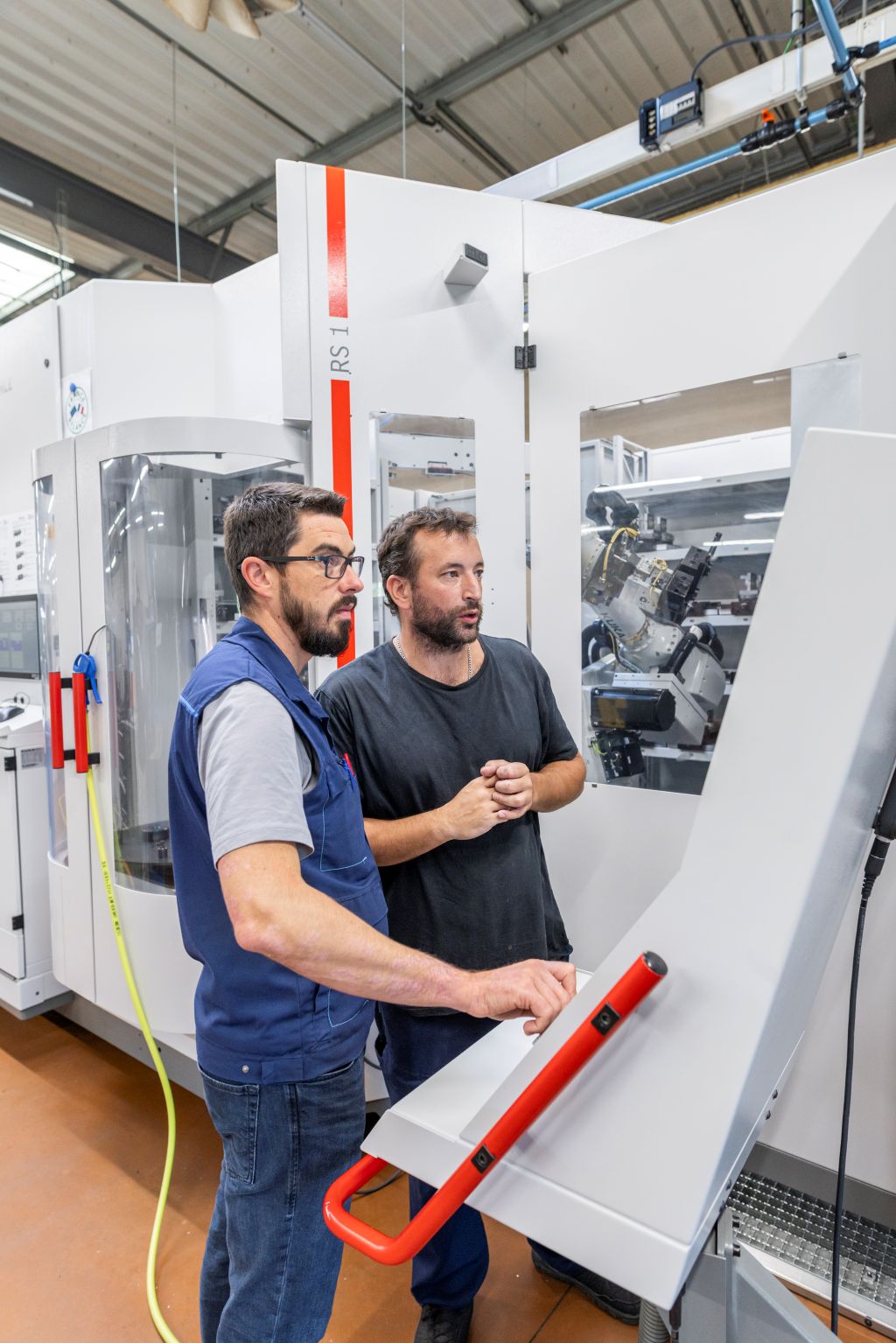
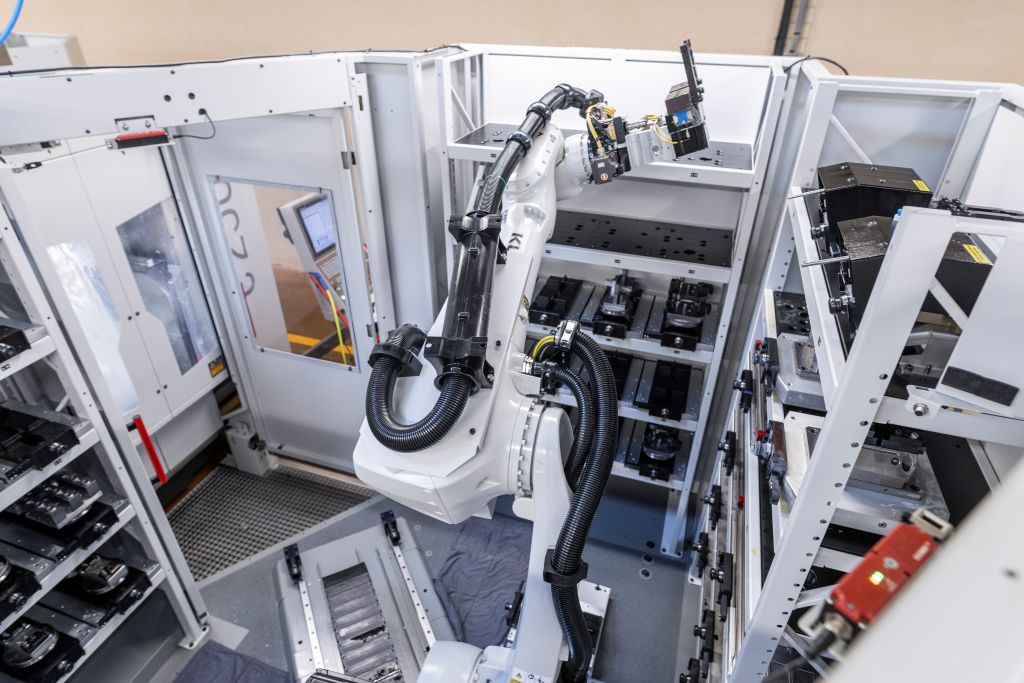
The adapted robot system RS 1 from HERMLE supplies both milling machines during ghost shifts with enough supply for individual part handling thanks to 64 pallets and eight matrices.
One detail surprises: The arm of the Kuka robot wears a golden paper crown. 'A relic from the installation time when the HERMLE technician from Gosheim found the porcelain figure in the Galette des Rois, the so-called King's cake, and decorated the robot with the accompanying crown,' reports Sébastien Lelong laughing. 'The crown has just become part of it; such things strengthen cohesion.' But the robot did not remain king for just one day; it has increasingly become the favorite of the staff. 'Robots and milling centers are toys for big boys,' describes the manufacturing manager.
'The operators develop their own ideas on how to improve processes because everyone has understood: The more they experiment with this machine, the more interesting their tasks become, and the more orders they can process.'
Precision and experience set new standards
Sébastien Lelong has been with the company for almost 30 years. He started back then on a C 600 U from HERMLE, which shaped him and is still one of the most precise machines in production. An intern became a milling machine operator, from the milling machine operator to a programmer, then the head of mechanical manufacturing. 'Today we machine tiny gears with a precision and repeat accuracy that seemed unattainable for a long time,' he says. A niche for which there is no training. 'That's learning by doing and one of our unique selling points.'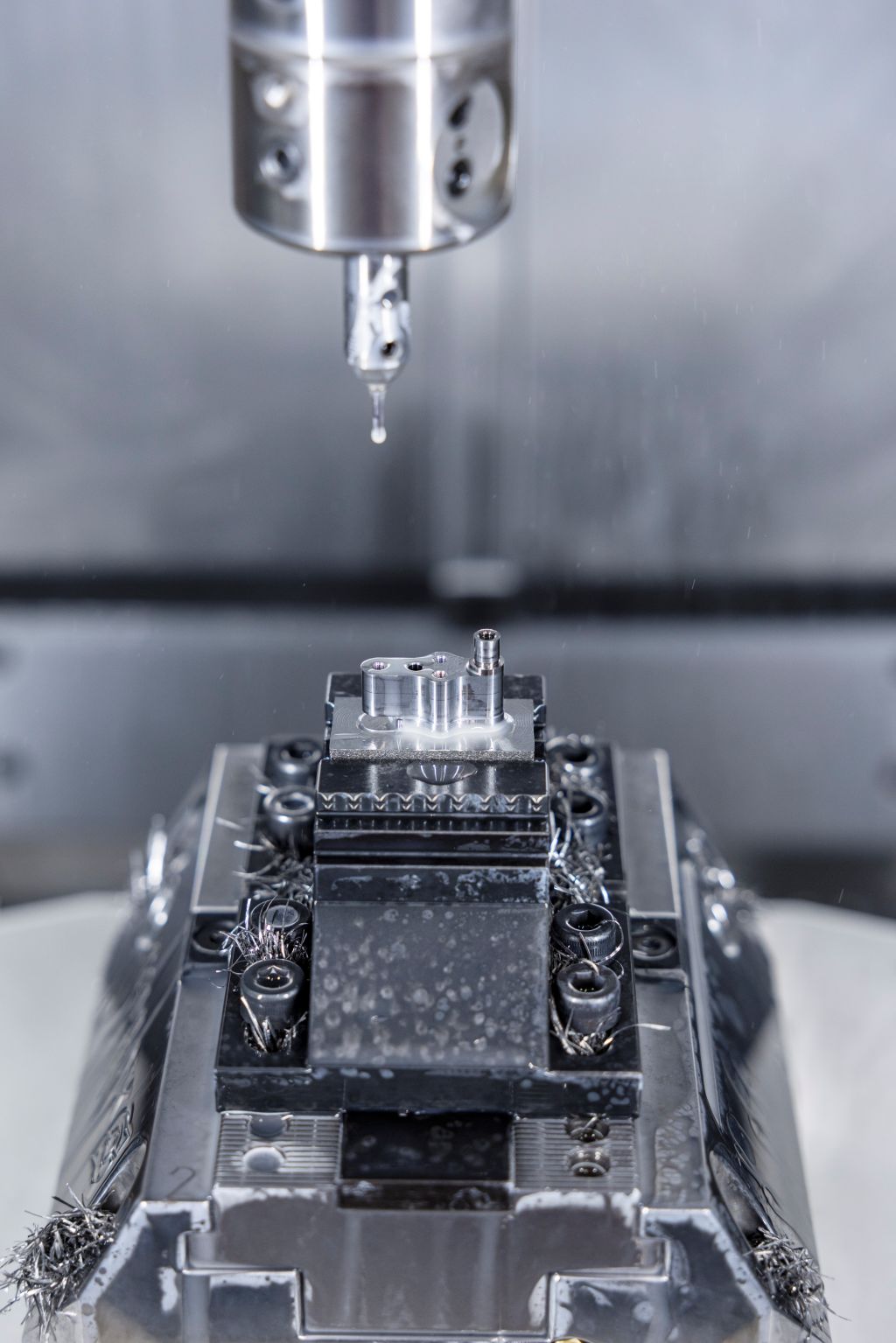
For example, Falcon business jets from Dassault Aviation are among the aircraft that contain parts from MCSA-CELERC. 'Our customers need small series for this, a maximum of 50 parts. And extreme delivery reliability,' emphasizes the manufacturing manager. The previously used milling centers reached their limits. 'The parts were running in two-shift operation on three different machines, but that was not enough for the growing demand,' says Sébastien Lelong. 'We needed more capacity and wanted a system that runs 24/7, is flexible, and allows us to use our 3R zero-point clamping system.'
The milling team shortlisted several suppliers and also visited the HERMLE headquarters in Gosheim. 'There I saw how the company manufactures parts for the machining centers with its own machines.
The robots, the assembly, the training center – everything in-house. I sensed the passion of the people there.' And one more thing convinced the manufacturing manager: 'With other manufacturers, I would have had three contacts: one for the machine, one for the robot, one for the pallet system. HERMLE's service, on the other hand, covers everything, and there is only one contact person. That made the difference for us.'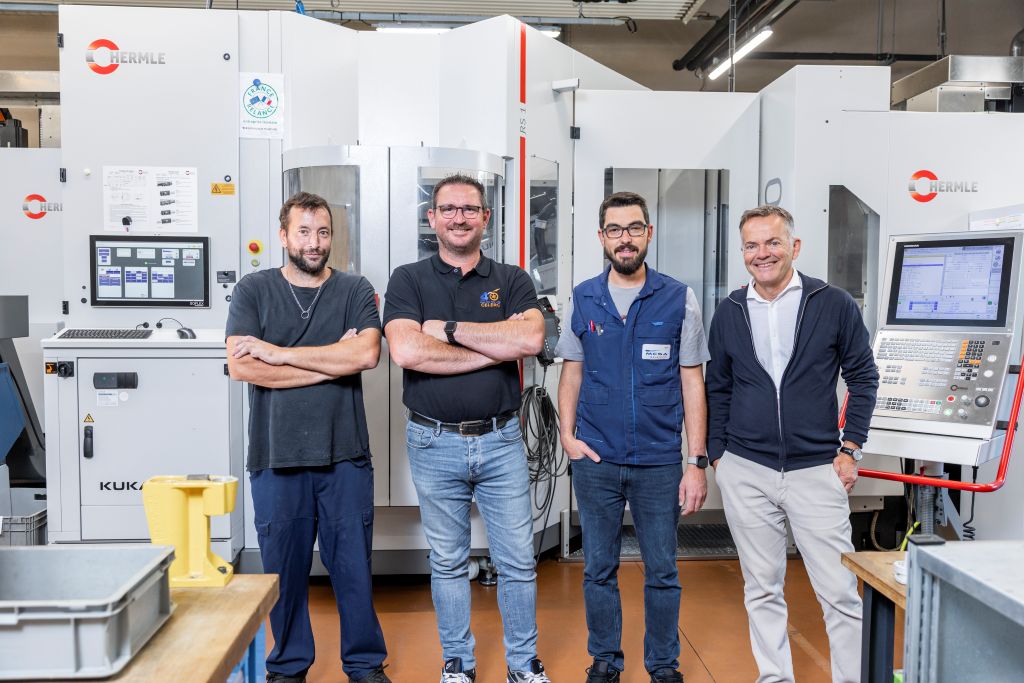
The gradual path
2022: The first HERMLE C 250 U with the adapted robot system RS 1 is delivered. 'We didn't want both machines right away, but first to get to know, optimize, and understand the automation,' explains the manufacturing manager. 'My colleagues were really impressed,' he recalls. 'I have people at the machine who understand their craft, but how quickly such a complex robot system can work productively – that surprised me too.'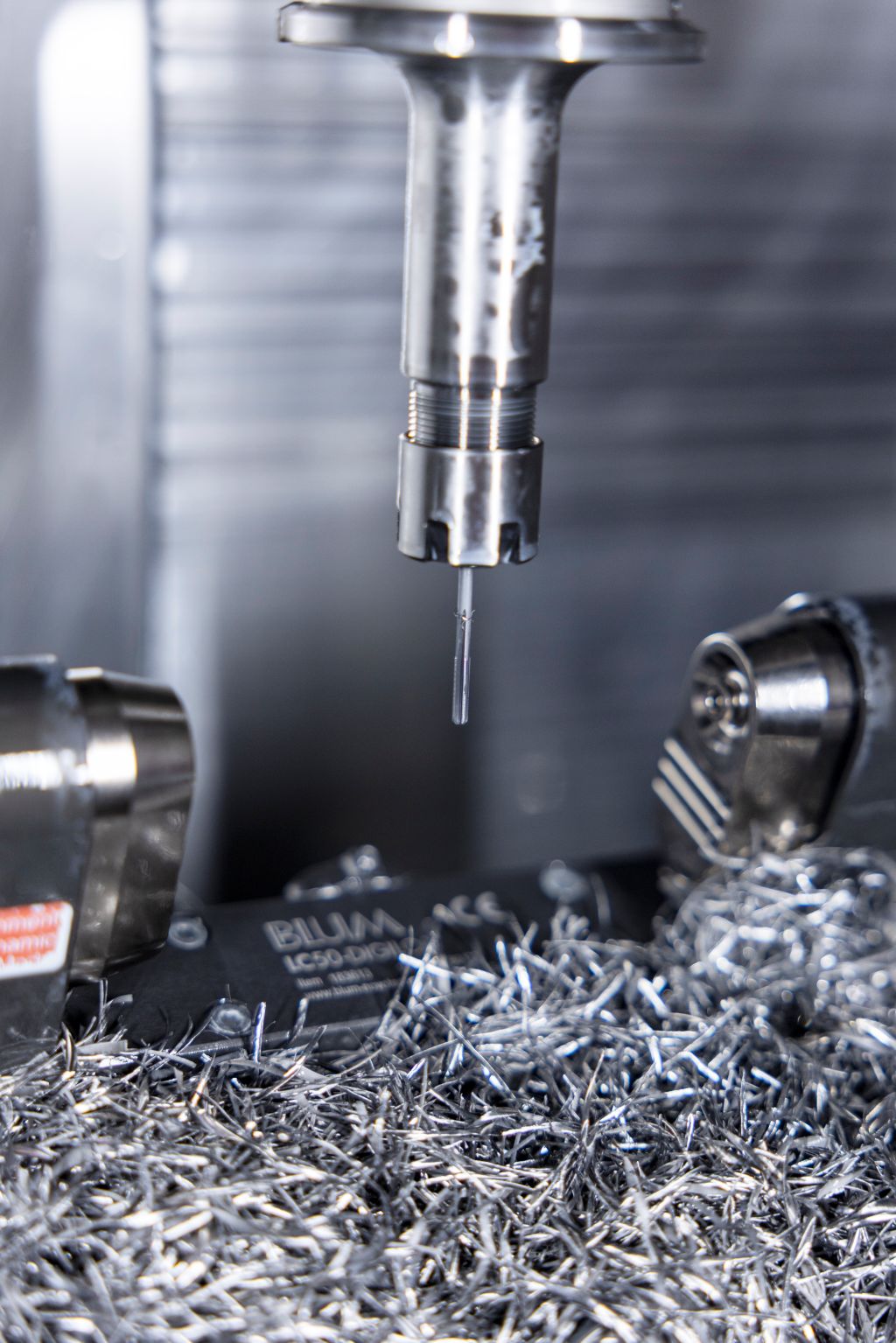
All workpieces that previously ran on three machines are now manufactured fully automatically. The old milling centers were thus freed up for new orders. 'We had a luxury problem,' says Sébastien Lelong with a smile. 'I had to acquire new parts to keep the old machines busy.' The numbers speak for themselves: In 2019, the group's revenue was six million euros. By 2025, it will be 14 to 15 million. Thanks to longer machine runtimes and optimized pallet utilization, productivity has increased significantly.
Titanium, aluminum, and abrasive materials
The company has just taken over new parts from a foundry at the sister site in Vierzon. 'The abrasive material is still giving us a bit of a headache,' admits Sébastien Lelong.
But the team is up for the challenge. Just like back then when they suddenly had to deal with titanium. 'The great thing is: Everyone in the team is immediately involved with new tasks. We find a solution. Everyone wants to improve.'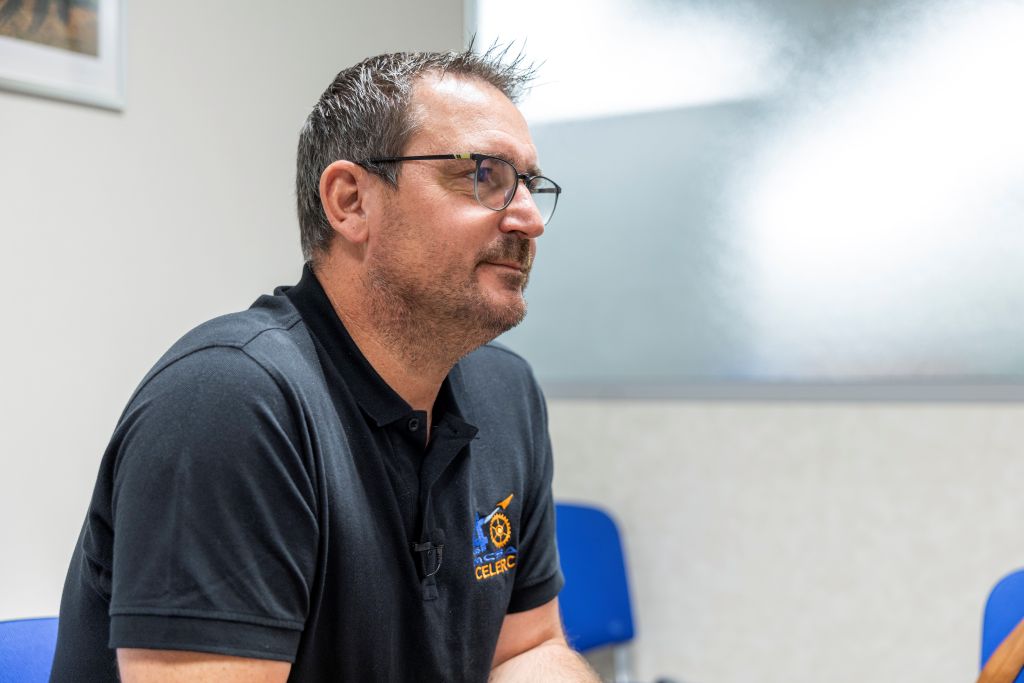
MCSA plans further growth. The next four years are expected to be as dynamic as the past six. Old machines will be gradually replaced. “Next, we will implement another automated solution,” reveals Sébastien Lelong. “And of course, HERMLE will be on board.” But he adds: “Automation is not the miracle cure for everything. We will always need manually operated machines, for example for parts that we manufacture in several work processes. Not everything can be automated. Balance is key.”
Contact: