
The so-called air grinding has always been one of the biggest efficiency brakes in flat grinding, especially with large, warped, or uneven workpieces. With MAP Grinding (Measuring highest point for Air-cut-less Productivity), the grinding machine manufacturer Okamoto presents an innovative solution that consistently eliminates this unproductive idle stroke. Through automatic workpiece measurement, intelligent material removal management, and seamless integration into the intuitive iQ control, MAP enables significant time and cost savings while ensuring higher process reliability – even in low-man operations.
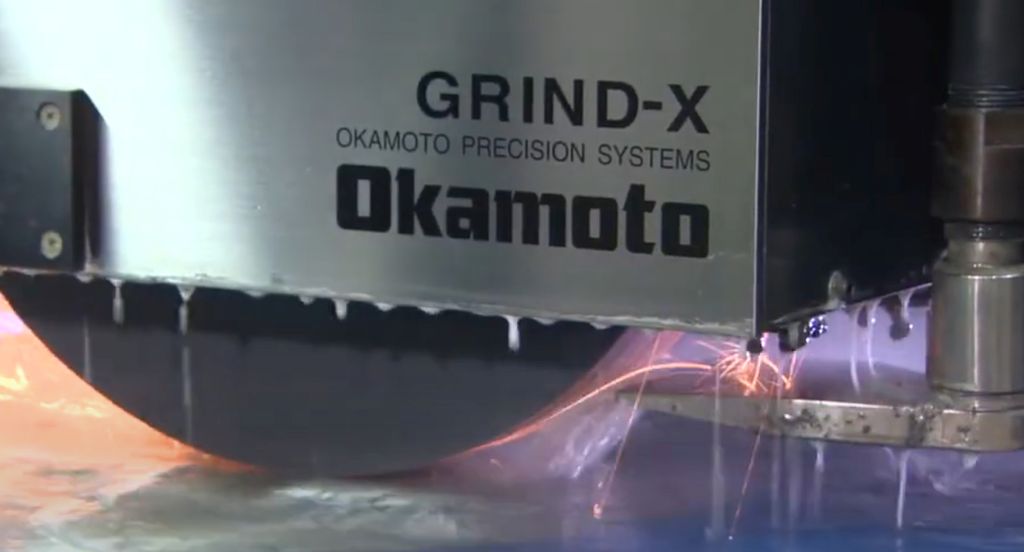
In flat grinding, air grinding refers to the movements of the grinding wheel over the workpiece without actually removing material. The machine operates, consuming energy and time, but with no productive effect. Especially with large or warped plates, long idle paths occur because the grinding must first 'grind down' from the highest point of the workpiece to the actual processing zone.
The consequences are well known: extended processing times, unnecessary wheel wear, rising piece costs, and hard-to-calculate cycle times. With MAP Grinding, Okamoto has now developed a solution that completely eliminates air grinding for the first time.
MAP Grinding: The first real answer to the air grinding problem
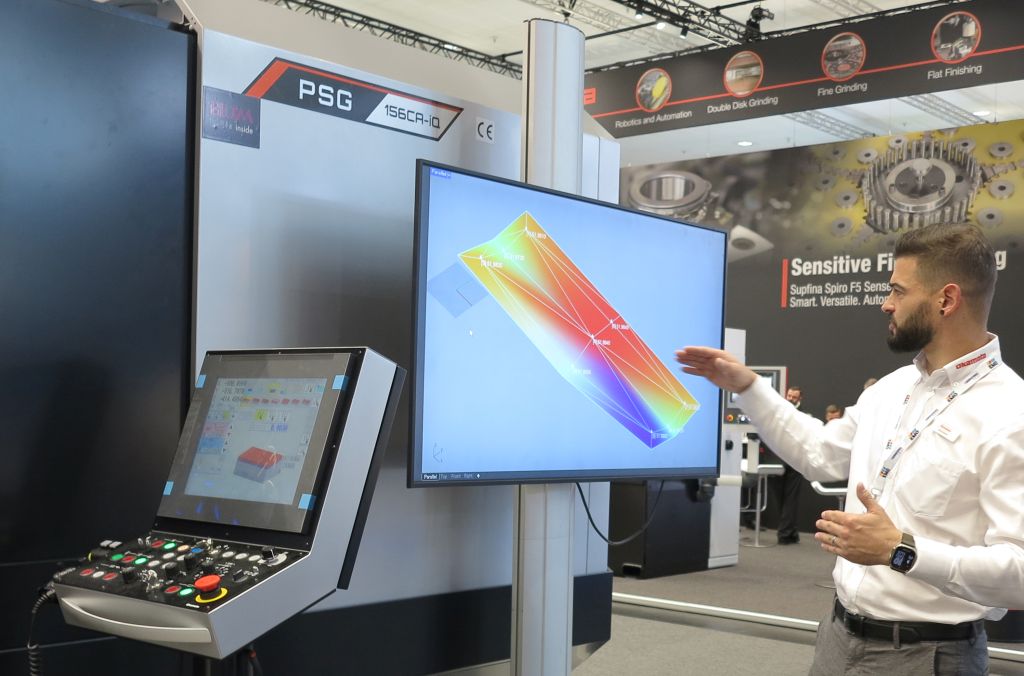
MAP Grinding is based on an intelligent interplay of measurement technology, NC logic, and high-precision axis mechanics. The process runs fully automated: first, a tactile measuring probe independently measures the workpiece. The machine determines the actual surface geometry, automatically fixes the zero point, and identifies the highest point of the component. Based on this, the software generates an optimized grinding program.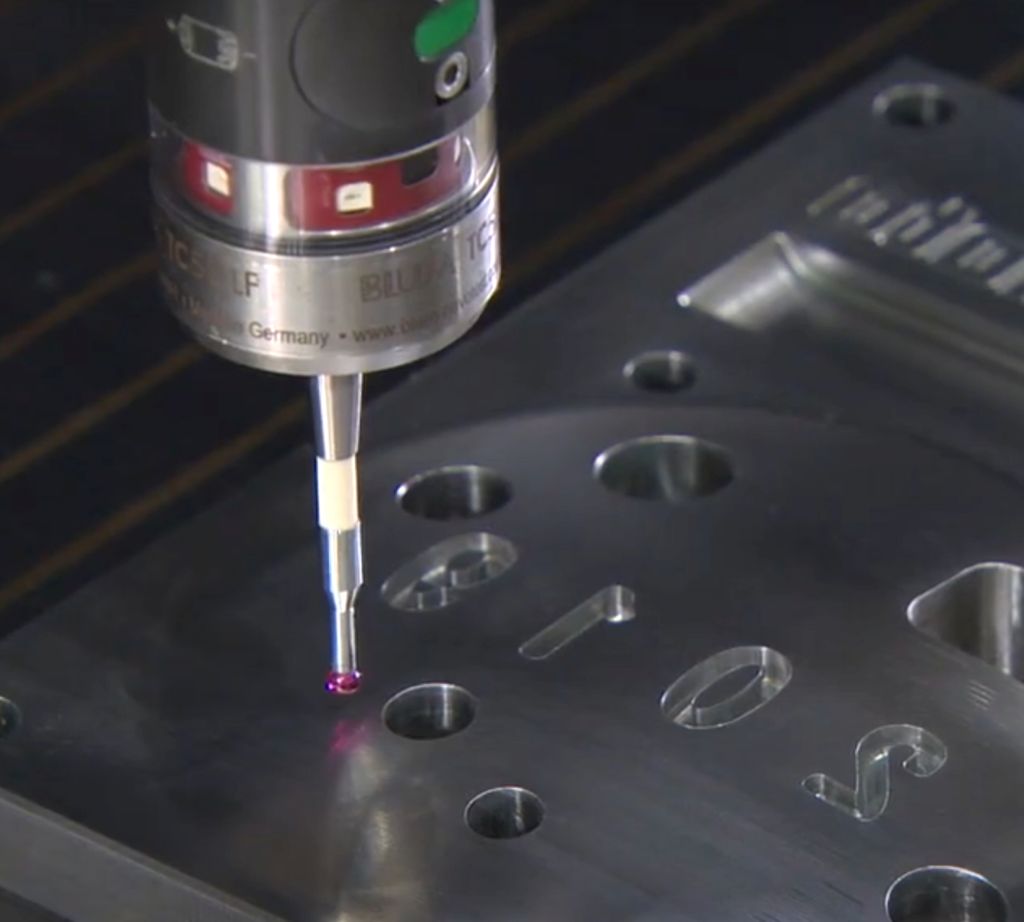
The material removal begins precisely at this highest point. From there, the machine gradually works its way to the next highest areas until the lowest point is finally reached. Grinding is done exclusively where material removal is actually necessary. Only when all height differences are balanced does the system automatically switch to classic oscillating grinding.
The result: no idle paths, no air grinding, no unnecessary time loss. According to Okamoto, 40 to 60 percent of the previous processing time can be saved, especially with large or warped workpieces.
Technical Requirement: Controlled X-axis with recirculating ball screw
A central requirement for MAP Grinding is the precise positionability of the machine table. This is realized by a servo-electrically controlled X-axis with a recirculating ball screw. The recirculating ball screw converts the rotary motion of the servo motor into a highly accurate, backlash-free linear motion. This allows the table to be positioned with micrometer precision and to be stopped exactly at each measuring position.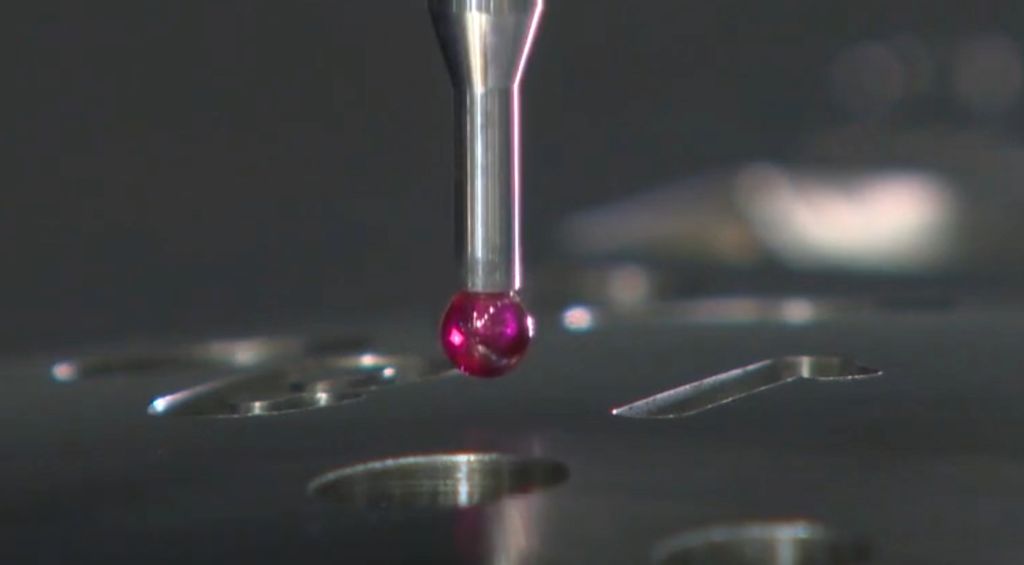
Patrick Glasstetter, Head of Service at Okamoto: 'Hydraulically driven tables are unsuitable for this process. They only swing back and forth, cannot be precisely positioned, and inherently have drift and dead zones. The required measuring accuracy for the automated measurement and the reproducible material removal strategy of MAP would therefore not be achievable.'
Productivity and Sustainability Advantages
The elimination of air grinding has a direct impact on efficiency and resource use. Shorter grinding cycles reduce machine runtime and lower energy consumption per component. Since grinding only occurs where material removal is necessary, wheel wear is also reduced. The need for coolant decreases, which reduces operating costs and environmental impact. MAP Grinding thus intelligently combines productivity increase and sustainability – an increasingly important factor in industrial manufacturing.
iQ Control: Complex Technology Made Easy
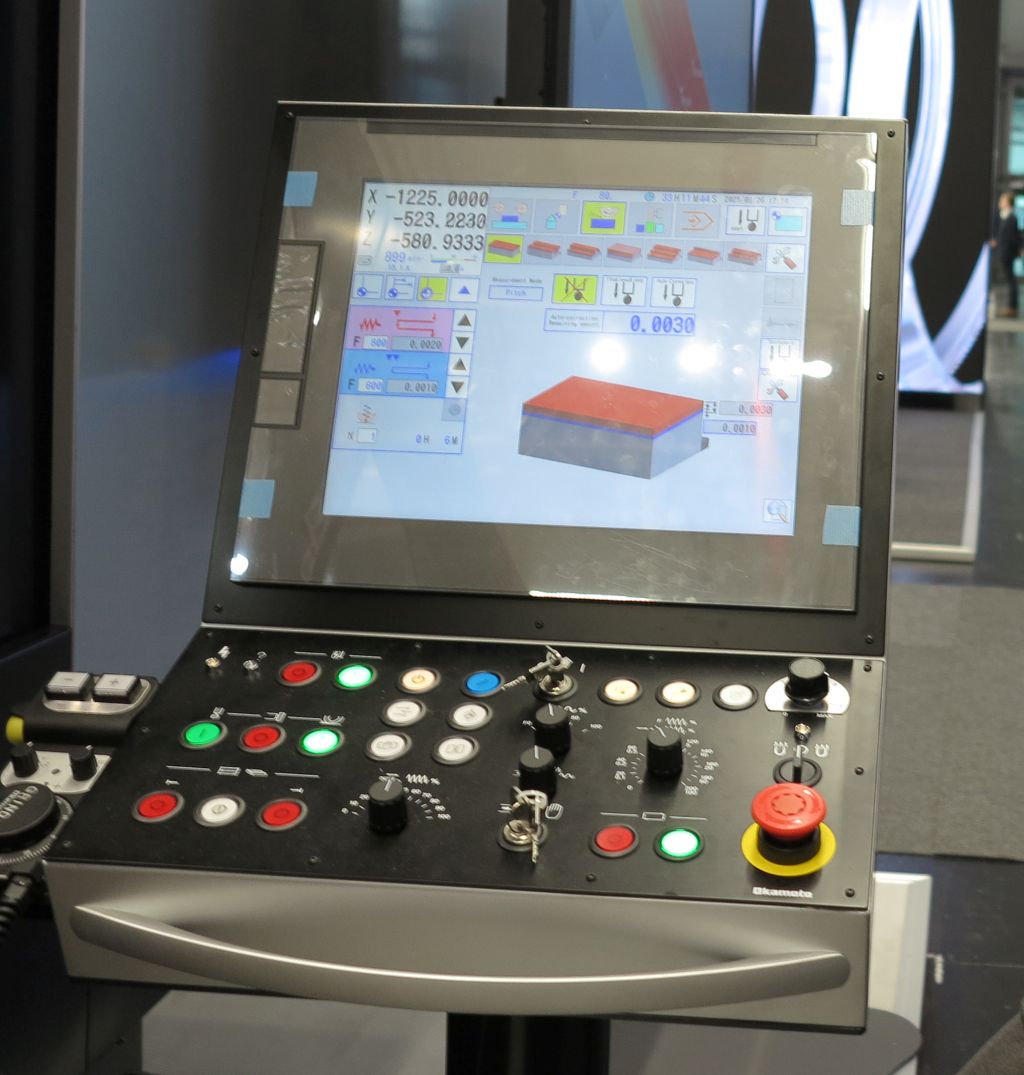
MAP is fully integrated into Okamoto's proven iQ control. This follows a clear operating concept: as little text as possible, but maximum graphical representation. Process steps, measuring points, and grinding strategies are visually represented and are intuitively understandable. The advantage is that even less experienced users can safely operate and productively use the machine in no time. Extensive programming knowledge or in-depth grinding know-how is not required. In times of skilled labor shortages, MAP thus becomes an important enabler for stable production processes.
Ideal for Low-Man Shifts
Due to the automatic measurement, the self-optimizing grinding strategy, and the high process reliability, MAP Grinding is particularly suitable for low-man operations. The machine operates reproducibly, avoids operator errors, and delivers consistent quality – even in night and weekend shifts. This transforms the grinding machine from a mere processing center into an autonomous process module that increases output without requiring additional skilled personnel.
A Technological Leap in Flat Grinding
Patrick Glasstetter: 'With MAP Grinding, Okamoto demonstrates how intelligent measurement technology, precise mechanics, and user-friendly control merge into real added value. The system consistently eliminates air grinding, significantly increases productivity, and makes high-precision flat grinding economically viable even under challenging conditions: No 'air number', but a clear technological leap – and a new benchmark for efficient, future-proof grinding.'
Contact: