
Modern machining processes require the highest precision, especially in industries such as medical technology, electromobility, and electronics. CemeCon therefore relies on tailored premium coatings: In engineering, Jürgen Balzereit and his team specifically adjust the coatings in close collaboration with the customer to meet the specific requirements of the respective tools and applications. Stephan Geisen supports this process with his expertise as a materials tester in the analysis of the coating. In the interview, both provide insights into their work.
Mr. Balzereit, the demands in industries such as medical technology, electromobility, or electronics are high. How does CemeCon support tool manufacturers in successfully positioning themselves in the market?
Jürgen Balzereit: Tool manufacturers often approach us because they want to bring a new tool to market and request our expertise or aim to differentiate themselves further from the competition. Sometimes, it also happens that the machining at the user’s end is not optimal and the tool should be better adapted to the application. Our engineering team analyzes machining results, material properties, and tool geometries to develop an optimal coating solution. These customizations provide our customers with a clear competitive advantage.
How does such a process work in practice?
Jürgen Balzereit: First, we consider the requirements for the tool and the material to be processed. The more information we have, the better we can create a customer-specific coating specification. There are several variables: coating material, coating thickness, tolerance, pre-treatment, finishing, and more. The process steps are sensibly combined and individually adjusted to the parameters. We work closely with our customers and rely on what is known as sampling: The tools receive different coatings that are validated in the machining test at the customer’s site. Only when the best possible result is achieved do we define a final coating specification that is precisely tailored to the application.
Mr. Geisen, you analyze the coatings in detail. What role do your investigations play in the engineering process?
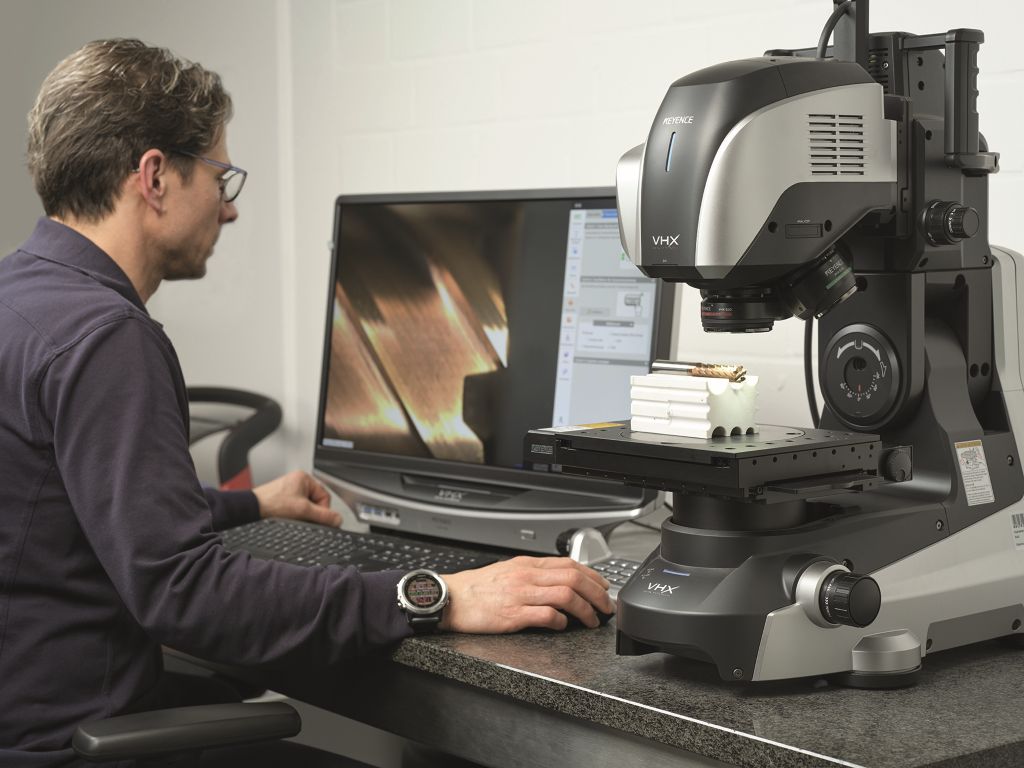
Stephan Geisen: A crucial one! Our customers expect consistently high quality, and for that, we need to know every detail of the coating. We measure, among other things, the coating thickness, analyze the surface roughness, and check the mechanical properties such as hardness and adhesion. We use state-of-the-art measurement technology – for example, we use a high-end scanning electron microscope from Zeiss to make fine details visible. This data helps us optimally adjust the premium coatings to the respective machining processes.
What other testing methods are used?
Stephan Geisen: In addition to microscopic analysis, we use a nano-hardness testing device from Anton Paar to accurately determine the mechanical properties. We check the cutting edges and examine the surface condition of the tools. By the way, all successful parameters are stored so that we can reproduce our coatings worldwide with the same quality.
Mr. Balzereit, the interplay of theory and practice seems to play a central role at CemeCon. How do you ensure that each coating is optimally matched to the tool?
Jürgen Balzereit: Close collaboration with our customers is the key to success. We involve both tool manufacturers and users in the engineering process. Only in this way can we develop individual solutions that meet the highest demands. In addition, we rely on a continuous improvement process: Our engineering experts optimize the coatings until the best possible result is achieved.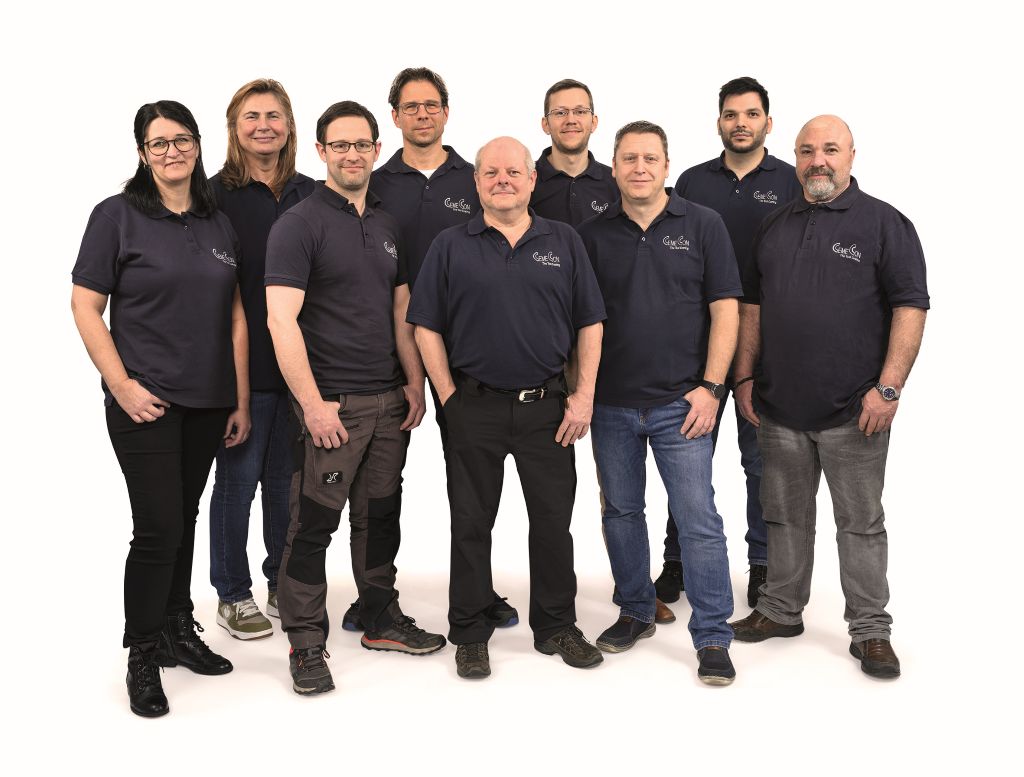
The engineering team at CemeCon sensibly combines the process steps and adjusts the parameters during sampling in close collaboration with the customer to the application and tools.
The analysis and control of the coating are crucial in engineering.
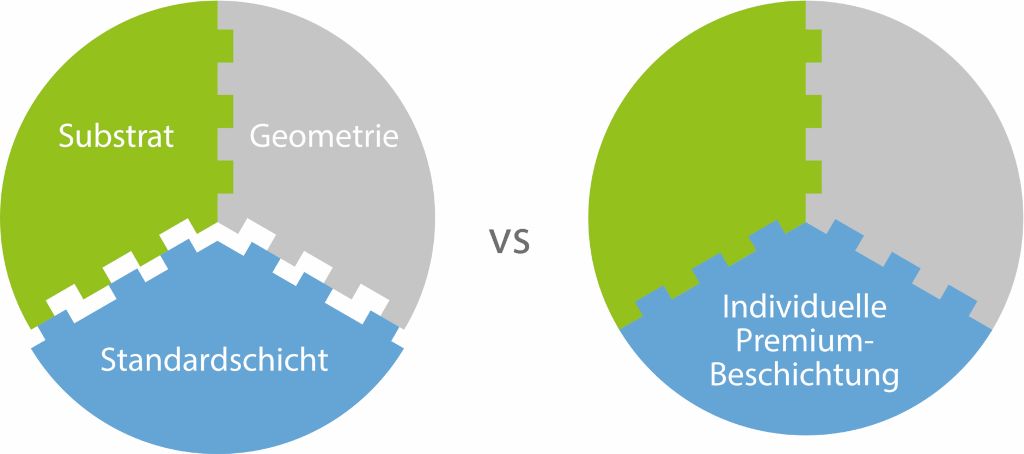
In joint engineering, the individual premium coating is precisely tailored to the requirements. This creates a perfect unit of substrate, geometry, and coating.
Contact: