
For a large cooling component made of tool steel, contract manufacturer Lehner had to create more than 700 millimeter long through holes – specifically 30 pieces per component. The solution: ISCAR's change head deep hole drill SUMOGUN and a bold strategy ensure a safe and economical process, high productivity, and short processing times.
Founded in 1968, Ludwig Lehner GmbH in Zweibrücken is a contract manufacturer with around 50 employees. Customers come from almost all industrial sectors and appreciate the quality, flexibility, and reliability of the family business. 'We machine everything our business partners need and have no qualms about new materials or processes,' says Nicolas Heinrich, assistant to the management at Ludwig Lehner GmbH.
The company processes aluminum, castings, all types of steel, Inconel, and titanium. The typical batch size ranges from one to a maximum of 50 pieces. 'The spectrum ranges from parts the size of a shoebox to 40-ton components,' Heinrich explains. 'Our specialty is machining components with complex requirements – highly precise and often on very short notice.'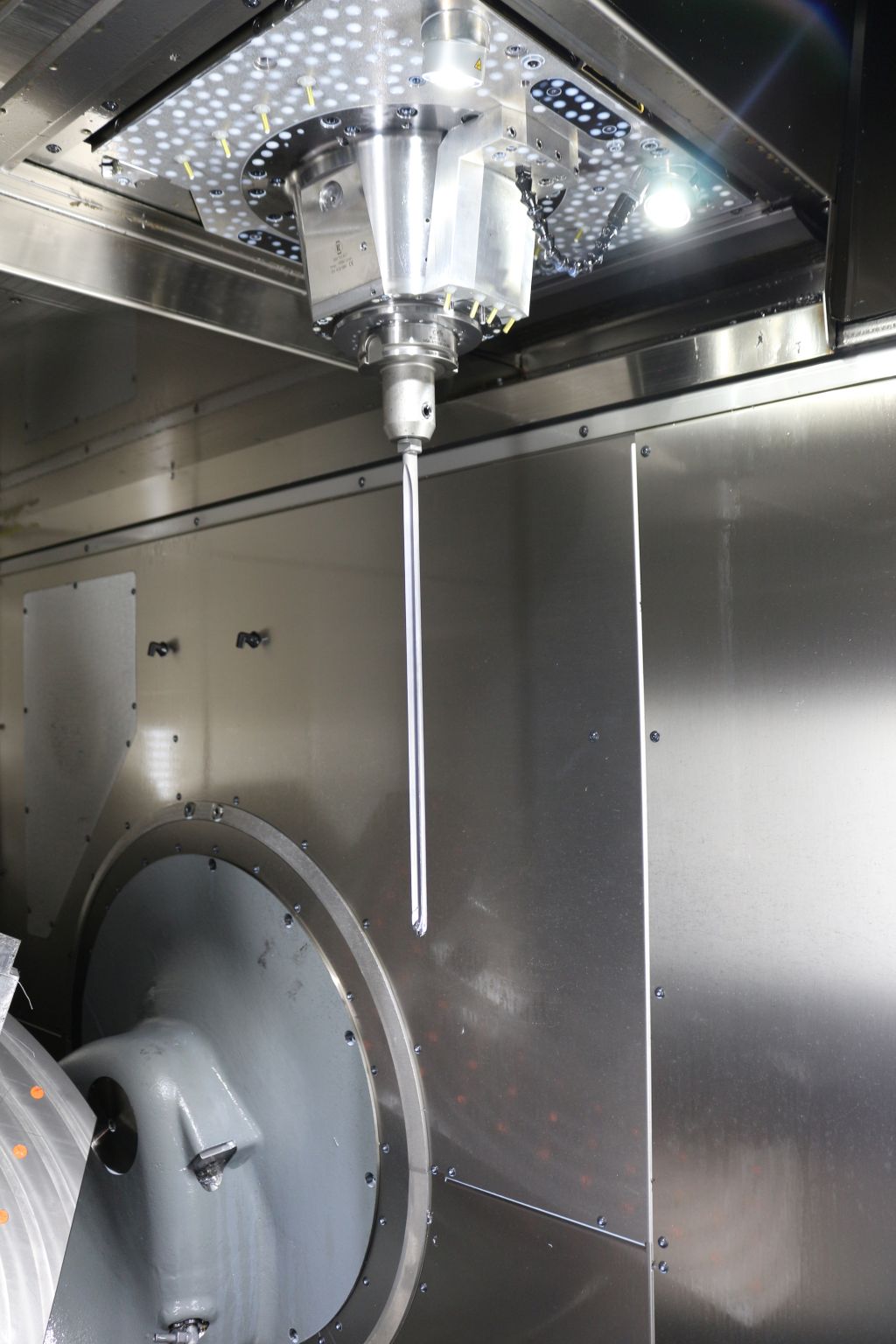
These characteristics also apply to a cooling component for a customer from general machine engineering. In components measuring 600 x 700 x 800 millimeters and weighing around 800 kilograms made of tool steel, 30 coolant channels had to be introduced during processing – each 720 millimeters long and with a diameter of 15 millimeters. 'In this form, it was initially a unique project with 25 workpieces to be machined,' Heinrich explains. 'However, we have such component types with nice regularity on the machine.' Therefore, he set out to find a flexible concept that allows for a safe and economical process and can be easily transferred to similar projects. Lehner had previously successfully worked with a SUMOGUN change head drill from ISCAR for shorter drilling tasks. Heinrich knew that there was a tool for greater drilling depths. He quickly called Thomas Baumann, consulting and sales at ISCAR, with whom he has worked trustfully for many years, and described the task.
Modular drilling system with 400 millimeters length
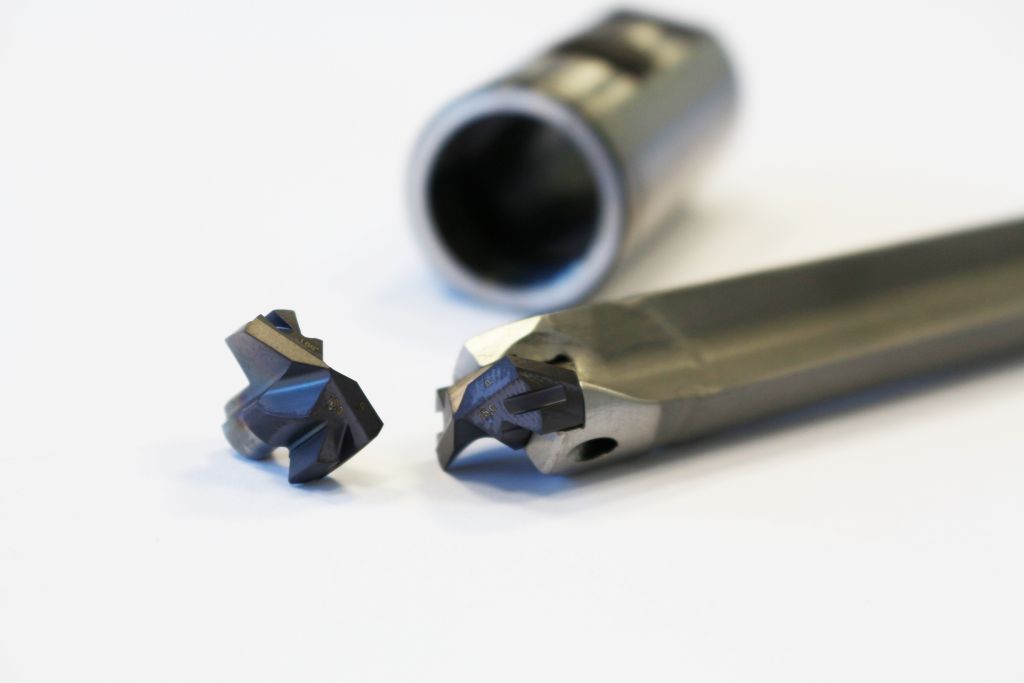
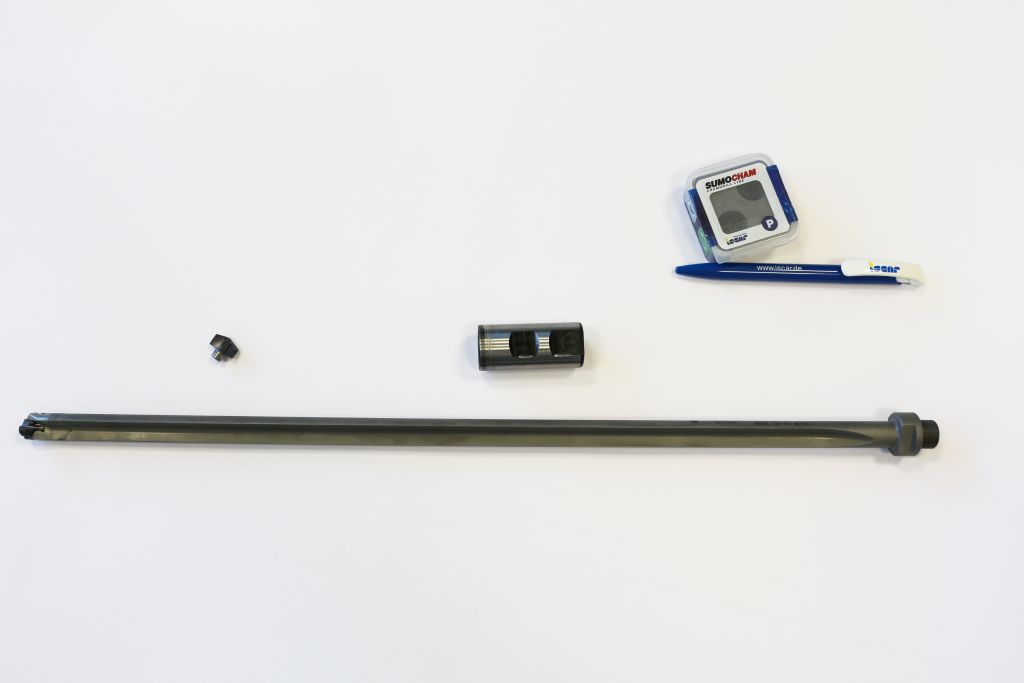
Together with application technician Erik Eckes and Patrick Muller, Product Manager Drilling, Baumann examined the case and presented a suitable tool: ISCAR's SUMOGUN with a diameter of 15 millimeters and a length of 400 millimeters. 'The SUMOGUN is a modular deep hole drill with diameters from ten to 25 millimeters for deep drilling up to 400 millimeters in solid material execution with interchangeable drill heads and clamping sleeves,' explains Patrick Muller. This tool uses a solid steel drill body. Thanks to its robust design, the tool delivers very good performance even with materials with a tensile strength of more than 1,000 Newtons per square millimeter and can transmit large torsional forces even at high cutting values.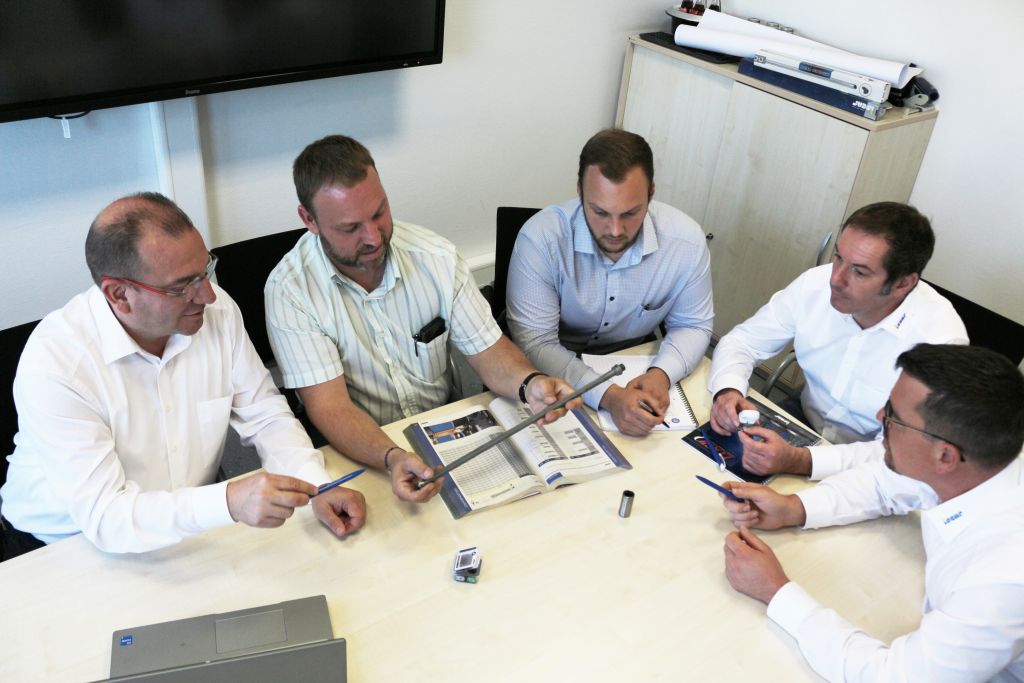
The drill body features two straight clamping grooves for ideal chip removal as well as an internal coolant supply that acts directly in the cutting zone. Users benefit from the wide range of drill heads and bodies and the resulting flexibility. The deep hole drills can be equipped with different standard SUMOCHAM drill heads. This allows users to precisely tailor the tools to their requirements and utilize various material-optimized drill head geometries. The drill head change occurs with the drill body clamped.
This practically eliminates setup times. Also modular in design is the clamping sleeve holder: users can quickly and easily exchange these via a threaded interface. The special fine thread and the axial flat contact in the interface ensure optimal roundness.
Tackling the task from both sides
Together with Nicolas Heinrich, the ISCAR trio developed a suitable process. 'We decided to tackle the problem, so to speak, from both sides,' says Eckes. To reach the targeted drilling depth, 30 holes should be drilled 360 millimeters deep from both sides, meeting in the middle of the component. 'Like in tunnel construction,' jokes the application technician. 'Precision and as little deviation as possible are crucial here, so the drillings meet cleanly.' The team ensured this through a pilot drilling with a SUMOGUN in 3xD. The necessary machine power, the corresponding travel distance, and the coolant pressure required for deep vertical drilling were provided by the Hermle C62. 'With an 800-millimeter special version of the SUMOGUN, we could have reached the total depth from one side. However, the required travel distance and the difficult chip evacuation at such depth spoke against it,' says Muller.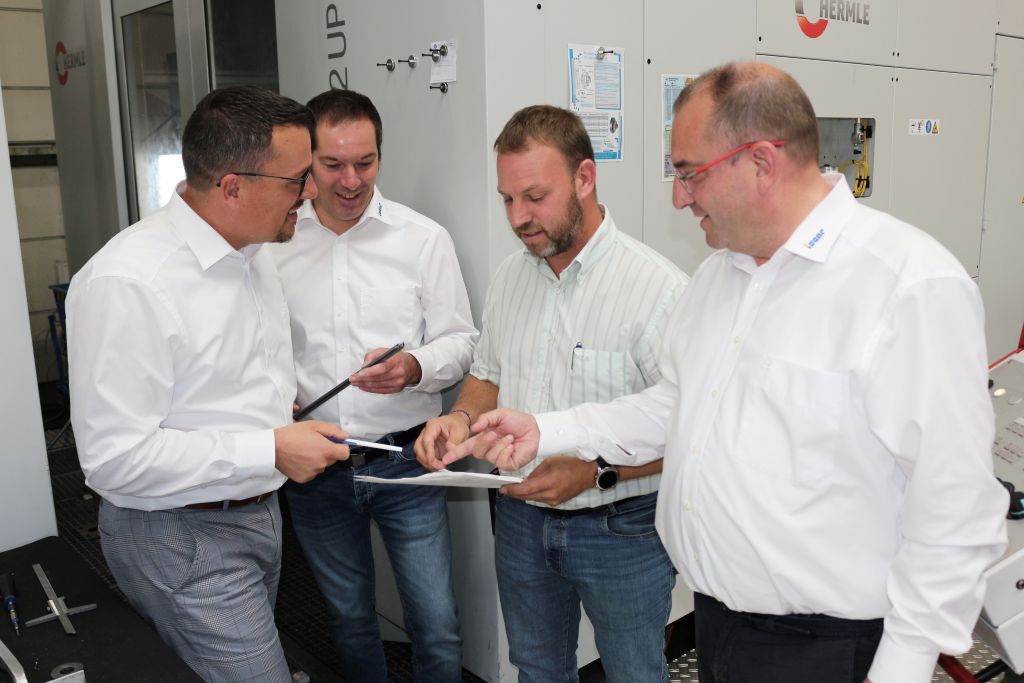
A trial run at Lehner was to show whether the idea is practical. 'It went great from the start. We just adjusted the cutting values a bit – and bingo,' Heinrich is pleased. 'The drillings are top-notch, and the deviation of not even a millimeter on the 360 millimeter long drilling fits for the coolant transport. The process runs absolutely reliably – not even the often problematic breakthrough into the counter-drilling poses a problem for the SUMOGUN.'
Short processing time meets sustainability
Thanks to a cutting speed of 65 meters per minute and a feed rate of 0.16 millimeters per revolution, Lehner only needs 103 minutes per component. 'We can process two complete components before we change the drill head for safety reasons after 120 drillings,' says Baumann. 'Here, the quick and easy drill head change is a very big advantage. The operator simply unscrews the old drill head and inserts the new one.' Since the drill body remains in the machine during this process, it can immediately continue working without recalibrating. 'This reduces setup time to almost zero; just changing the relatively small head also saves raw materials and is more cost-effective,' Muller points out. 'Lehner even takes sustainability a step further and continues to use the replaced heads – for example, for pilot drilling.'
Nicolas Heinrich is very satisfied with the solution in particular and with the collaboration with ISCAR in general. 'ISCAR is always there when we need support, for instance, when known solutions reach their limits or when we are exploring new paths.'
Contact: