
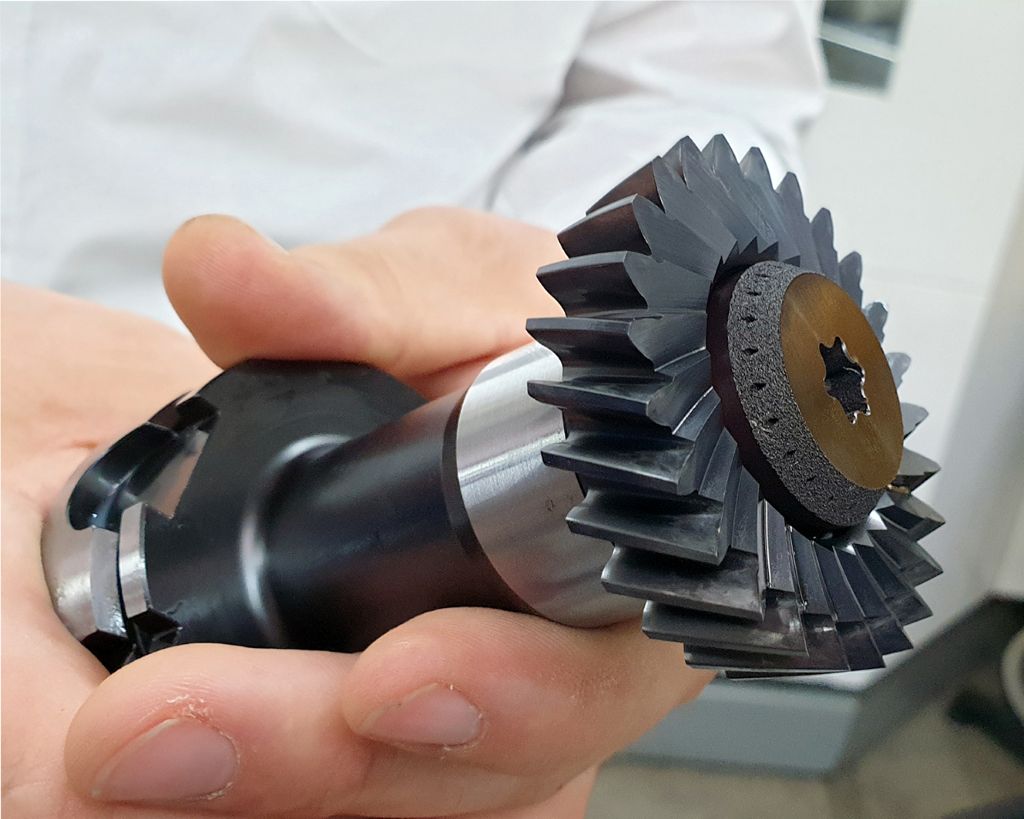
The machine tool manufacturer ALZMETALL primarily manufactures its components on its own machines. The production of gears has also been brought back in-house. The optimization is ensured by the skiving process supported by the Heidenhain control system. INGERSOLL WERKZEUGE GMBH has developed a carbide tool that can economically produce seven different workpieces.
Based in Altenmarkt/Alz, ALZMETALL GmbH & Co. KG is a medium-sized company with around 300 employees that has continuously developed over its more than 80-year history. It began with an iron foundry for gray and ductile cast iron and the production of drilling machines. The in-house foundry, including an automated molding system, is an important prerequisite for machine construction at ALZMETALL. It creates flexibility in production and ensures consistently good quality of the raw material. However, the foundry would not be profitable solely for internal needs. 90 percent of the cast material is intended for external customers, some of whom also have components manufactured by ALZMETALL.
In drilling machines, the manufacturer offers a wide portfolio ranging from simple analog bench drills to heavy-duty industrial drilling machines with digital control, such as the programmable iTronic. In the 1970s, ALZMETALL launched the Abomat, which enabled automatic tool changes for drilling machines and was later equipped with CNC control. This product paved the way for the production of CNC machining centers.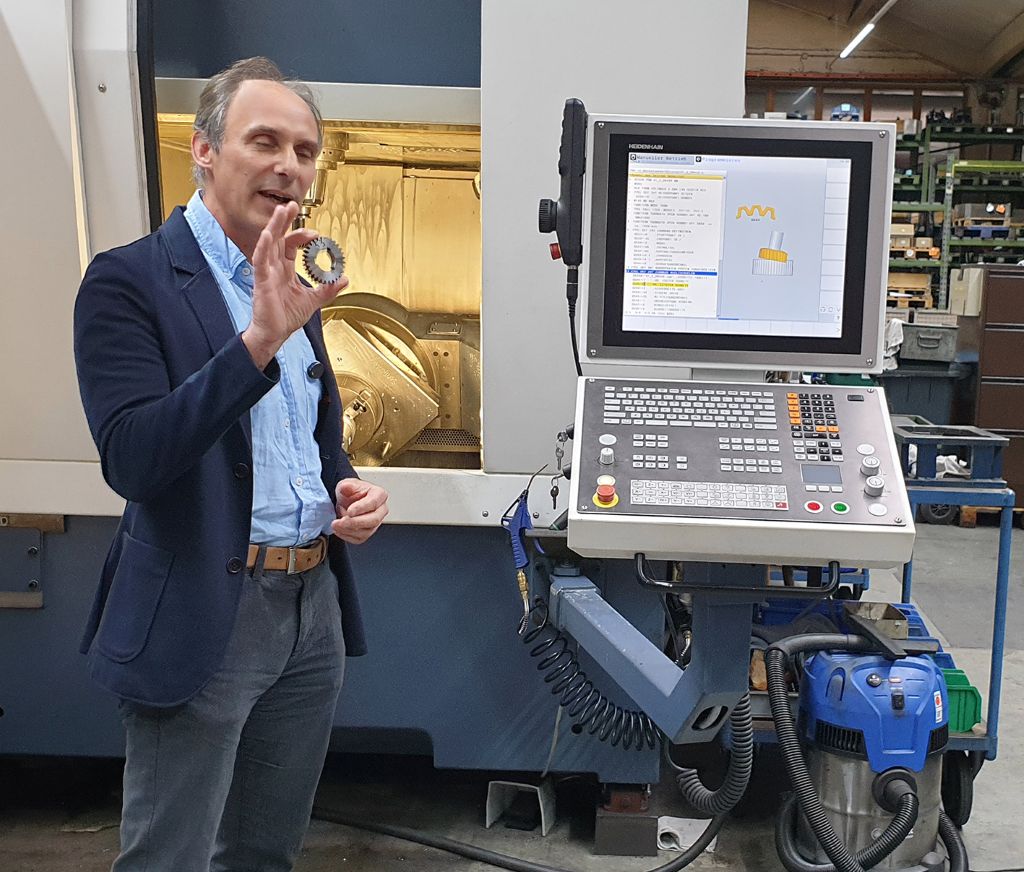
In 2001, the G 800 was introduced, a five-axis machining center in gantry design, which for the first time used torque drives in the swivel and rotary axes. The machines have since been further developed and enable continuous simultaneous machining of components in the size range of 600 to 1,400 mm workpiece size with their high dynamics. Another highlight was the technical advancement in 2006 of pure milling machining centers to milling-turning machining centers. In this generation of machines, drilling, milling, and turning operations could thus be performed in a single setup. Later, the grinding process was also added.
Unique thermal management
Strengths of ALZMETALL's CNC machines include their stable construction and high rigidity. The accuracy appreciated by customers in the manufacturing of components is achieved through a special thermal management, as Georg Buchner, CNC Application Engineer, explains: 'We build the machine thermosymmetrically from the Tool Center Point. The construction is uniform from the tool tip upwards. During heat flow, this Tool Center Point remains intact, and we achieve the desired precision without compensation in the X and Y directions, which distinguishes us from many other manufacturers.'
As a classic medium-sized machine tool manufacturer with very high manufacturing depth and flexibility, ALZMETALL is able to respond to a wide range of equipment variants and thus very individually to customer requests. The company is active worldwide and serves a variety of different industries. The trend is towards high-end machines. Meanwhile, the machining centers have become the largest revenue driver for the company. In terms of numbers, the drilling machines, of which ALZMETALL produces around 1,600 units annually, contribute to the revenue of the machine tool business.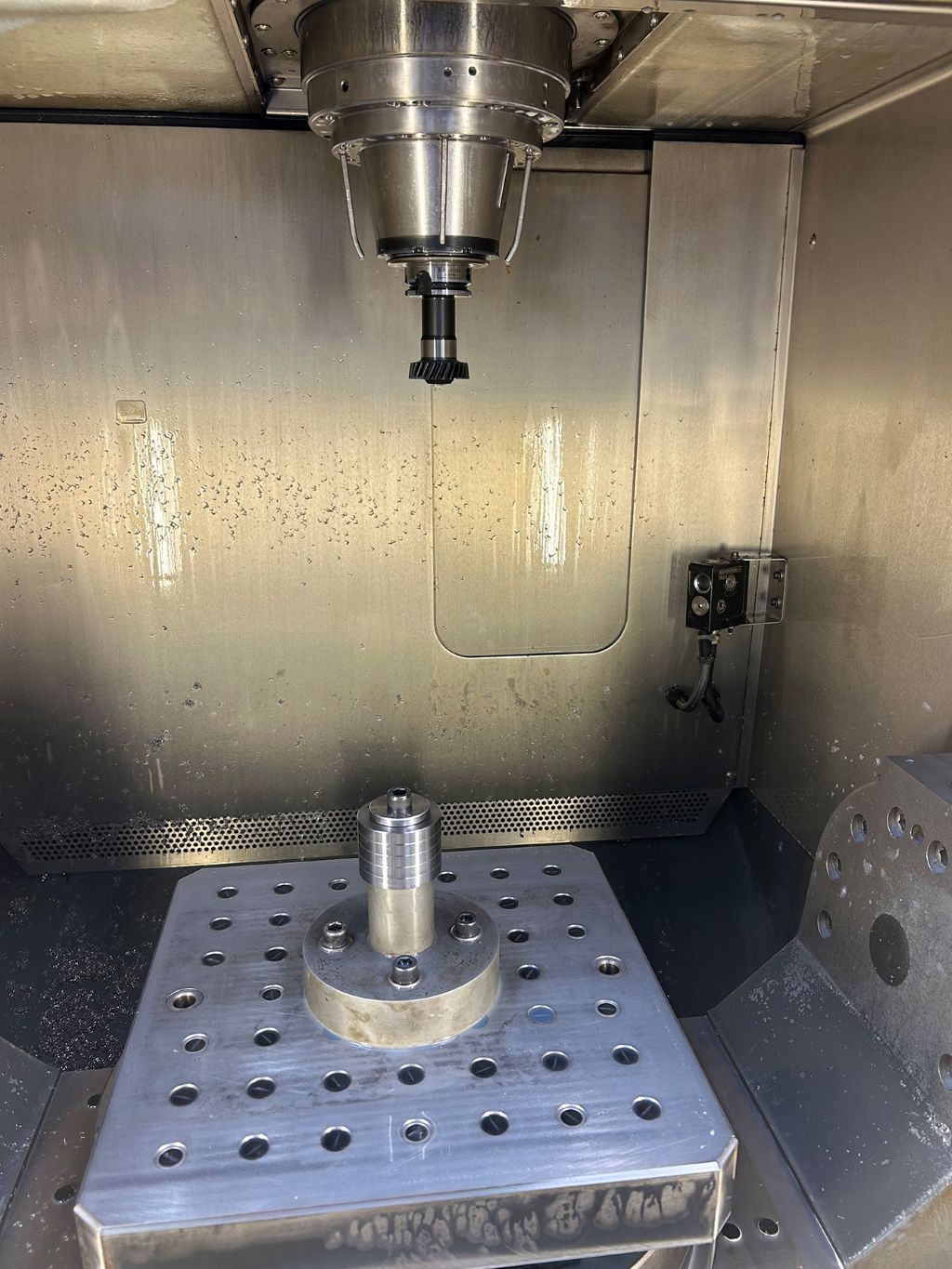
ALZMETALL develops and constructs its machines exclusively in-house, which, together with the manufacturing depth, represents a unique selling point among machine tool manufacturers. The in-house machining centers form the essential basis of production. About ten years ago, the production of gears was outsourced. They are needed in various sizes for each drilling machine for power transmission and control. However, ALZMETALL was sustainably dissatisfied with the outsourcing: it was considered too expensive, caused long delivery times, and the quality left much to be desired.
Control with skiving cycle
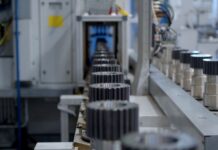
When the decision was made to bring gear production back in-house, it was clear that there would be no return to the previous production method, as the operation of the still existing old machines would be uneconomical for batch sizes of 300 to 400 pieces. ALZMETALL did not have to search long for the ideal solution, as a milling-turning machining center GS 800/5-FDT equipped with the TNC 640 control from Heidenhain was already in use in production. The advantage of this control is that a skiving cycle is already available on it, which only needs to be activated to utilize the efficient skiving process. The machine, with its robust construction, kinematic accuracy, and a 1,100 rpm C-axis rotary table, provides the best conditions for skiving.
'To synchronize the spindle, you need the functionality of the control,' explains Ludwig Buchner, Product Manager Application Technology at Heidenhain. 'The movements of the axes to be traveled are the core competence of the control, in which all control engineering know-how is present. The standard cycle for skiving, which ultimately implements the user's inputs into axis movements, looks the same on every machine.' As with all options of its control, Heidenhain also offers a 90-day test phase for skiving. ALZMETALL also took advantage of this opportunity before purchasing the cycle.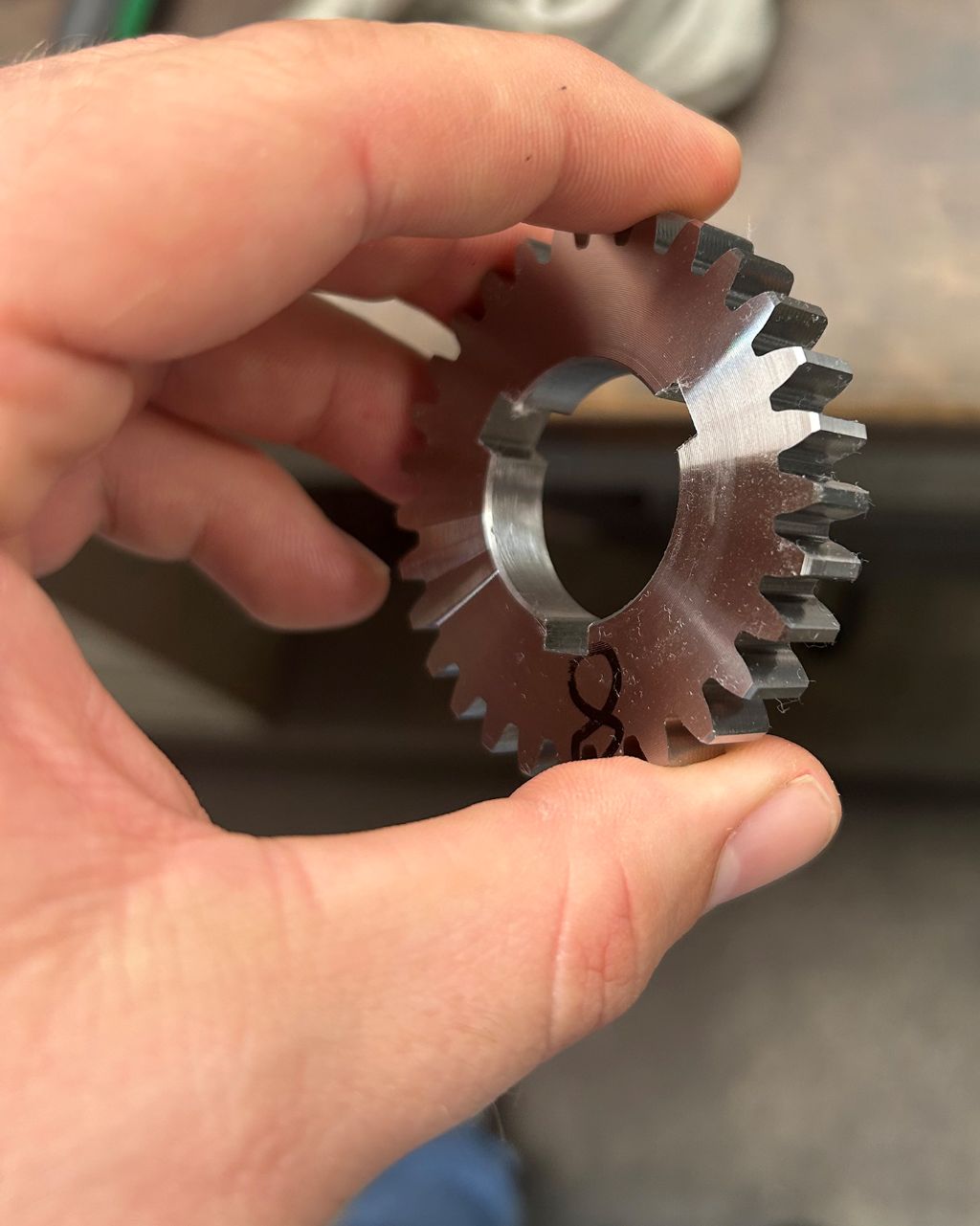
Since the GS 800/5-FDT had already been in use for several years, the software was first updated, which Ludwig Buchner also considers important: 'We have been offering these standard cycles as an option for over six years. During this time, the skiving cycle has been continuously optimized to improve spindle synchronization and increase surface quality.'
A tool for seven gears
Tools for skiving are fundamentally special tools that are adapted to the respective components. At ALZMETALL, it was specifically about the production of seven different gears for assemblies of various drilling machines.
Three tool manufacturers were shortlisted for ALZMETALL. For a good reason, INGERSOLL was ahead in this competition.
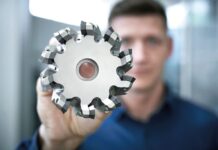
While competitors brought three or even four different tools into play, INGERSOLL designed its skiving tool in such a way that all seven workpieces can be processed with it – and also provides an absolute functional guarantee. For ALZMETALL, this was by far the most economical solution, which is why the decision for the tool manufacturer from Haiger ultimately fell not only on price but also on technology. "Being able to produce seven components with a single tool has a certain charm," praises Georg Buchner the solution found.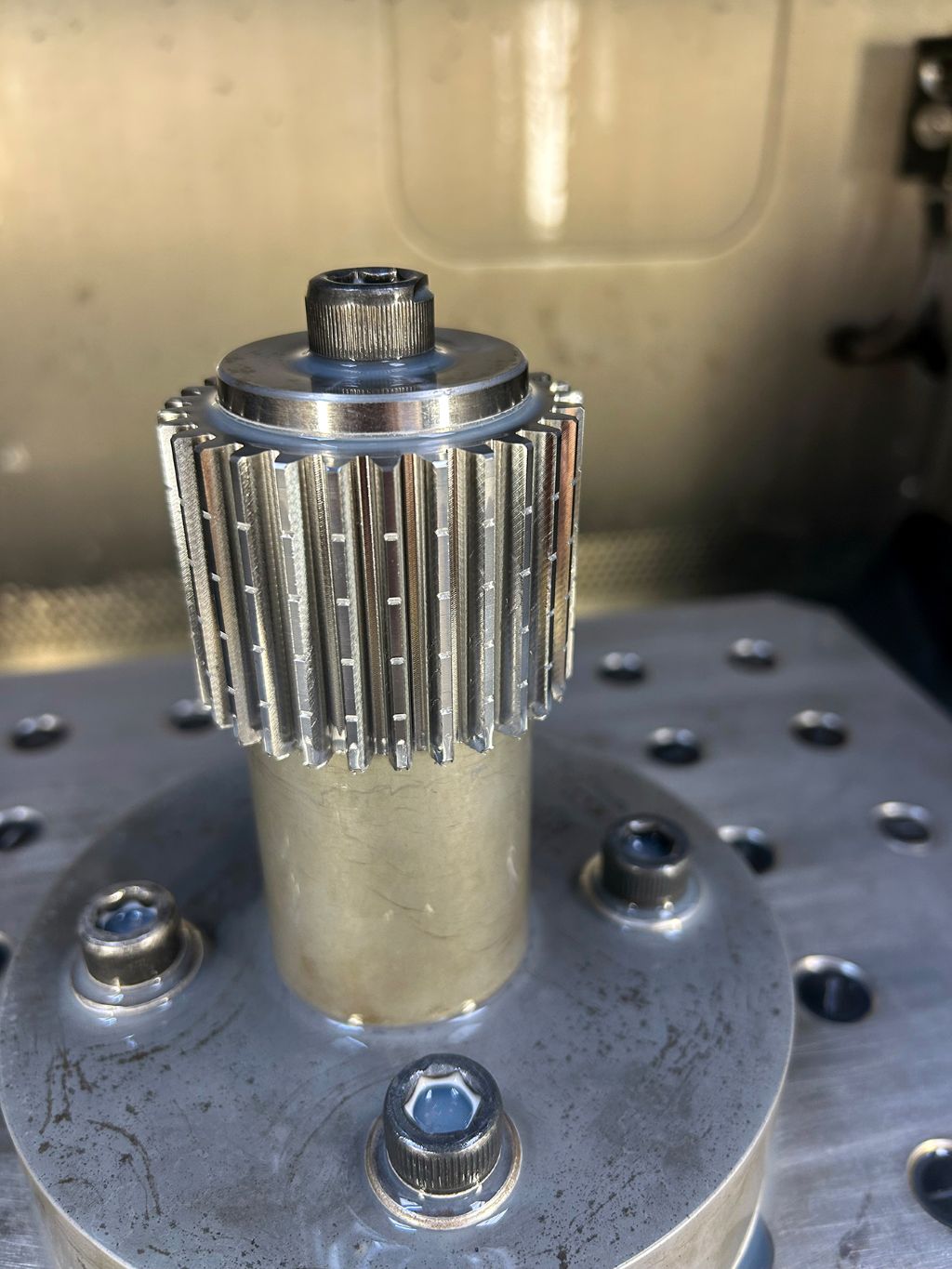
According to Michael Bum, application technician at INGERSOLL, the similarity of the gears is essential for success. The module 2 gears all have the same tooth height factor; only the number of teeth varies. The material used is predominantly the alloy steel C45. "In the end, the process is mainly about the cutting distribution," explains Bum. "When skiving, we always have to operate with a decreasing feed rate to avoid putting too much pressure on the tool." The number and depth of cuts are precisely defined by INGERSOLL and can be directly transferred to the control system.
The axis cross angle and the number of teeth of the skiving wheel had to be optimally adjusted to the different workpieces and to the speeds of the main spindle and table spindle.
To achieve the desired gear quality 7 according to DIN 3962, INGERSOLL opted for a ground skiving wheel made of carbide. A solution with adapted indexable inserts, for which special designs would also have been necessary, would have incurred higher costs. The number of teeth of the components varies between 15 and 48. The tool has been designed by INGERSOLL with 26 teeth. The skiving wheel is mounted on a carrier and clamped with a fastening screw. A special feature of this screw from the 3D printer is integrated cooling channels that direct internal cooling to each cutting edge.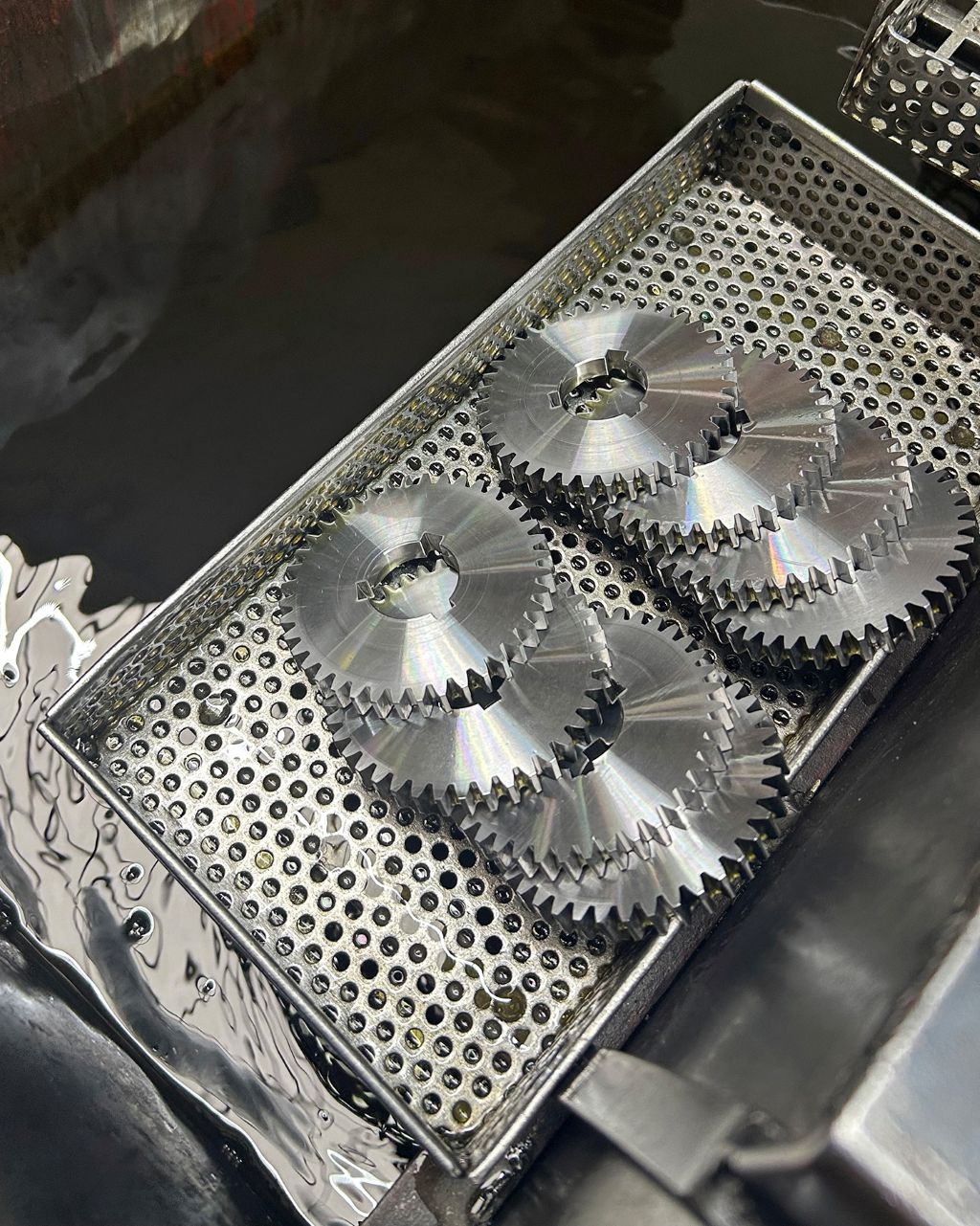
Quality and productivity match
With the achieved gear quality and processing time, Dennis Springer, team leader of production at ALZMETALL, is very satisfied: "In the past, we manufactured the gears in groups of five components, which took 10 to 15 minutes. Now we achieve a processing time of 3:40 minutes. This corresponds to an increase in productivity of about 60 percent." The promised quantities were also reached immediately, which encourages Dennis Springer. He is optimistic that further optimizations will make even higher quantities realistic. The decision to manufacture the gears in-house has more than paid off for ALZMETALL.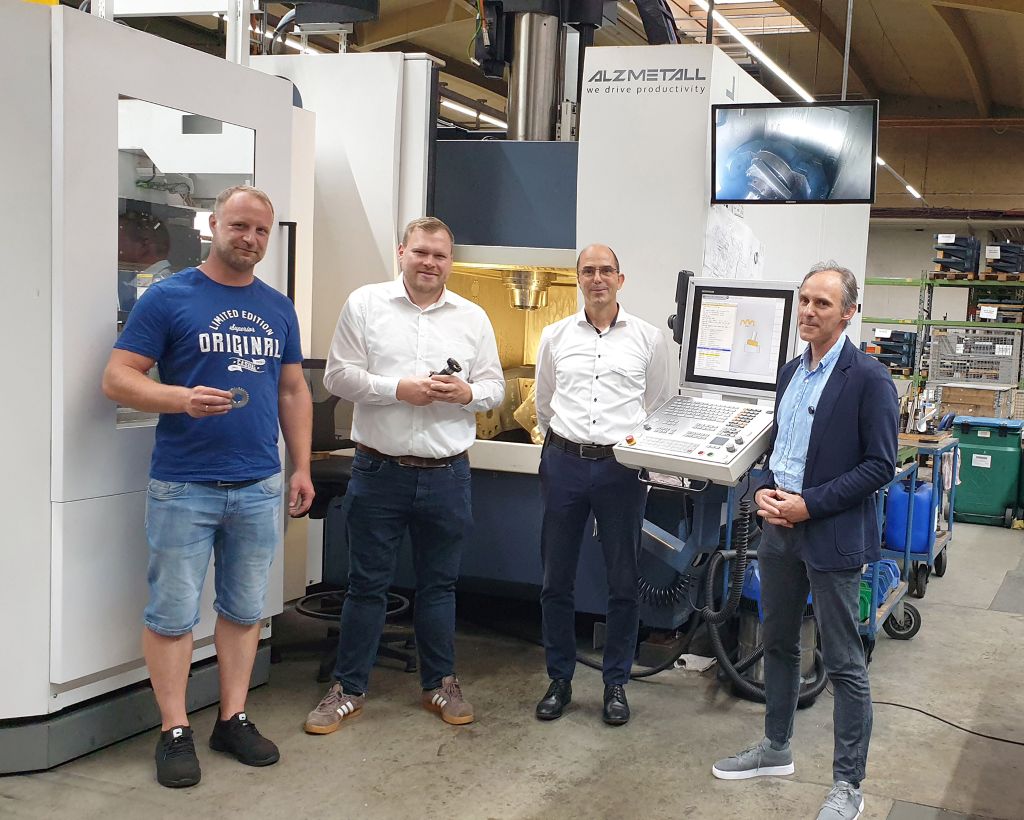
INGERSOLL completely accompanied the process for the customer from tool design to the first good part. Georg Buchner finds commendable words for the collaboration: "We felt very well taken care of by the tool manufacturer and received excellent support, especially during the commissioning. It worked well and was very pleasant for us." Practically, for ALZMETALL, the use of the skiving cycle on the Heidenhain control was also beneficial, as no further training or education was required for it. "We receive the process data from INGERSOLL and only need to feed the program with it. The rest runs practically automatically. For the operator at the machine, this is a great relief," says Buchner.
In collaboration with Heidenhain, ALZMETALL also offers skiving to its customers as an option. The successful use in its own production should be a good selling point for that.
Contact: