
Currently, medical technology appears like a pearl in the German industrial landscape. It is reliably driven by demographic developments and an increasing demand for minimally invasive surgical instruments, implants, or artificial knee and hip joints. When it comes to quality and functionality, surface quality, or perfect fit, grinding processes play a special role in the production of these products. It is timely that the GrindingHub trade fair (May 5 to 8) is taking place this year in parallel with Medtech (May 5 to 7) at the Stuttgart exhibition center. In the quest for more efficiency in production, close coordination along the value chain is becoming increasingly important.
In Germany alone, the Medtech industry reliably grows by about 5 percent each year. Approximately 68 percent of the revenue, according to recent industry reports, goes to exports. Thus, it is not surprising that production companies feel attracted to these successes, especially when it comes to compensating for declines in other areas. However, the barriers to market entry are high, primarily due to the very complex requirements of the European Medical Device Regulation (MDR). Nevertheless, the Association of German Machine Tool Manufacturers (VDW), organizer of the GrindingHub, is also focusing on medical technology as an important growth market. Recently, current trends in medical technology were discussed at the EMO Economic Forum last year in Hanover together with customer industries. The discussions particularly focused on the high precision required for complex, patient-specific devices, flexibility in production for individual adaptations, and complete traceability across global supply chains.
Smooth surfaces are essential
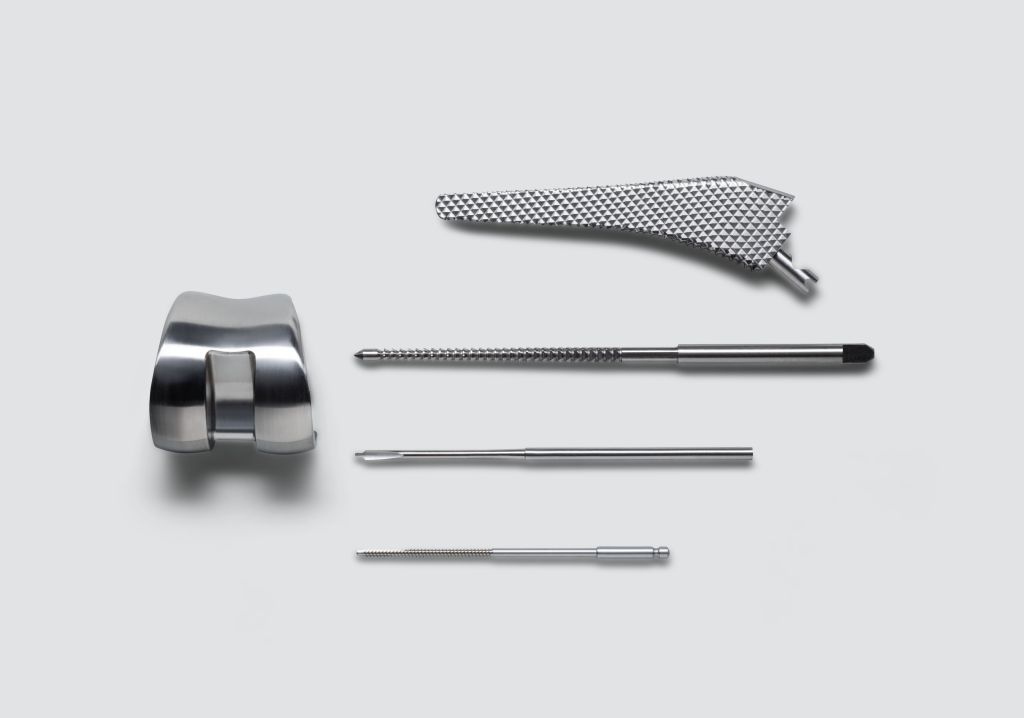
Innovative grinding technology is particularly in demand for devices used in diagnostics, surgery, intensive care, or implants and endoprosthetics. To enable diseased joints to regain pain-free movement, no germs should adhere to the surfaces of prostheses. For artificial hip joint balls, experts speak of a surface finish in the roughness range of Ra ≤ 0.005 µm. To ensure pain-free injections, the tips of micro-injection needles, which may have a diameter of just 0.18 mm, must be ground without burrs. For metallic and bioresorbable stents, smoothly ground surfaces help reduce turbulence in blood flow.
According to estimates from the Federal Ministry of Health, there are currently around half a million different medical products. The diversity also poses a challenge for grinding technology. In addition to high precision requirements, it also involves the range of materials used, which includes titanium and cobalt-chrome alloys, stainless steel alloys, and ceramics.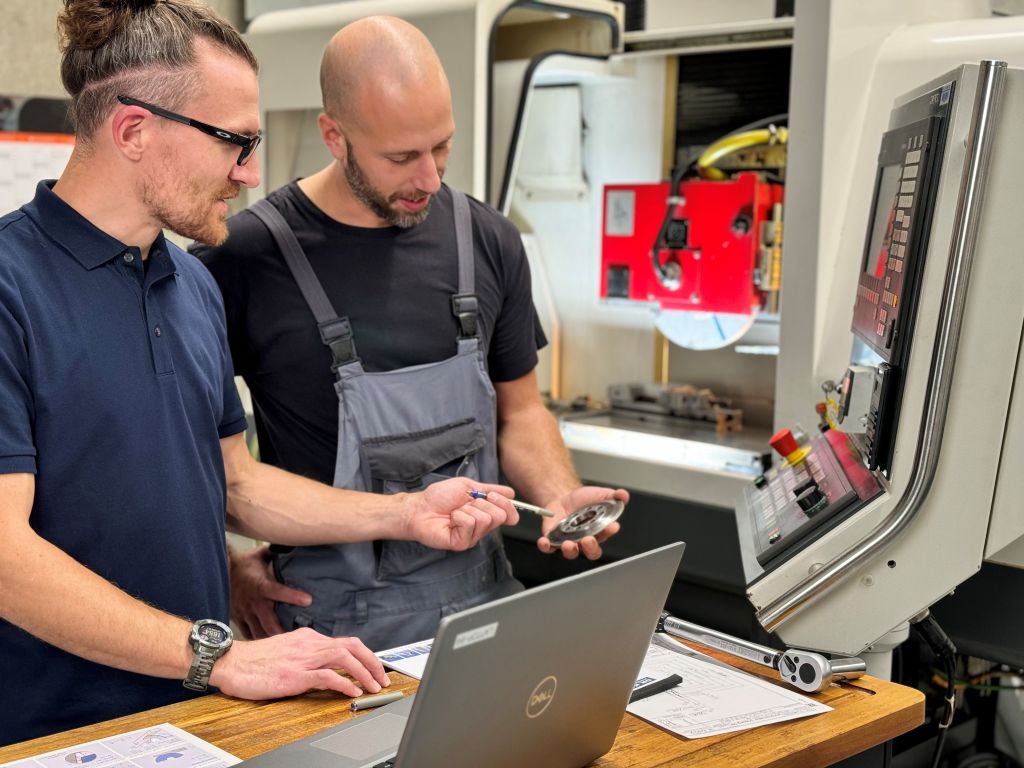
Coordinated overall system as a goal
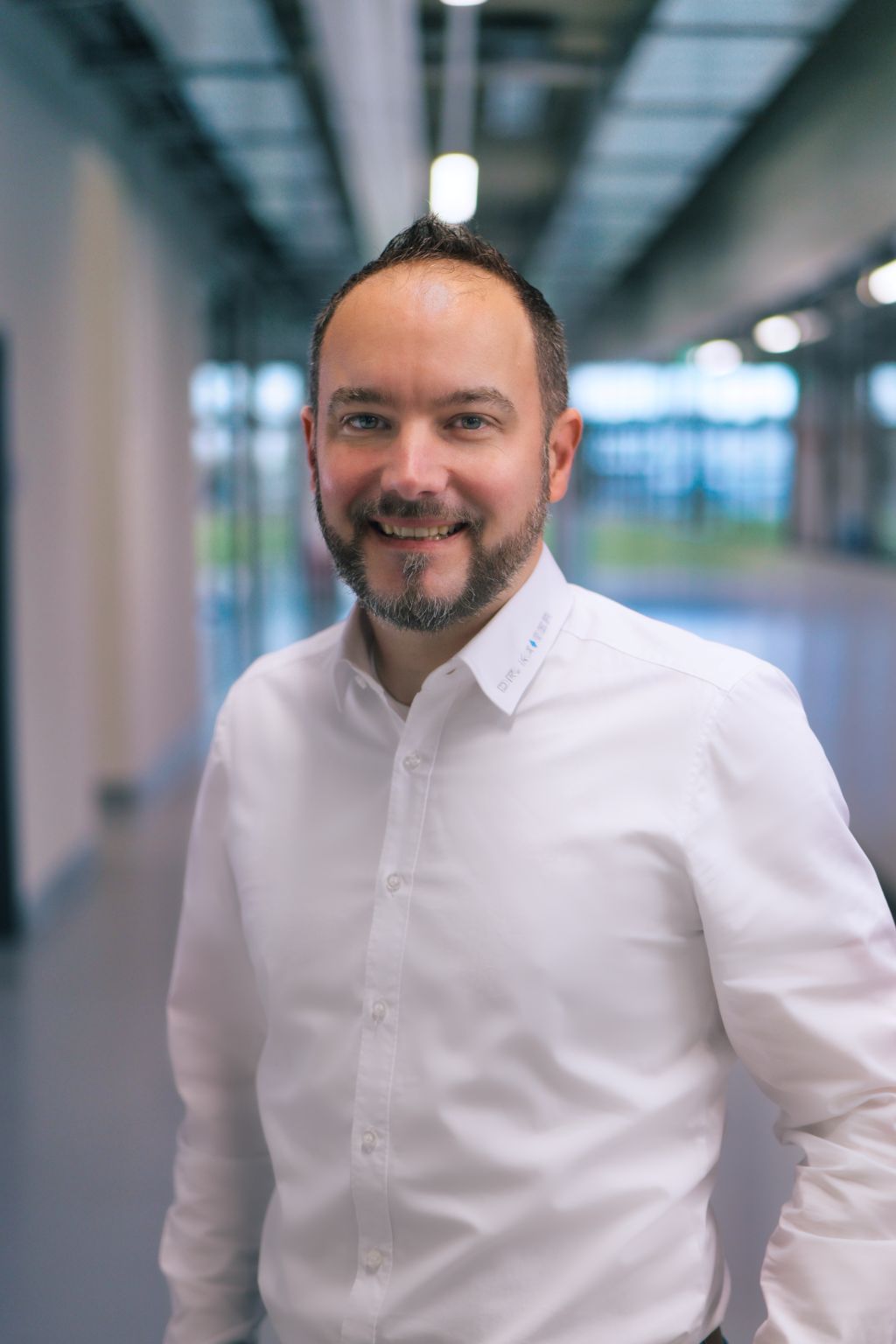
"Especially in very demanding processes, complex geometries, high-strength, difficult-to-machine materials, and tolerances in the µ-range, our solutions are in use," explains Christoph Müller, Head of Sales at Dr. Kaiser Diamond Tools. "From precision grinding of titanium pins and bone drills to optical devices and the production of dental drills, medical technology offers a wide field," says the expert.
As a manufacturer of high-precision grinding and dressing tools, the company from Celle in Lower Saxony also recognizes growing potential in the field of medical technology. "In the current tension between cost pressure on one hand and increased demands for quality, process stability, or sustainability on the other, our customers are increasingly relying on tailored developments and process optimizations," says Christoph Müller.
A coordinated overall system instead of individual components is the key to more efficiency. In addition to the products, the area of application technology is gaining increasing importance, whether in knowledge transfer in seminars, digital support via app, or in-house testing fields as well as process designs and optimizations at the customer's site.
Continuous research and development work
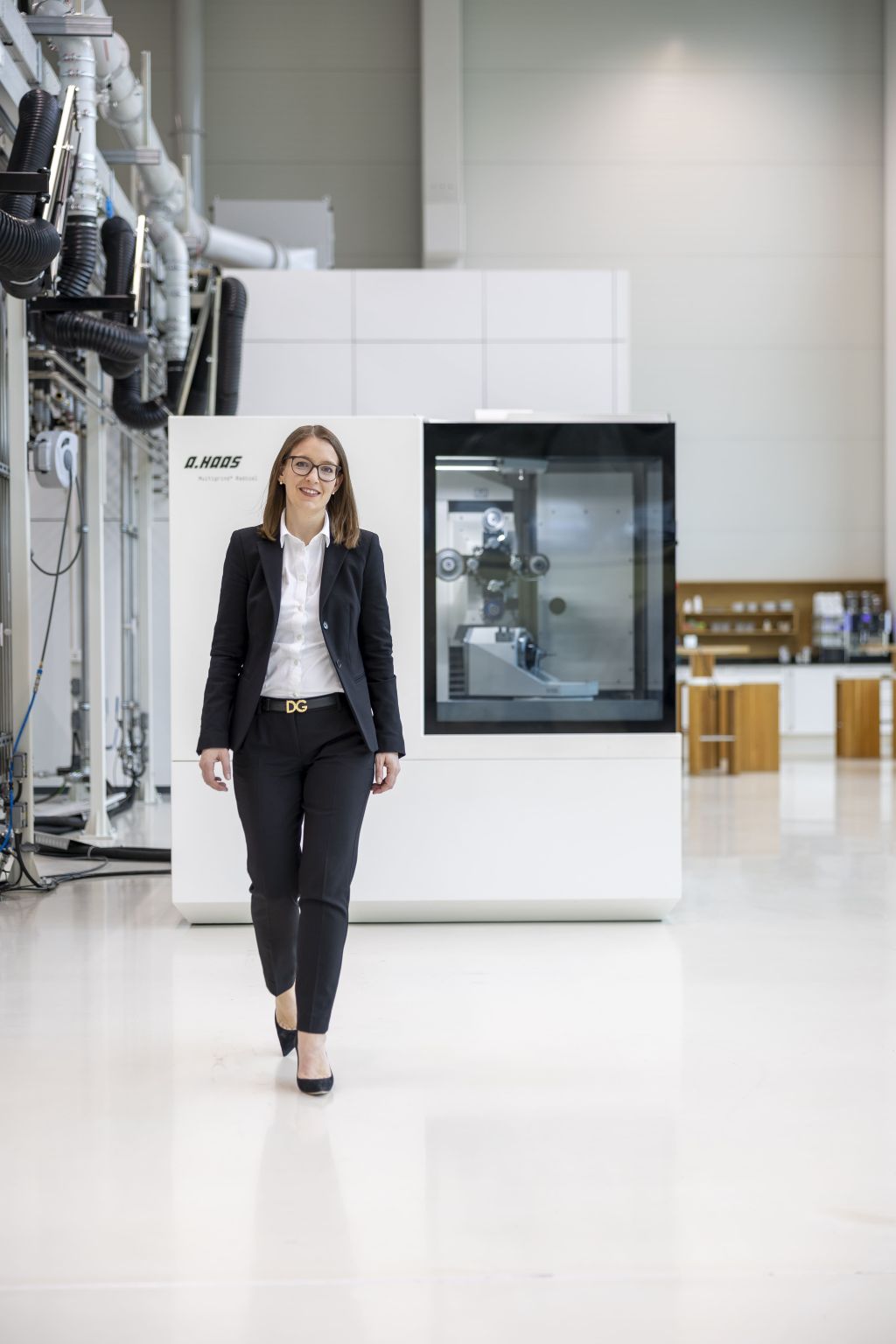
The stronger focus on process optimization is also confirmed by Marie-Sophie Maier, managing director of the grinding machine manufacturer Adelbert Haas in Trossingen. She sees three central challenges in medical technology at the moment. These include the desire for higher process reliability, increasing demands for precision and reproducibility, and a growing variety of variants. Automated or at least partially automated environments are prerequisites for this. "From our perspective, the seamless interaction of machine, software, clamping, and measuring technology is crucial," emphasizes the managing director.
According to the company's own calculations, around 2.4 million knee endoprostheses are produced annually on grinding machines from Adelbert Haas. With significant savings in setup time, faster programming, combined grinding and milling, and dressing in the process, investments in corresponding machines pay off very quickly, according to the company.
Marie-Sophie Maier emphasizes that medical technology is one of the most demanding application fields. "We are continuously involved in application-oriented development and research projects, especially at the interface between grinding process, software, and measuring technology," says the managing director. In addition to further increasing process stability, the focus is on data-based optimization of grinding processes and the integration of closed-loop solutions. A closed-loop system allows for the seamless integration of processing and measuring machines. The software ensures that data from the processing machine is directly transmitted to the measuring machine. The measurement protocol returns to the machine, which then independently makes the necessary corrections. The projects are developed in close collaboration with industry partners and scientific institutions, according to Adelbert Haas.
Trend towards flexible machine and software concepts
For the future, Marie-Sophie Maier sees a clear trend: "We are experiencing increasing functional integration in medical components alongside stricter regulatory requirements." For grinding experts, this means that processes must not only be highly precise but also transparent, reproducible, and documentable. Additionally, according to Marie-Sophie Maier, flexible machine and software concepts are gaining importance to efficiently accommodate new materials, complex geometries, and changing requirements.
This trend is likely to become a topic in Stuttgart as well. For the grinding experts, the concurrently held trade fairs are a gain. 'As an exhibitor at GrindingHub, we are pleased about this and hope for synergy effects with MedTech,' says Christoph Müller. Visitors have access to both events with just one ticket.
Contact: