
Product innovations at MAPAL always aim to further develop and support customers in their productivity. Services have previously ranged from tool design to tool management and support at the production line. Now, the tool manufacturer goes even further and offers complete turnkey solutions for process design up to achieving process capability. AI is also knocking at the door.
With process design, the foundation is laid for the costs incurred for a component. Crucial framework conditions are cycle time and process stability. Although MAPAL has long possessed the necessary tool know-how, elements were still missing for complete service offerings: In the areas of clamping devices, programming, and process acceptance, MAPAL has not been able to delve deeply until now.
With the acquisition of the Italian company X-Pro last year, a gap has been closed. MAPAL is now able to support customers early in the industrialization of components with feasibility analyses and optimal planning of processing steps, thus ensuring that the required cycle times and quality specifications are met.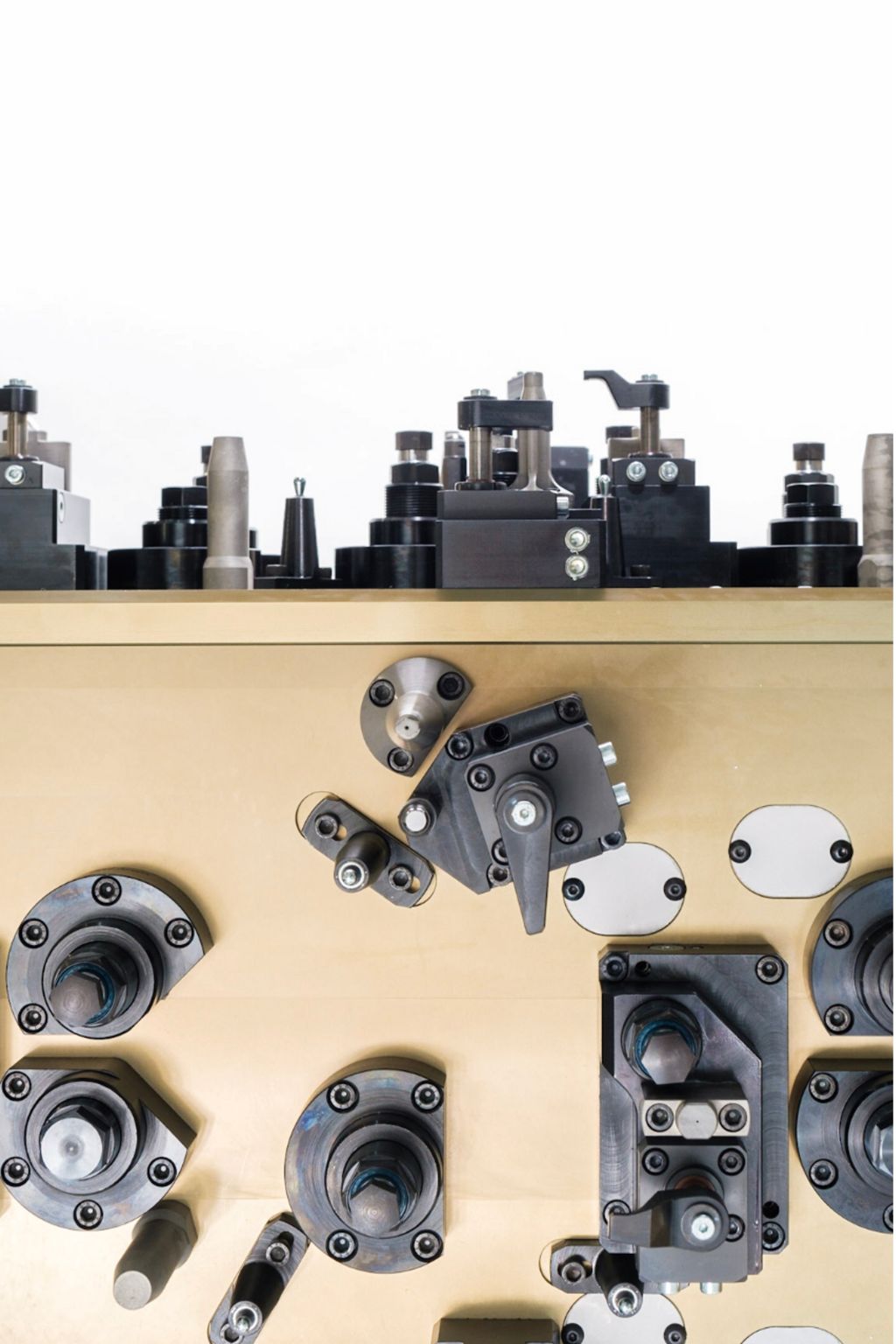
"The goal is an efficient and stable manufacturing process," says Stephan Köstler, Global Head of Machines and Services at MAPAL. He adds: "Even in the concept phase, clamping devices are designed to meet the requirements for quality and process safety - tailored to the loads of the machining process. A simulated and optimized NC program ensures that all processing steps run collision-free, even before the first part is produced. The installation and ramp-up of the process under real conditions on the production line, with proof of process capability, is the final step."
Taking into account the new possibilities, projects have already been successfully implemented in which MAPAL has taken full responsibility and was able to fully meet customer expectations within eight to twelve weeks.
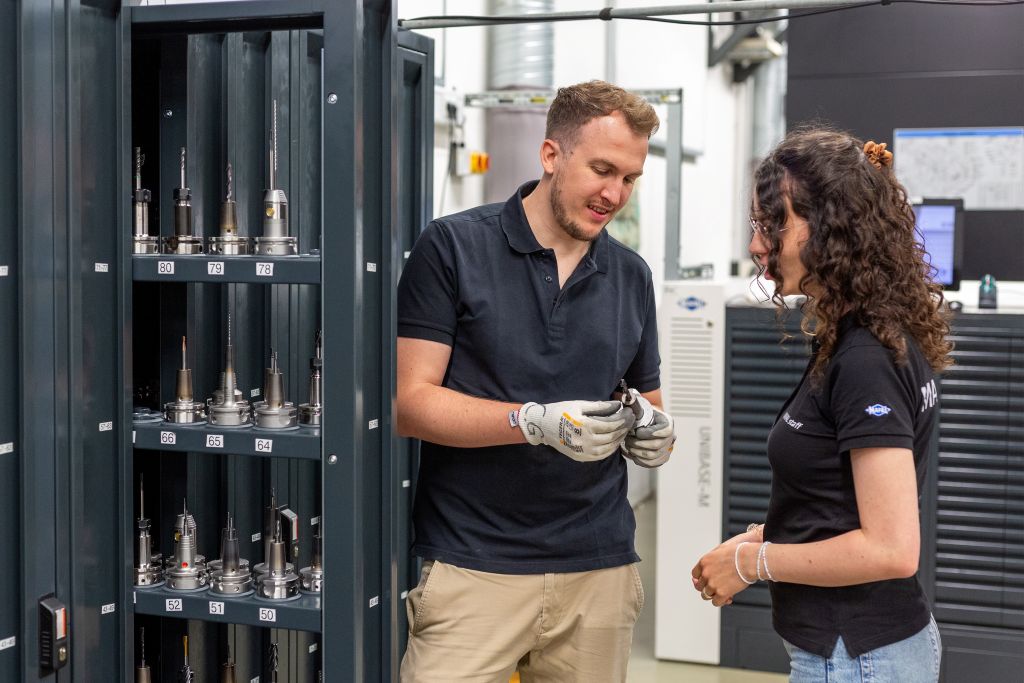
Tool management to optimize the machining process and tool cycle
This holistic approach also shapes tool management - a service concept that goes far beyond mere tool supply. At its core is the continuous optimization of machining processes and the entire tool cycle from procurement through storage and presetting to reconditioning. The use of current tool technology in the machining processes itself guarantees productivity gains. MAPAL relies on digital processes, standardized workflows, and a close integration with production. The complete integration of the cloud-based platform c-Com into the MAPAL group in 2025 underscores this approach: data, tools, and processes are brought together in one system - transparent, secure, and globally available. Customers benefit from consistently high tool availability, reduced inventory levels, and significantly more efficient internal logistics. At the same time, the central data base enables a well-founded analysis of consumption, costs, and performance - in real-time and across plants.
MAPAL does not see tool management as an additional service, but as an integral part of modern manufacturing. With over 100 ongoing projects worldwide, a central competence center in Aalen, and decades of experience in machining, MAPAL is a strong partner for companies that want to specifically increase their productivity even beyond the start of production.
With PRODaaS@SCALE into an automated future
An even stronger digital integration into the processes of customers, including the connection of live data from the machining machine, allows for Productivity as a Service (PRODaaS). A first project was successfully completed last year, and now there is an even broader continuation. "With PRODaaS, it was about systematically feeding back the experiences gained during ongoing series production to achieve productivity gains, so that during the initial component design, we are already much closer to the ideal point," reflects Stephan Köstler. For this purpose, a digital assistant continuously evaluated data from the machine environment and made concrete suggestions for possible optimizations.
The new project PRODaaS@SCALE, which will start shortly, takes a step further into a more automated future. Köstler: "With PRODaaS@SCALE, the assistant becomes a self-regulating system. It directly incorporates the experiences gathered in application into the process design." The use of AI is intended to help bridge the gap between theory and practice in this research project. Customer-specific trained AI systems are expected to provide significantly better settings for machining processes during planning than would be the case without this feedback loop.
The implementation is aligned with the Manufacturing-X initiative from business, politics, and science and their lighthouse projects. "Many digitization projects have not progressed beyond the pilot phase in the past ten years," says Stephan Köstler. "The challenge was to scale the joint use of data."
At PRODaaS@SCALE, the establishment of new data infrastructures is the key to ensuring joint data use without compromising data sovereignty. Project partners include the company Zoller, which makes a significant contribution with measurement technology and tool diagnostics, as well as Walter Formenbau as a pilot customer. Also new is the approach of collaborating with the woodworking machine manufacturer Weinig as a project partner to signal the transfer and use of this systematics in the woodworking industry. As in the PRODaaS research project, MAPAL also takes on the role of consortium leader in the scaled version.
With its expanded offering, MAPAL positions itself as a leading provider of future-oriented manufacturing solutions. Future topics such as artificial intelligence and digital integration increase the productivity and efficiency of customers. With turnkey solutions and the integration of c-Com, production processes are optimized and continuous productivity gains are achieved. Thus, MAPAL is well-equipped to meet the demands of modern manufacturing industry and to provide its customers with tailored, innovative solutions.
Contact: