
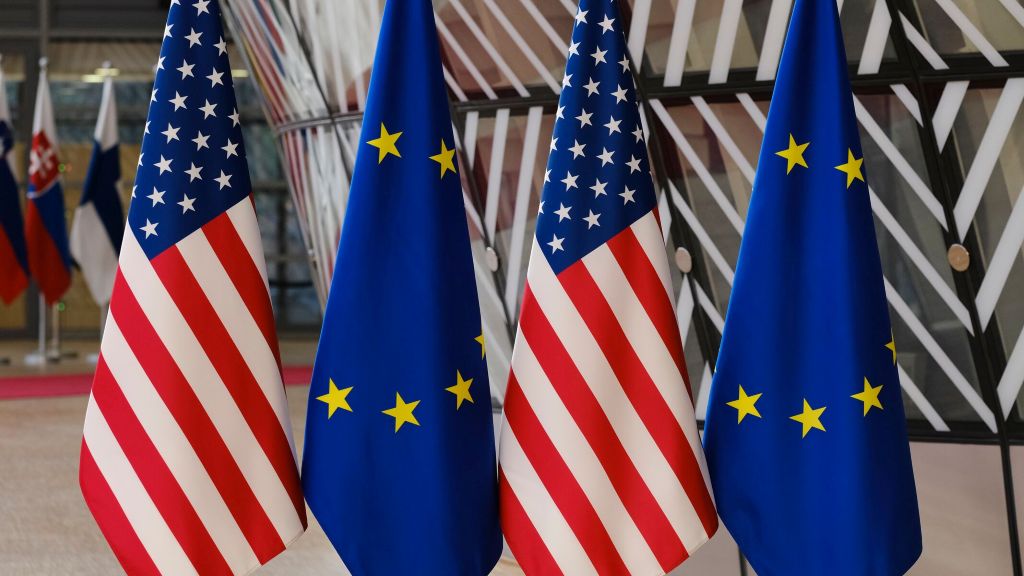
The EU Commission defends the 15 percent 'tariff deal' with the USA as a 'decision for stability and predictability'. However, more and more products are being excluded because they fall under the significantly higher steel and aluminum tariffs. This threatens many companies existentially. The VDMA urgently calls on the EU Commission to advocate for improvements.
The European Commission sees the recently made tariff agreement with the USA as an act of 'stability and predictability'. In a guest contribution for the 'Frankfurter Allgemeine Zeitung', Commission President Ursula von der Leyen writes: 'The most important element of our agreement is that we have drawn a very clear line at 15 percent for most EU products, including vehicles and pharmaceuticals.' However, Ms. von der Leyen omits two essential points that cast the 'tariff deal' in a different light. On the one hand, the USA has significantly expanded the list of products for which the significantly higher steel and aluminum tariffs are to apply. As a result, about 30 percent of US machine imports from the EU are now subject to a 50 percent tariff on the metal content of the product. This means that many companies in the manufacturing sector, such as machinery and plant engineering, have their entire US business at risk.
On the other hand, the list of steel and aluminum tariffs is to be reviewed and possibly expanded every four months. Instead of planning security, as announced by the EU Commission, uncertainty will continue to prevail in transatlantic trade because the 'tariff deal' is not permanent. Additionally, there is a significant extra burden due to bureaucracy, as the steel and aluminum tariffs are determined through a complicated process: companies must provide, among other things, declarations regarding steel melting, the origin of cast parts, and proof of metal content. Typical medium-sized companies in mechanical engineering cannot procure these data in detail.
The VDMA has therefore addressed an open letter to Ms. von der Leyen. VDMA President Bertram Kawlath writes: 'We strongly urge the Commission to make every available effort to free the EU from tariffs on steel and aluminum derivatives and to ensure that machinery and equipment are exempt from future sectoral tariffs.'
Already, around 150 new products have been added to the list of steel derivatives for which a tariff rate of 50 percent on the metal content of the product would apply in the future. This includes motors, pumps, industrial robots, and agricultural and construction machinery. At the next review in four months, additional products could be added, such as drones or wind turbines and their components. This is an unacceptable outcome for the industry of a supposedly stability-bringing 'tariff deal'.
Since the first announcement of the tariffs, the VDMA has cautiously expressed optimism that a permanent 15 percent tariff could at least provide planning security for companies. However, following the recent agreement, VDMA President Bertram Kawlath's conclusion is that the new tariffs have once again unsettled the European industry. 'The damage caused and the prospect of further tariffs in the coming months are pushing important sectors in machinery manufacturing to the brink of an existential crisis,' he warns.
Contact: