
In June 1975, almost all of Paris dreams of love – à l’électronique. While the new electronically controlled RER express train begins its journey, the Centre Pompidou with color-coded pipes and electronic building technology is created in the middle of the city. At the same time, the international machine tool industry celebrates the premiere of the 'Exposition Mondiale de la Machine-Outil' – shortly EMO – at the Parc des Expositions de la Porte de Versailles. The common denominator of the three events: They herald the global dawn of a new era in which electronics gradually takes command. A retrospective by technology journalist and eyewitness Nikolaus Fecht.
Adieu, EWA – this is what it is called in Paris in 1975 and two years later also in Hanover. EMO takes over the legacy of the 'European Machine Tool Exhibition', which had been held alternately in Belgium, Italy, France, and Germany since 1951. The continental industry showcase becomes an international event, to which the European machine tool association Cecimo alternately invites to Milan, Paris, and Hanover.
Numerical Control: Cam Discs and Camshafts Passed
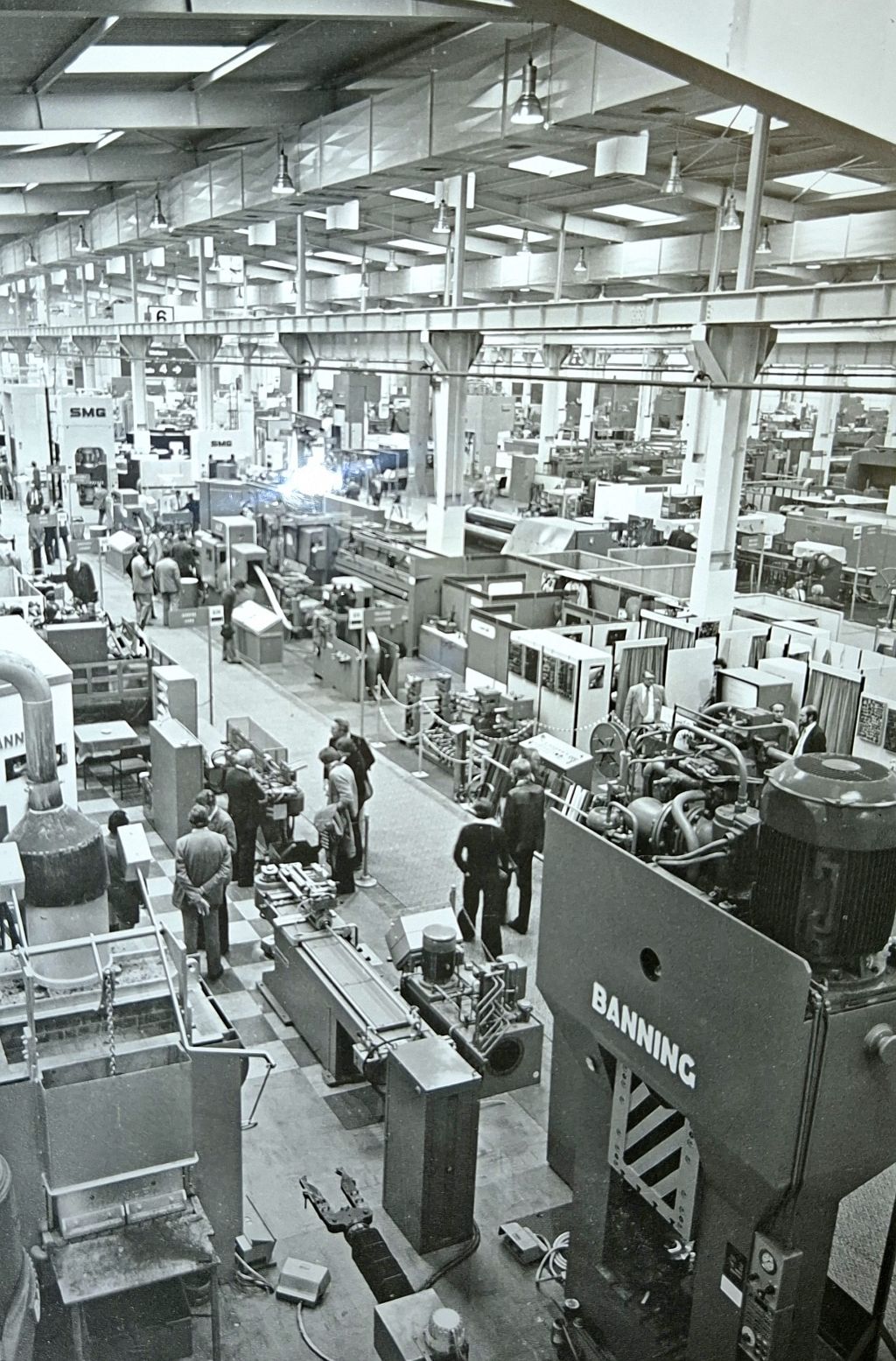
For the first time, the European machine tool industry presents itself at a trade fair with a consistently international focus. A particular impulse from the USA causes a stir in the mid-1970s: numerical control (NC). Programmable controls replace cam discs, camshafts, and mechanical copying devices, allowing motion sequences to be defined flexibly via software for the first time. But this is just the beginning, a German trade magazine prophesies at the time: 'The first World Congress on Machine Tools concludes with a discussion about the future development of machine tool control in connection with the application of computers.' However, that is still a long way off; punched tape still dominates the scene – the classic storage medium for numerically controlled machines.
I learn about the next step towards CNC – 'Computerized Numerical Control' – as a working student in the large training workshop of Thyssen in Kassel in the mid-1970s. However, handling this technology has to be learned first: 'Hands off, this is not for beginners!' a master admonishes the aspiring electrical engineer as he curiously inspects his first CNC machine: A CNC machine tool over three meters high – equipped with an early control system from Siemens. The student looks at a magnetic tape-based input system that glows amber.
Advance from Japan: Every fourth lathe has a CNC system
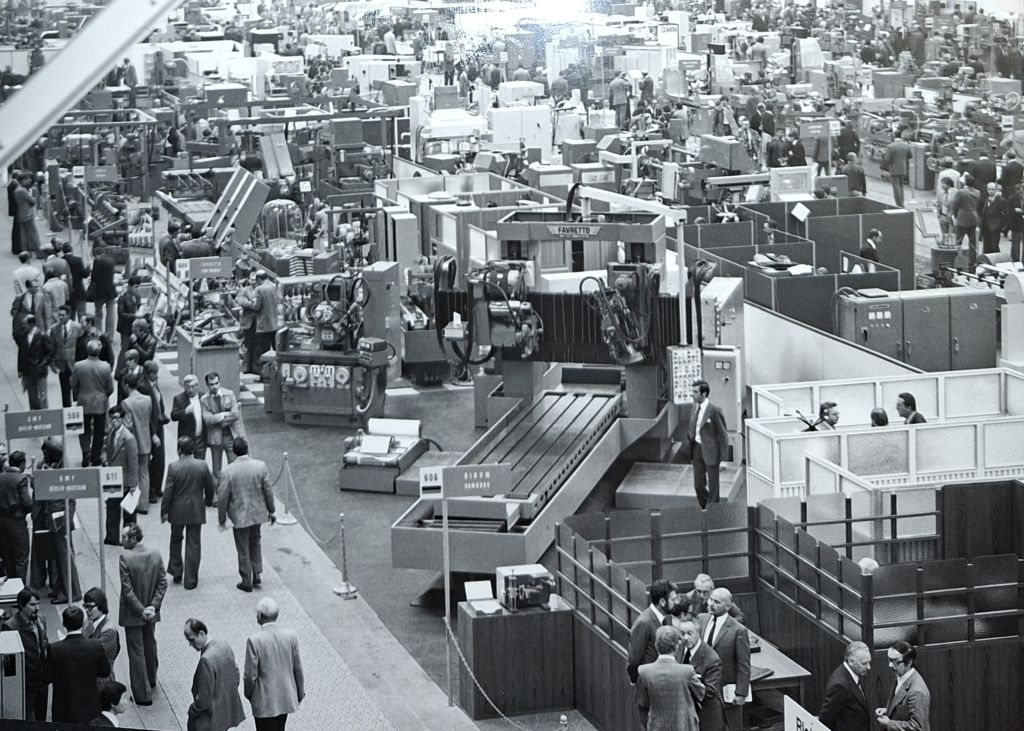
No wonder I am fascinated by the newcomer – CNC is still a technical exception in the mid-1970s. According to the National Bureau of Economic Research, Cambridge (USA), less than five percent of machines in the United States are CNC-controlled, and in the Federal Republic of Germany, only about two percent. Only Japan is significantly ahead: by 1975, every fourth exported lathe already has a CNC system – and the trend is strongly rising.
With shining eyes, production specialists look at computer solutions from the Far East or the USA, but there is long-lasting skepticism holding them back: I count myself among them. During my first EMO visit in 1987 in Milan, I get to know high-tech from the Far East as a specialist editor: Mitsubishi presents a CNC system that allegedly works five times faster than conventional 16-bit systems and even optimizes processing automatically thanks to artificial intelligence. For me as a writing engineer, a new era begins, which I call 'CIMsalabim' in the trade press – a playful allusion to 'Computer Integrated Manufacturing' (CIM), where robots, machine tools, conveyor belts, measuring stations, and computers merge into a computer-integrated factory.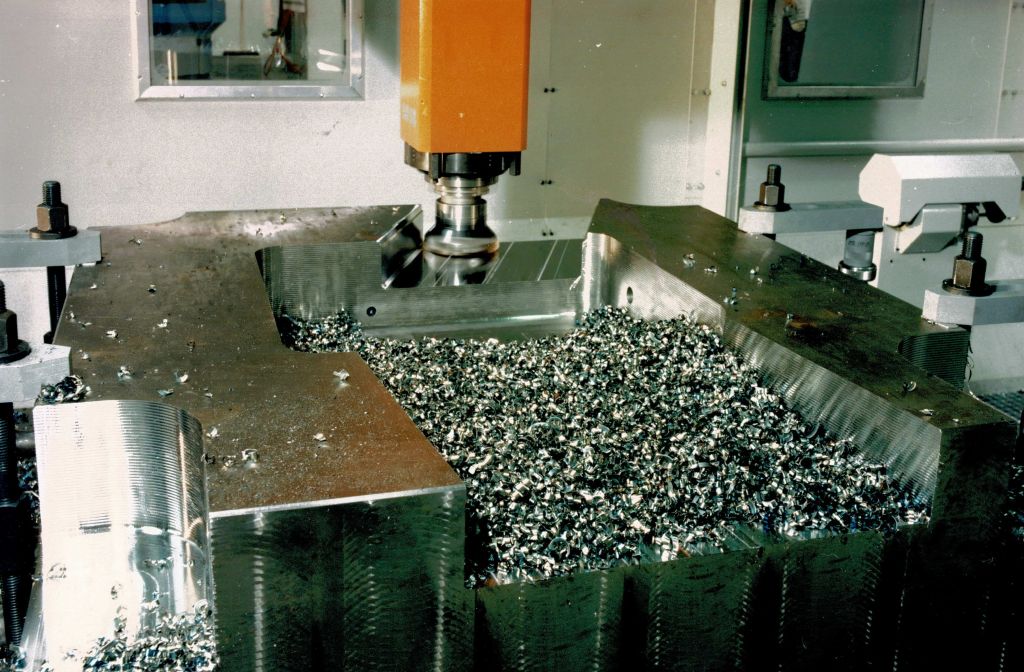
The digital trend soon follows green themes – initially laughed at, then promoted, ultimately demanded. A key role was played by the so-called high-speed machining (HSC). The process allows extremely fast machining while maintaining high surface quality – and with very little or no coolant at all. At EMO Hannover 2001, Getrag Ford Transmission GmbH shows how HSC and minimum quantity lubrication can be combined resource-efficiently. Thus, I learn in a local report for the EMO press service:
'A Kölsch glass is enough to process 90 gearbox housings' – previously it was still 220 liters of emulsion. The VDW also recognizes the potential early on. HSC became a promoted key technology, supported by eco-projects and the Blue Competence initiative. By the latest at EMO 2011, it becomes clear: Energy efficiency is no longer a side issue.
Industry 4.0: From Label to Evolution
A few years later, a new guiding principle sets further impulses: Industry 4.0 stands for the idea of networking manufacturing systems through powerful computers, sensors, and interfaces so that they can be controlled and analyzed in real-time – ideally even via smartphone. 'A smartphone for production,' a developer whimsically wishes for in 2017 at EMO Hannover.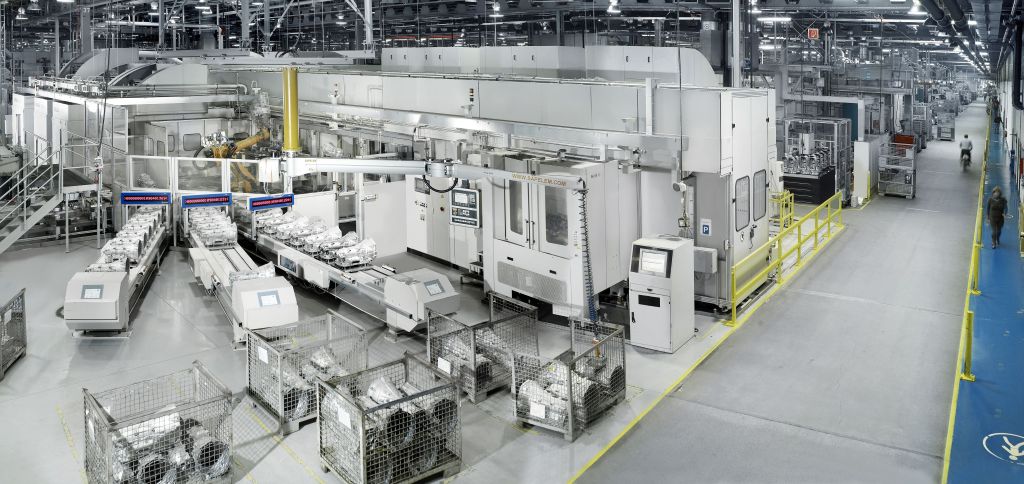
However, the first step is to intelligently link systems together. Under the guiding theme 'Connecting systems for intelligent production,' EMO sends a clear signal for digital networking in manufacturing technology. In 2019, umati (universal machine technology interface) celebrates its premiere in Hanover – the worldwide initiative for open communication interfaces for the machine engineering industry and its customers based on OPC UA information models, initiated by the VDW.
Since then, umati has continuously developed: The international community today ensures standardized information models for numerous applications under the umbrella of VDW and VDMA, provides a platform for the exchange of experiences, creates visibility in the market, and enables the practical demonstration of added values. Nowadays, open interfaces exist not only for machine tools but also for components, software solutions, and many other manufacturing technologies – a crucial contribution to the smooth collaboration of various systems in connected manufacturing.
The year 2020 becomes a test of endurance: Virtual communication establishes itself in a short time – a substitute for contact restrictions due to Corona. Companies switch to remote maintenance, digital customer formats, and flexible logistics. In 2022, further adjustments follow with the cessation of Russian gas supplies – from energy efficiency to the realignment of global supply chains. Industry 4.0 becomes a lived practice. Virtual services such as remote maintenance, remote diagnostics, and online training replace on-site deployments in many places. Digital tools support customer contacts, cloud-based platforms...
formats enable training and support regardless of location and time.
Efficient communication despite Corona contact restrictions
Contactless communication works efficiently, as I observe while researching for a text: "Digitalization demonstrates its strength particularly in conjunction with online communication. This refers to incident resolution, teleservice, and remote diagnostics, the flexibility of which many companies have come to appreciate during times of crisis." Thus, the pandemic becomes a catalyst for digitalization – in service and interaction. These experiences continue to shape our service structures today. Some wonder whether physical trade fairs are still necessary – after all, virtual ones work.
Communication has become surprisingly good in the meantime.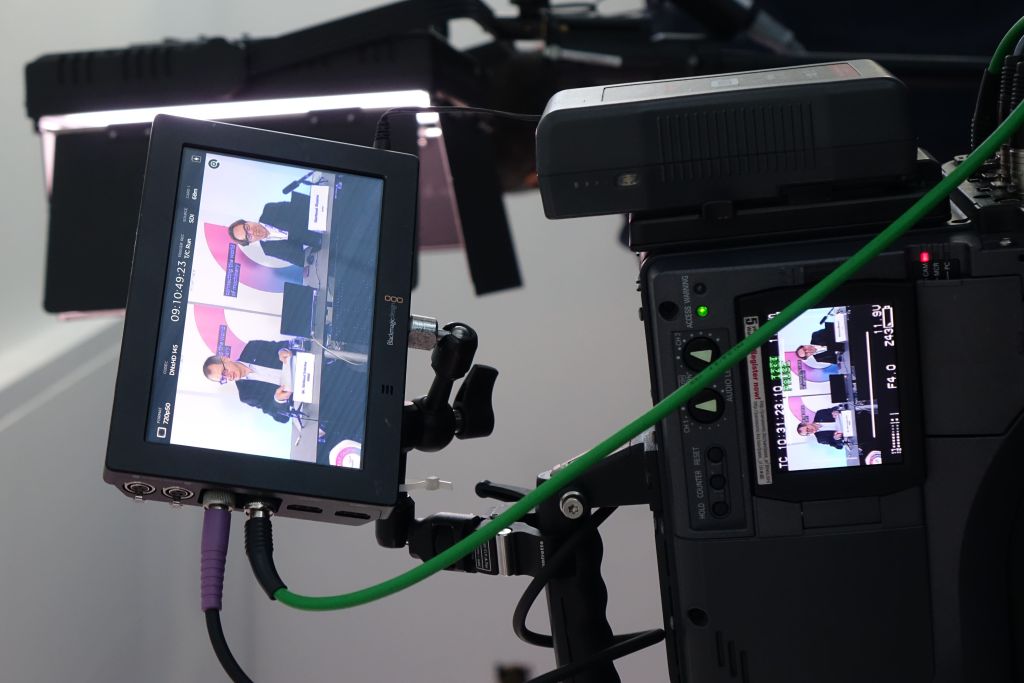
Virtual communication remains – but the next technological leap is already on the horizon. Shortly after the digitalization boost from the pandemic, an old acquaintance is back in the spotlight: artificial intelligence. While Asia and America are already investing, Professor Jörg Krüger from the Fraunhofer Institute for Production Systems and Design Technology IPK in Berlin warns: "Without AI, soon out for the count." He advises linking the domain knowledge of workers with neural networks.
Data is the "digital gold dust" of production, from which new business models could emerge. At EMO 2023, this claim becomes tangible: Trumpf presents an AI assistance system for the automatic sorting of sheet metal parts, while J.G. Weisser showcases predictive maintenance based on learning algorithms. Mapal, Ceratizit, and the Fraunhofer IPT also demonstrate how AI optimizes manufacturing processes, reduces inspection times, and makes machines smarter. AI is on its way from buzzword to standard – evident at an increasing number of booths at EMO.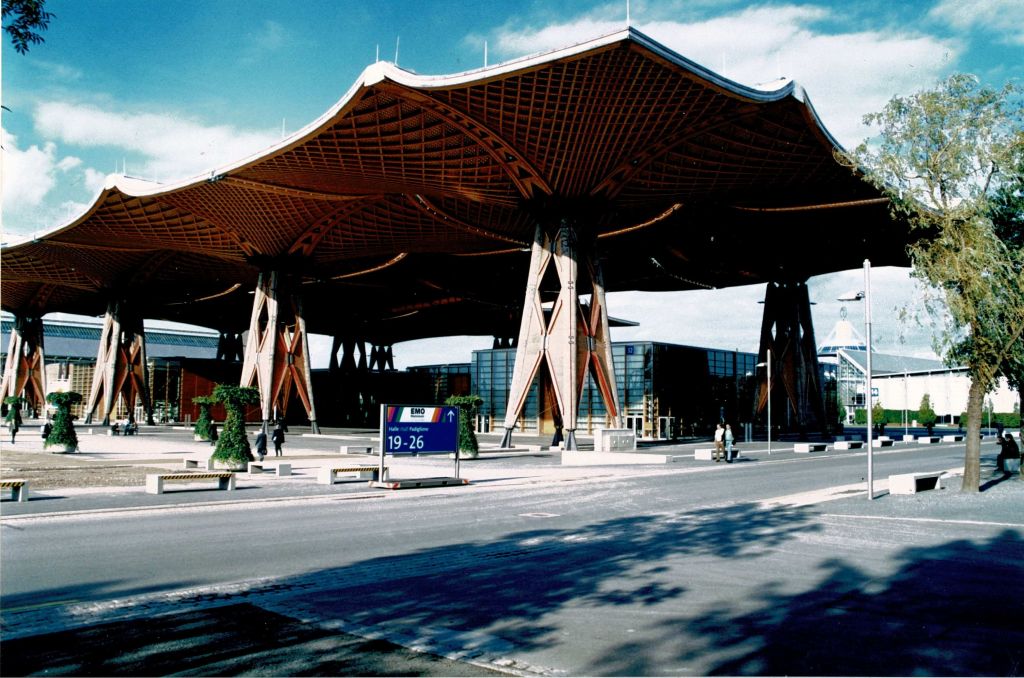
And yet, the EMO 2023 demonstrated that networking does not replace personal exchange but enriches it. Under the claim "Innovate Manufacturing," the VDW attracted over 90,000 professionals from around the world to Hannover – about half from abroad. The trade fair impressively proved: Digitalization promotes dialogue. Thus, for me, the circle closes in Hannover, where I stood as a curious working student at my first CNC machine 50 years ago – and today, as a technology reporter, I reflect on half a century of EMO experience. My exciting question: And what comes next?
The research reveals: At EMO 2025, the focus will once again be on digitalization, automation, and sustainability – complemented by new AI applications. DMG MORI, in collaboration with Siemens, will showcase a comprehensive digital twin. Sandvik Coromant will present smart tool holders with real-time monitoring. Supfina will introduce a new machine concept for surface finishing, and VibroCut will demonstrate ultrasonic support for machining. MAPAL also reminds us that traditional tool solutions still have their established place. VDW Chairman Franz-Xaver Bernhard sums it up: "The future of production is created where innovation meets experience – and that is precisely the strength of EMO."
Author: Fecht
Contact: