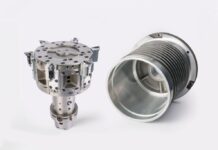

Lead is a heavy metal that can be harmful to the environment and human health in higher concentrations. Therefore, the reduction of lead in production materials has become increasingly important in recent years and is additionally mandated by certain EU directives. However, when processing lead-free metals with the previously common tools and cutting geometries, long, irregularly breaking chips are usually produced. Furthermore, the cutting edges of the tools wear out significantly faster than is the case with lead-containing materials. The reason for this is that lead acts in metals like an integrated lubricant, which is now absent. Therefore, manufacturing components from such metals requires innovative tools.
Taking responsibility
For companies, switching to lead-free alloys is not only a matter of legal compliance but also of ecological responsibility. The decision to switch to lead-free materials is based on Lüdecke's long-term vision of sustainable production and responsible resource management.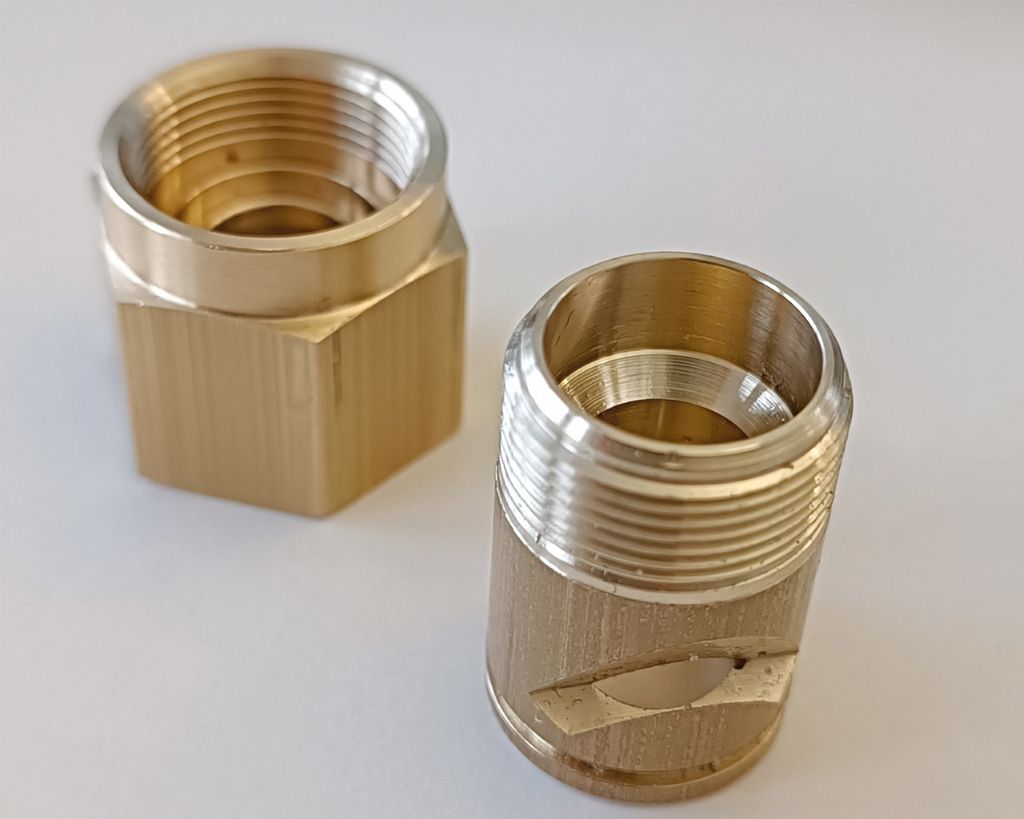
Therefore, selected components made from lead-free or low-lead materials (particularly brass) are already being manufactured – a fact that is highly appreciated by customers. This includes, for example, fittings and couplings for pneumatics, temperature applications, process industries, or water supply. However, the transition to the environmentally friendly material proves to be significantly more difficult than initially expected. In lead-free materials, the chips no longer break regularly.
As a result, long tangled chips accumulate in the working areas of lathes and milling machines. This significantly impairs process reliability, which manufacturing companies especially need in series production, and often results in high costs for tool procurement, frequent machine downtime, and a drastic reduction in tool life.
Special requirements for threads
At Lüdecke in Amberg, couplings made of brass (material CW724R) are manufactured, among other things. This is done in large series on rotary transfer machines, including from the manufacturer K. R. Pfiffner, Utzenstorf / Switzerland. Threads M18x1 are to be cut on the couplings.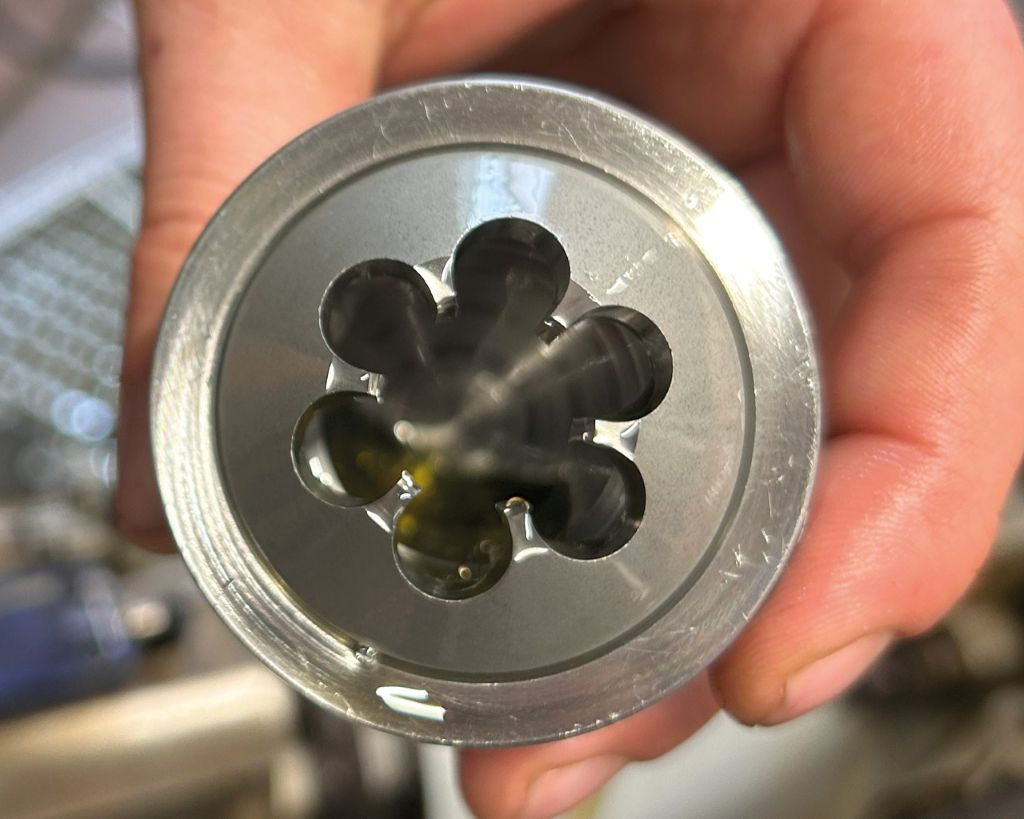
However, when producing threads in lead-free materials with the usual HSS and HSSE cutting dies, significantly lower quantities were achieved compared to processing lead-containing brass alloys. Previously, such thread tools produced nearly 100,000 threads. However, when using lead-free brass, they are worn out after only 3,500 processed parts and need to be replaced. With a cycle time of about 4.5 seconds per workpiece, this means that the highly productive rotary transfer machines must be stopped every four to five hours to change the thread tools. This significantly reduces productivity and proves to be uneconomical.
HM tool with optimized cutting geometry
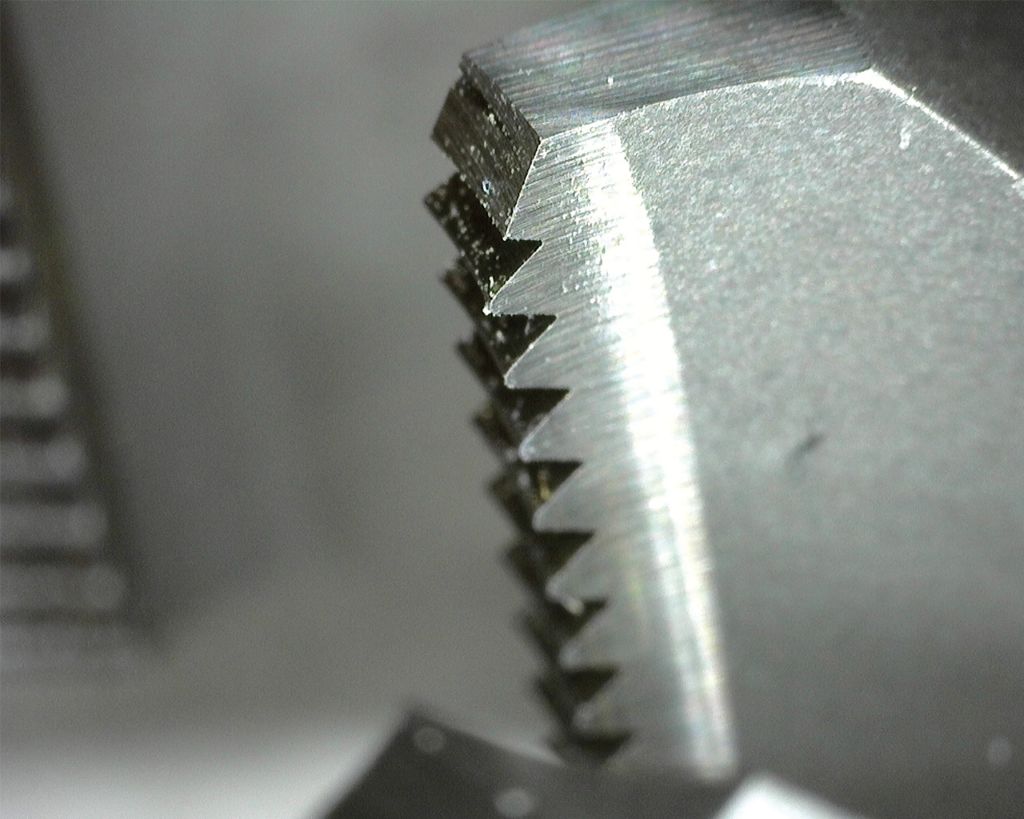
To process the lead-free brass alloy CW724R, the experts from the thread tool specialist Johs. Boss GmbH + CO. KG developed cutting dies made of carbide. These are equipped with optimized cutting geometry.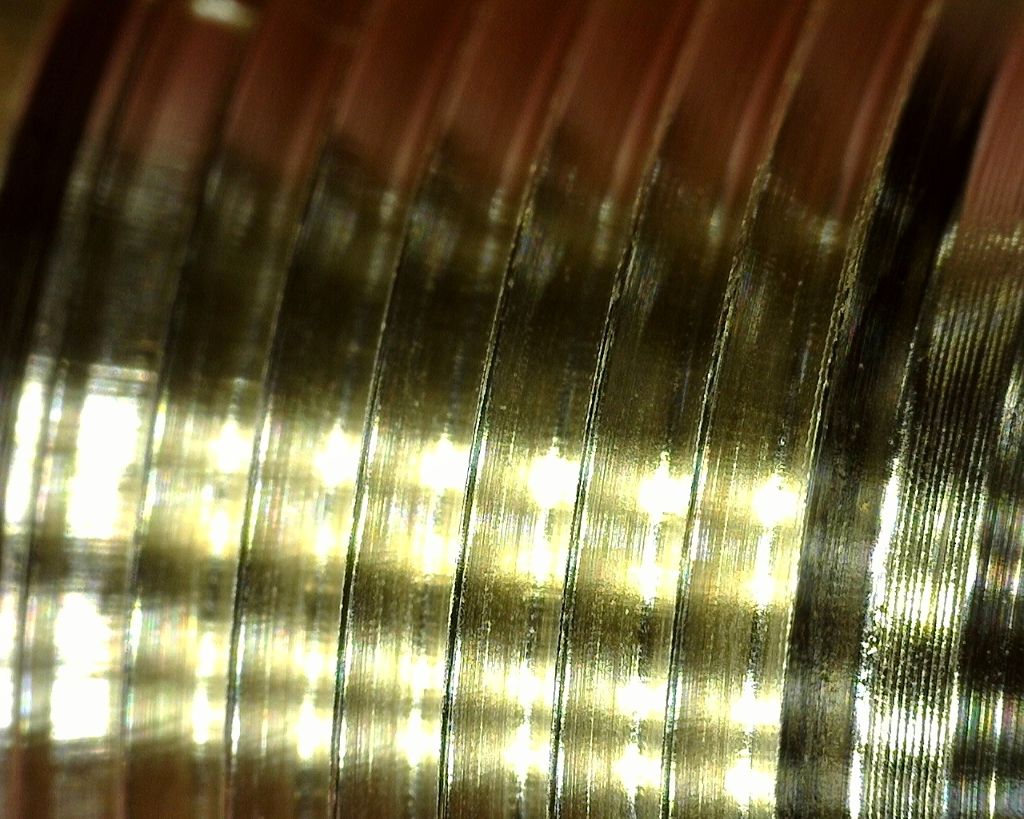
The first tests at Lüdecke showed that the optimized thread cutting dies still reliably produce the required accuracy and high surface quality after about 2,500 manufactured parts. The cycle time was also maintained at about 4.5 seconds. So far, the manufacturing technicians at Lüdecke have always been able to identify tool wear based on the extended cycle times. Worn cutting edges require higher torques on the spindles. Consequently, the spindles operate at lower speeds and lower feed rates.
Due to the unchanged parameters, the manufacturing technicians left the carbide thread tool from Johs. Boss in the rotary transfer machine. Ultimately, nearly 80,000 couplings were produced without tool change at a constant cycle time. The thread tool processed a complete batch without wearing out to the required surface quality on the thread flanks. This shows that the optimized thread tools made of carbide with specially adapted cutting geometries from the tool manufacturer Johs. Boss can achieve the same productivity, reliability, and economy when processing lead-free metal alloys as the previously used HSS tools in the production of components made from lead-containing alloys.
Contact: