
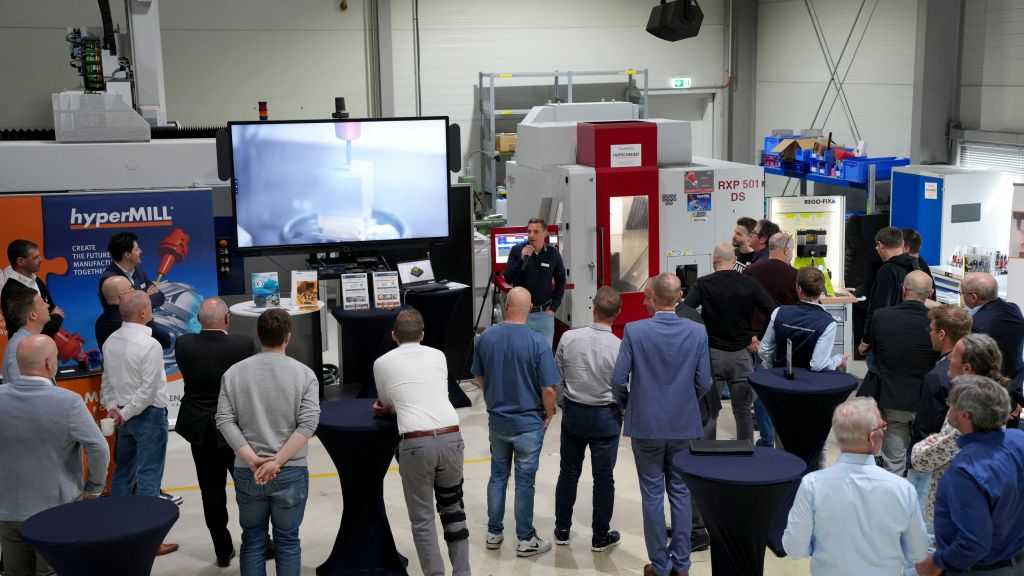
In addition to the presentation of the special tools Graftor and C-Razor, topics included materials, machines, and CAM strategies. Hufschmied invited partners: Gustav Blome GmbH, MHT GmbH Merz & Haag, OPEN MIND Technologies AG, REGO-FIX AG, Röders GmbH, and Zimmer & Kreim GmbH & Co. KG.
The workshop was themed 'Graphite vs. Copper - Discuss the advantages and disadvantages of copper and graphite in electrode production with us.' Before the host presented his specialized tools theoretically and in a live demonstration, representatives from the partner companies spoke.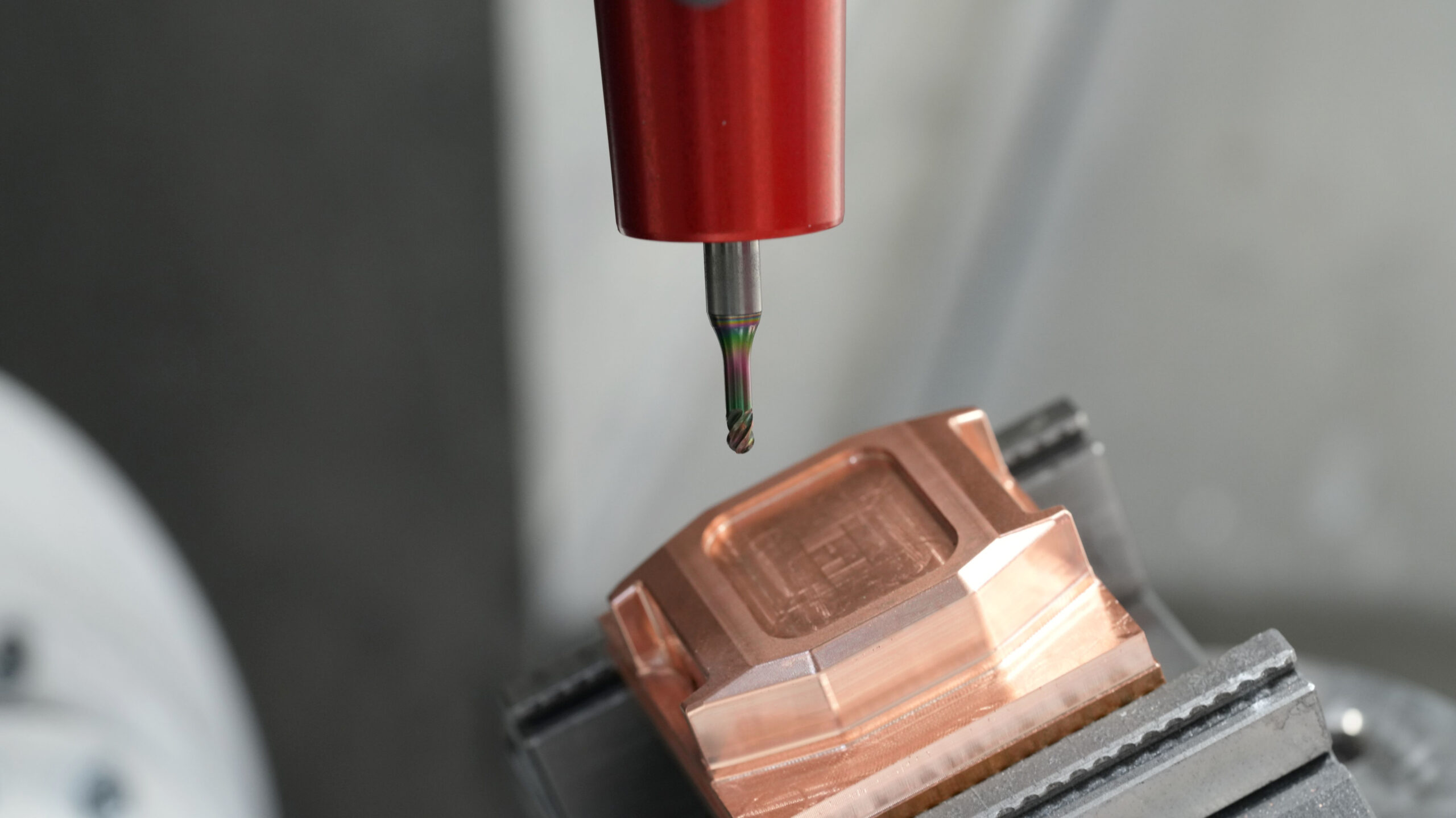
The speaker from Gustav Blome introduced the topic with a presentation on graphite as a specialized supplier for erosion needs. OPEN MIND presented the module and process for programming electrodes in the CAD/CAM system hyperMILL. Röders Tec, on whose machine milling was later performed, clarified machine technology and its significance for the economical production of precise electrodes. REGO-FIX focused on tool clamping and MHT on optimal cooling and lubrication.
Live Demo
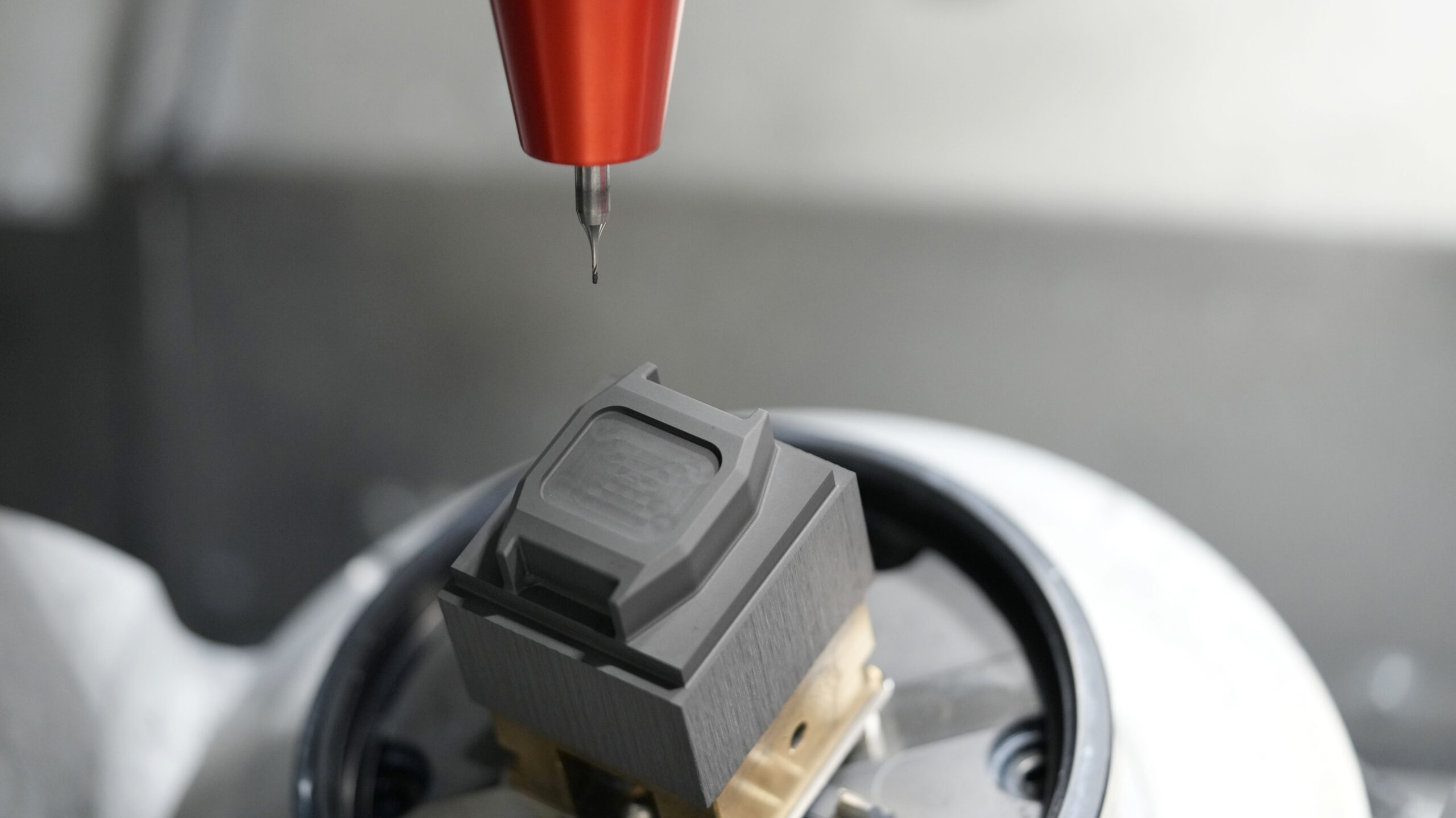
The demo part in the form of a wristwatch was milled once from graphite and once from copper on the Röders Tec RXP 501 DS. With the Graftor tools, feed rates of up to 8200 mm/min at 24,000 RPM were achieved. The copper milling also impressed with its speed. For example, during trochoidal roughing, material was removed at 11,150 mm/min at 9000 RPM.
The special tools for both graphite and copper are combined roughing/facing tools. Their special geometries, along with the selected milling paths, machine conditions, and chosen parameters, ensure extraordinary smooth operation. Participants were able to see that this enables excellent surface quality.
'Of course, we could not definitively clarify the discussion of whether copper or graphite is the better choice for electrodes. However, we were able to demonstrate that the economy of electrode production is increasingly less of a counterargument through highly efficient processes,' says Christel Hufschmied, Managing Director of Hufschmied Zerspanungssysteme GmbH. 'I think it has become clear that machining strategies, the selection of the right tools, and a highly precise machine technically and economically expand the possibilities of electrode production and thus also of sinker erosion.'
Contact: