
In the machining of non-ferrous materials, diamond coatings often provide the highest wear protection. However, their use on carbide saw tools has often been economically and technologically limited. These limitations have now been impressively overcome by a new generation of nanocrystalline diamond coatings from Oerlikon Balzers in collaboration with sawing technology expert Ott + Heugel: With BALDIA VARIA, the tool life of circular saw blades when cutting gold and brass alloys increased by seven to eight times, while process costs significantly decreased.
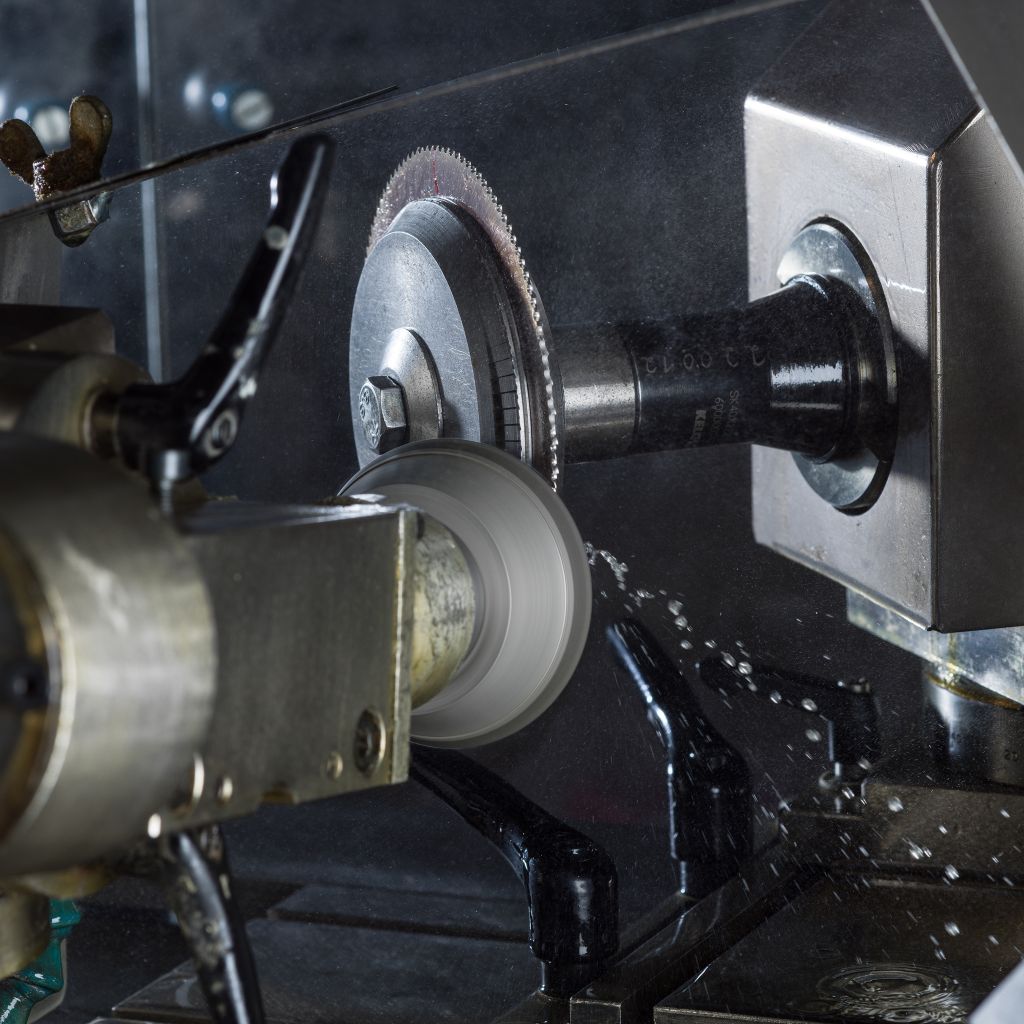
"We want to continuously develop technologically and therefore consistently strive for progress," said company owner Fabian Heugel, successfully demonstrating this motto of the Württemberg family business Ott + Heugel, which he leads in the fourth generation. One of his customers, a jewelry and watch manufacturer, cuts round bars and square materials from yellow, white, and rose gold as well as brass with carbide saws from Ott + Heugel. These non-ferrous metals are ductile and relatively soft. During machining, their tendency to stick and adhere quickly leads to built-up edges on the tool. One consequence is unwanted burr formation on the workpiece, which complicates further processing.
To counteract this in time, the customer regularly monitors the machine's power consumption as an indicator of increased force and beginning wear.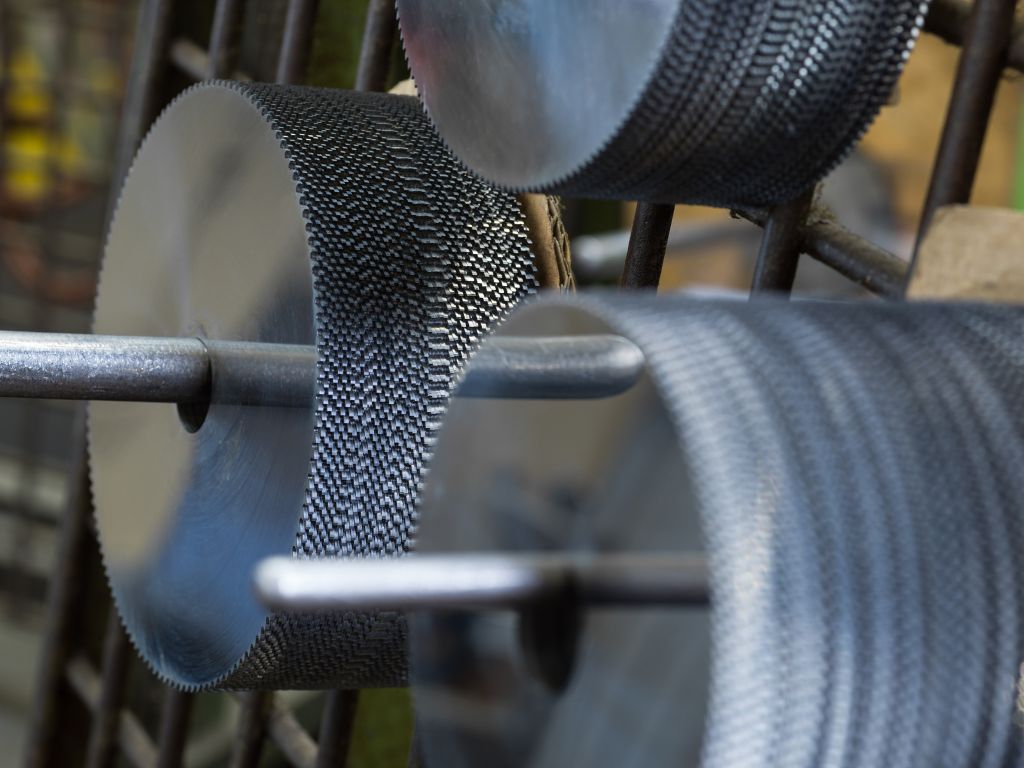
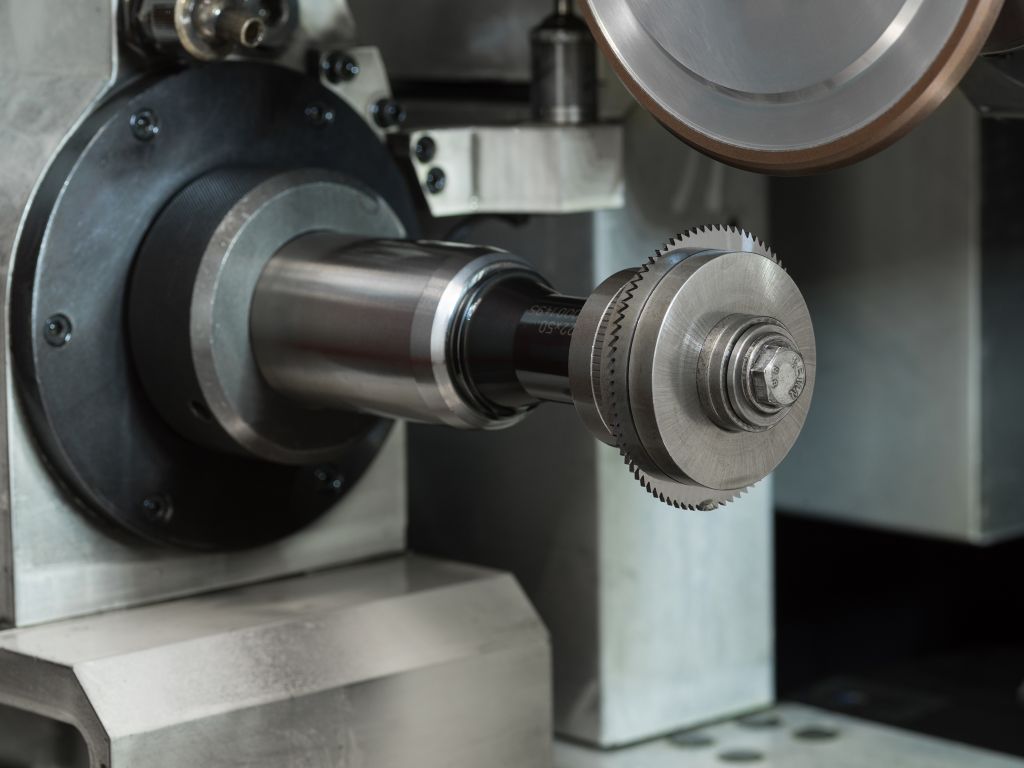
A trial switch from uncoated to AlTiN-coated carbide saw blades already doubled the tool life. However, Fabian Heugel remained persistent and, on the recommendation of Klaus Springer, customer advisor at long-time partner Oerlikon Balzers, introduced the new diamond coating BALDIA VARIA. "The coating was still an unexplored territory in sawing technology, but we decided together with the customer to start trials," said Heugel. This paid off: After ten weeks of use, no wear was visible, but a seven to eight times higher tool life, depending on the material processed.
The tool, with a diameter of 63 mm and special tooth geometry, is used in a three-shift operation on the same type of machine.
Narrower cutting widths improve material efficiency.
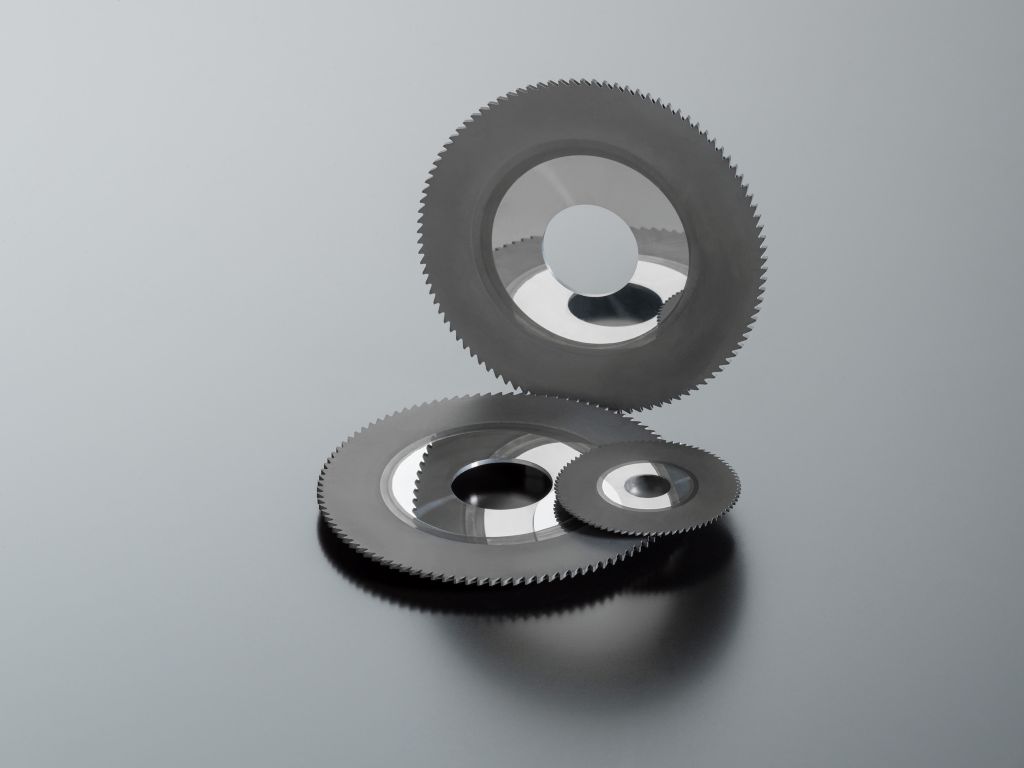
Thanks to the improved performance, the saw blade thickness could be reduced from 0.7 mm to 0.5 mm. This narrower cutting width now leads to significantly less material usage: The very satisfied customer, who is currently planning to use five of these tools, saves around 800 meters of precious noble or non-ferrous metals annually. Additionally, there are fewer tool changes, setup times, machine downtimes, and power consumption checks. Although tool reconditioning is no longer possible, the advantage of tool life compensates for this.
The special plasma-CVD technology (Chemical Vapor Deposition) for diamond coatings on the self-developed coating system INDIAMA from Oerlikon Balzers also creates advantages that set new standards: On the one hand, it enables a particularly uniform and economical diamond coating of large volumes. On the other hand, the system can accommodate shaft tools with a total length of 330 mm and a coating length of up to 150 mm or saw blades up to 200 mm in diameter. This allows for a price level comparable to high-quality PVD coatings. However, the greater benefit results from higher tool life, increased stability, less process effort, and thus reduced cutting costs per component. "Interested parties are welcome to conduct their own coating trials," said Klaus Springer.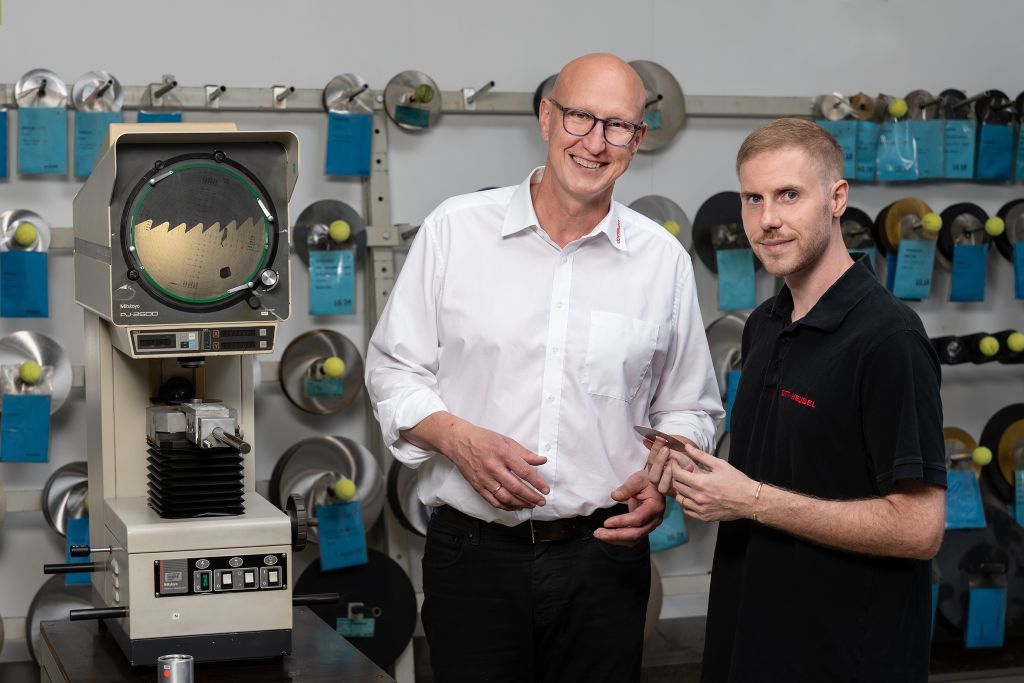
Follow-up project already in sight.
The nanocrystalline diamond layer BALDIA VARIA, deposited at over 800 degrees Celsius, has a hardness of up to 10,000 HV. In comparison, PVD coatings typically reach 3,000 to 4,500 HV. The diamond hardness ensures sharp cutting edges for burr-free cutting of non-ferrous metals over long periods and high abrasive resistance. The very smooth, low-friction layer also withstands adhesive wear and sticking.
"We could not find comparable and simultaneously economical solutions with other coaters," explains Fabian Heugel. The company owner already has a follow-up project in mind with Oerlikon Balzers: the use of saw blades and drills with BALDIA VARIA for processing lead-free brass in the electrical industry. For this purpose, he is conducting long-term tests with a mass manufacturer on rotary indexing machines, which primarily aim to address the costs per component. And thus, he remains true to his motto: Progress must be consistently advanced.
Contact: