
To convince a customer that long overhanging tools with the smaller HSK tool holder run stably on the system, machine builder bavius technologie conducted a test cut under real conditions. An important part of the test: the right tools. With a tool set for roughing and finishing from ISCAR, the test exceeded all expectations.
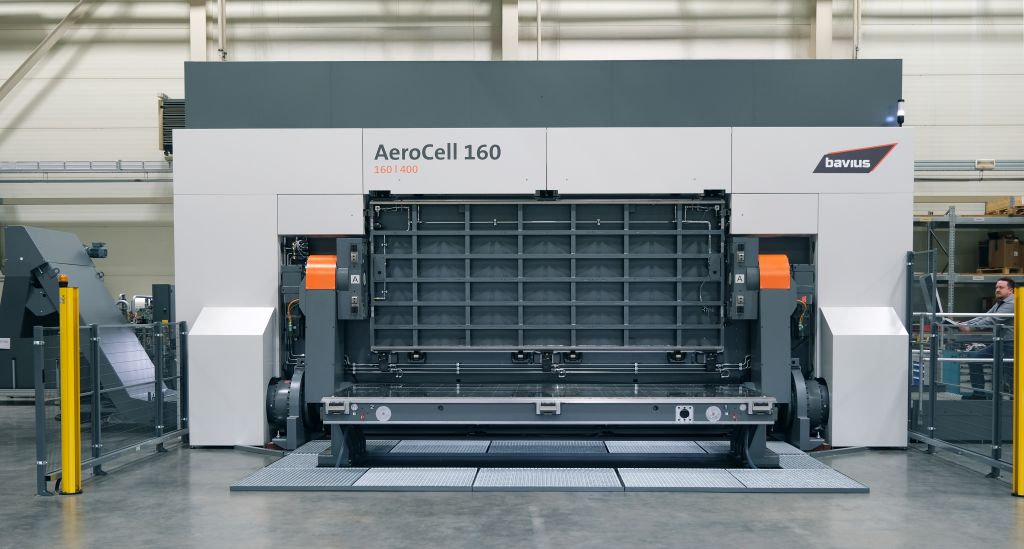
bavius technologie, based in Baienfurt in Upper Swabia, has been active since 2017 as an independent, family-run company with around 120 employees in the development and production of high-speed CNC systems for high-volume aluminum machining. bavius focuses on two product lines: Profile machining centers (PBZ) and horizontal machining centers (HBZ) with the AeroCell series.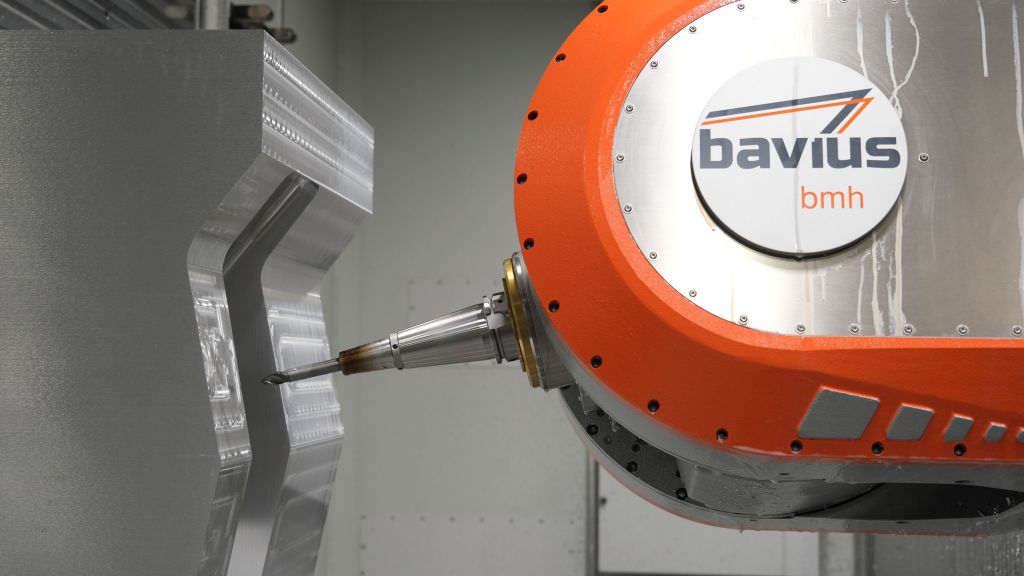
Dynamic system sought
An American company from the aerospace industry was looking for a system that offers high removal rates, dynamics, and availability while maintaining high processing quality to manufacture large structural components from aluminum, says Dominik Merz, Director Global Sales | Applications at bavius. 'A perfect task for our HBZ AeroCell 160 I 400.'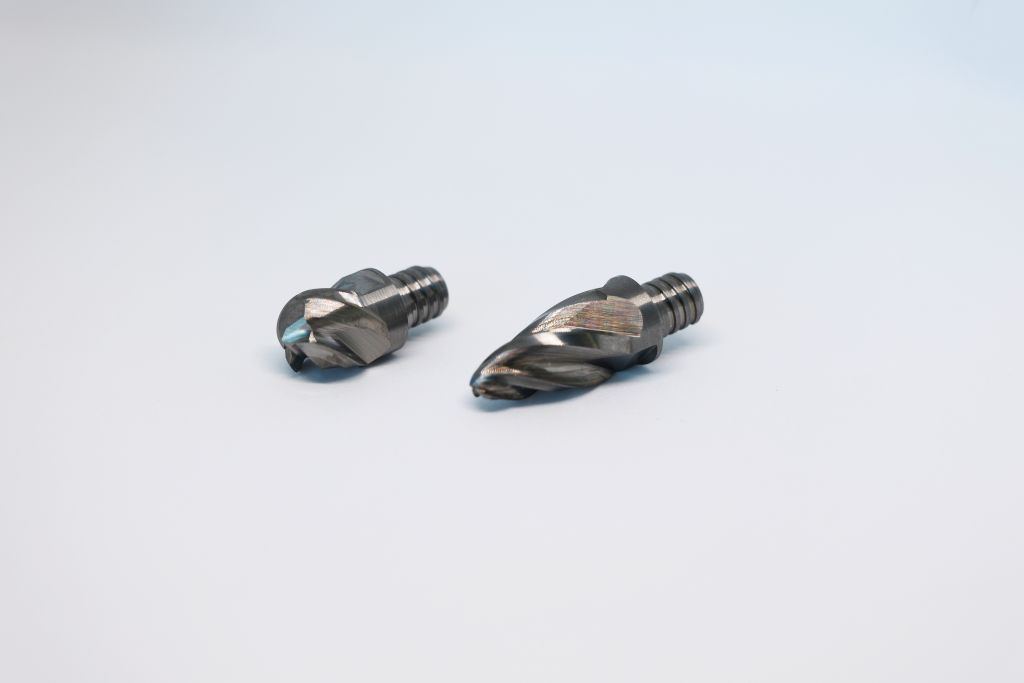
The system features a high-performance spindle that runs at up to 30,000 revolutions per minute and delivers a power of 140 kilowatts in continuous operation (operating mode S1). In operating mode S6, short-term powers of up to 175 kilowatts can be called up. 'Since the 140 kilowatts are already available at 19,000 revolutions per minute, high powers can be called up in the mid-speed range, which offers several advantages,' explains Dominik Merz.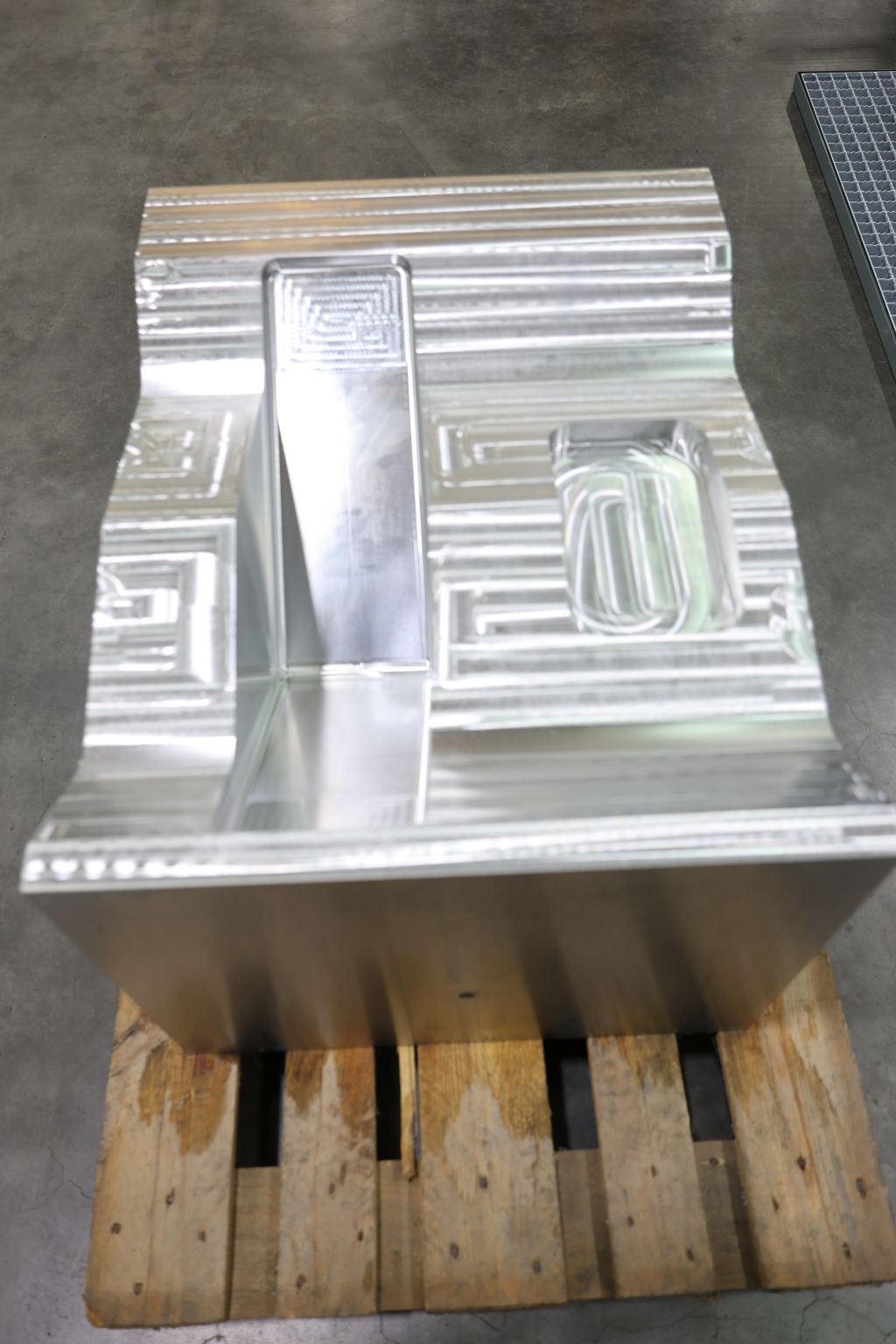
Only the standard tool holder HSK-A63/80 used by bavius caused concern for the US customer. For reasons of experience and stability, he preferred a larger size. However, this would have significantly restricted the available machining performance of the system. 'To be able to run at 30,000 revolutions, the AeroCell 160 is equipped with an HSK 63/80 tool holder, which, thanks to its larger planar surfaces, also provides the necessary stability for long overhangs,' explains Stefan Diem, application technician at bavius. 'With a 100 holder, only 20,000 revolutions per minute would have been possible. This was initially not an option for bavius and would have limited the advantages of the machine.' Dominik Merz adds: 'Especially since the often several hours of machining of such parts runs at 70 or 80 percent with short tools. It quickly becomes noticeable in production whether the user can utilize full speed and full power.'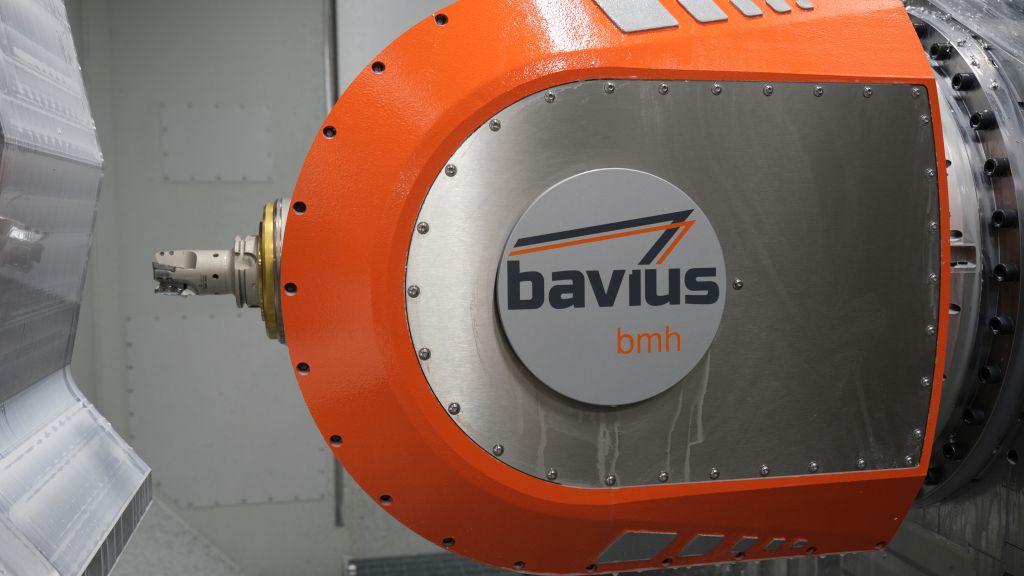
To demonstrate to the customer that the smaller holder also provides the necessary stability with long tools, the bavius team arranged a live test run under real conditions at bavius in Baienfurt. The plan: A V-shaped pocket measuring 170 × 626 millimeters and 260 millimeters deep should be machined into a block of aluminum forging alloy EN-AW 7012 (AlZn6Mg2Cu) measuring 600 × 780 × 500 millimeters, as typically found in structural components for aerospace.
Customized solution
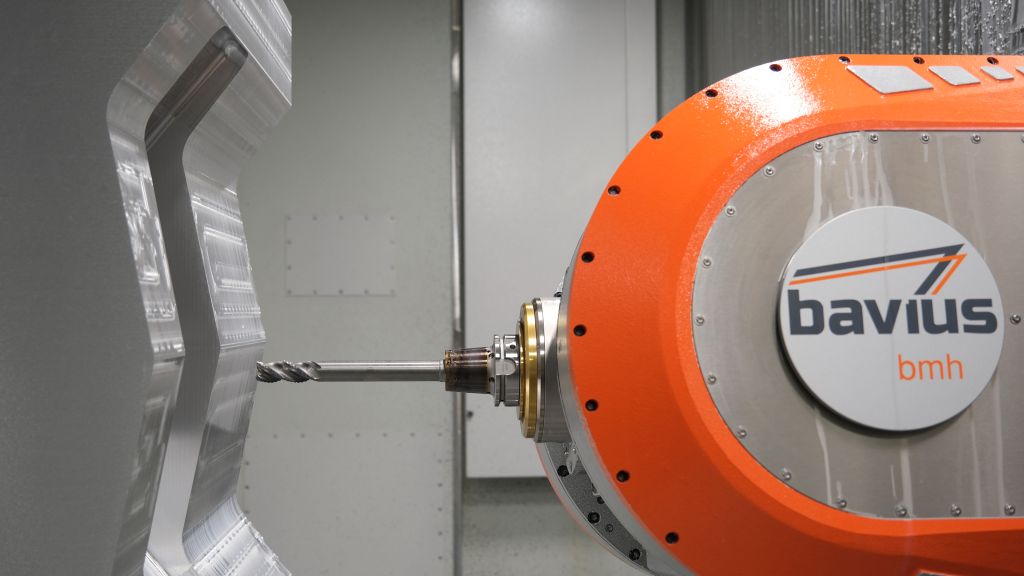
'We contacted our long-standing partner ISCAR to put together the optimal tool package for roughing and finishing,' explains Stefan Diem. Michele Piccolantonio, consulting and sales for equipment projects, Calogero La Quatra, product specialist Multi Master, solid carbide and PCD tools, and Anton Kress, product specialist milling, had the task described to them and together with the bavius team developed a set precisely tailored to the task and the material.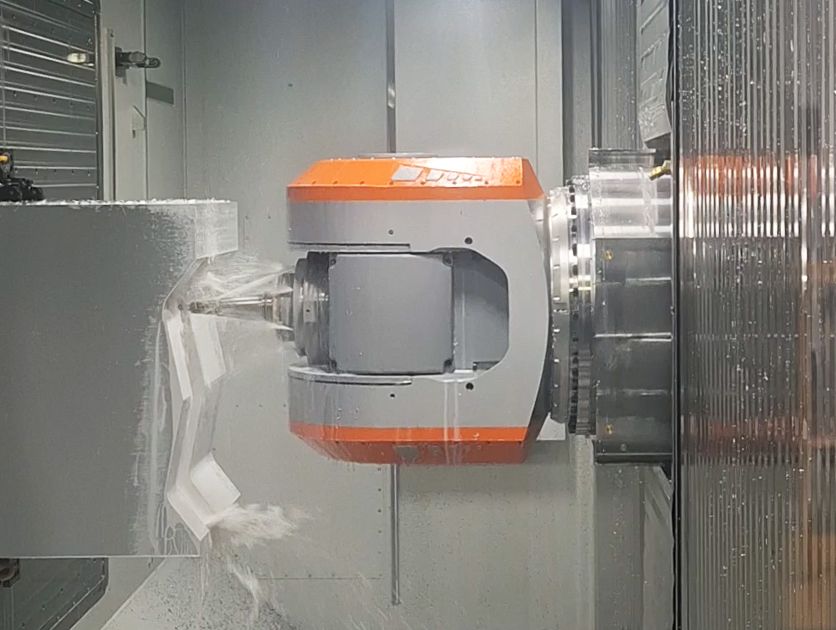
'Aluminum can generally be machined quickly and easily, but it still has its peculiarities,' says Anton Kress. Highly positive systems with very sharp polished cutting edges are needed here to prevent chips from sticking to the cutting edge and the surface, ensuring process reliability. This also results in lower cutting forces during machining. This brings enormous advantages when using long tools and significantly reduces deflection and vibrations.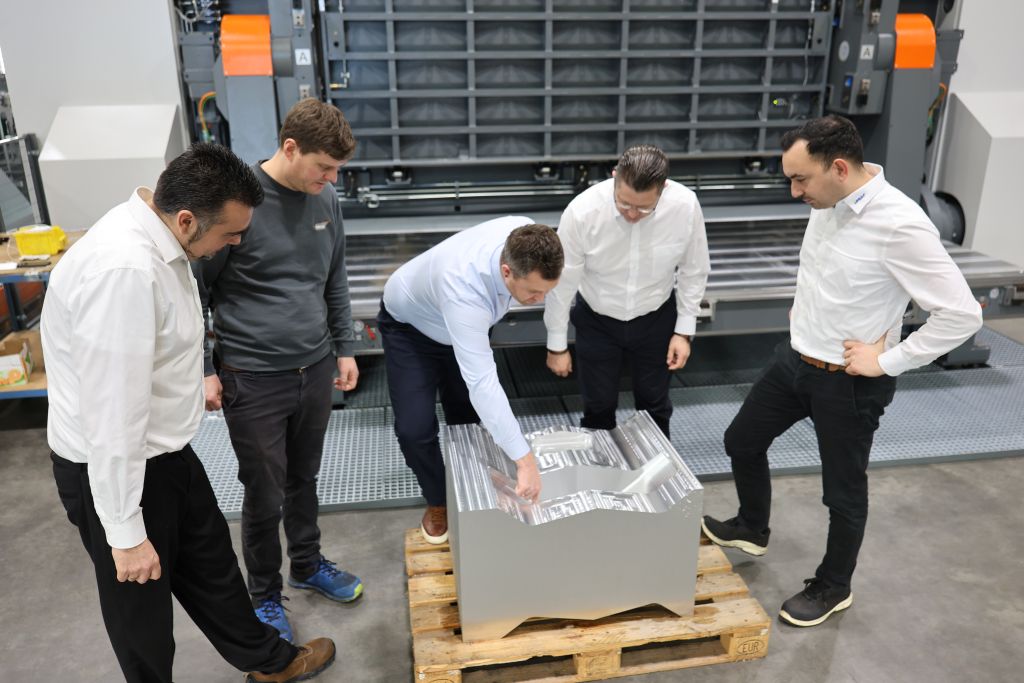
'Important selection criteria were therefore, among other things, that we use soft-cutting standard tools that support the high dynamics of the machine, allow high speeds, and run reliably to keep the system's availability high,' says Michele Piccolantonio. 'In roughing, very high removal rates should also be possible - keyword high-volume machining - and in finishing, top surface quality,' adds Anton Kress. In the end, a tool set with cutters from the HELIALU, MegaAlu, and MULTIMASTER families was created.
Quickly rough a lot of material
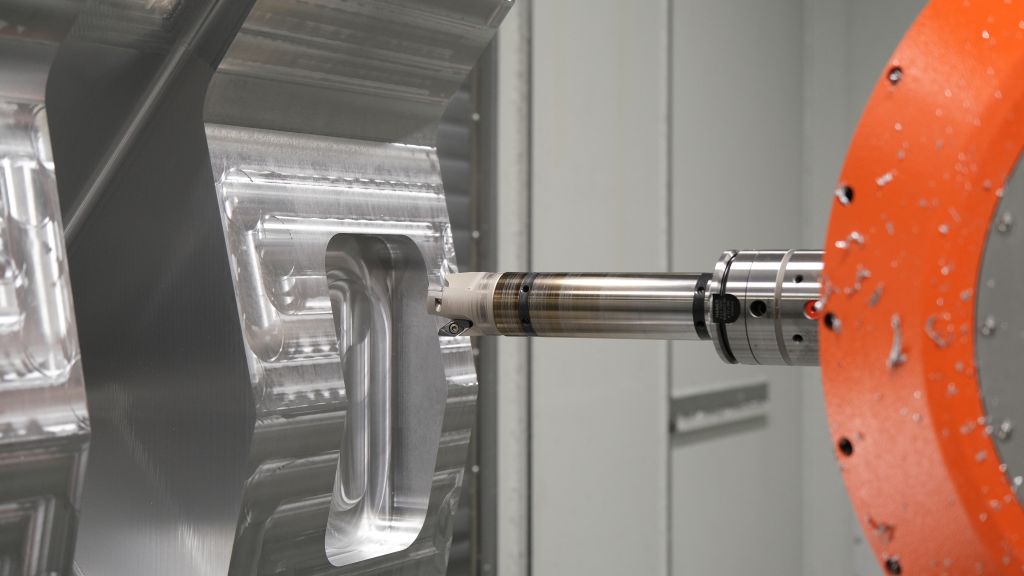
To remove large quantities of material in a short time, HELIALU cutters with targeted JHP cooling with a diameter of 50 millimeters were used. For roughing the surface contour and the first part of the pocket, the cutter was designed as a monoblock tool with a length of 110 millimeters, equipped with four indexable cutting inserts (WSP) with two helical cutting edges. The extensively ground, 22 millimeter long, sharp cutting edges with a highly positive chip angle and polished chip surfaces cut softly and ensure excellent chip flow.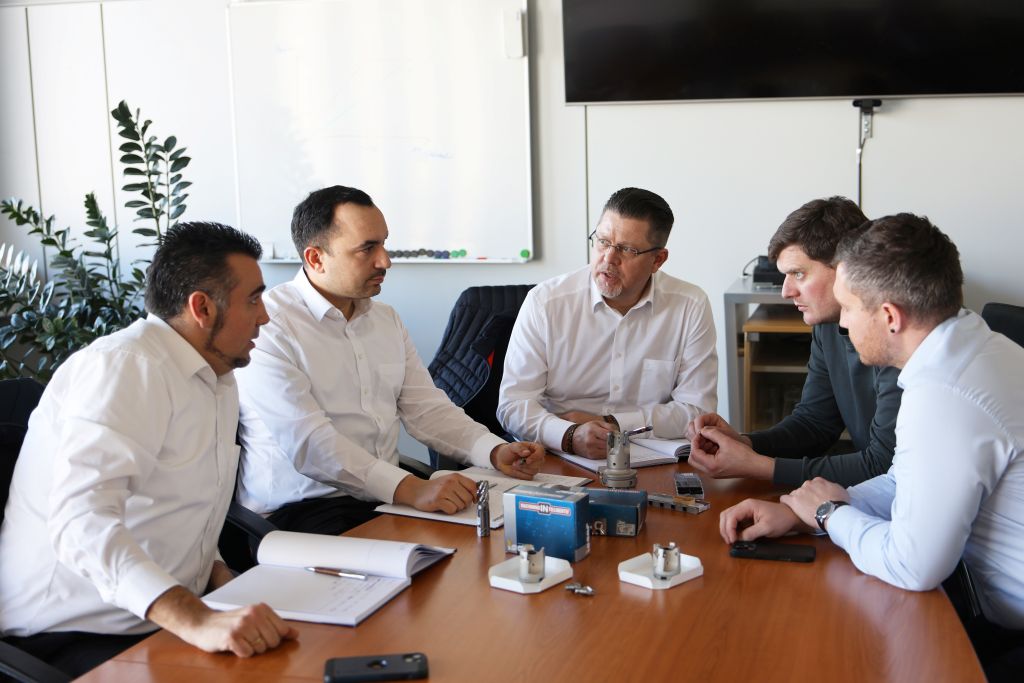
"With this, we were roughing at a spindle speed of 25,400 revolutions per minute and could pull up to 148 kilowatts at the spindle," says Stefan Diem. "With a feed rate of 25,400 millimeters per minute and a cutting depth of 16.5 millimeters, we were able to remove up to 14.5 liters of material per minute." The deeper areas of the pocket were equipped by bavius with HELIALU face mills in lengths of 157, 207, and 257 millimeters, reliably using 14 mm cutting inserts – with speeds of up to 28,000 revolutions per minute, a power of up to 65 kilowatts, and feeds of up to 16,500 millimeters per minute. "It was impressive how the machine rushed through the material," says Dominik Merz.
Using four three-flute MegaAlu solid carbide end mills with a diameter of 25 millimeters and lengths from 5xD to 8xD, bavius reduced the corner radii from R50 and R25 to R12.5 and rough milled the pocket to its final depth of 260 millimeters. "For this, we also use the only exceptions to the standard. The two end mills in 7xD and 8xD are special tools," says Calogero La Quatra. "A particular advantage of these three-flute aluminum specialists: They have an unequal pitch, and due to their special cutting geometry, the process is nearly vibration-free even with such long overhangs."
Top surface quality thanks to MULTIMASTER end mills
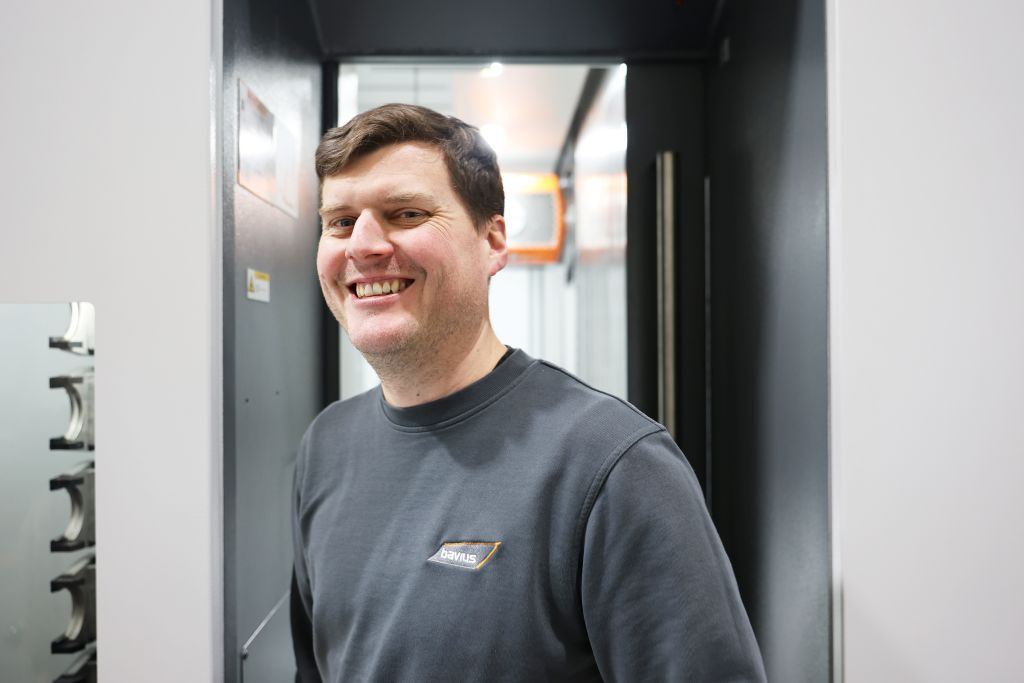
In the production of aerospace components, it's not just about quickly removing large amounts of material. Equally important is a high quality of the component surfaces. This makes finishing a crucial process. For the test, screw-on solid carbide ball nose and barrel end mills from ISCAR's MULTIMASTER family with tool lengths between 155 and 293 millimeters were used. With spindle speeds between 21,000 and 27,000 revolutions per minute, fine and ripple-free surfaces with roughness depths of 6.5 micrometers were created on the bottom and walls of the pocket within minutes.
For the finish of the pocket bottom, a three-flute EBA ball nose end mill with a diameter of 16 millimeters and an 8 mm radius was responsible. Mounted on the 200 holder, the tool measures 280 millimeters. To finish the larger sides of the pocket, bavius used the drop-shaped EOBA barrel end mill with a diameter of 16 millimeters, four cutting edges, and a 75 mm profile radius on the 200 holder. "This barrel end mill finishes up to nine times faster than a comparable ball nose end mill. This is because the radius serves as a mathematical factor, allowing the line jumps to be increased axially by a multiple," explains Calogero La Quatra. "And that at low speed and independently of cutting parameters."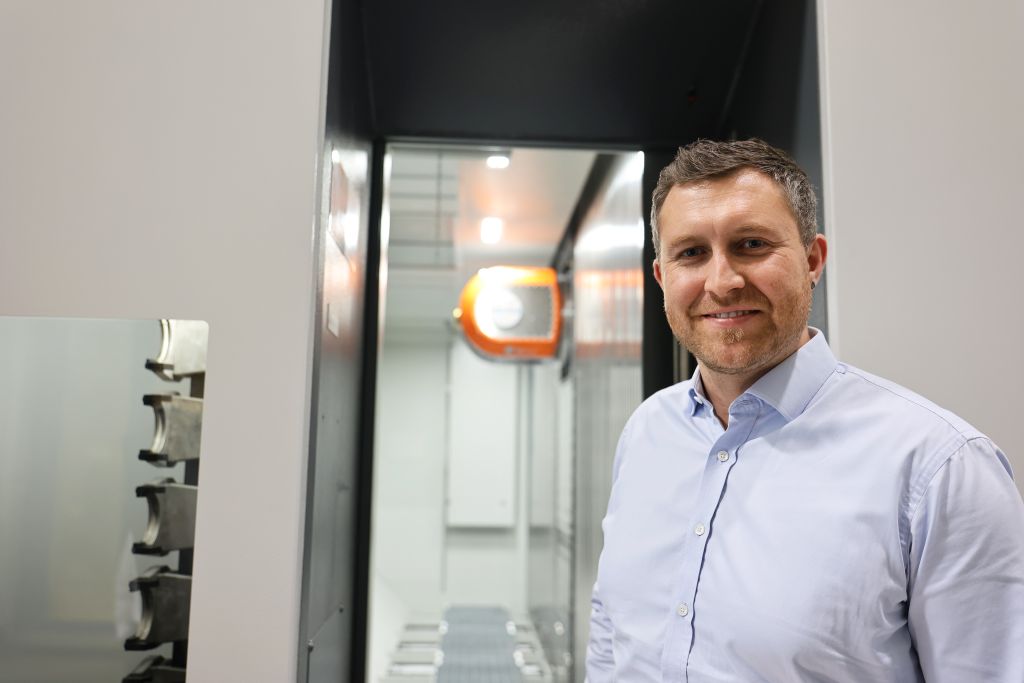
Test results exceed expectations
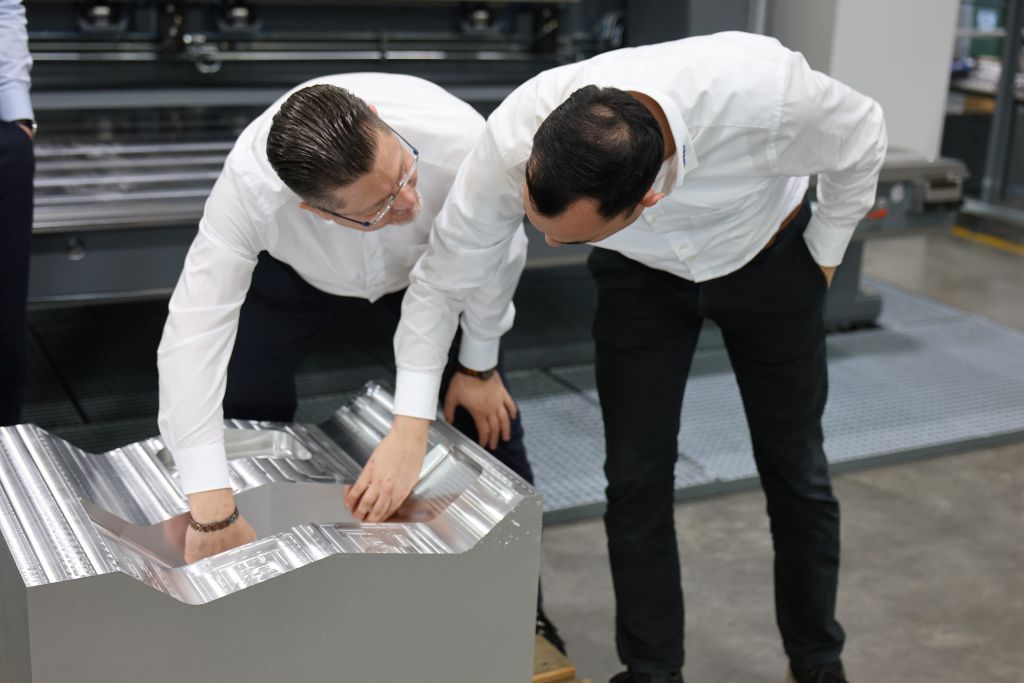
In just three hours, about 70 kilograms of material were removed, and the pocket was machined reliably and in the required quality into the block. "The combination of a dynamic, powerful machine and the right tool results in shorter processing times and significantly increases productivity," summarizes Stefan Diem the results. "And as predicted, the long overhanging tools with the 63/80 holder also ran absolutely stable and vibration-free."
With a 357 millimeter long HELIALU with a diameter of 50 millimeters, the machine builders pushed this stability test to the limit: In addition to the V-pocket, they machined another cavity reliably into the aluminum block with a feed rate of 8,100 millimeters per minute and a spindle speed of 18,000 revolutions per minute.
"The test run exceeded all expectations. The customer was completely convinced and so enthusiastic that he would have liked to take the machine home immediately," says Dominik Merz. "Through the interplay of our dynamic AeroCell and ISCAR's innovative tools, we were able to provide him with an efficient solution."
Contact: