
Just a few years ago, honing machines were primarily designed for maximum quantities. Today, smaller batch sizes, frequent variant changes, and shorter delivery times shape the manufacturing everyday life. Economic efficiency is no longer achieved solely through short processing times, but through the ability to manufacture different workpieces quickly, precisely, and with minimal setup effort. Flexibility thus becomes a decisive productivity factor. The Nagel Group provides four answers to the challenges of modern honing technology.
Four Technologies - One Common Goal
Whether flexible high-mix/low-volume production, quality from the first workpiece, precision over several meters, or surfaces in the nano and sub-micrometer range - the challenges of precision machining differ, but their solutions follow the same principle: higher flexibility, more process intelligence, and maximum productivity. With Nagel Technologies, Kadia, Gehring Technologies, and FLP Microfinishing, the Nagel Group demonstrates at AMB 2026 how these requirements can be met along the entire process chain - from flexible honing processes to highly productive series production and Deephone to AI-supported surface finishing. The focus is not on individual machines, but on future-proof manufacturing solutions for the precision machining of tomorrow.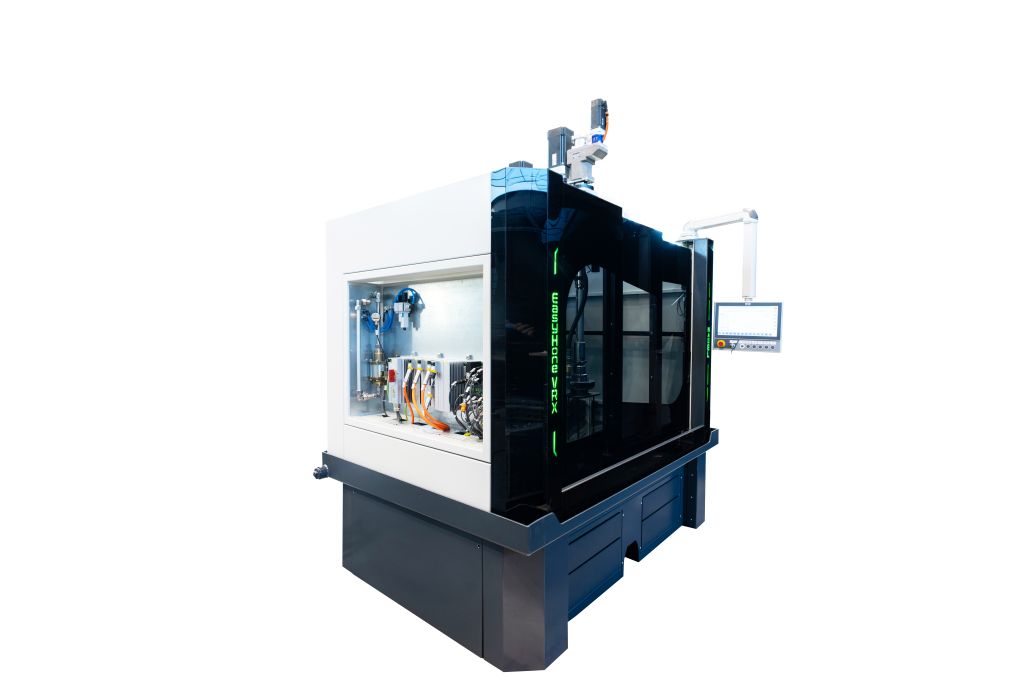
With the EasyHone VRX, Nagel Technologies has developed a flexible honing center specifically for these requirements. The modular machine concept allows particularly medium-sized manufacturing companies and contract manufacturers an economical entry into honing technology and grows as needed with additional axes, clamping, or measurement technology modules. Developed and manufactured in Germany, the machine combines proven Nagel quality with high investment security. The EasyHone VRX is also structurally designed for flexibility.
An X-axis of up to 1,200 millimeters, a generous T-slot table, and a variable clamping concept enable the processing of a wide variety of workpieces without elaborate conversions. Multiple fixtures can be prepared in parallel, reducing downtime and increasing productivity even before the actual honing process.
However, mechanical flexibility alone is not enough. With the digital HonAssistant, the EasyHone VRX supports the operator in program creation and process management. An optional pneumatic air measuring device monitors the bore diameter directly during processing, eliminating the need for manual intermediate measurements, reducing measurement errors, and increasing process reliability, especially with tight tolerances. At the same time, experiential knowledge is digitized and made available independently of the individual operator - an important advantage in light of the increasing shortage of skilled workers. The EasyHone VRX is aimed at applications with frequently changing workpieces - from bushings and compressor components to engine blocks. Its greatest advantage lies not in maximum quantities but in the ability to economically combine reproducible precision, short setup times, and intuitive operation. This combination increasingly determines competitiveness, especially in high-mix/low-volume productions.
However, flexibility only creates an economic advantage if the required quality is achieved from the first workpiece after each product change. This is exactly where KADIA comes in with the third generation of the U line.
Productivity Begins with the First Workpiece
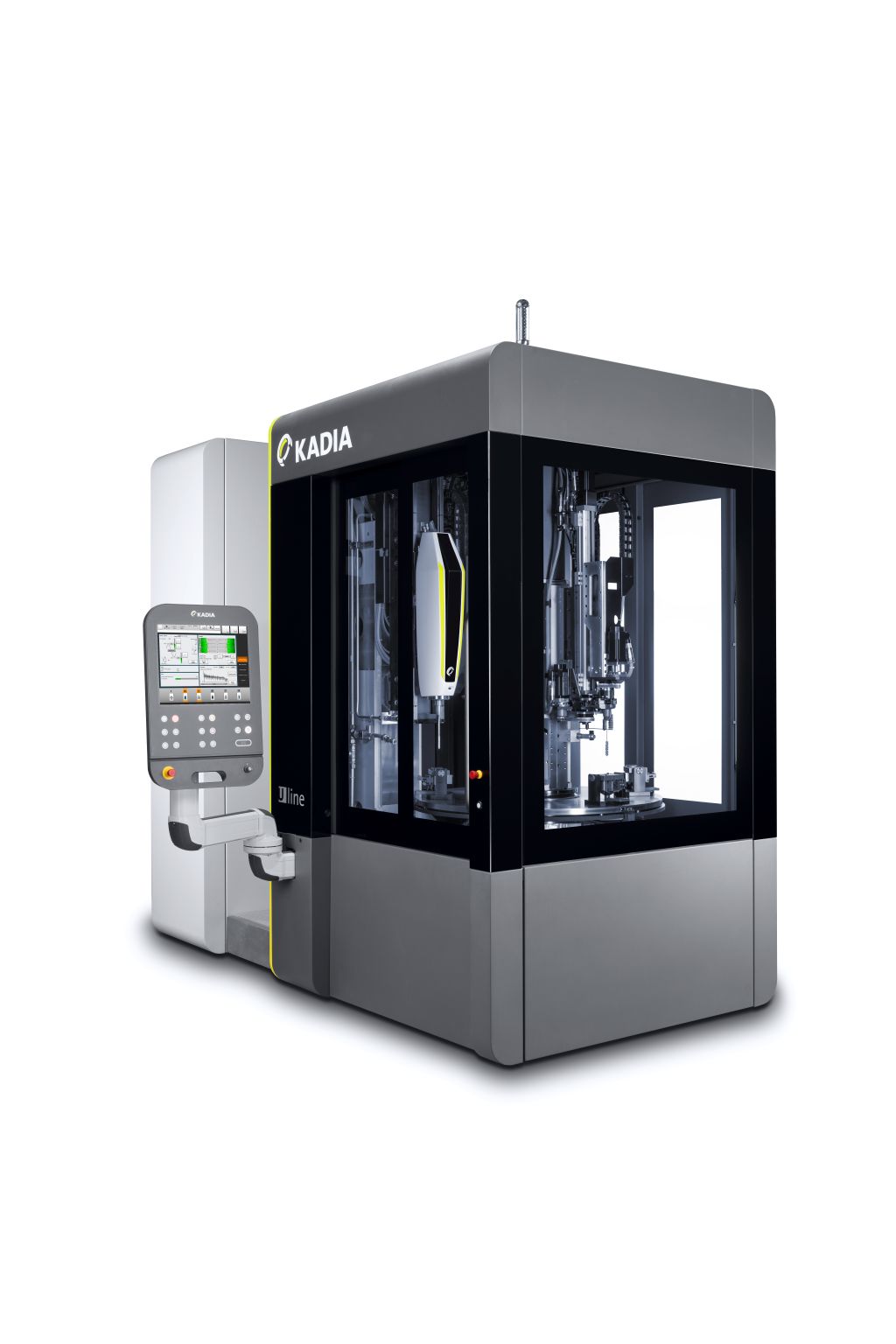
With smaller batch sizes, increasing variety, and shorter product life cycles, high productivity alone is no longer sufficient. It is crucial to produce immediately within tolerance after each workpiece change without long ramp-up processes or optimization loops. Industries such as hydraulics, aerospace, defense, medical technology, and pharmaceuticals today demand the highest precision, short setup times, and economical high-mix/low-volume productions. For these requirements, KADIA has developed the third generation of the U line. A 30 percent larger rotary table, 60 percent more working area, and optimized accessibility shorten tool and workpiece changes and create ideal conditions for flexible automation of handling systems for small batch sizes up to unmanned production cells. Productivity and flexibility thus become a unit.
A key feature of the U line is its software-centered development approach.
The new HMC100 control continuously monitors the machining process, combines several machining strategies within a honing cycle, and enables, together with the new LH2x honing spindle with three direct drives, higher dynamics, greater cutting performance, and an expanded application range. Integrated form honing reproducibly generates defined bore geometries, while higher machine availability, simplified maintenance, and intelligent process management significantly reduce dependence on the experiential knowledge of individual operators. The economic benefit is demonstrated by an automated production cell from practice: different precision components are manufactured with cycle times of under ten seconds, while setup times are reduced by about 20 percent. At the same time, process capability, machine availability, and overall equipment effectiveness (OEE) increase, scrap and start-up parts decrease, and the required quality is achieved from the first workpiece. This reduces piece costs, increases investment security, and creates the flexibility to integrate future workpieces and applications without elaborate adjustments.
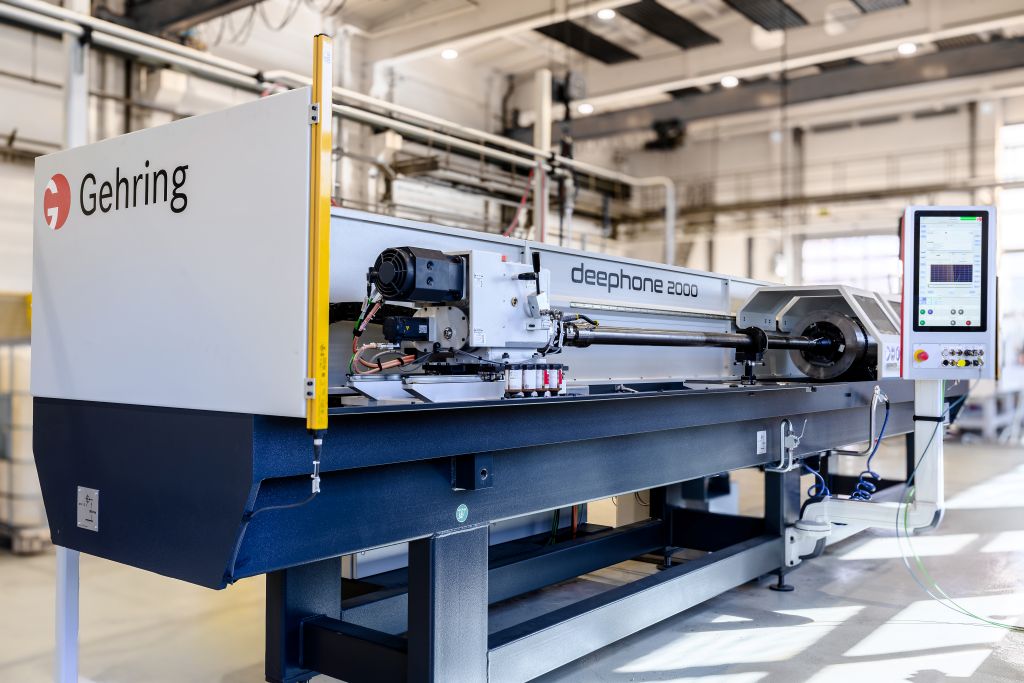
However, even perfect process management encounters physical limits when workpieces are not a few centimeters but several meters long. Then, the ability to ensure reproducible precision over the entire component length becomes decisive - this is exactly where Gehring Technologies comes in with its modular Deephone system.
When Precision Becomes Several Meters Long
As component length increases, the requirements for honing technology rise significantly. Long hydraulic cylinders, shafts, or pipe components not only demand the highest dimensional accuracy but also reproducible precision over several meters. At the same time, customers expect shorter project lead times, economical machine concepts, and quick adaptation to different applications. With the modular Deephone system, Gehring Technologies has developed a new machine platform for this purpose. Instead of individual special machines, the concept is based on standardized modules, allowing Deephone to be quickly and economically configured for workpiece lengths from 2 to 10 meters. This shortens project planning and quotation preparation, reduces engineering effort, and simultaneously creates the flexibility for customized solutions.
The modular system is complemented by various gearbox variants, the new control generation GCU 3.x, and a coordinated tool and grinding technology from the corporate group. Machine, tool, and process are thus developed as an integrated overall system that ensures the highest precision, process reliability, and cost-effectiveness over the entire component lengths. The application areas range from hydraulic cylinders to long shafts and demanding pipe components for industry, energy, and plant engineering. Especially in these markets, where individual requirements and short delivery times increasingly determine competitiveness, the Deephone modular system combines technical flexibility with a significantly faster implementation of customer-specific solutions.
However, even precision over several meters does not mark the end of technological development. In semiconductor manufacturing, optics, or medical technology, the requirements shift again – there, surface qualities in the nano and sub-micrometer range are decisive. FLP Microfinishing has specialized precisely at this manufacturing level.
When artificial intelligence enables nano-accuracy
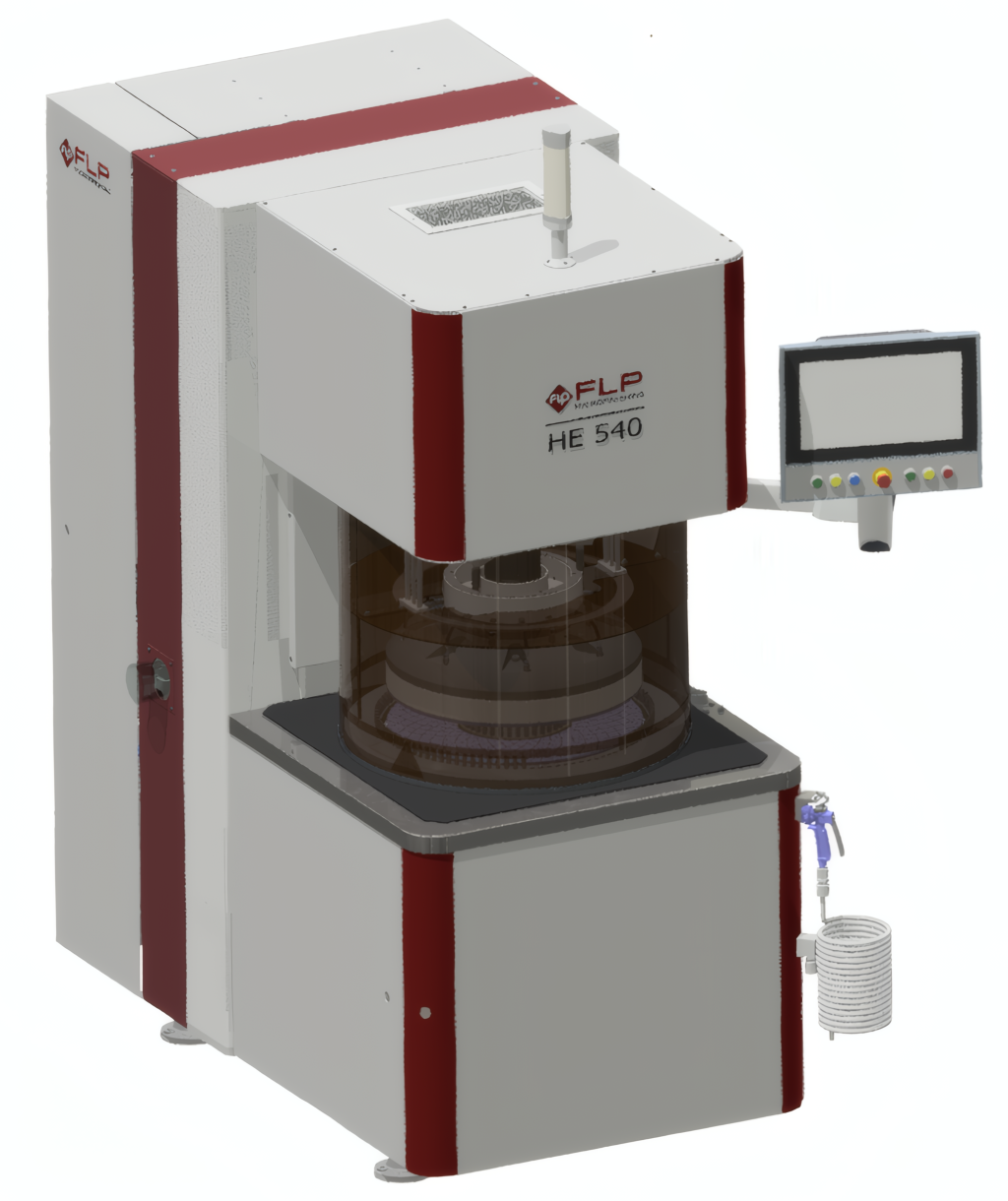
Surface finishing is undergoing a similar transformation as honing technology: While accuracies in the micrometer range were previously considered the standard, many applications today require tolerances in the nano and sub-nanometer range. At the same time, a shortage of skilled workers and rising cost pressures make the economic operation of high-precision manufacturing processes more difficult. Therefore, machines that combine the highest precision, intelligent process control, and energy efficiency are in demand. With the HE series, FLP Microfinishing offers a modular machine platform for double-sided fine grinding, lapping, and polishing that is designed for these requirements. The stable and compact construction can be adapted to various machining tasks through standardized modules or customer-specific extensions, thus creating high flexibility and long-term investment security.
The HE 540 was specifically developed for geometrically demanding and thin-walled workpieces. It processes, among other things, glass wafers, sapphire, and components made of hard metal or ceramic with high process stability and reproducible dimensional accuracy. Despite its extraordinary rigidity, it operates with the sensitivity required for these applications and remains so compact that it can be transported through any standard industrial door. A central element is the intelligent interaction of mechanics, control, and software. The planar processing system developed by FLP precisely controls the tool paths and achieves flatness and
planar parallelism of 0.1 to 0.01 micrometers. With corresponding AI modules, the machine continuously analyzes the machining process, supports the operator with optimization recommendations, and increasingly takes over tasks of process and cost optimization. Experience knowledge is thus digitized and made available independently of individual specialists. The potential of intelligent process control is demonstrated by an already realized Industry 4.0 manufacturing cell within the Nagel Group: Several connected machines exceeded the originally required performance metrics by more than 50 percent. For users, this means higher process stability, constant removal performance, reproducible precision, and significantly increased cost-effectiveness. The HE series exemplifies the transformation of surface finishing – from the high-precision individual machine to the intelligent production platform.
The Nagel Group at AMB 2026 in Stuttgart in Hall 5 Stand 5C30.
Contact: