
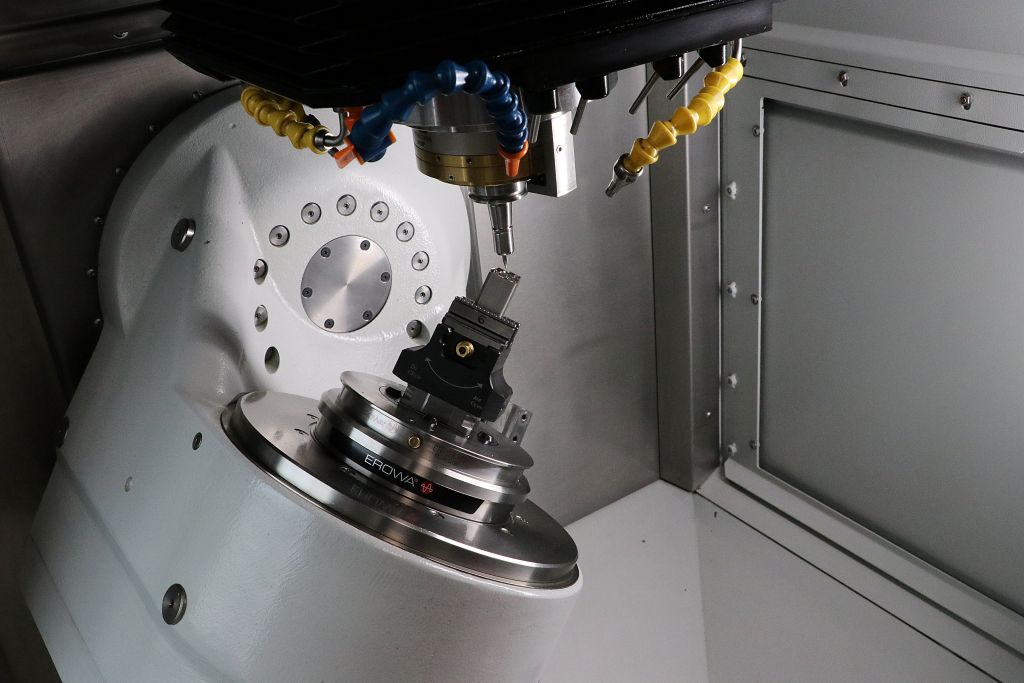
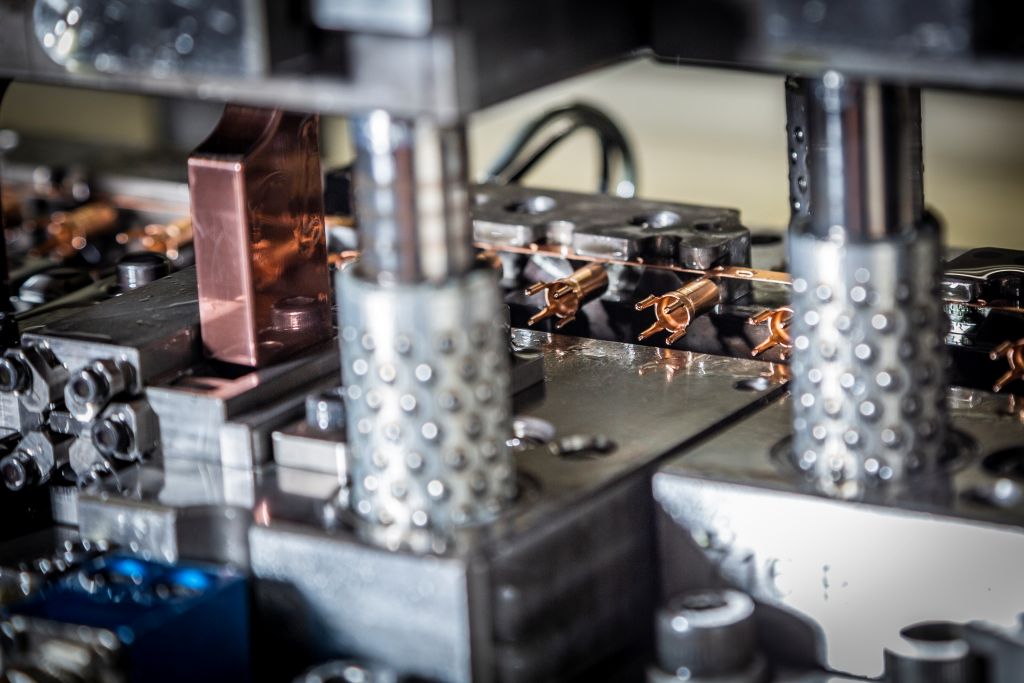
The toolmaking of Quittenbaum GmbH forms the crucial basis for billions of highly precise stamping and stamping bending parts. A Kern Micro HD has been at the center of operations for six years, which has had an additional grinding function for three years. The employees responsible for the machine, Simon Schoner and Stefan Dufter, are enthusiastic: 'Kern sets a benchmark in terms of technology and collaboration for our partners.'
Located near the Bavarian Königssee and surrounded by impressive mountains like the Watzmann, Quittenbaum GmbH presents itself in its most beautiful light under radiant sunshine. Even upon entering the entrance hall of the precision stamping company in Schönau a. K., the pleasant feeling remains, as the employees convey a completely satisfied working atmosphere.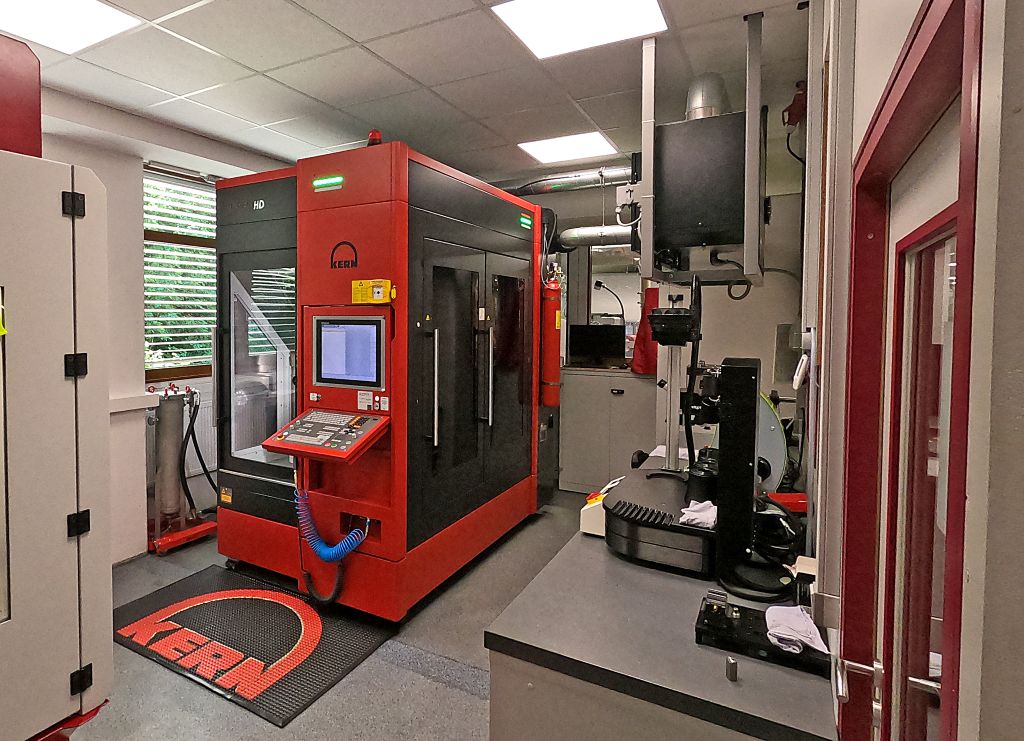
Industrial master Simon Schoner, group leader of CNC milling in toolmaking, particularly appreciates the positive working atmosphere and names an important reason for it: 'Both our owner and our managing director live what they preach. They stand behind us employees and give us incredible freedom of decision. Accordingly, we can react quickly to customer requirements and also have a significant say in investments in new technologies and machines.'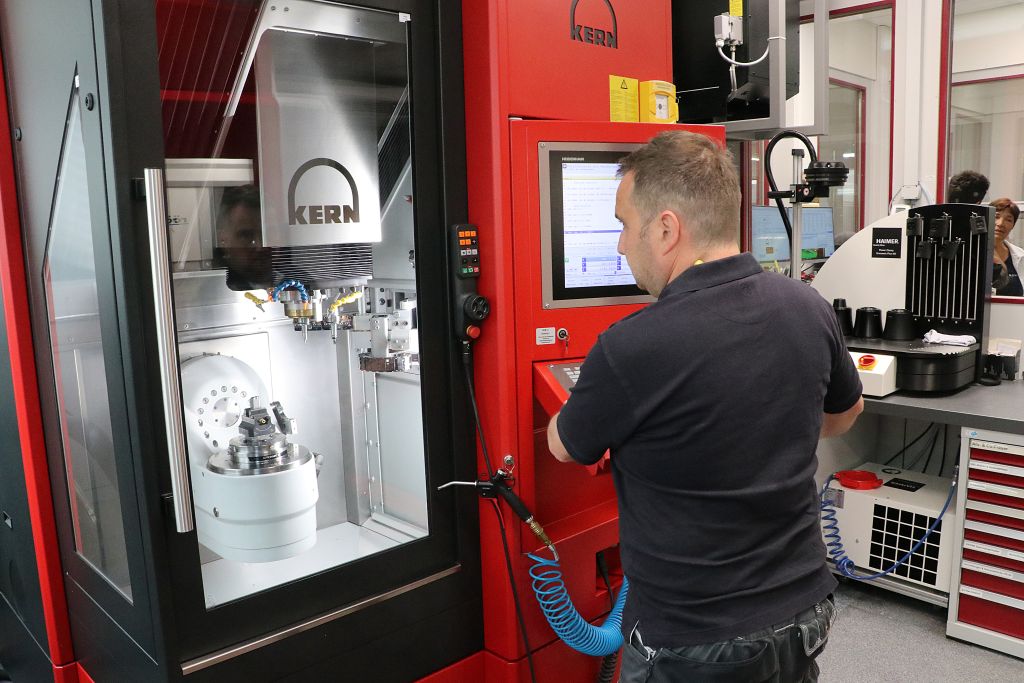
Quittenbaum's specialty is high-precision stamping and stamping bending parts such as micro-stamping parts, press fits, and shields, which currently go to the automotive industry about 70 percent of the time. Since the components are installed in the electronics regardless of the vehicle's drive concept, no one in Schönau has to worry about declines in this area. The signs are rather pointing to growth, as the positive characteristics of the company are also spreading in other innovative industries. Accordingly, inquiries from the aerospace, telecommunications, and other electronics sectors are continuously increasing.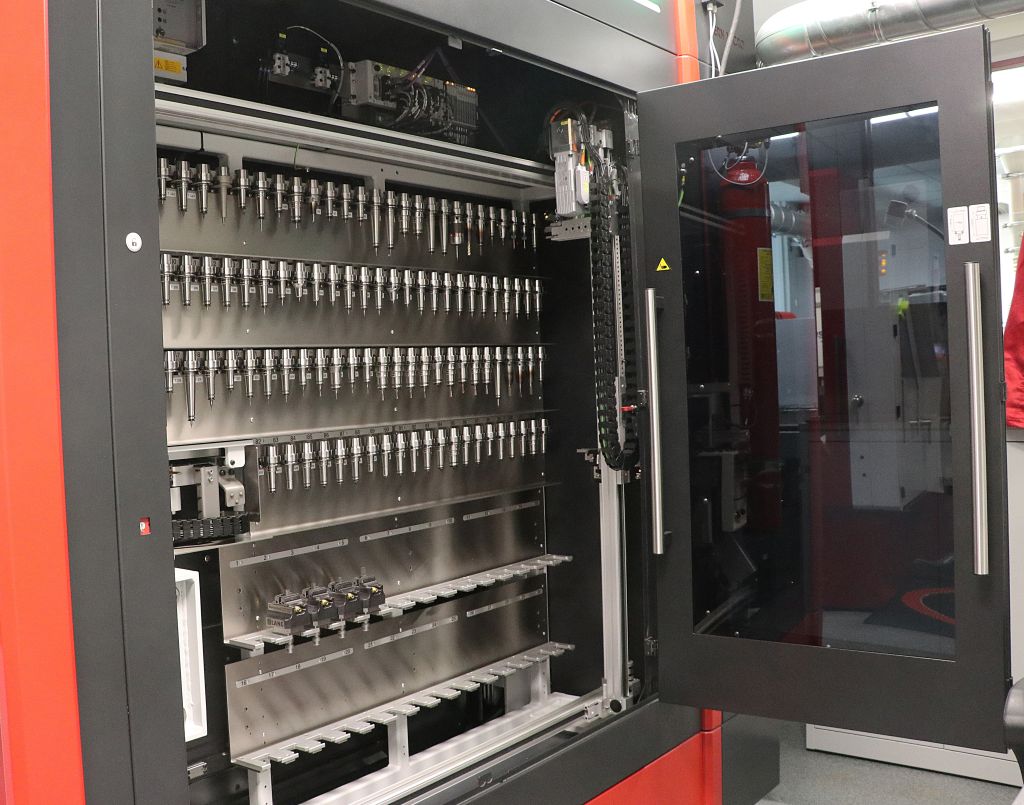
Uncompromisingly high-quality equipment
Crucial for the fast reaction times, great flexibility, and 100 percent quality, alongside motivated employees, is primarily the uncompromisingly high-quality technical equipment of the medium-sized company. This applies to component manufacturing as well as to the directly affiliated toolmaking, which exclusively produces for internal needs.
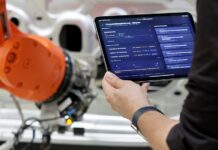
Since October 2020, the five-axis precision machining center Kern Micro HD has been producing various complex bending and stamping dies for progressive die tools. Simon Schoner still remembers well how it came to this: 'Our colleagues from production increasingly needed complex forming parts made of carbide with freeform surfaces and undercuts.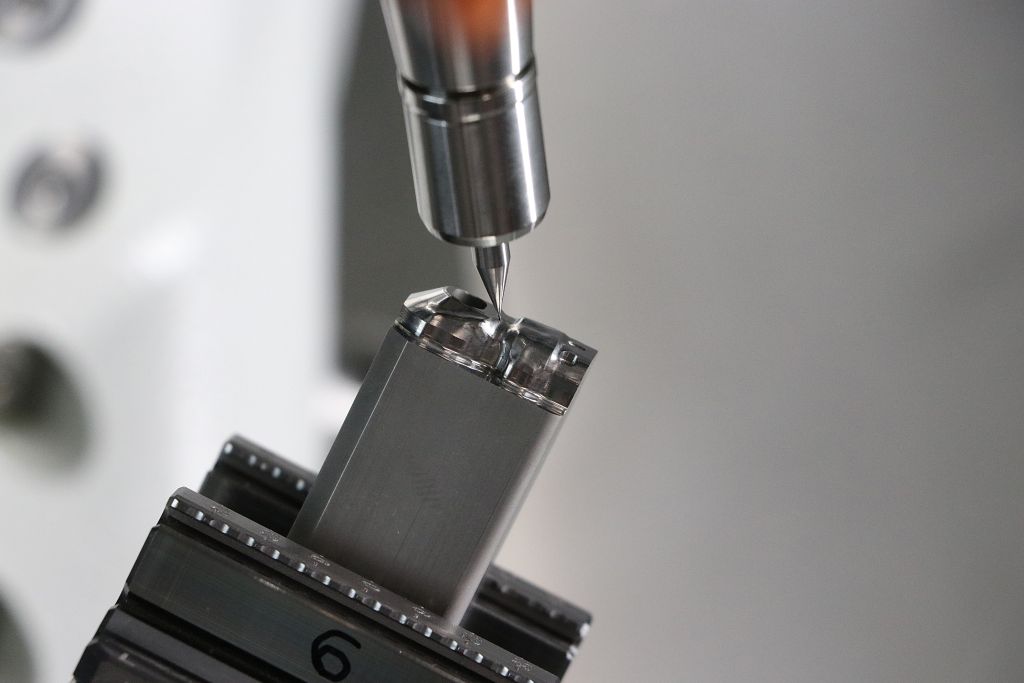
Of course, we could not mill these with our three-axis machines in a single setup. This, along with additional erosion, made the manufacturing process complicated. The productive solution was clear to me and Stefan Dufter quickly: A five-axis machining center was needed.'
Two convincing days at Kern in Eschenlohe
This began a selection process that the two trained toolmakers conducted independently. In the first step, they exchanged ideas with various machine tool manufacturers, and in the second, they brought the design data of a complex sample component that was to be manufactured on the respective machining centers. According to Simon Schoner, the process was similar in almost all cases: 'We were explained in about two hours how the program for simultaneous five-axis milling would look. Some time later, we then received the finished workpiece for inspection.'
Only at Kern Microtechnik did the process proceed quite differently, as Stefan Dufter confirms: 'We spent two days in Eschenlohe, where an application technician explained to us in detail what is important in programming such components and what the Kern Micro HD ultimately makes of it – with perfect surface and dimensional accuracy. We realized that not only the machine can do everything we wish, but also the human interaction fits. And we can fully endorse that even today – six years later.'
24/7 production thanks to tailored automation solution
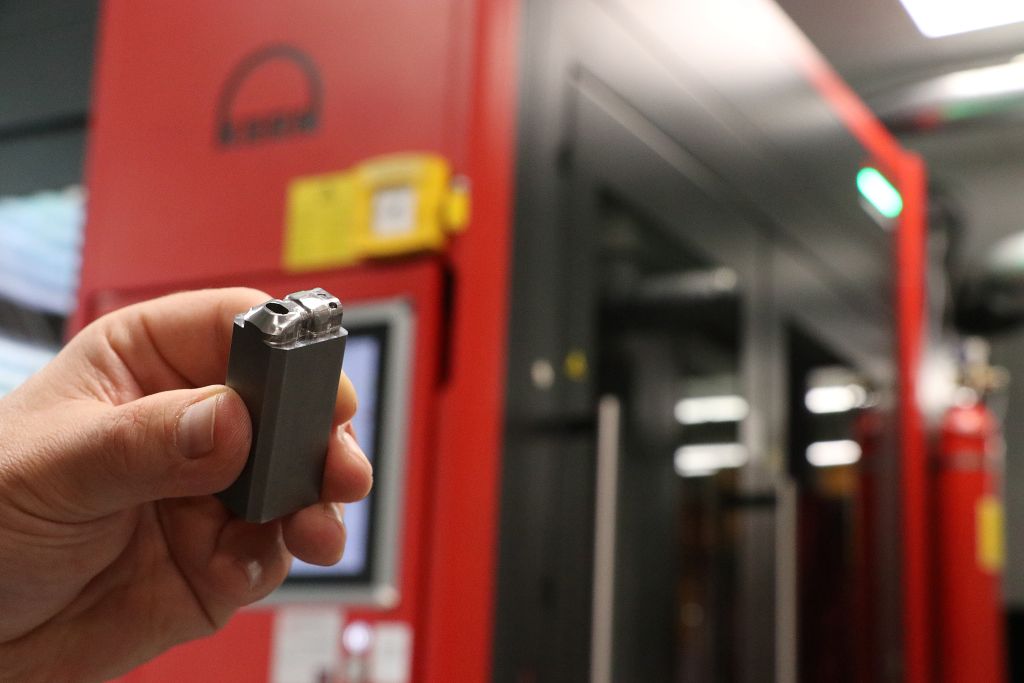
Since then, the Kern Micro HD has been running nearly around the clock, while the employees in Quittenbaum's toolmaking mainly work single-shift. This is made possible not least by a tailored automation solution that optimally utilizes the limited space available to the machining center. This means: The machine's integrated tool changer also functions as a workpiece changer. The associated compromise that instead of about 200 tools, only around 100 tools can fit is well justifiable for Stefan Dufter:
'Thanks to this solution, we can fit 30 workpieces. That helps us much more than the additional tool spaces.'
Dufter is also more than satisfied with the result quality of his Kern machining center: 'We reliably achieve a dimensional accuracy of 3 µm and consistently the same mirror surfaces with up to Ra = 0.05 µm. Previously, a qualified employee had to polish each workpiece by hand for half an hour. The results were very good, but the time expenditure was enormous and the surface was never exactly the same.'
One hundred percent carbide good part rate in half the time
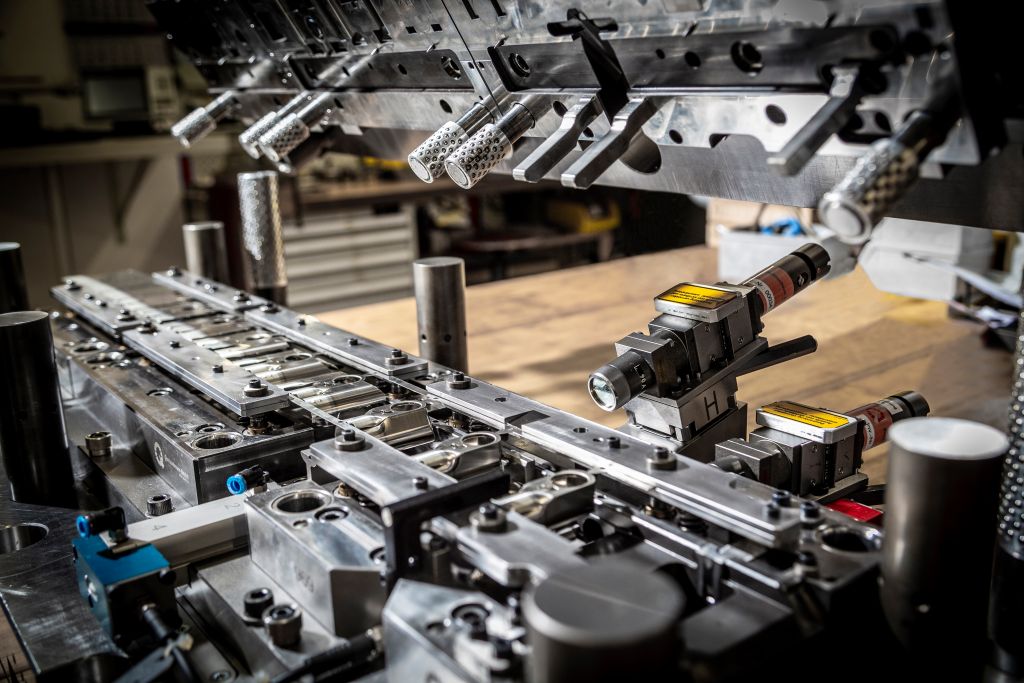
With the Kern Micro HD, a once-programmed component can be produced with repeat accuracy at any time. This is particularly important when individual form and stamping dies need to be reproduced for production months later. Since Quittenbaum's customers demand a guarantee for precise results, the toolmaking also does not compromise and subjects its components to a hundred percent inspection. Insight from toolmaker Dufter:
"Our Kern achieves a hundred percent carbide good part rate and doesn't even take half the time compared to our previous solution."
Such proven results with customers also please Kern's regional sales manager Barbara Bergmann. The engineer, however, is not surprised: "With the Kern Micro HD, we have a precision machining center in our portfolio that stands out from the market due to a few innovations. These include, for example, our unique temperature management and the patented micro-gap hydrostatics in all linear axes. In combination with linear motors, the extremely small gap provides particularly high stiffness and excellent damping properties of the machine, which ultimately reflects in the highest surface quality and accuracy of the workpiece."
Retrofitted: Affordable grinding pins replace expensive milling tools
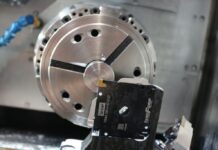
A particularly interesting special feature of the Kern Micro HD was retrofitted by Quittenbaum in 2023 – the grinding option. The reason for this was purely economic and was directly related to the steadily increasing demand for forming inserts & stamping dies made of carbide. The initial problem: Expensive milling tools are subject to high wear when roughing this material.
The solution: Cost-effective grinding pins handle the roughing tasks. Subsequently, it is only necessary to finish the crucial profiles and surfaces to polishing quality using five-axis machining strategies.
"I find it very impressive that we can work significantly more economically in this way and that it can be done in one machine and one setup," says industrial master Schoner, adding: "The complete retrofitting only took three days. That's great, isn't it?"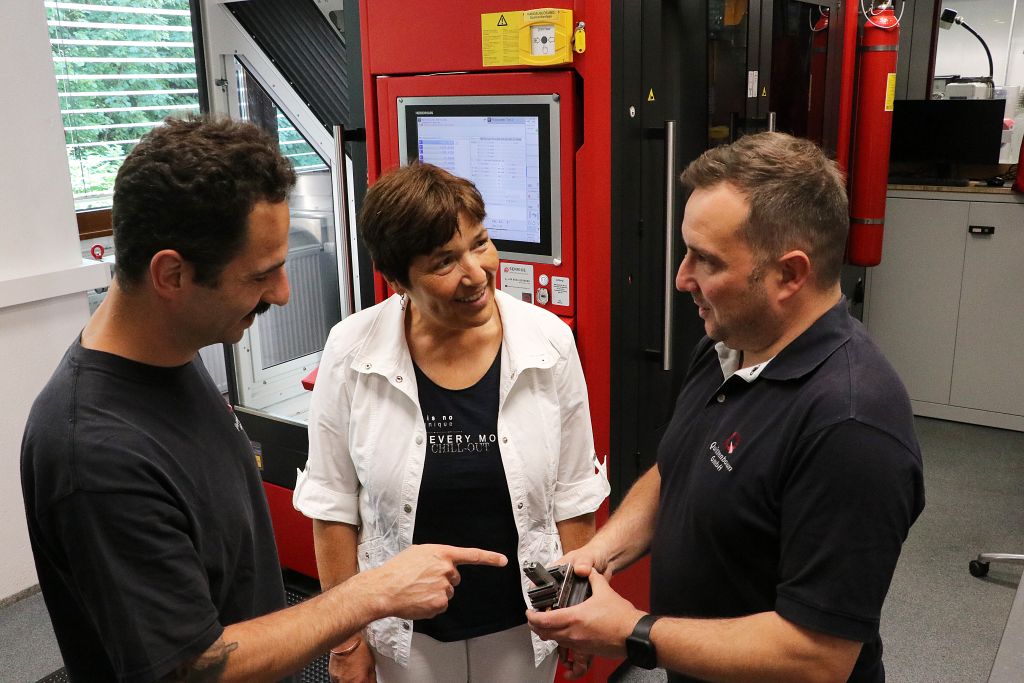
The ability to make such and other retrofits and conversions quickly and easily is, according to Barbara Bergmann, an important Kern strategy: "We know that markets and thus the parts spectrum of many of our customers are constantly changing. We will always meet this with developments and the adaptability of our machines."
Next innovation in sight: Laser system Kern Femto E3
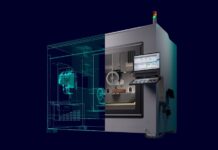
Quittenbaum's toolmaking also has innovative ideas beyond the technologies previously used. "We always explore the limits of what is possible, and since Kern thinks the same way, we regularly exchange ideas. During such a discussion round, we came across a machine with a completely different technology – the Kern Femto E3." It removes material not with a milling cutter, but with a wear-free laser. For some form tools, this is a perfect solution, explains the industrial master: "That's why we are currently having some products manufactured in this way on a contract basis."
Whether and when the purchase of a Kern laser system makes sense for Quittenbaum is still unclear. According to Simon Schoner and Stefan Dufter, it is definitely worth considering. And when the two toolmakers feel that the right time has come, they will certainly be supported by their management.
Contact:
www.kern-microtechnik.com