
The approach targets CNC manufacturers that produce medical components such as screws, dental implants,
Economically and reliably manufacturing instrument components or device parts.
need. Increasing variety of variants, cost pressure, and demand for skilled workers are increasing the
Pressure, small-scale process chains with multiple machines, manual retooling processes.
and high handling proportions to be reassessed. Production turning is thus evolving into a platform for compact, automatable, and qualifiable series processes.
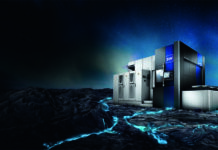
Production Turning as an Integrated Process Platform DMG MORI understands production turning as a portfolio of horizontal turning platforms for the productive complete machining of rotationally symmetrical and complex components. Depending on the application, machines with a main spindle, counter spindle, multiple tool holders, driven tools, Y-axis, and bar machining are used. Several machining steps can be parallelized, non-productive times reduced, and components can be processed in a largely continuous process from raw material to the finished workpiece.
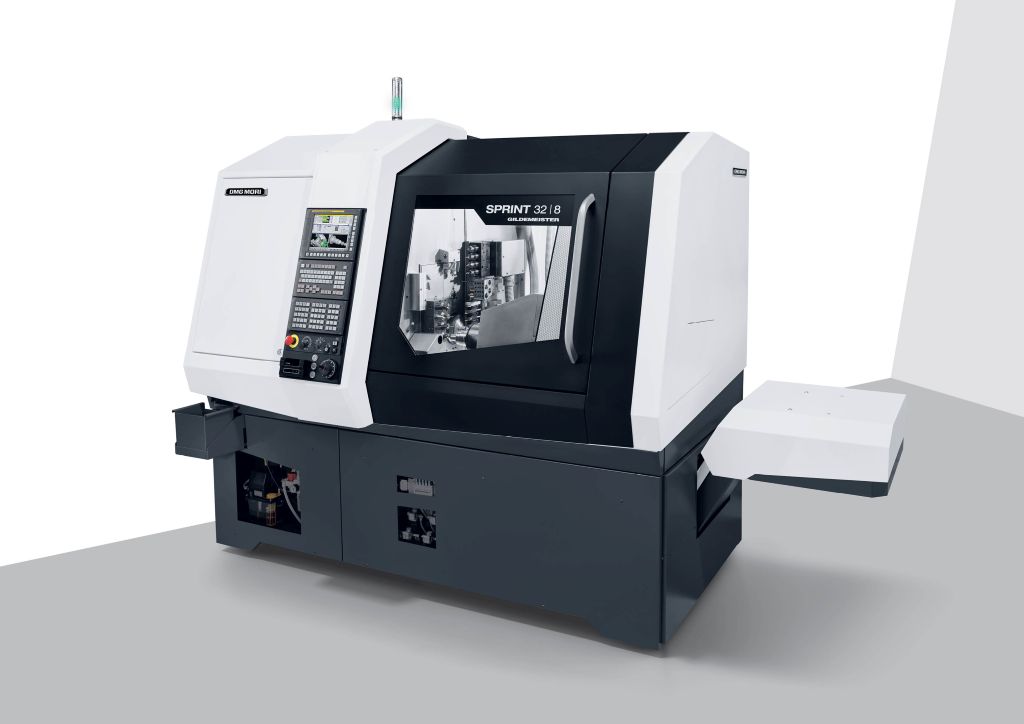
For applications in the medical field, DMG MORI combines this machine architecture with industry-specific process design. This includes SPRINT long-turning machines and compact production lathes for bar-based small parts such as screws and dental implants, as well as MULTISPRINT concepts for high productivity.
Variant manufacturing, NZ and NZX platforms for more complex instrument components as well as turning-milling solutions for precise device components.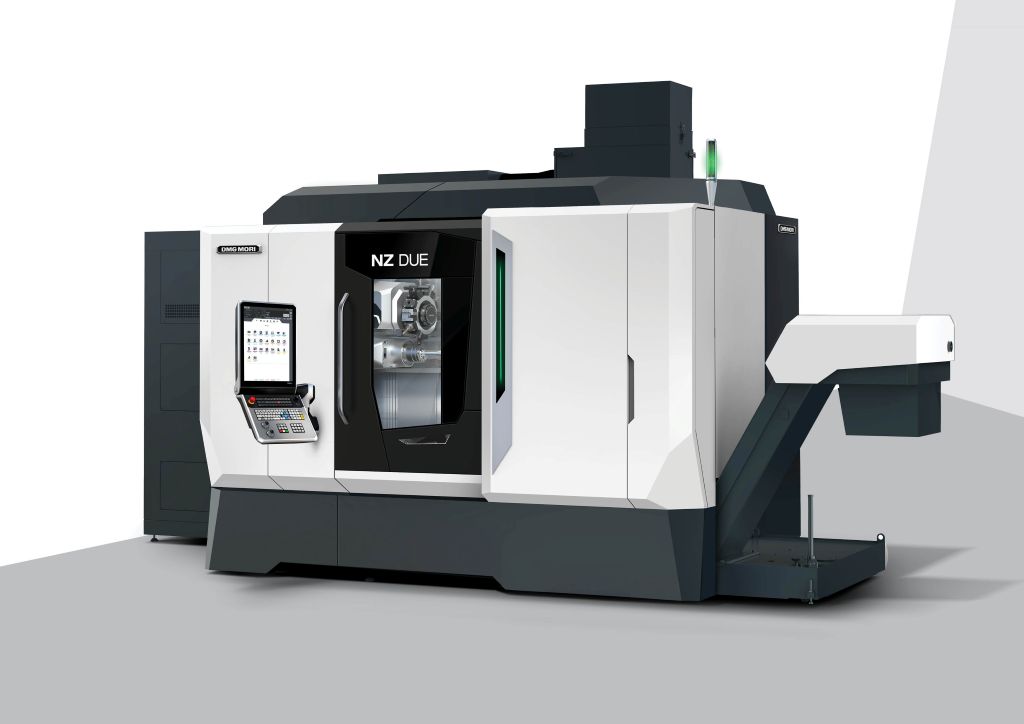
Application range from screws to device components
For medical applications, DMG MORI transfers production turning to different
Component families. For rod-based small parts such as bone screws or dental implants, SPRINT long-turning machines and MULTISPRINT concepts are at the forefront. They support productive processing from the rod, reduce clamping and handling steps, and create stable conditions for repeatable series processes.
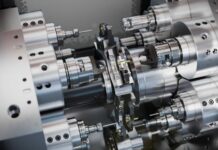
For more complex instrument components such as handles, articulated parts, fastening elements, or plug profiles, the NZ platform, NZX series, and SPRINT turret machines offer additional possibilities for parallel and complete machining. Main and counter spindles, multiple turrets, Y-axes, and driven tools enable front and back machining, cross drilling, contours, and flat surfaces in an integrated process. This allows for reduced cycle times, minimized internal handling steps, and better control of geometric relationships.
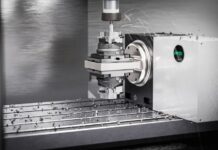
Even rotationally symmetrical machine components with additional milling sections can be produced on
economically produce suitable production turning platforms. This includes shafts, housings, coupling elements, or components for medical technology drives and
Handling systems. The integration of turning and milling operations supports
Roundness accuracy, shape fidelity, and documentable machining conditions. Process,
Tool and workpiece data can be used for traceability, quality assessment, and
audit-compliant documentation made usable.
From machine concept to a qualifiable series process
DMG MORI supports users in the medical technology sector from the selection of suitable turning and milling machines to automation and peripherals, as well as the design of qualifiable series processes. This includes Greenfield and Brownfield consulting, production planning,
Technology design, process development, commissioning, and ongoing service.
Production operation. Through Medical Excellence Centers, DMG MORI combines machines, application knowledge, automation, digitalization, and process competence for medical technology applications. This shifts the focus from individual machine concepts to integrated production architecture.
Comprehensive product portfolio for individual manufacturing solutions
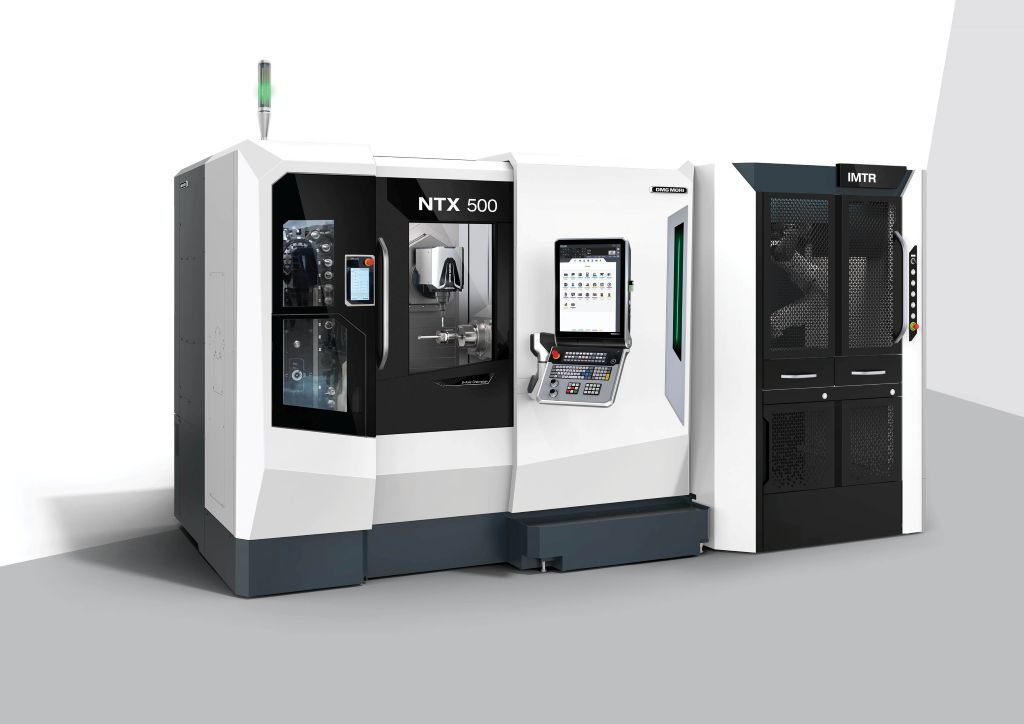
The conception of manufacturing solutions for medical technology applications goes far beyond production turning and the associated components. The Medical Excellence Centers rely on a wide range of machine portfolios to design application-specific solutions for economical production. A prime example of this is the machining of complex implants and orthopedic instruments on the NTX 500. The compact turning-milling center achieves efficient and quality-oriented 6-sided complete machining. An integrated robot automation (IMTR) further increases productivity as needed.
Production turning as a response to the demands of medical technology.
Process integration, automation, and digital transformation (DX) form the basis of the integrated
Interaction of a concrete solution approach for the central challenges of the
Industry. In doing so, DMG MORI simultaneously paves the way for a new definition of the
Production turning in the medical field: for less fragmented processes and more
Productivity and transparency in products and processes.
Contact: