
Many companies are increasingly replacing traditional indexing and cam-controlled multi-spindle lathes with modern CNC multi-spindle machines, as components become more complex and the demands for dimensional accuracy and surface quality increase. Cam-controlled concepts particularly encounter limitations with modern, lead-free alloys: setup is labor-intensive, highly dependent on personnel, and offers little flexibility to adjust cutting and chip behavior through programs.
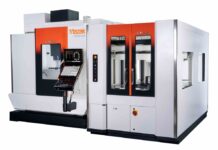
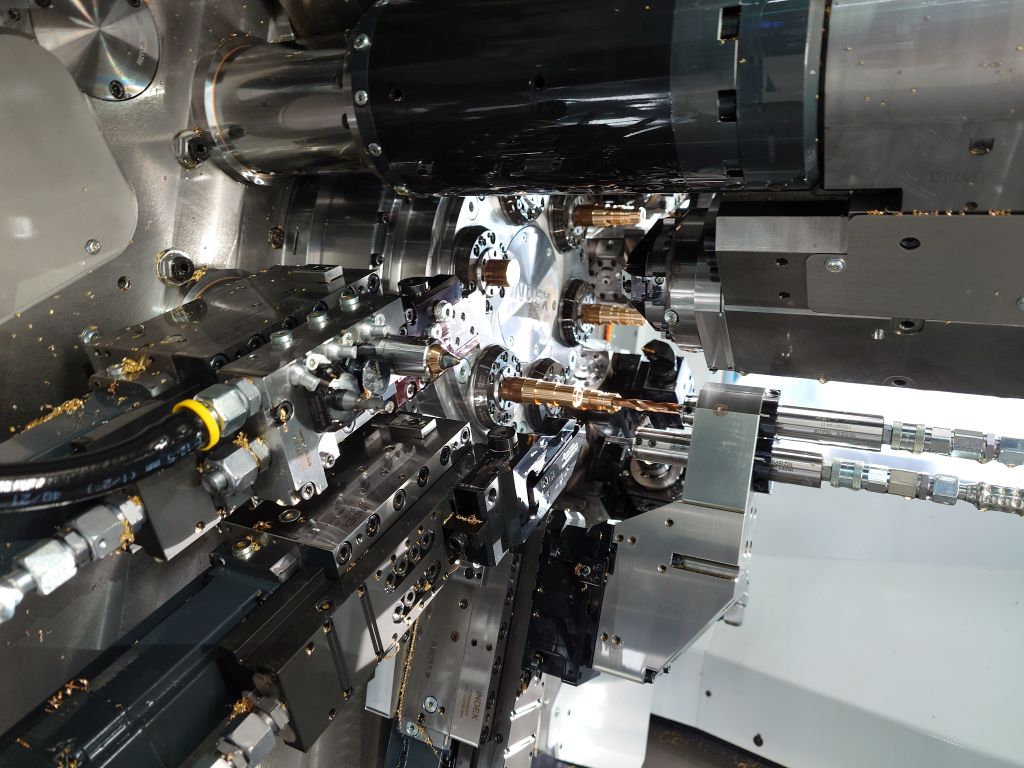
INDEX CNC multi-spindle lathes such as the MS16, MS22, MS32, MS40, or MS52 series combine high output performance with great flexibility. A compact spindle drum with Hirth gearing, fluid-cooled motor spindles with up to 8,000 min⁻¹, and freely programmable speeds for each spindle position allow for optimal cutting values for each tool edge. This reduces cycle times, increases tool life, and improves surface quality. At the same time, chip breakage can also be specifically influenced even with difficult-to-machine, lead-free brass alloys – a decisive advantage over purely cam-controlled machines.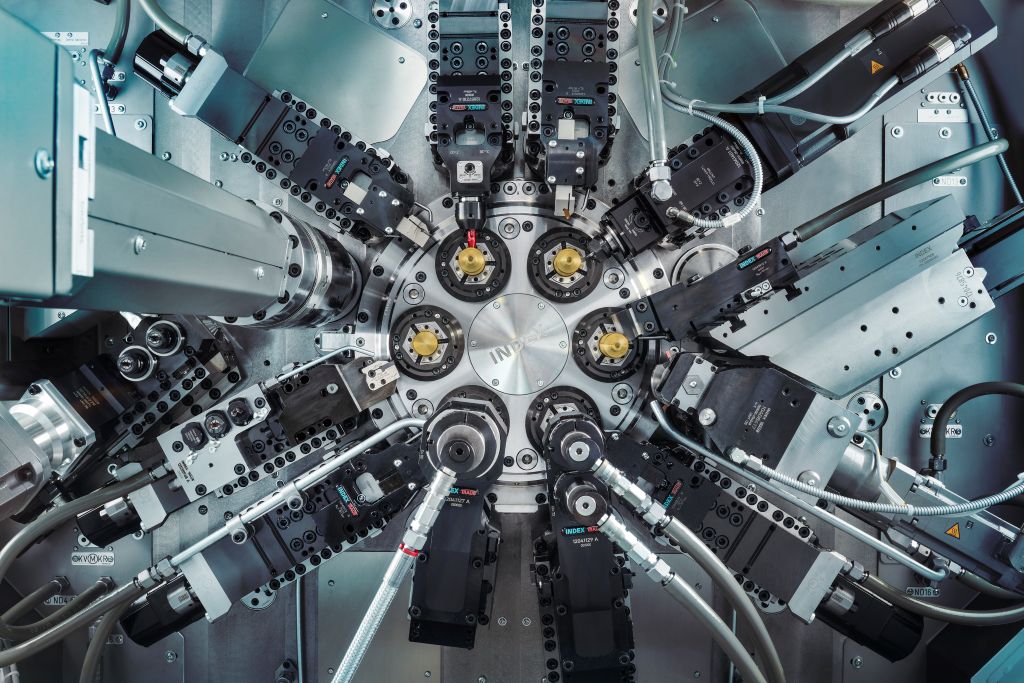
In the high-end configuration, these multi-spindle lathes feature two V-shaped cross slides with NC-X and NC-Z axes per spindle position, complemented by synchronous spindles for rear-side machining. With additional C and Y axes as well as driven tools, complex operations such as off-center drilling, thread cutting, contour and form milling, or polygon turning can be performed in a single setup.
The W gearing on the slides supports the precise alignment of the tool holders and ensures tight tolerances. Due to the setup-friendly design, multi-spindle lathes are also worthwhile for medium batch sizes starting from about 10,000 parts.
The crucial reason why the use of lead-free materials suggests a switch to modern CNC multi-spindles lies in the changed chip behavior. In the previous standard brass with about two to three percent lead (e.g., MS58), the lead had a chip-breaking effect; short, manageable chips were produced. In contrast, lead-free copper-zinc alloys like CuZn42 often produce long, thin threads that wrap around the tool and workpiece without additional measures. This leads to disruptions, increased wear, potential component damage, and unplanned machine downtimes.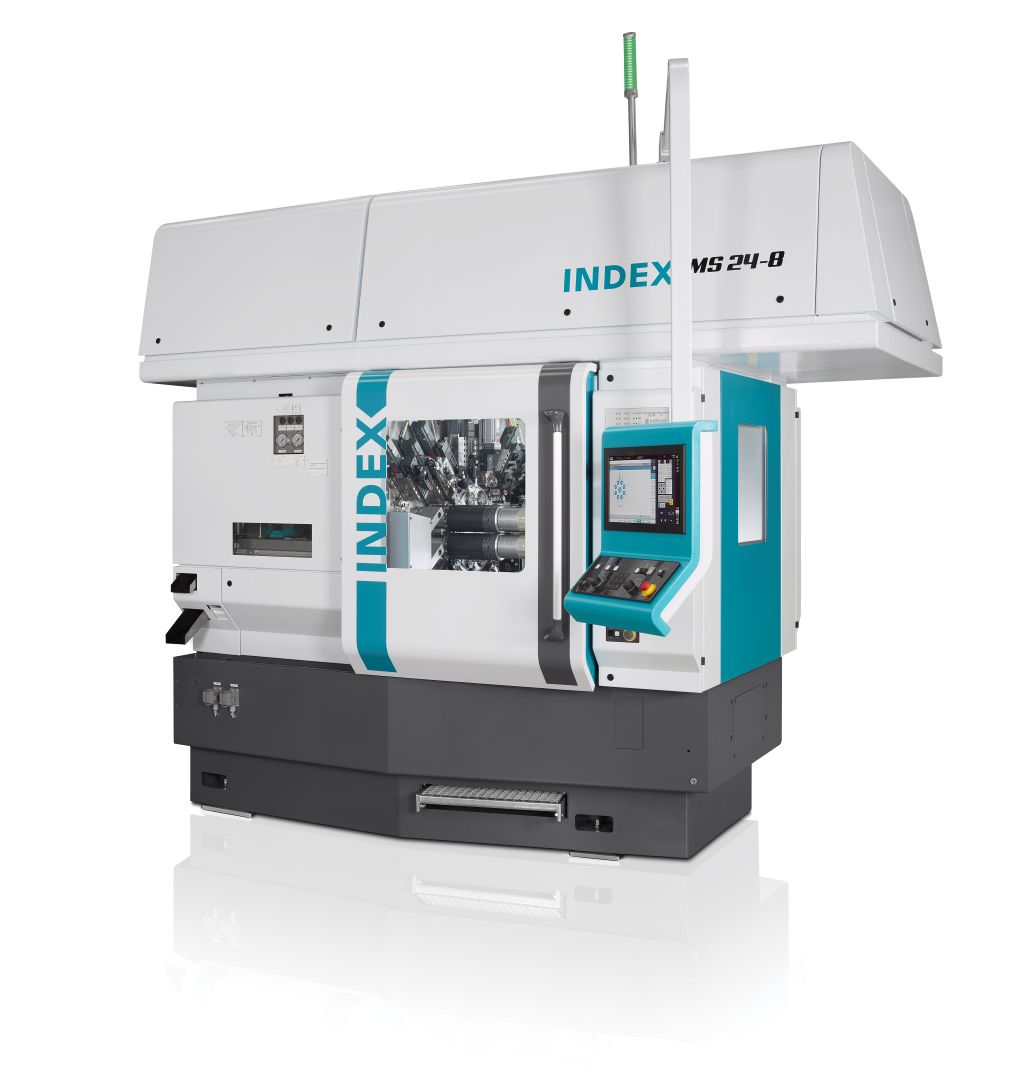
To avoid these effects, machines need to withstand high cooling and flushing pressures and have adaptive CNC cycles for chip control. INDEX relies on software functions such as INDEX ChipMaster, which can programmatically support early chip breaking. In combination with tools that have specific chip-breaking geometries, a coordinated system of machine, tool, and process parameters is created. This allows even critical lead-free alloys to be processed with short, controlled chip forms, stable process control, and high surface quality.
Another component is automation: Modern INDEX multi-spindle lathes are typically equipped with bar feeders and can be fitted with automation cells where robots remove and sort the finished parts. Especially for demanding workpieces, the quality directly from the machine must be so high that rework such as deburring or sorting is eliminated. The combination of CNC-based multi-spindle technology, automated peripherals, and thoughtful chip management enables the compliant and economical mass production of lead-free brass materials.
Contact: