
Tatra Trucks, the oldest manufacturer of road and off-road vehicles and the second oldest manufacturer of combustion engine trucks worldwide, is modernizing its engine production. A manufacturing cell with three Heckert HEC 800 machining centers, automated by a pallet system, increases efficiency and reduces space requirements by almost a quarter.
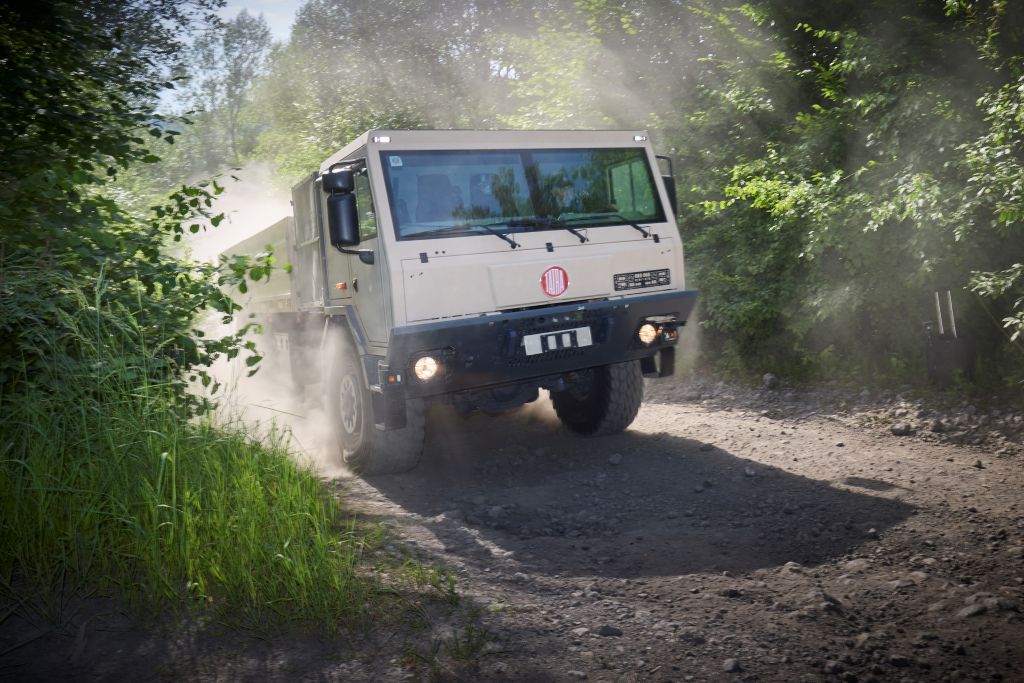
Tatra, an automobile manufacturer from Kopřivnice, Czech Republic, started producing carriages in 1850 and has been manufacturing automobiles since the late 19th century. Today, it is primarily the heavy Tatra Trucks that impress with their off-road capability, high reliability, and excellent utility characteristics - even under extreme weather conditions such as frost and desert temperatures.
A special feature of the vehicles is the Tatra concept: a chassis with a central load-bearing tube and individually suspended half-axles, allowing for any number of axles to be mounted, from 4x4 to 12x12 and more. The directly air-cooled V8 and V12 diesel engines of the Tatra T3 series with supercharging and intake air cooling are also among the USPs.
Production takes place at the headquarters in Kopřivnice, Czech Republic. There, the complete chassis for the T158 Phoenix vehicles is created, which can be equipped with various superstructures such as containers, concrete mixers, tanks, and special constructions. Additionally, vehicles from the T815-7 Force series are produced, available in both civilian versions (e.g., as fire engines, etc.) and military versions. Technology and process manager Martin Kappler explains: 'For our Force series vehicles, we manufacture almost all components ourselves: the complete chassis, the cabin, engine, and transmission.' The production portfolio of Tatra also includes the Tactic series of medium vehicles, designed exclusively for military purposes.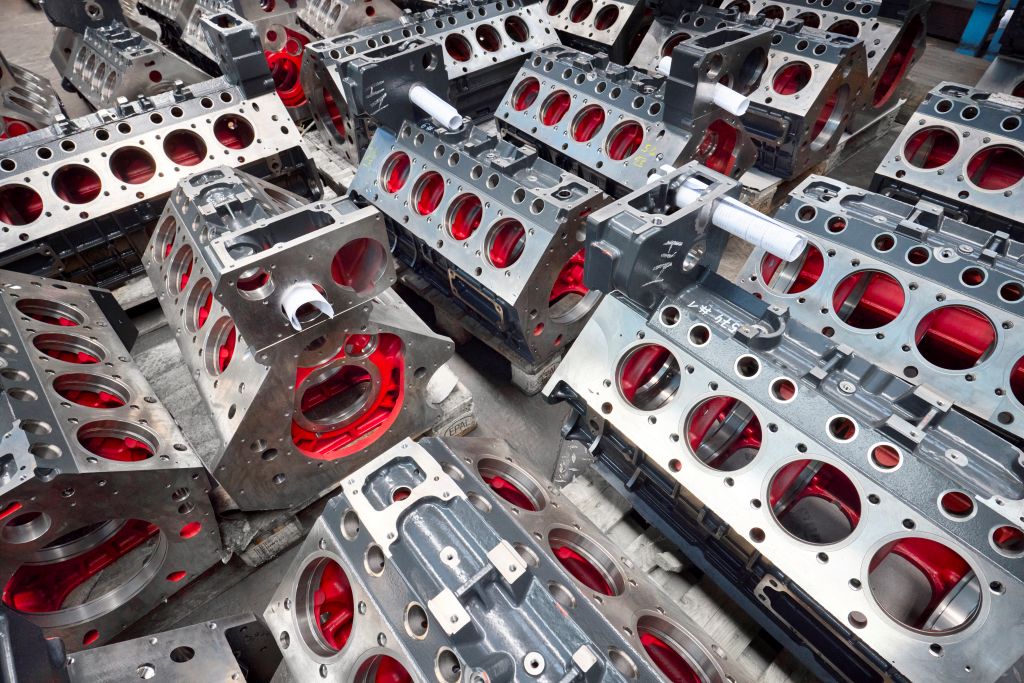
Automated manufacturing cell replaces transfer line
Regarding engine equipment, Tatra Trucks allows its customers to choose from several options. Available are liquid-cooled engines from established manufacturers and Tatra's own V8 and V12 engines in various power variants. The latter have been manufactured in Kopřivnice on a transfer line since 1980.
'Despite its age, the technical condition of this facility is still good,' says Martin Kappler, 'but the energy costs are extremely high, as is the consumption of cooling lubricants. Therefore, we decided to switch the engine housing production to a cell with automated machining centers.'
Furthermore, he argues that the switch from V8 to V12 on the transfer line takes a long time, often several production shifts: 'Given the flexibility required today, the new manufacturing cell also excels in this regard. With our universal device, we can quickly change over and produce each engine housing individually. Thus, we are significantly more efficient with the machining centers, even if the pure machining time of an engine housing on the transfer line is shorter.'
As a result, the production managers of Tatra Trucks decided in 2024 to order a Heckert HEC 800 from Starrag as the basis for the planned manufacturing cell - complemented by an automation solution in the form of a Fastems FPC3000 system.
25 years of experience with Heckert machines
A decision with a backstory: In 2017, Tatra replaced an aging BAZ. Its original tasks were milling base surfaces and machining index holes necessary for clamping and positioning the cast parts in the transfer line. Purchaser Libor Kalíšek recalls: 'After we compared several suppliers at that time, we decided on a Heckert HEC 800, as it seemed most suitable and offered an extended machining spectrum.'
Since then, Tatra has been using the Heckert HEC 800 for the pre-machining of 8- and 12-cylinder engine housings. In one operation, the lower housing part is completely machined, including the index holes and all holes for attaching the oil pan. Technologist Dušan Kelnar adds: 'Additionally, we rough on the Heckert HEC 800 the engine housing surfaces and set holes that cannot be machined in the line. Before we send the pre-machined housing to the transfer line, a complete reworking of the engine housing takes place, including the various covers, the pump seat, etc.'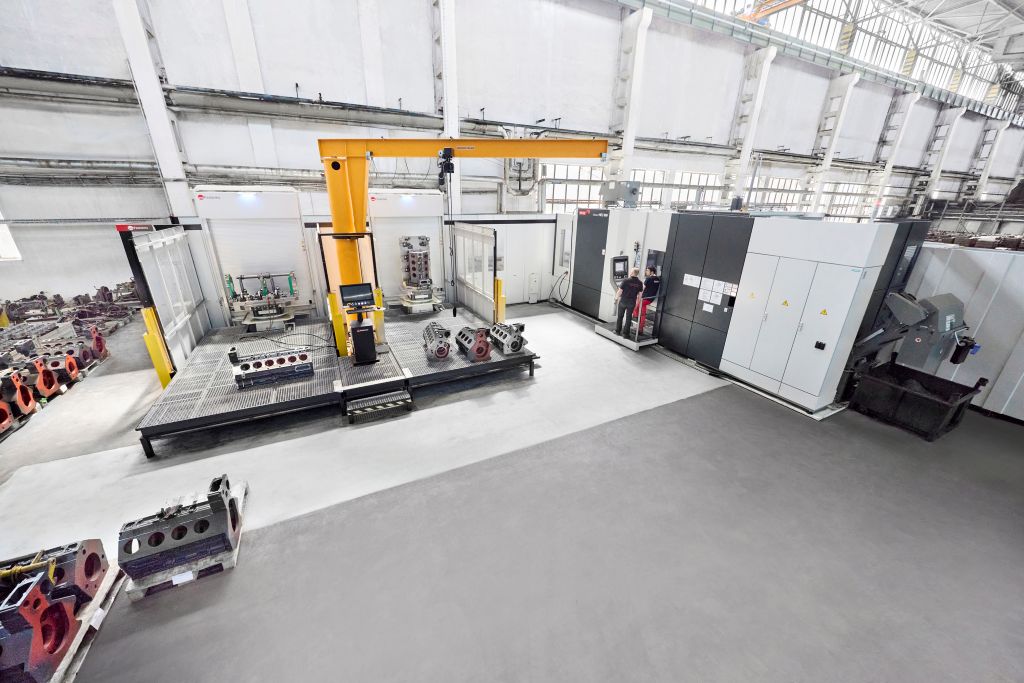
Dušan Kelnar points out that he and his colleagues are long familiar with the machine manufacturer Starrag and the Heckert centers: '25 years ago, we purchased the first Heckert CWK 630 machine for machining transmission housings.' In the following years, Tatra regularly invested in further Heckert machines: two CWK 630 for machining axle housings, three CWK 500 for swing arms and wheel reduction housings, and two CWK 500 for components of the Tatra Tactic series.
By 2017, three HEC 630 and two HEC 500 machining centers had also replaced other old machines. 'Therefore, we have extensive experience with Heckert machines,' emphasizes Kelnar. 'These machines have proven themselves due to their concept, reliability, and long-term accuracy.'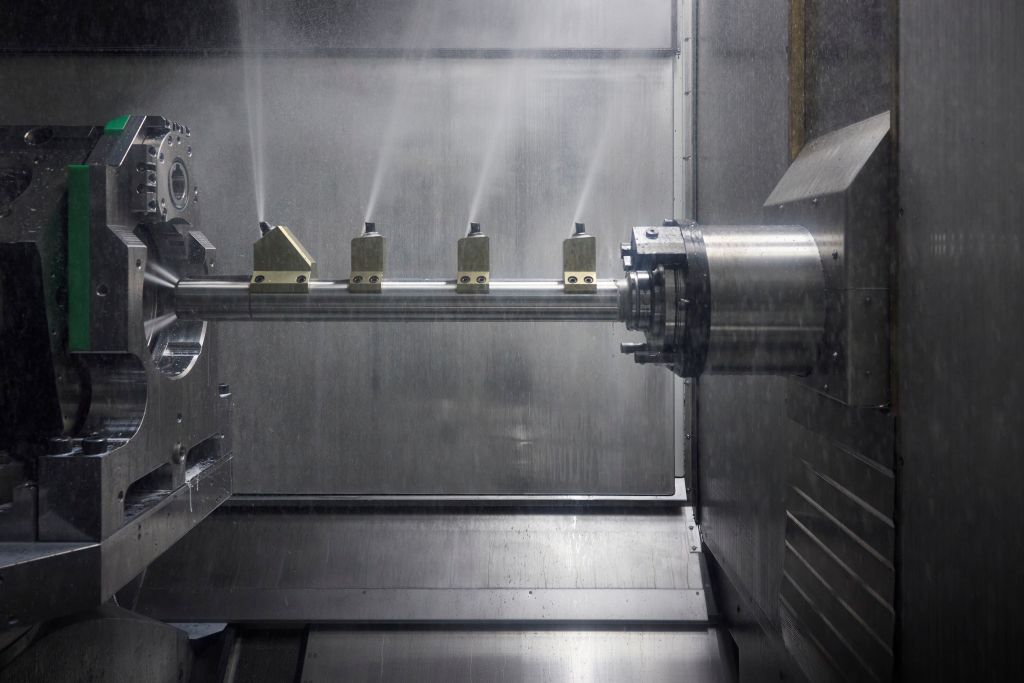
Manufacturing cell is gradually expanded
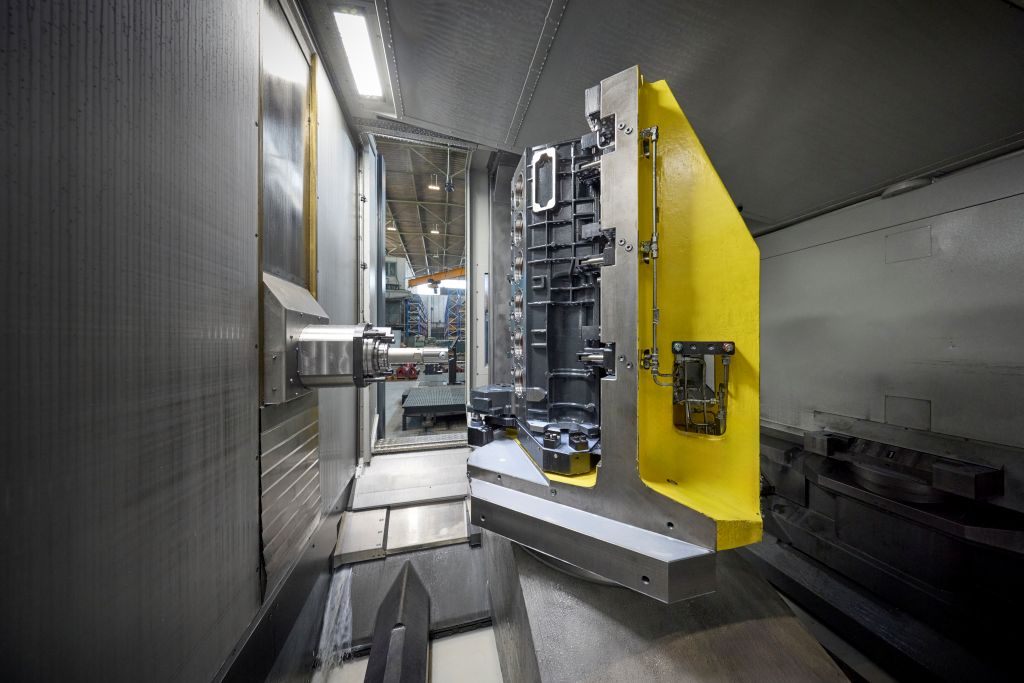
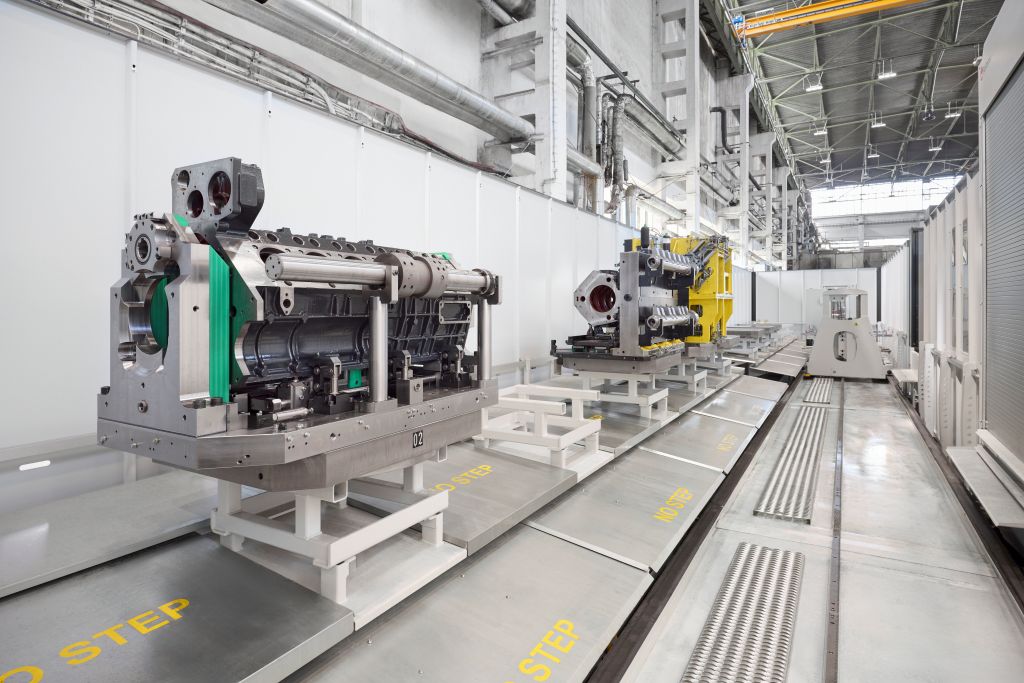
The new Heckert HEC 800 delivered in early 2025 is the basis of the manufacturing cell that has now been put into operation. The machine features special equipment, including, for example, a travel path extended to 2,050 mm in the Z-axis, an NC axis in the spindle for controlling special tools, and a magazine for long tools up to 1,250 mm.
Process manager Kappler explains: 'The cell takes over the complete machining of our 8- and 12-cylinder engine housings and increasingly replaces the transfer line.' The raw parts are cast parts made of Cu-alloyed GG20 cast iron with dimensions of about 1,200 x 600 x 700 mm and a weight of around 400 kg. The complete machining is carried out in four clamping operations with special hydraulic clamping devices developed and manufactured by Starrag.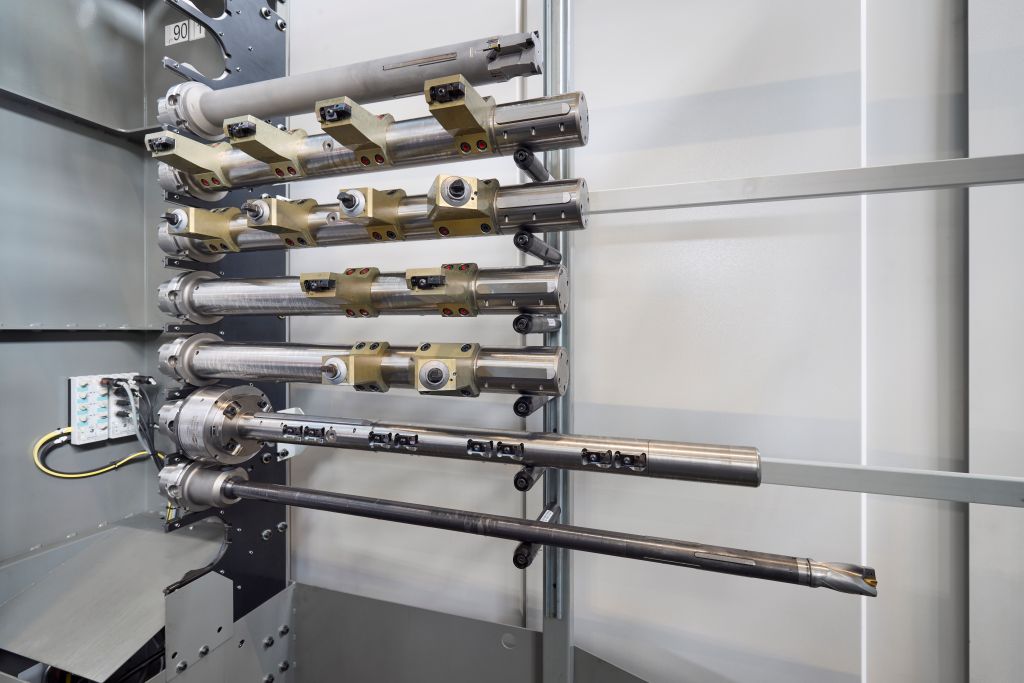
In a second step, the manufacturing cell will soon be expanded with an identical Heckert HEC 800 machine. In a third expansion phase, Starrag will integrate the already installed Heckert HEC 800, which is currently still responsible for the external pre-processing of the cast blanks.
The automation of the manufacturing cell is ensured by a flexible pallet storage system, which consists of a rack with twelve pallet spaces and a linear conveyor.
The latter takes care of the pallet transport between the machines or the setup areas of the machines. The pallet storage system will also be further expanded with the growing number of machines.
Enormously increased area productivity

Martin Kappler compares the two manufacturing systems: "Our transfer line had a capacity of about 1,600 pieces per year, which we are currently only utilizing half of. This quantity will also be reached by our manufacturing cell in the final expansion phase in two-shift operation, which is important for us. Because we expect a significantly growing demand. We may cover an even increased need with a third shift."
His enthusiasm for the new production solution is primarily due to its high efficiency. There are several reasons for this, as Kappler emphasizes: "Thanks to automation, our new manufacturing cell can be operated by a single employee. Compared to the previous transfer line, operating costs are significantly lower, and the space requirement of the manufacturing cell is only about a quarter at 570 m²."
Purchaser Libor Kalíšek, who initiated the purchase of the Heckert HEC 800, is now retired. His successor Tomáš Holčák also praises the collaboration with Starrag: "All offers and negotiations were conducted at a high technical and commercial level. We greatly appreciate that Starrag delivers the machines ready for use, as a functional unit of machine, tools, fixtures, technologies, testing, and handover. The technical support, service, and maintenance also work excellently." Due to the positive experiences, further projects for the modernization and rationalization of production are already in planning.
Contact: