
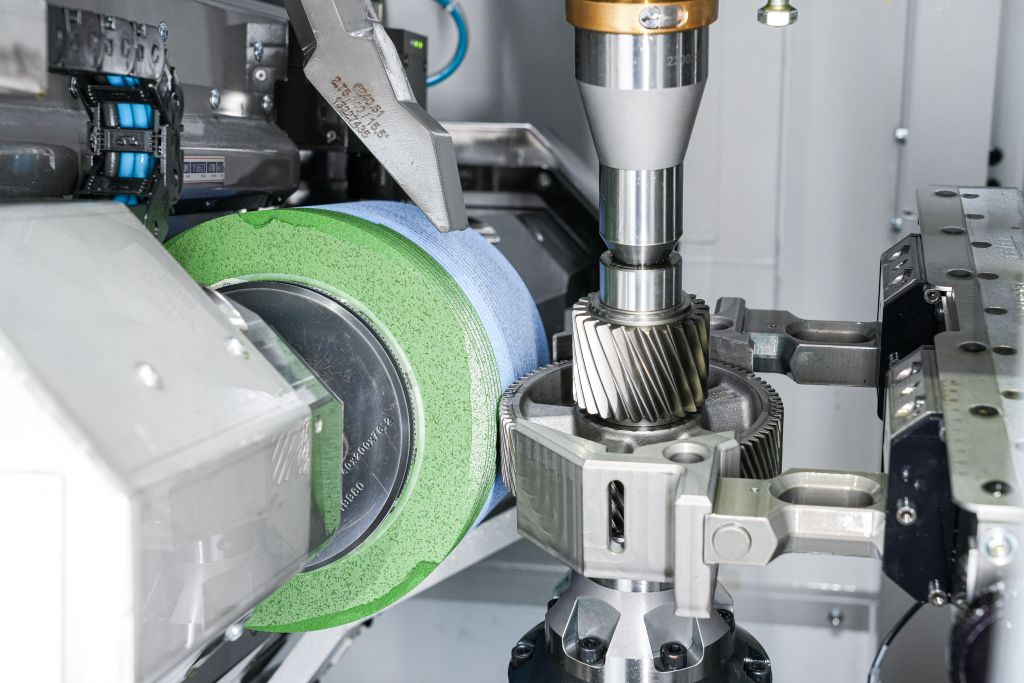
With the further development of non-interfering gear grinding, Liebherr-Verzahntechnik GmbH elevates efficiency and quality in hard finishing to a new level. Processing times when using dressable grinding worms have been reduced to nearly the level of conventional methods – even with asymmetric gears. At the same time, optimized shift methods allow for the integration of fine grinding or polishing in a single operation.
As early as 1988, Liebherr set a technological milestone with the patenting of non-interfering gear grinding with CBN grinding worms. Now the next step follows: New functionalities and an innovative machine kinematics make the process economically viable, process-safe, and of high quality even with dressable grinding worms. Dressing and cycle times are now nearly at the level of conventional gear grinding methods.
New application areas for non-interfering gearing
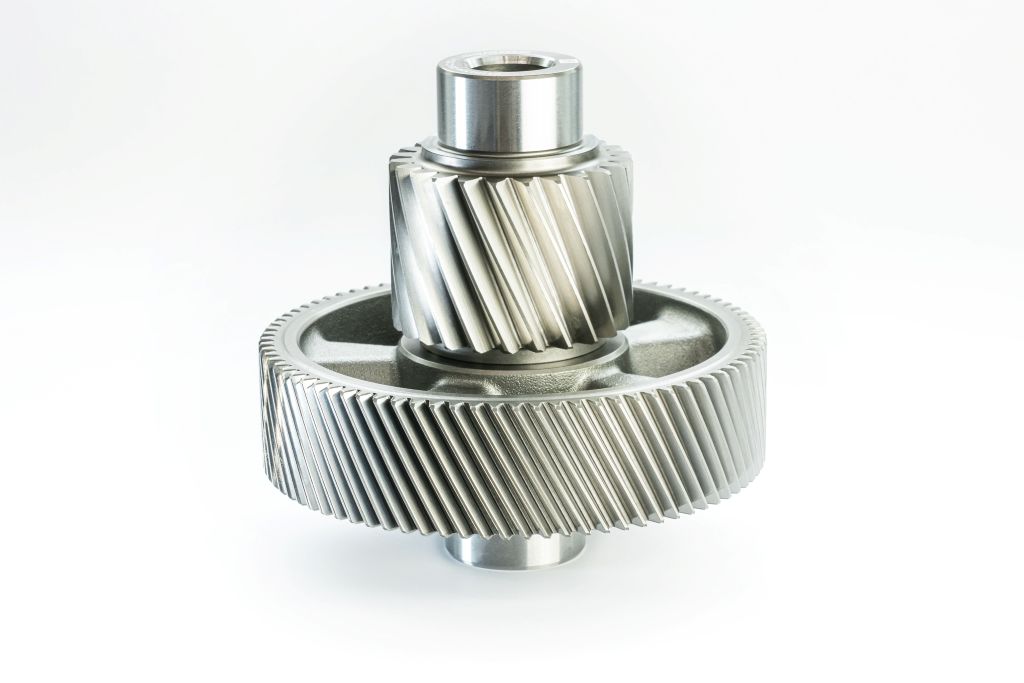
The optimized process opens up new application fields for non-interfering machining: As practical tests show, even complex geometries such as asymmetric gears can be specifically optimized for maximum load capacity or reduced noise development – or both. The new machine kinematics allows for significantly freer shift methods that can be flexibly adapted to component requirements.
This enables the integration of fine grinding or polishing, resulting in another leap in quality. Even the smallest grinding worms can now be used economically – an advantage in collision-critical gearing. The operation via the user-friendly LHGearTec control is simple and intuitive.
Optimized Shift Strategies
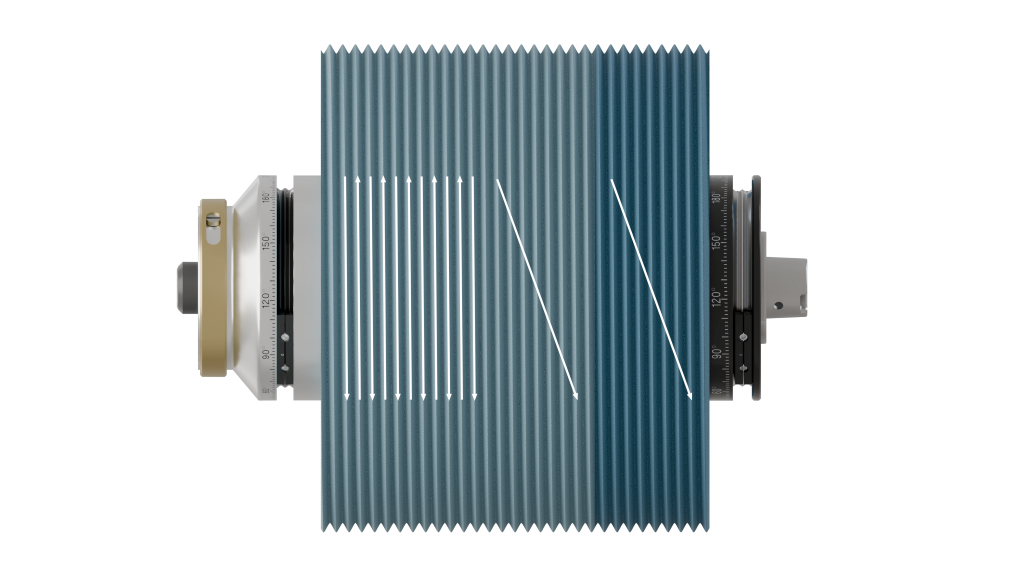
In optimized shifting, different segments on the grinding worm are specifically utilized: By integrating fine grinding or polishing areas or combining modified and non-modified zones, surface quality and tooth flank geometry can be specifically influenced. The decoupling of shift length and position prevents profile deviations, as confirmed by Fabian Stadelmann, Manager for Technology Development at Liebherr-Verzahntechnik GmbH:
"The number and length of the diagonal areas can be easily defined via the LHGearTec – without affecting the workpiece quality." The software additionally supports the targeted generation of controlled interferences ("twist-controlled").
Targeted Tooth Flank Optimization with Economic Machining
For users, clear advantages arise: The process enables targeted load and noise optimization – through load-optimized tooth flanks or high surface quality. The combination of non-interfering gear grinding and subsequent fine grinding or polishing adds the strengths of both processes and leads to a significant quality gain – without economic losses. The use of standard dressers makes elaborate design for special interference geometries unnecessary; two-flank dressing is also possible.
From E-Mobility to Special Gears
The technology is suitable for a wide range of applications – from gearbox components for e-mobility to special and heavy-duty gears. "In combination with the – frequently highlighted by our customers – high rigidity of our machines, we offer measurable added value in efficiency and precision, thus providing a clear competitive advantage," summarizes Fabian Stadelmann.
Contact: