
Riccardo Rosa stated: "Domestic demand remains too weak despite the 'plus sign'; no glimmer of hope in the automotive sector and the 'Made in USA uncertainty' are the critical factors accompanying the daily work of Italian manufacturers, who are concerned about the near future. The economic policy instruments that the government authorities are currently establishing for the period 2026–2027 will be crucial."
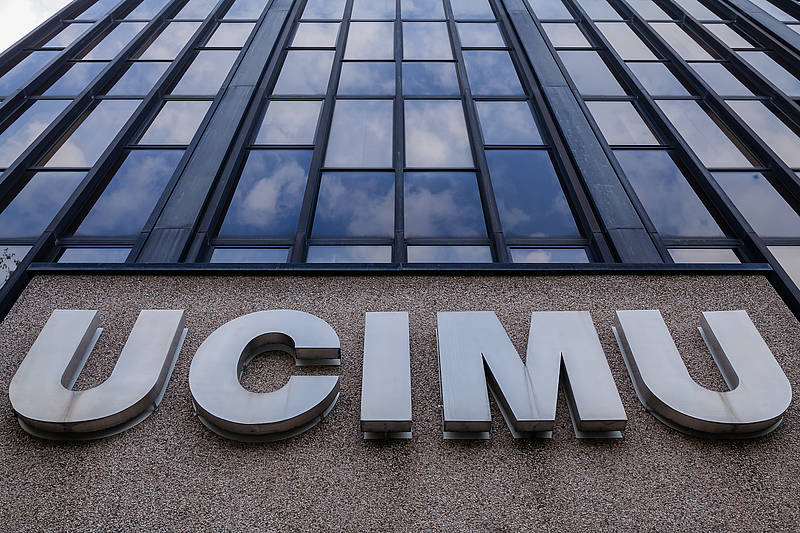
In the third quarter of 2025, the order index for machine tools developed by the Centro Studi & Cultura di Impresa of UCIMU–SISTEMI PER PRODURRE showed stability with +1.1% compared to the period July–September 2024. The absolute index value was 53.3 (base 100 in 2021). In particular, orders collected in the domestic market increased by 12.4% compared to the third quarter of 2024, with an absolute value of 15.4. In the foreign market, incoming orders decreased by 7.7% compared to the same period last year. The absolute index value was 87.1.
Riccardo Rosa, President of UCIMU–SISTEMI PER PRODURRE, stated: "Although this recent survey of the UCIMU index confirms the positive development of domestic demand, the absolute index value shows that it is still very weak. In fact, the decline in foreign activity is only narrowly offset by the recovery of the domestic market."
"The context in which we are currently operating – continued Riccardo Rosa – is extremely difficult. Europe is suffering greatly from the German crisis and the geopolitical instability caused by the conflict between Russia and Ukraine. In particular, the transition to electric motors has led to a significant decline in industrial activity: European car manufacturers are not investing, as it is unclear what the future holds, and companies in the supply chain are announcing factory closures and layoffs almost daily."
"On the other hand, we see Italian manufacturers that the decline in activities in our most important sales sector, namely the automotive industry, cannot be offset by investments in so-called alternative sectors. For this reason, we consider it crucial – to avert the specter of industrial desolation of the old continent – to extend the transition periods towards green mobility and to conduct a thorough consideration at the level of EU institutions regarding alternative drive forms that ensure low emissions while securing production, factories, and jobs."
"Looking across the ocean – said the President of UCIMU – the United States has so far held up well. However, we note that some Italian companies are having difficulties delivering machines to the USA – due to tariffs. There is also great concern in this regard, as the stance of the US government has triggered significant uncertainty in the international market and has actually led to a slowdown in export activity, as our order index clearly shows."
"We know – concluded President Riccardo Rosa – that at the national level, the Ministry of Enterprises and Made in Italy, as well as the Ministry of Finance and Economy, are currently working on outlining a new industrial policy program that is intended to support companies in the coming two years. The unsatisfactory experience with the 5.0 program, which only yielded interesting results in its final phase, should serve as a warning so that companies will have a truly useful and effective tool available in the future to support the modernization of Italian production facilities."
"We welcome the idea of a unified measure, although for us the tax refund claim would be the better solution. However, we demand that a bonus element be introduced that is linked to production within the EU. The duration and financial resources will also be crucial, which must support the transformation of our factories at a time when AI and digitalization, if used correctly, can make a difference. Regarding the duration – concluded Riccardo Rosa – we demand that the measure comes into effect at the beginning of the year to avoid the excessive waiting time that we already experienced with the 5.0 program. Regarding financial resources, the pressure from Asian supply as well as the general instability – the main factor for the stagnation of investments in capital goods – requires serious intervention regarding overall economic resources to support the competitiveness of the Italian manufacturing industry."
Contact: